
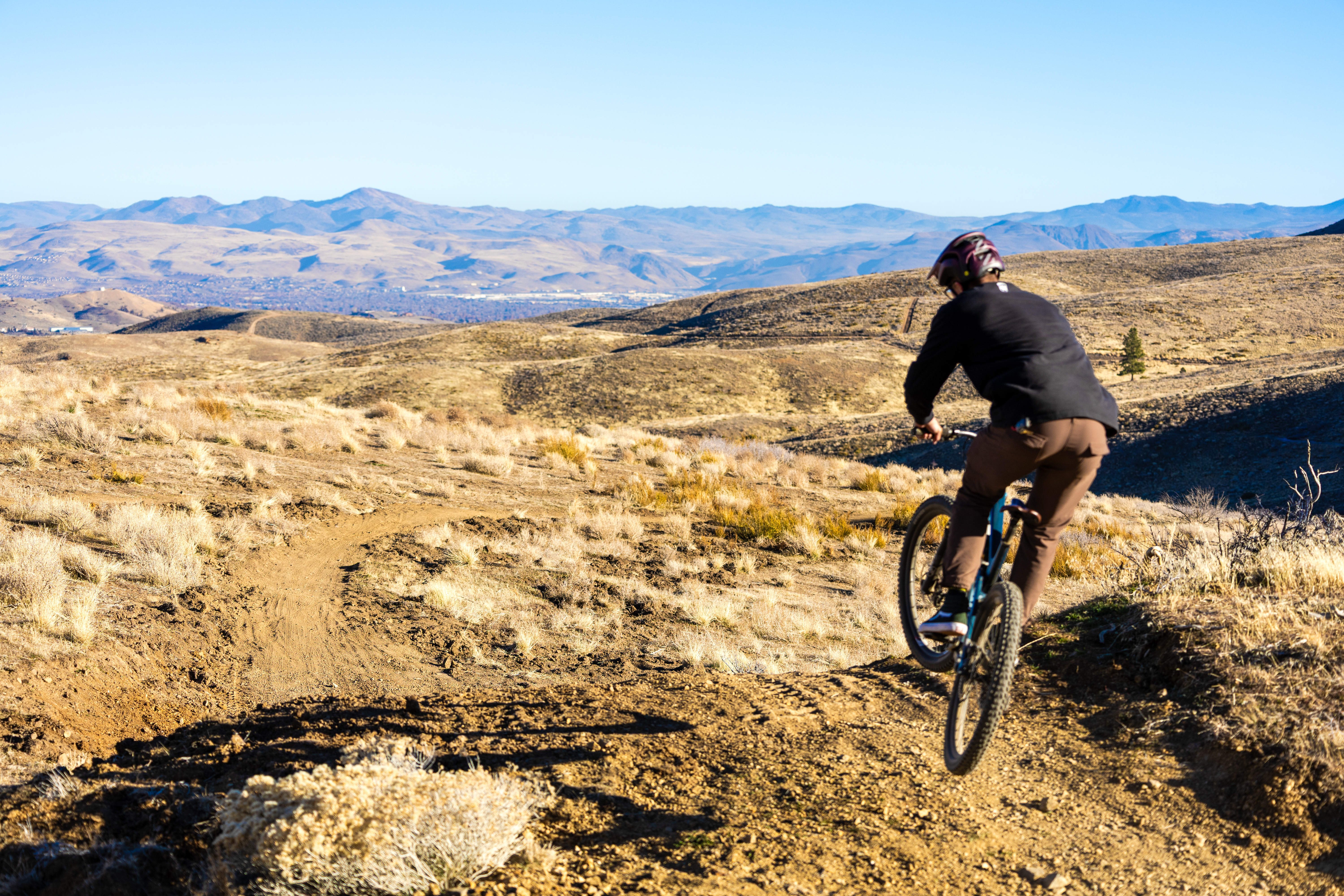
For decades, the bench cut singletrack trail was the gold standard of mountain bike trail building techniques. But in recent years, a variety of new, more advanced techniques have been on the rise that create a better-quality trail and require much less maintenance. One such technique is building a singletrack trail with a slightly elevated trail tread.
You might be familiar with elevated trail treads where singletrack passes through low-lying boggy areas, but the technique can be used even in arid environments to create more engaging trails that “amplify the terrain,” while simultaneously draining water better. That’s how Steve Wentz, Owner of Momentum Trail Concepts, describes it.
Here’s how it works.
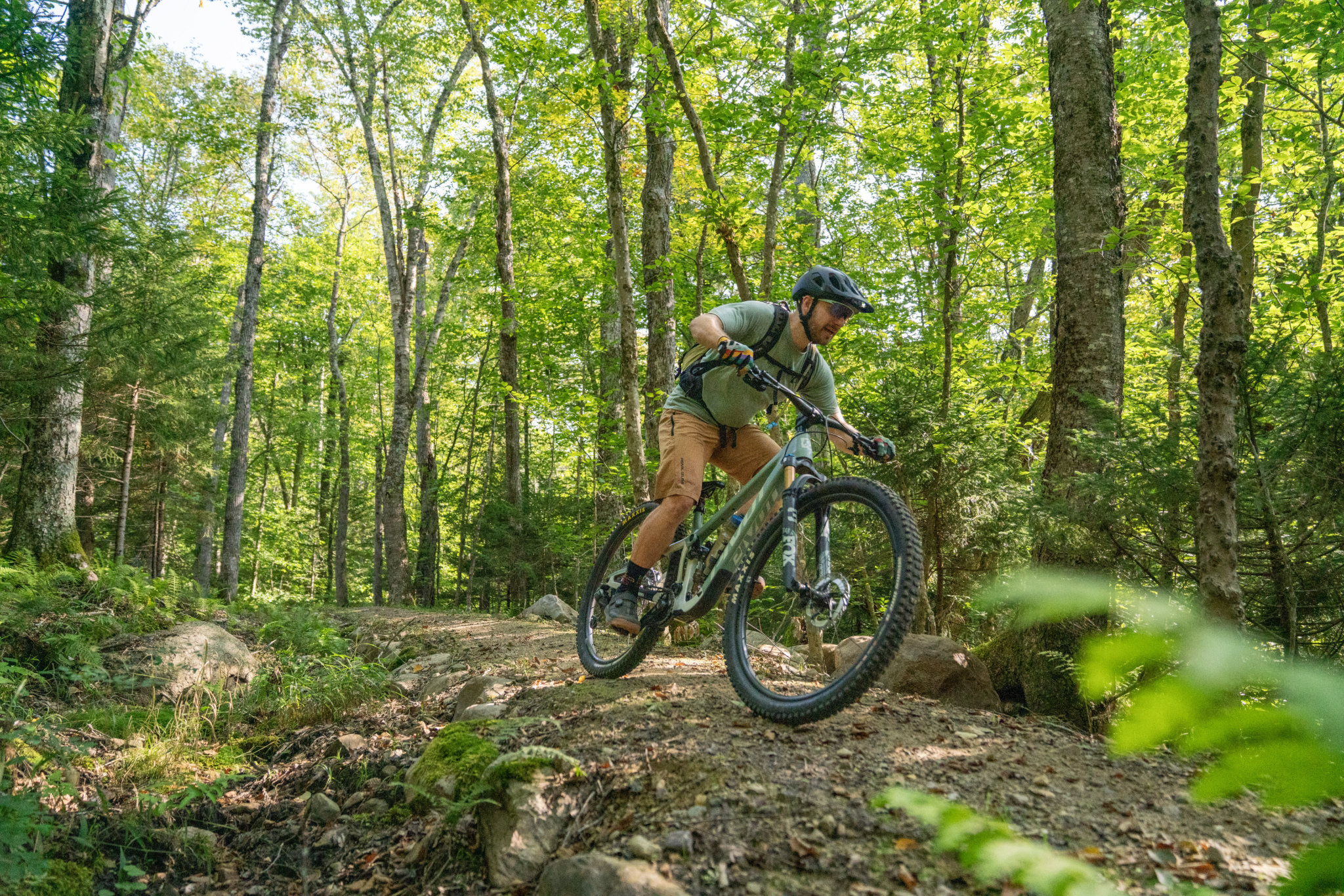
Building an elevated trail tread using mineral soil
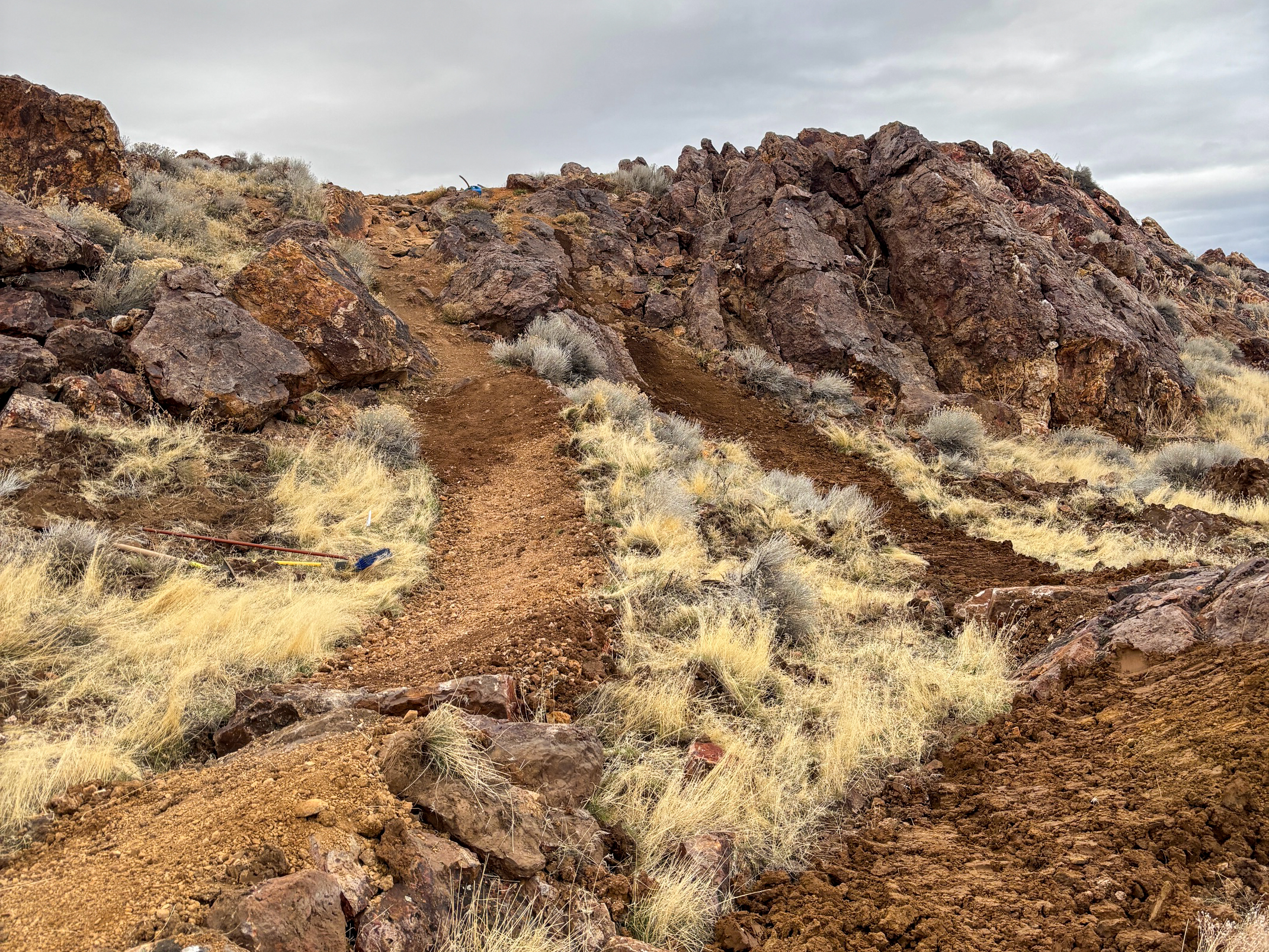
The machine operator begins by scraping off the organic layer of soil where the trail is intended to go. Then, instead of digging straight down into the mineral soil to create a bench, the trail builder digs a nearby pit deep into the earth to access the best-quality mineral soil there. This is called a “borrow pit.”
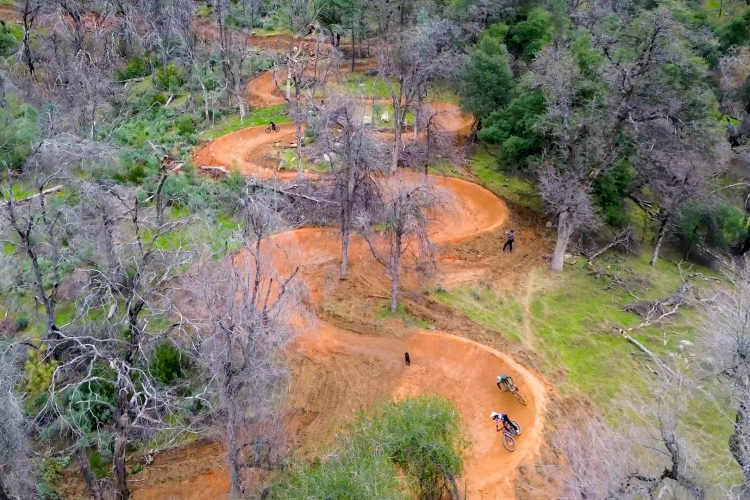
From the borrow pit, the builder excavates high-quality soil. (This works especially well with clay-based soils.) They then take this high-quality dirt and cover the trail tread, where they had previously removed the organics. As they’re covering the tread, they’re able to build it up and create rolls, undulations, and other engaging trail features.
Once that section is done, the builder takes the organic soil they had scraped off previously and dumps it back into the borrow pit. This way, there aren’t holes scattered throughout the forest. Trail users who come through the trail might have no idea that the builder used this technique. They’ll just enjoy an engaging, interesting singletrack experience.
The benefits of using mineral soil to build an elevated trail tread
The upper mineral soil can sometimes be crumbly and difficult to compact, but when the trail builder digs high-quality dirt out of the borrow pit, it can be compacted into a fantastic trail tread. The slightly elevated tread also drains water much better, because it can drain both to the inside and the outside.
“When you have mineral base on the inside, on a traditional bench cut, you have nowhere for the water to seep in quickly,” said Wentz. “So that’s why trails are generally out sloped a lot, because once you get to a harder pack, more foundation base, like on your house, water is not seeping into that really quickly.
“So if you can elevate the trail and make this look like it’s always been there, you have organic materials on the inside and the outside, so both sides of this water can absorb into root systems more naturally, and the trail can sheet off water on both sides. And you kind of have freedom of design as far as slopes one way or the other, to the left, to the right, to make the trail feel how I think it should, without having to worry about, ‘Oh, I always have to drain water one direction, which is to the outside.’”
This results in a trail that requires much less maintenance long-term, according to Curtis Johnson, President of the Biggest Little Trail Stewardship (BLTS) in Reno, Nevada. “The quality of trails and the sustainability and the longevity of the trail not needing additional maintenance, it increases the maintenance interval,” said Johnson.
As well as lower long-term maintenance, the build process also requires less cleanup by hand crews. Hand crew cleanup is often done by volunteers or conservation corps crews, but with this technique, it’s unnecessary.
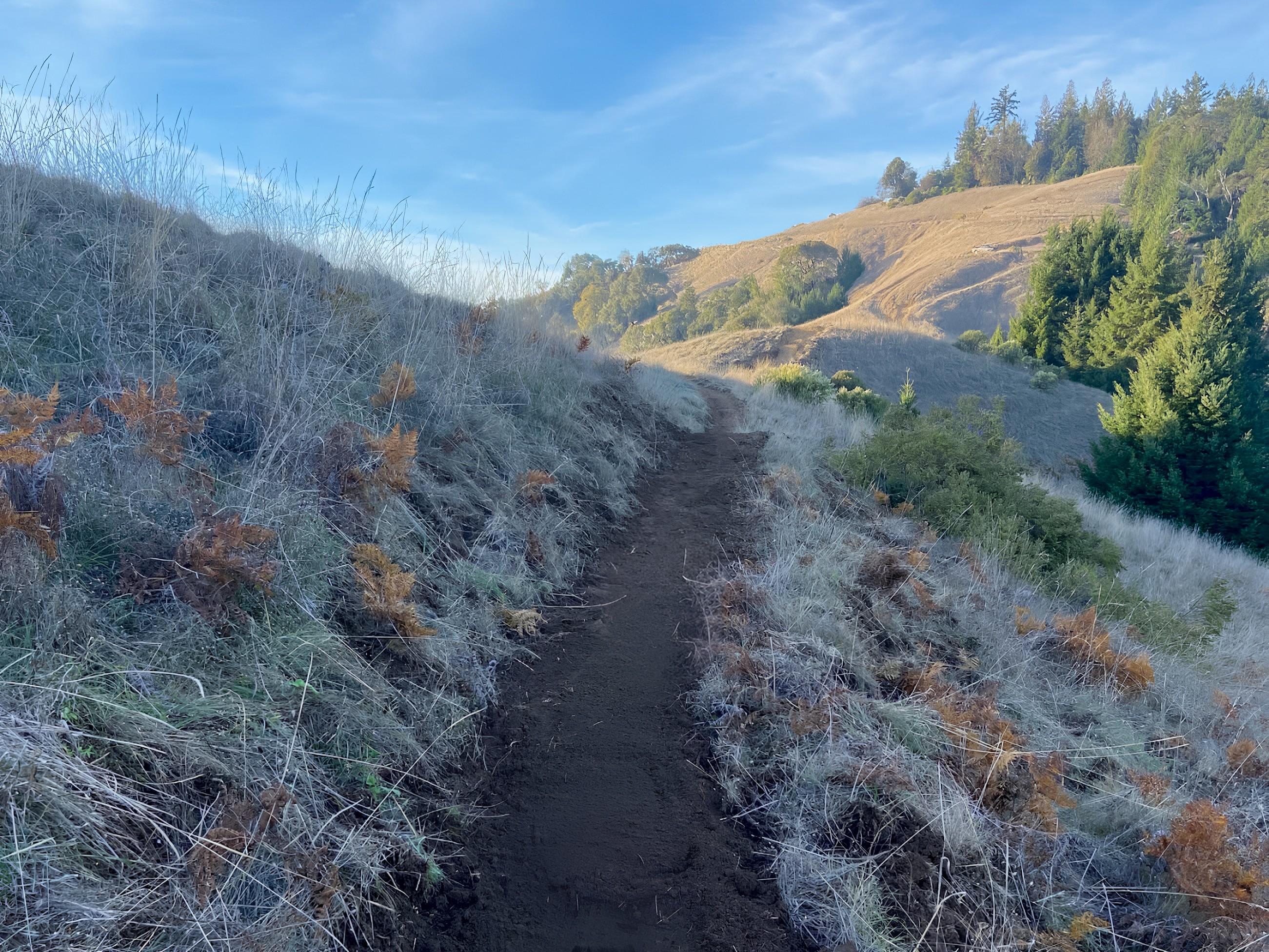
With a standard bench cut, after hand crews have cleaned up the backslope (the uphill side of the benchcut), the bench is fully dug into the hillside and requires a few years to grow back in and look more natural. But with this elevated technique, there’s essentially no backslope to clean up or grow back in.
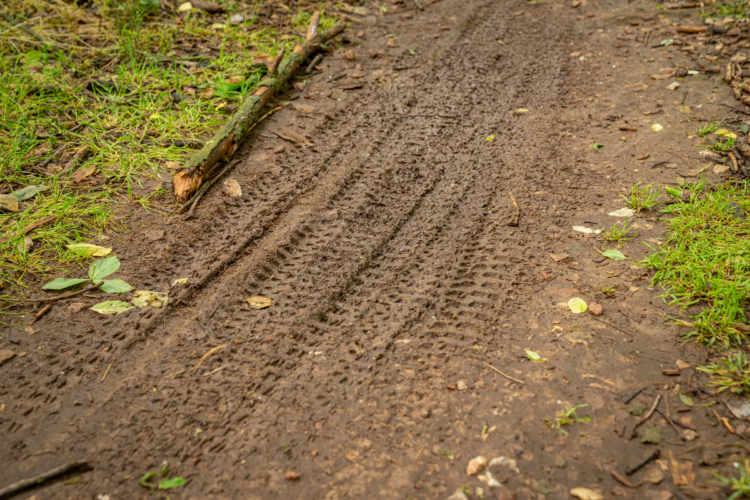
Wentz explained that the trail in the photo above is just minutes old. Despite the trail tread only being about two and a half feet wide, he built it with a five-foot-wide excavator — and still, there’s no handwork required by a secondary crew. “There’s no crew, there was just me and a rake, and there’s no work behind the machine, basically, if it’s done right.”
It might be more expensive, but it’s worth the price
Yes, with a time commitment somewhere between 50% and 100% higher to build a trail this way, it’s going to be more expensive. “This is something where I feel like it’s done the right way, and that’s not always the $1 per foot way, which is how most projects are bid,” said Wentz. He went on to say that building a high-quality trail from the get-go is well worth the expense, and Johnson, who has hired Wentz for multiple projects, agreed wholeheartedly. Whenever possible, Wentz prefers to build projects at a daily rate, instead of a per-foot rate, to help ensure a better quality of trail construction.
The upfront cost can largely be covered by the longer maintenance interval on the trails. In a previous interview, Shane Wilson, Principal for Trailhaus, said they recommend land managers and local clubs budget 5% per year of the trail installation cost for ongoing maintenance. But with this elevated trail tread technique, the installation cost might be higher, but that means the ongoing maintenance budget can be much lower.
This is a major boon because it’s usually easier for local clubs to raise money for a new trail build than for ongoing maintenance. “It’s very easy to get funding to build new track, but the ongoing maintenance is hard to get,” said Mark Upshall, Operations Manager at the Rotorua Trails Trust.
Wentz told us that while plenty of other trail builders use this elevated trail building, it’s mostly the bike park trail builders. He personally learned the technique while building in British Columbia. It’s much rarer for builders digging classic backcountry singletrack in the Lower 48 to dig such labor-intensive borrow pits to excavate the rich mineral soil. But with all of the benefits it provides, it wouldn’t be surprising to see more builders adopt this technique.

0 Comments