

Seven broken ribs. Pneumothorax. Internal bleeding along my spine. October 18th, 2023 changed my perspective forever on body armor. While standing and pedaling on a flat trail, I somehow lost my front wheel and hit a tree. I’ll never forget the liquid accumulating immediately in my lower back, creating a water-bed-like effect.
Coming from a history of freestyle BMX, not even wearing a helmet in the early years, I thought the typical helmet, gloves, and knee pads were enough for trail and enduro mountain bike rides. Since the crash, I’ve been searching for the most protective armor that I’m still willing to wear while pedaling in the sweltering Spanish sun. Enter the Rockintor body armor. It’s level 2 certified protection with a climb switch, something I can get behind. To be clear, all pads, chest, back, lower back, ribs and shoulders are CE Level 2 certified, not the entire garment. Being a local-to-me brand from Catalonia, Spain, and designed for the climate and trail conditions here, I figured it was worth trying.
Rockintor Protection Vest key specs
- Weight: 940g (33oz)
- Sizes: S/M, S/M wide, M/L (tested), L/XL, L/XL wide
- Certifications: CE Level 2 — EN 1621-1/2/3 Certified Pads
- Price: $304. First week PRE ORDER promo pricing is $199
- Buy from rockintor.com
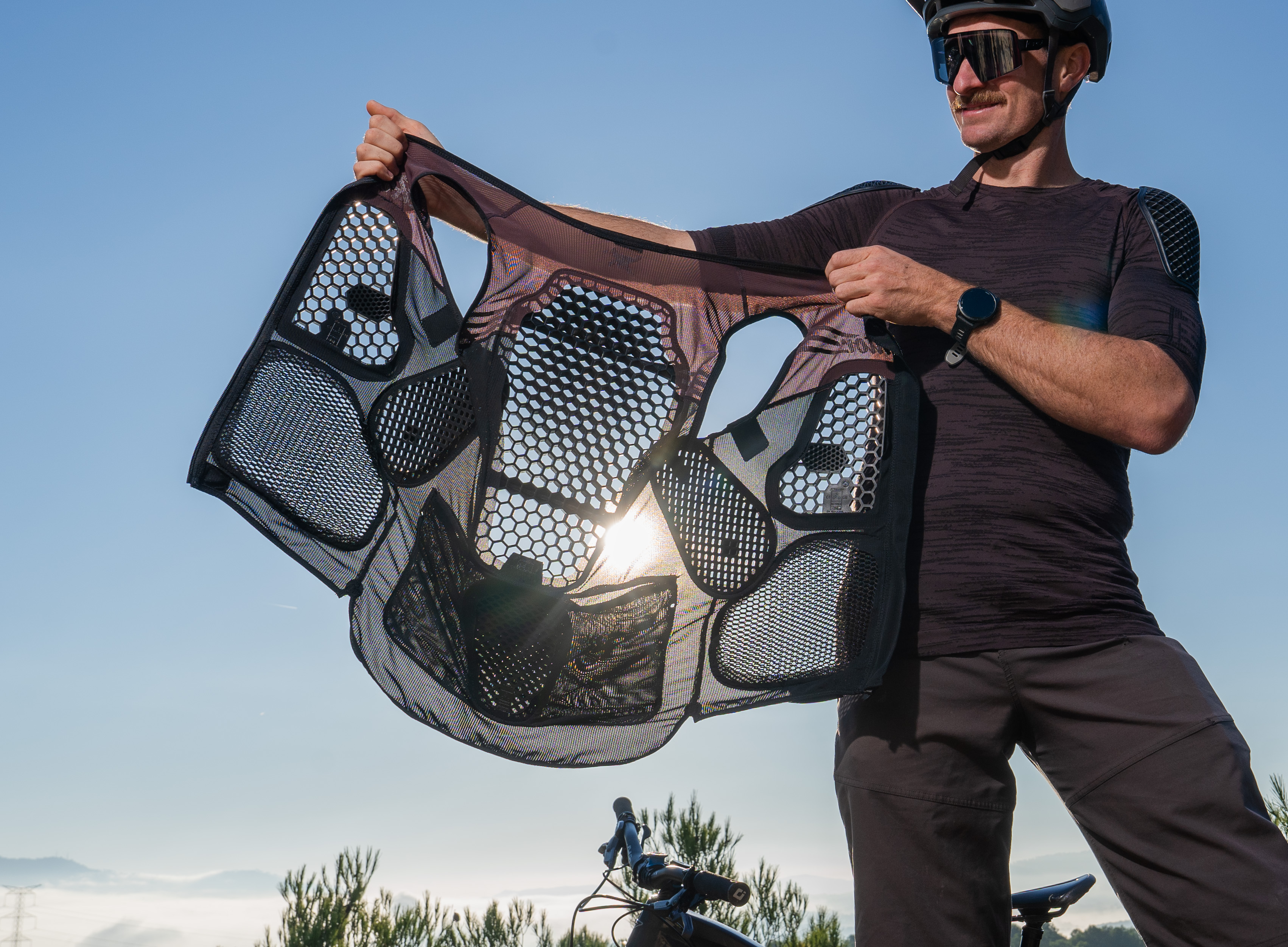
Upon first inspection of the body armor, which is in the format of a zippered vest, it was clear that more reason had gone into the product design than the product name, Rockintor AirVora OrganProt3ct Armor. I thought we were beyond using numbers as letters, but hey, it doesn’t affect the product quality. You can clearly see that the armor includes CE Level 2 certified impact protection pads in critical areas such as the upper and lower back, chest, and ribs. In fact, the protection covers the entire spine as well as within the lower back pockets. Plus, the lower abdomen has a resistant mesh that is robust enough to help prevent punctures from sharp sticks and rocks. I appreciate that: at 13 years old, my BMX handlebar tore 10” of my stomach wall.
The zipper feels smooth and upon putting it on, it’s clear that the vest is in a different ballpark in terms of ease-of-use. Light, form-fitting, and easy to take on and off. No weird wriggling motions are required to put it on and off like with other form-fitting body armors. The vest has a claimed weight of 940g, and my non-scientific scale weighed my vest closer to 800g.
Thankfully, I was able to select a dark burgundy color, which is a bit more subtle than other brighter prototypes I have seen. I would like to see even more natural color options available since it is body armor after all – style is not its strength. You can see through the aeration holes in the protective areas which can add or detract from its looks, depending on your taste. I actually dig the style since you can just open it up after a lap and combine it with your baggier graphic t-shirt of choice if that’s your thing. I went with a size medium/large, being 6′ tall and 180lbs, which is true to the size chart. It is form-fitting, so you may want to size up if you like a bit more room.
There is a rear zipper pocket with two compartments, one large and one small, that allow you to stash a snack or even an extra layer. It is elastic and quite spacious, with 2L of volume. I bet even the bulkiest rain jackets would fit and still have room for an energy bar or a stroop waffle.
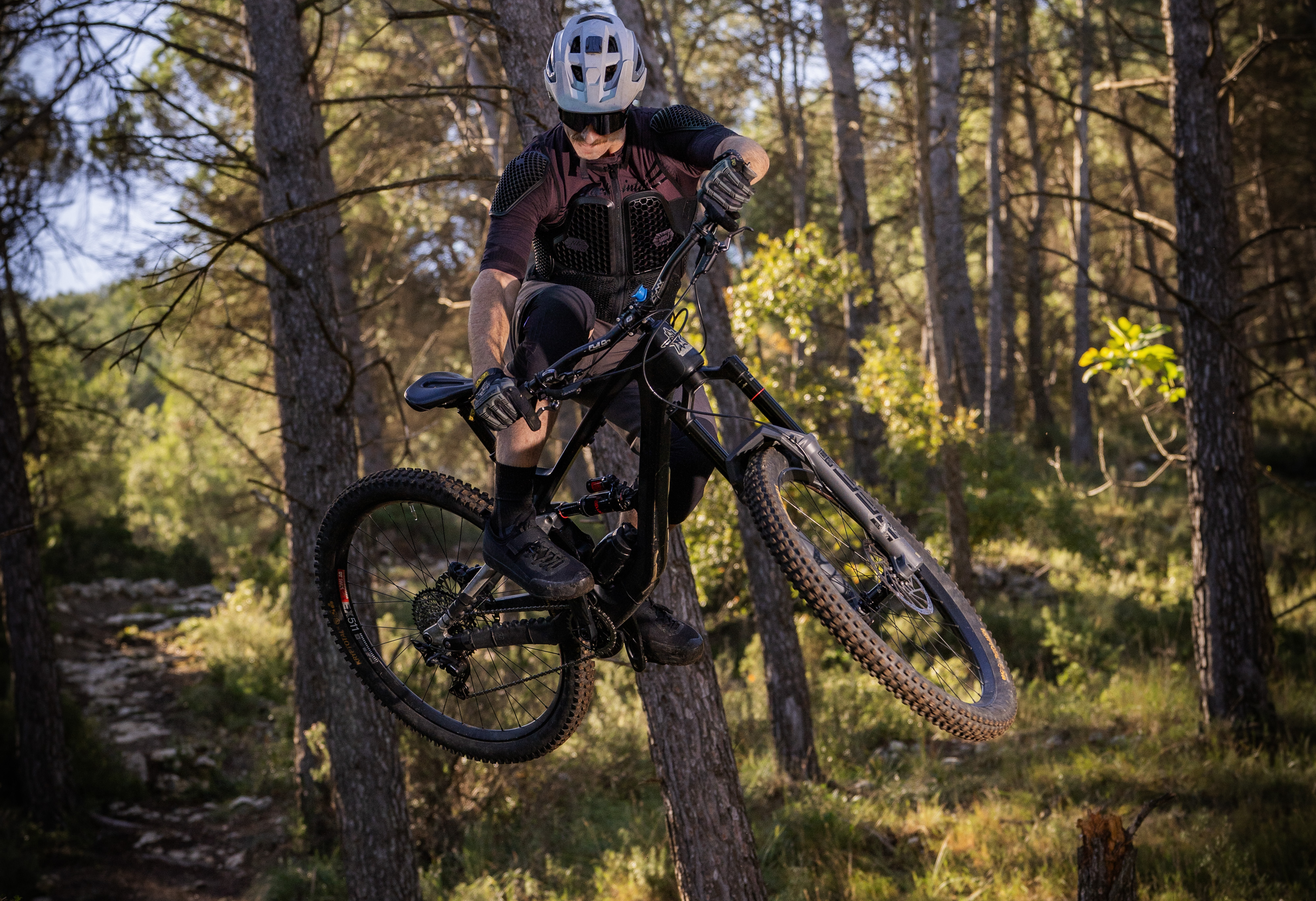
I did have a few brush ins, no pun intended, with trees and the ground on the notoriously tight Spanish singletrack around where I live, while wearing the vest. I didn’t have anything really scary happen like a high-speed crash, but I can say the armor did its job with no signs of wear and tear. The Rockintor body armor padded areas meet CE Level 2 — EN 1621-1/2/3 standards. I trust this means that at least the protective elements are built to take a beating.
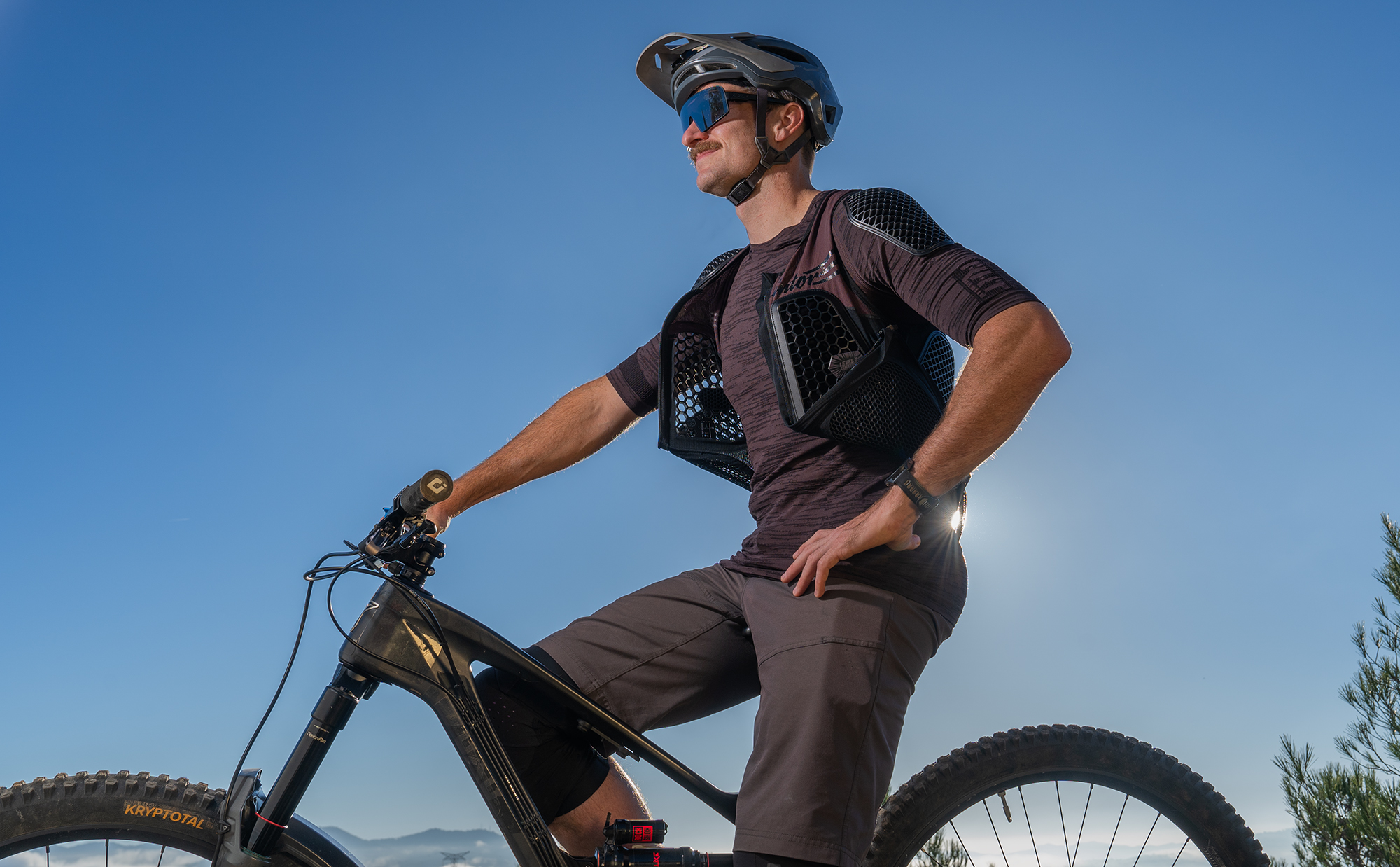
The elephant in the room for all types of protection is how it performs when pedaling uphill in warm weather. After all, it doesn’t really matter how protective a layer is if you never use it. When the Rockintor is unzipped, you can fold back the front flaps and attach them via velcro to just under the armpit. This is a simple, but effective, method to ensure airflow, completely opening the front of the vest. Of course, this does significantly reduce the actual protection provided, but pedaling uphill on forest service roads is a low enough risk for me. To be fair, the vest is very light anyway and is quite airy, thanks to the numerous ventilation holes in the protective elements and the ultralight connecting fabric. For technical singletrack climbs, I would just leave it zipped up. I never felt my range of motion restricted in any way. This is the best body armor I have used for pedaling, hands down.

I sweat a lot, always. While this product doesn’t miraculously stop that, at least it hasn’t started to smell yet and is much cooler than other armor I’ve tried. It may start to smell at some point, but so far, so good. Not even my partner has commented on it after leaving it in a warm car. The vest design maximizes aeration and minimizes fabric in smell-prone areas like under the armpits. For the sake of the review, I threw it in the washer with the cold setting and on the hand wash cycle a few times and it came out just fine. However, please follow the official product cleaning recommendations!
As we head into the fall months, I will be pairing this with the Rockintor three-quarter sleeve base layer that has shoulder pads. It seems like the perfect match for the cooling temps. By “cooling temps” I’m referring to anything less than Barcelona’s highs in the 90s, lows in the 80s, and high humidity for 2-3 months. Generally, I’m not a fan of shoulder pads since they seem to attract unwanted contact with trees and branches on the unmaintained trails in the area. This is true for any shoulder pads from any brand for me, though. At least, these are super low-profile and comfortable.
When it really gets chilly, the body armor fits well beneath baggier layers, like a wind breaker or waterproof shell. It’s hard to notice it’s even there, to be honest. Even after living in the Rocky Mountains of Colorado, I can’t imagine a time where a thin to medium thickness thermal under the vest and a shell on top wouldn’t cover 99% of the coldest winter days.
How does it compare?
The other body armor I’ve been using over the past several years are two variants of the Fox Baseframe D3O®, one a t-shirt with shoulder pads and one sleeveless. They are impossible to take off after sweating (no zipper) and I have broken the back protection insert during transport multiple times. I only used the Fox armor for enduro races, where it was required, and when getting shuttled or taking a lift uphill. While they are also form fitting, I wore them directly on my skin with no other base layer. They also lack true rib coverage and the chest protection is not level 2 certified. Let’s just say I won’t be returning to this style of protection any time soon.
I also frequently use a small backpack for riding. My 14L pack has an integrated back protector. While it is useful for hauling gear, it is much hotter than the Rockinter vest. Plus, the chest straps are more restrictive for breathing heavily unless you loosen them between climbing and descending.
The only downside to the Rockintor body armor I can see is if you are doing an all day epic or are riding with very limited water and need more than your frame can take. In today’s age of internal frame storage, water bottle options, and integrated tool storage solutions, the Rockintor body armor seems quite complimentary with no issue. However, if you like to keep your tools in a backpack or lack frame storage for both tools and water, the body armor is a bit more limiting than a pack with back protection for longer rides. However, there is a pre-order of a backpack-friendly version for those who can’t live without a pack.
The rear pocket has ample space for a layer and then some, but I hesitate to put larger or sharper tools there due to the risk of falling on them and causing more damage to myself, even though there is a full spine protection pad, extended into the pocket. The body armor tested is ideal for those who have frame storage for tools and water, which seems to be the majority these days.
Durability
In terms of long-term durability, we will have to see how the Rockintor body armor holds up. I have no issues so far after four months of testing in Spain, New England, and Madeira. I wouldn’t be surprised if the vest stretches a bit since the connective fabric is so ultralight, but it has proven to be incredibly robust so far. I’m legitimately surprised, having a knack for breaking things.
Share your Rockintor Protection Vest review
Bottom line
The Rockintor AirVora OrganProt3ct Armor is one of the only level 2 certified, form-fitting, zip-up protective vests on the market. It combines the ease of use of a baggy external bike park-style plastic armor protector with the sleekness of the more enduro-focused, slim-fitting options like the Fox Baseframe I mentioned above. Having level-2 certified pads with rib protection, the Rockintor checks all the boxes for me. The price is steep, but it is competitive with options from other brands. From rough euro enduro tracks to bike park laps, this vest will be my companion for the foreseeable future.
Stay tuned to https://rockintor.com. Product available late December 2025.



4 Comments
Dec 11, 2025
3 days ago
3 days ago
3 days ago