

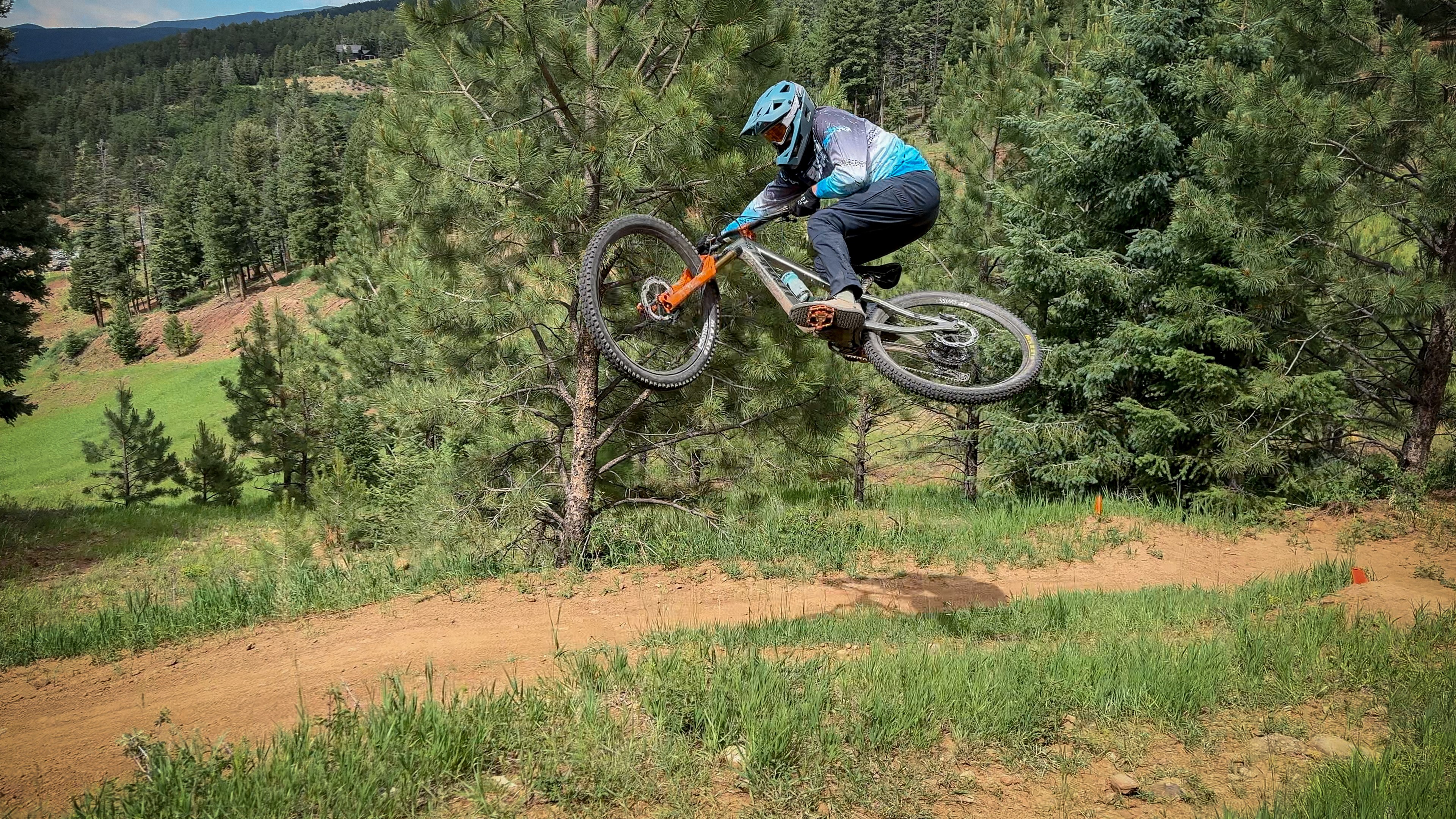
Though I’ve never experienced the “float” associated with clipless pedals, I do know what it’s like to frequently reposition my feet on flat pedals because my feet either get stuck in the wrong place or get knocked out of place by a root or rock.
Ken Belknap, the inventor and owner of 8 Degree Pedal, has exclusively used flat pedals for mountain biking like me, and has struggled with knee pain caused by a fixed foot position when riding. He knew clipless pedals would alleviate the issue, but he couldn’t stand the idea of being clipped into a bike. So, the idea of flat pedals with float was born.
After four years, five prototypes, an extensive amount of testing, and five different patents, the 8 Degree Pedal became a reality. Belknap gave Singletracks a pair of X8-2 and X8-3 pedals to test. So, do the pedals deliver on their promise of giving riders the best of both worlds when it comes to flats vs. clipless? Read on to find out.
8 Degree Pedal key specs
- X8-2
- Dimensions: 112mm (L) x 111mm (W)
- Weight: 554g per pair
- X8-3
- Dimensions: 100mm (L) x 100mm (W)
- Weight: 537g per pair
- Price: $215
- Buy from 8 Degree Pedals
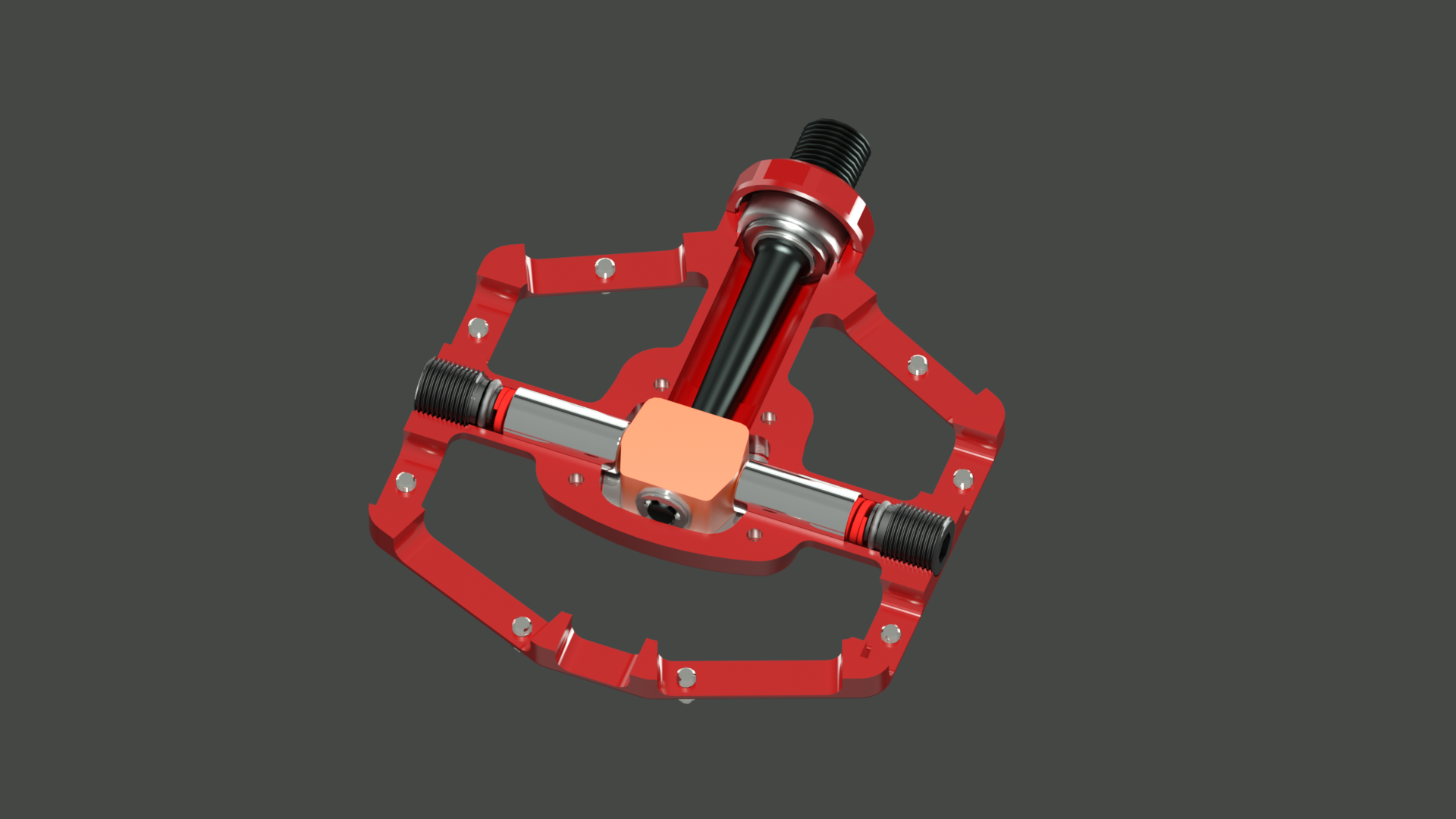
How 8 Degree puts float into their flat pedal
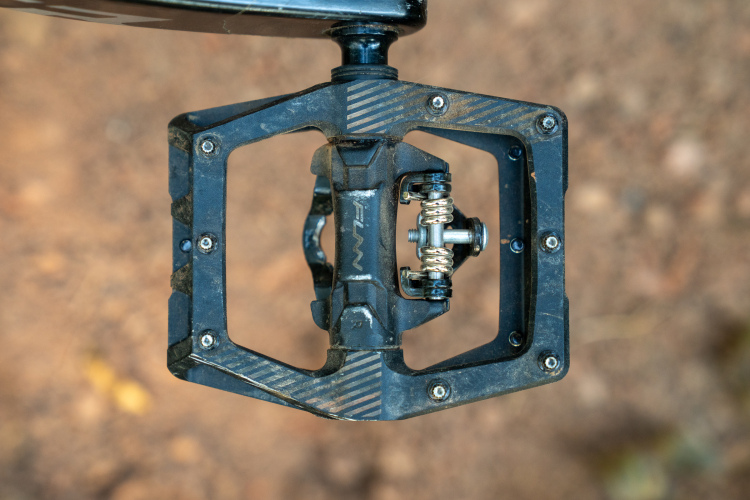
The 8 Degree pedals move fore and aft up to four degrees thanks to a combination of springs, a puck, and a spherical bearing. A Teflon-coated spherical bearing at the threaded axle end allows the pedal to pivot and “self-center.”
A Delrin puck inside the middle portion of the pedal slides between two 0.010” stainless steel plates. Springs provide resistance against the puck, functioning like a cam and lifter in an internal combustion engine.
Together, this system works as a resistive self-float compensating system. The company claims that the bearings and springs have shown little to no wear after a million cycles.
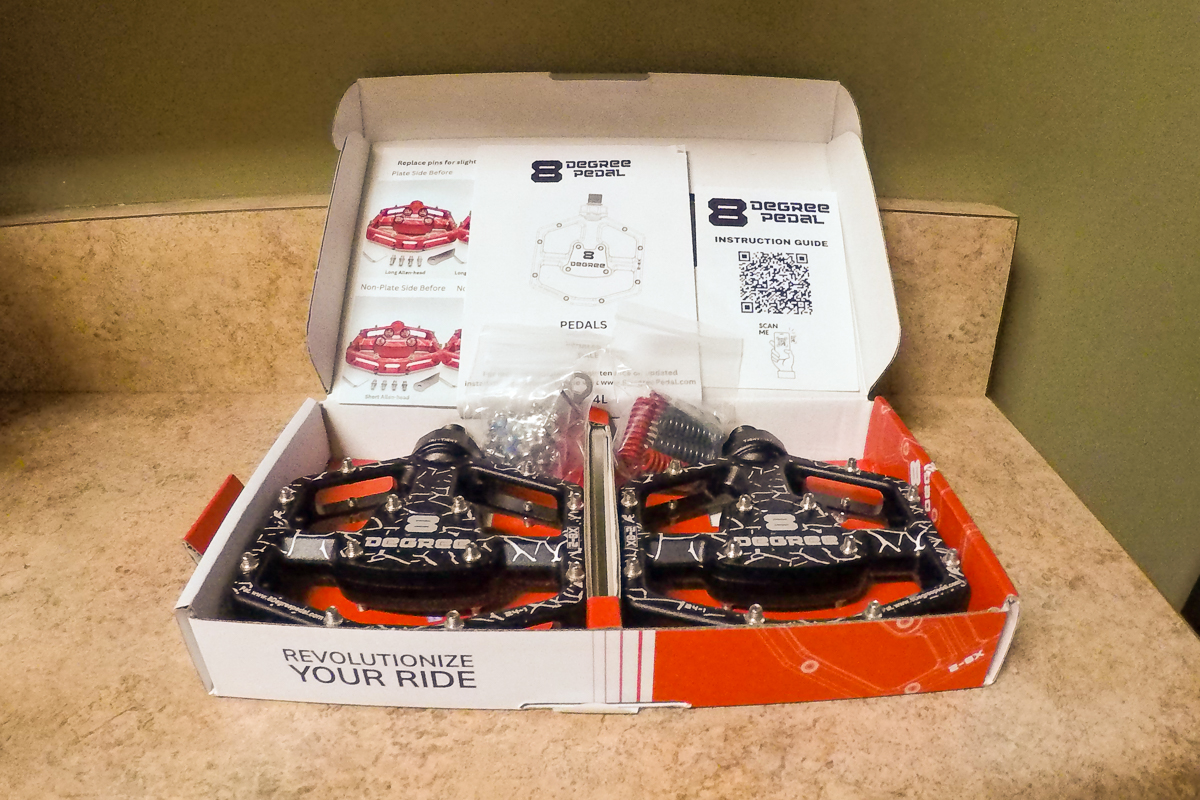
Unboxing and installation
8 Degree pedals ship with three different sets of springs. The pedals are fitted with 30lb springs (Blue) that 8 Degree says are the best all-around choice for most riders. In a separate package, there’s a set of 20lb springs (Red) that 8 Degree states are best for road riders, lighter cyclists, and stationary bikes, along with a set of 40lb springs (Green) that work best for larger riders or those who want firmer float resistance.
If riders still can’t find the perfect amount of float using the springs alone, 8 Degree also includes spacers to use with the springs. Each spacer provides an additional 15% increase in spring tension and riders can use up to two spacers per side.
Then there are the pins. The pedals have 8 Degree’s custom Super-Grip double-sided pins installed on them. Out of the box, the pins are installed with the 4.8mm high side facing up. Flip them over to increase the pin height to 6.3mm. Just be careful when you are tightening or loosening the pins because the metal is soft.
If riders feel those pins are too grippy, then 8 Degree includes smaller pins as well. Riders can replace the pins in the middle of the pedal with smaller ones to achieve a concave feel.
Lastly, 8 Degree includes a 6mm Allen key to loosen the endcaps when changing out the springs or installing the pedals on the crank, and a full set of instructions with pictures.
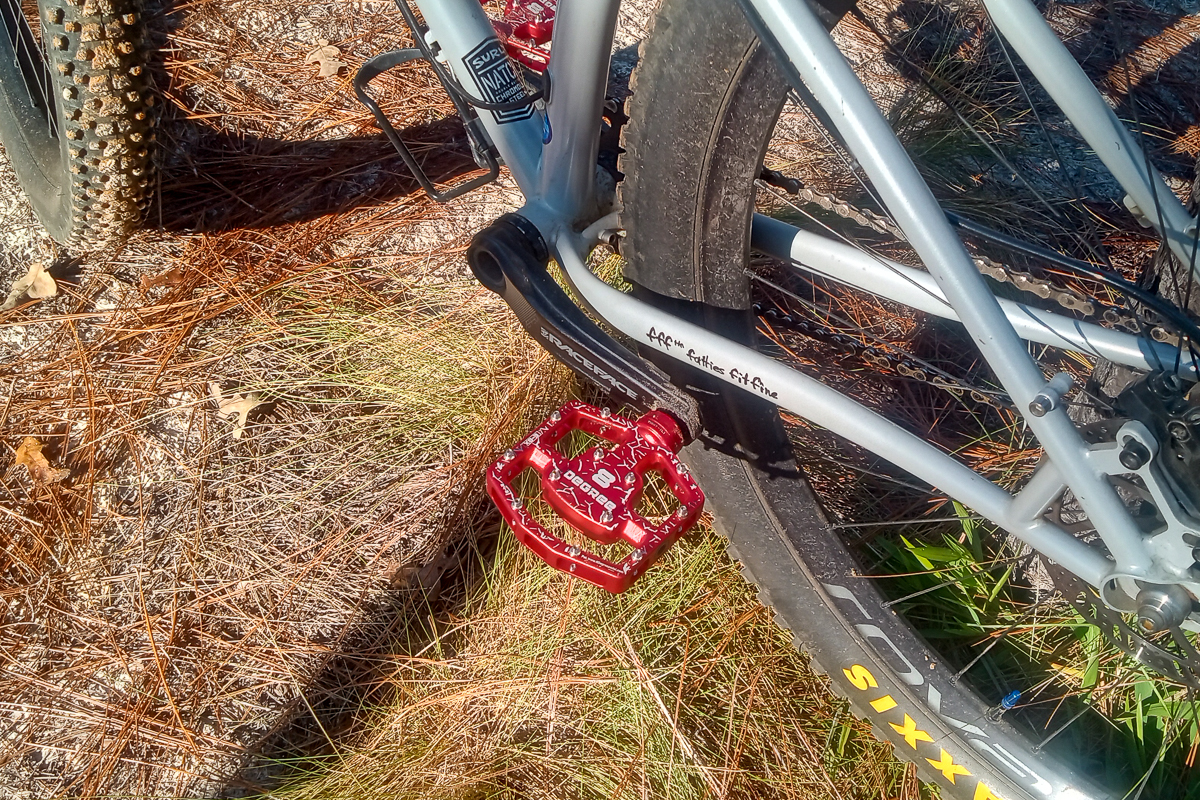
The pedals themselves are block-shaped with no tapering at the edges. 8 Degree says they are similar in shape to the RaceFace Atlas flat pedals, and I would agree. The body of the pedals are made from 6061-T6 aluminum and covered in graphics reminiscent of the 80s.
For the review, I put the X8-3 pedals on my fully rigid singlespeed bike, and the X8-2 pedals on my trail hardtail.
Set up
To dial in the pedals, I approached them the way I would dial in suspension or find the best air pressure for a set of tires. I rode a short loop on one of my local trails, testing all three spring sizes and different pin configurations on both sets of pedals.
The 20lb springs were too light for my taste. Using them felt like having a rear tire go flat. It was a squirmy, almost gyroscopic feeling. In contrast, the 40lb springs were too firm. My feet kept getting knocked off them like a regular flat pedal. I decided the 30lb springs had the perfect balance of firmness and float.
I began testing the pedals with the shorter side of the Super-Grip pins but later switched to the longer side. For me, the short side did not provide adequate grip in all conditions.
In terms of platform size, I didn’t notice a huge difference between the two pedals. However, I would suggest that riders whose feet are bigger than my size 8 shoe (Size 41 EU) go with the X8-2s. My shoes filled the platform of the X8-3 pedals with no room to spare.
On the trail
I spent nearly two months testing both sets of pedals on both my bikes using several of my local trails.
Three things about the pedals stood out to me from the very start of the test period. First and foremost, I rarely, if ever, had to reposition my feet on the pedals during my rides. The pedals seemed to offer another level of damping when riding rougher trails. My feet stayed firmly planted on them for most of my rides, only being jostled by hard hits.
Reviewer profile height: 170.2cm (5’7”) weight: 72.6kg (160lbs) testing zone: Southeast, USA
Second, my cornering markedly improved when I started using them. I found myself rolling through turns I’d normally brake for. The four degrees of rotation supplied by the pedals helped me open my hips more while still maintaining a good foot position on the pedals.
Third, I felt like I was putting more power down with each stroke than I’d done with any other pedals. I don’t have hard metrics to substantiate my feelings, but I matched my previous personal best on one of my local trails, set two years ago, using a lighter, full-suspension bike.
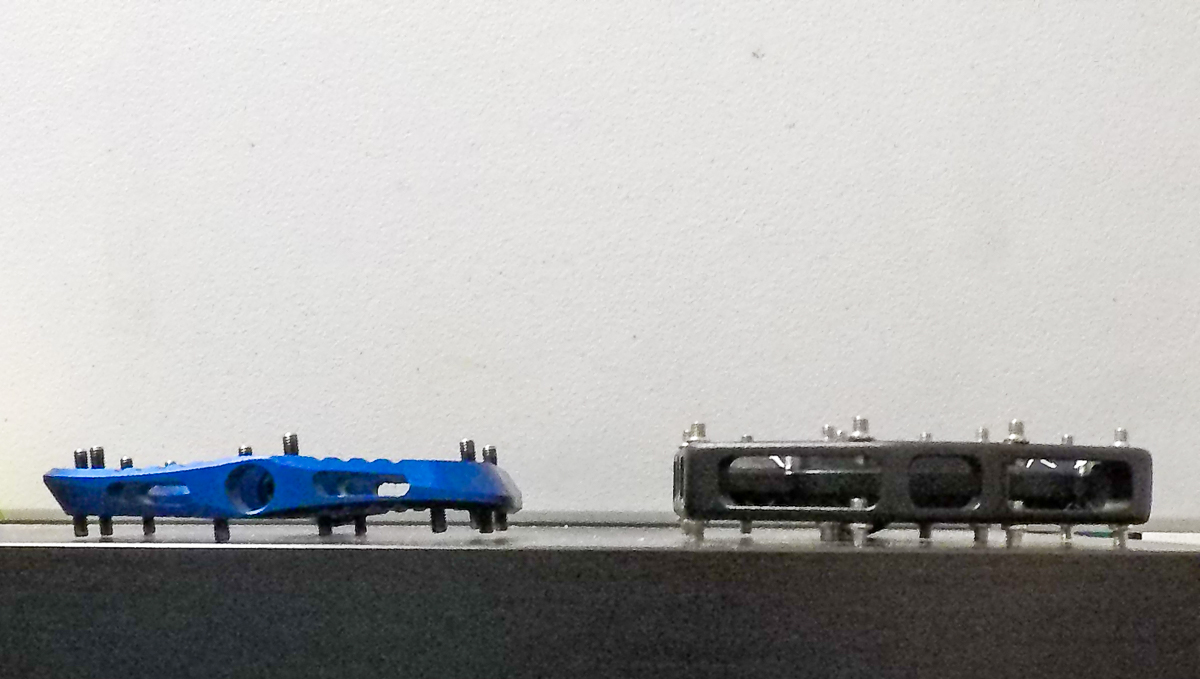
The pedals have many positives, but there are a few drawbacks
Despite all the positives noted above, the pedals are not perfect. Their thick block shape (7mm thicker at the edges than the OneUp Wave pedals I tested recently) increases the likelihood of pedal strikes. I never experienced one during the test period, but the bottom brackets on my bikes are slightly higher than most modern trail bikes, and I use 165mm cranks. 8 Degree is currently working on a parallelogram design to help remedy this issue.
Additionally, the pedals are substantially heavier than other aluminum flat pedals. The X8-2 pedals weigh nearly 200g more than a pair of OneUp Wave pedals. If saving weight is an important factor, then these are not the pedals for you.
Share your 8 Degree Pedal review
Finally, there is the cost of the pedals. With an MSRP north of $200, there are plenty of other aluminum flat pedals that cost less money. However, none of them will provide the movement of the 8 Degree pedals. For riders who are currently experiencing joint pain in their lower extremities when riding, 8 Degree pedals are worth every penny.
Pros and cons of 8 Degree Pedal
Pros
- No need to reposition feet throughout the ride
- Dramatic improvement in cornering
- More natural movement when pedaling that can help with knee and hip pain
Cons
- Expensive compared to other aluminum flat pedals
- Thick and boxy shape could lead to more pedal strikes
- Heavier than other aluminum flat pedals
Final thoughts
I didn’t believe there was more room for improvement when it came to flat pedals, but 8 Degree proved me wrong. Belknap put some serious thought into the design and mechanics of these pedals, and it shows.
After using them for the past two months, I don’t think I would ever go back to using a normal flat pedal again. Between the added damping, the way they comfortably hold my feet in place, and the way they help me open my hips to rail through corners, there’s no other flat pedal I’ve used that offers comparable benefits.
While the price of the pedals is steep compared to others, the benefits are worth it. The 8 Degree pedals have bridged the gap between flats and clipless, providing the best of both worlds to riders.



4 Comments
Dec 17, 2025
I rode these the last 2 weeks.
They are very interesting.
Because of a bad hip, my right leg and foot are twisted outside a bit, I usually have to move my foot on the pedal during rides, although I do that a lot intentionally to create pressure, adapt fro climbing and for jumping. These axles and platforms are wide enough my heel doesn't hit the chainstay and I really didn’t have to rotate my foot much at all. I think this reduces stress and strain on my hip overall, especially big pedal days. I've been doing a lot of climbing lately and working on hip drive for more standing power, and I felt like I didn’t have to anticipate a foot position change when I stand to climb.
The greater area of comfort I noticed was between feet-and-shoes; way less foot movement in the shoes, and way less strain and fatigue in my feet overall. I usually only get 1 season (or less) out of my flat shoes due to the wear on the soles. It’s pretty obvious I twist and push a lot through my feet when. you look at the bottom of my shoes. I think that the floating pedal will reduce the sole wear on any shoe.
But, I do notice it is harder to maintain rotational pressure. One (advanced) skill I use a lot is to torque (rotate) my feet on the pedals left or right to create a twisting moment to generate pressure. More completely I also rotate my head, shoulders, belly and knees, which creates a lot of traction and pressure in turns. When riding DH trails, I am a bit more "lazy" when I do this (because of the bigger diameter turns and berms) and I often just slowly rotate and maintain that position through the majority of the turn to create more moderate pressure, and align my body to the exit. On the 8-Deg pedals, this twisting input is somewhat cancelled out and requires more intentional application; I needed to think about it more to maintain it through longer turns. Now, I think I have a tendency to sharp and short a lot of turns (that’s my style), so the lack of this pressure on DH runs might actually make me smoother overall in some places, and force me to be more active and intentional in others. I also think it influenced my line choice throughout the day; I found myself picking (better?) entry lines and trying to look further through turns because I didn’t have my usual confidence to “force” myself through apex of turns. I did notice my line choices and setup into berms were slightly different. These techniques difference are not 'wrong' or 'bad' per se, and it is possible that the pedals forced me to rethink and revise some of my cornering techniques and timing. While I don’t want equipment compensating for lack of skills sensitivity (i should be able to use 30-50% rotational pressure if that’s appropriate), skilled riders might find it necessary to think critically about how they like to execute versus how better to execute. This is really the same as switching from flats to clips or back to flats in general. Different equipment offers different pros and cons and ideally each rider needs to compare and contrast and decide what to change for themselves. In the 8-Degree pedal, changing between medium, harder or softer springs might help make overall feel and performance more like regular flats, but I think soft would make some moves too slow and stiff might reduce the suspension benefits, so there is some exploration to do in order to decide what you want to achieve.
When I returned back to my regular One-Up flats I immediately notice the 8-Deg pedals were sucking up a lot of lateral rear wheel movement and chatter in rough sections of trail. Back on normal flats I could feel the rear end getting pushed around in my ankles and knees; this movement I just normally allow and manage through passive pressure control in my hips and legs. But the 8-Deg pedals did not transmit as much into my feet, and I think I allowed me to keep a more stable body position with higher (stronger) hips and legs , with less shock into my body. I felt like I was being pushed around less and the Strava times on those runs somewhat support that speed was high (or higher).
M.
Dec 17, 2025
Dec 17, 2025
Dec 27, 2025