

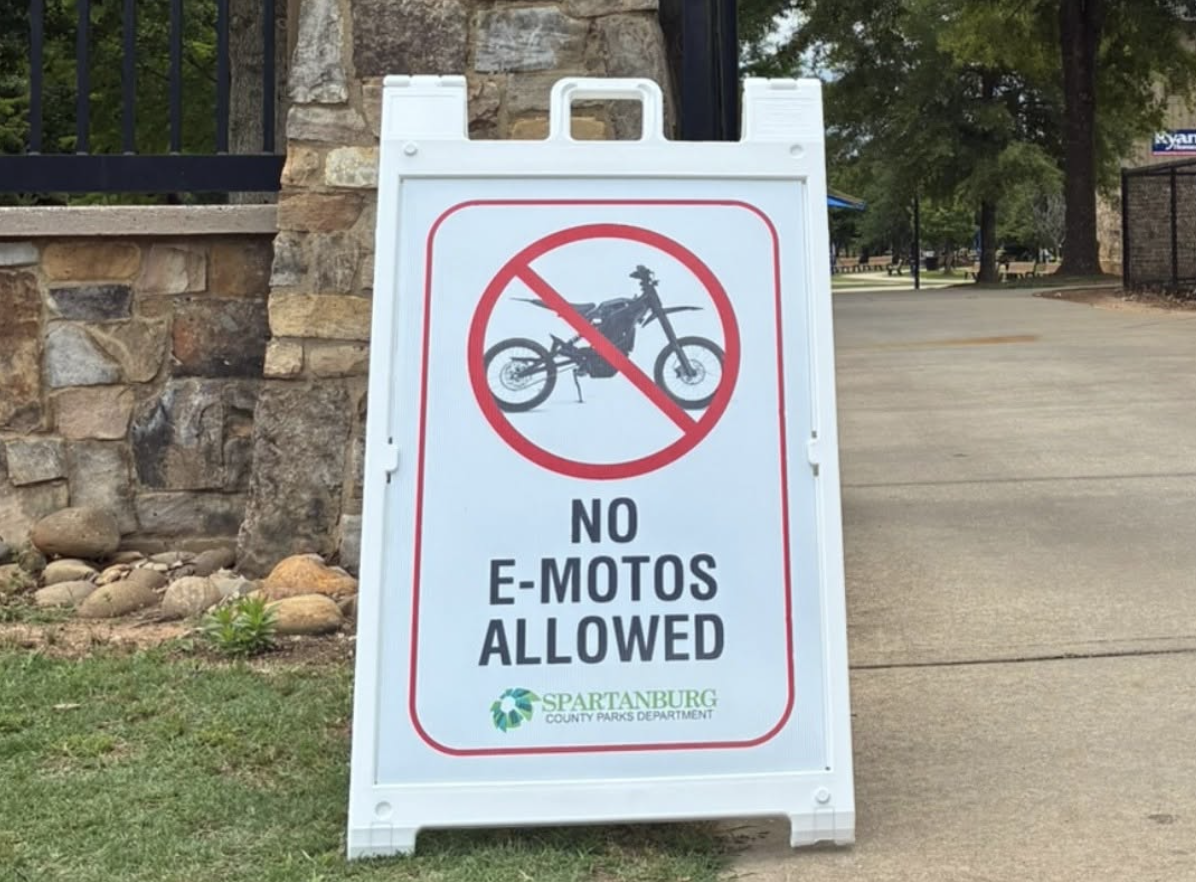
In the past few years, social media and local news outlets have been flooded with videos and images of apparent “e-bikes” on roads, streets, and in parks around the country. While we have seen municipalities take action at the local level, in 2026, we are now seeing state laws passed to address the issue.
New Jersey
New Jersey was among the first states to take action against “e-bikes” at a state level, which Singletracks covered at the beginning of the year. New Jersey Governor Phil Murphy signed the bill into law on January 19, 2026, imposing stricter restrictions on e-bike users.
First, the bill requires that essentially any bike with an electric motor be registered and that riders have a license. The law also requires those riders to carry their license and registration while riding, similar to driving a car.
There is also an age requirement. For New Jersey residents age 17 or older, a standard driver’s license will do. Riders aged 15 and 16 will need a special permit, which requires passing both a written and riding test.
Those under 15 who want to ride an e-bike are out of luck. According to the law, this applies to the class 1 eMTB that might be allowed at your local trailhead.
The New Jersey law also recreates the e-bike categories, blurring the lines between e-bikes and e-motos. For most of the country, the standard e-bike classification system is generally followed. A class 1 e-bike has a motor that only engages while pedaling and cannot assist at speeds over 20mph. A class 3 e-bike also only engages when pedaling but can provide assistance up to 28mph. In the middle is class 2, which provides either pedal or throttle assistance, but the assistance stops at 20mph.
All three of these categories stipulate the motor cannot exceed a 750W power limit.
New Jersey’s new law establishes its own categories, reworking the classifications. Under the New Jersey categories, (1) class 1 essentially remains the same, (2) classes 2 and 3 are essentially lumped together, and (3) a third category is established for “any two-wheeled vehicle with fully operable pedals and an electric motor capable of greater than 750 watts that is capable of reaching a speed greater than 28 miles per hour.”

E-bikes or e-motos?
The New Jersey law received criticism from People for Bikes. The advocacy group claimed that the law is heavy-handed and does a poor job of distinguishing between an “e-bike,” which shouldn’t exceed 750W, and those that do. They argue that even with “fully operable pedals,” a better distinction should be made between e-bikes and e-motos.
Sadly, it was two teenagers’ deaths that caused New Jersey to move forward with the law. However, while much of the reporting and language around the law use the term “e-bikes,” People for Bikes points out that it is really e-motos, like Surrons, that are involved in many of these accidents.
We found this to be the case in an article Singletracks released last fall. Among the trail organizations, law enforcement, and local municipalities we spoke to, both on and off the record, a common theme kept coming up. The traditional class 1 e-bikes and eMTBs that many of us are familiar with aren’t the issue. Again and again, the problem seems to stem from teenagers riding much higher-powered e-motos, many of them capable of providing 3,000W of power or more.
Many of these bikes barely have “operable” pedals, with some omitting them altogether. Yet they are called “e-bikes,” with organizations like People for Bikes claiming it is intentional to boost sales. Simply put, a mom is much more likely to buy their 14-year-old an “e-bike” rather than an “electric motorcycle.”
California’s proposed law
California is also taking action at the state level, albeit on a very different course than New Jersey. A new bill, SB 1167, proposed by California Sen. Catherine Blakespear, is currently before the state legislature, awaiting the governor’s signature.
In the proposed law, California will not recreate and lump together every bicycle with an electric motor. Rather, the state will continue to adhere to the established class 1, 2, and 3 system, going after manufacturers instead.
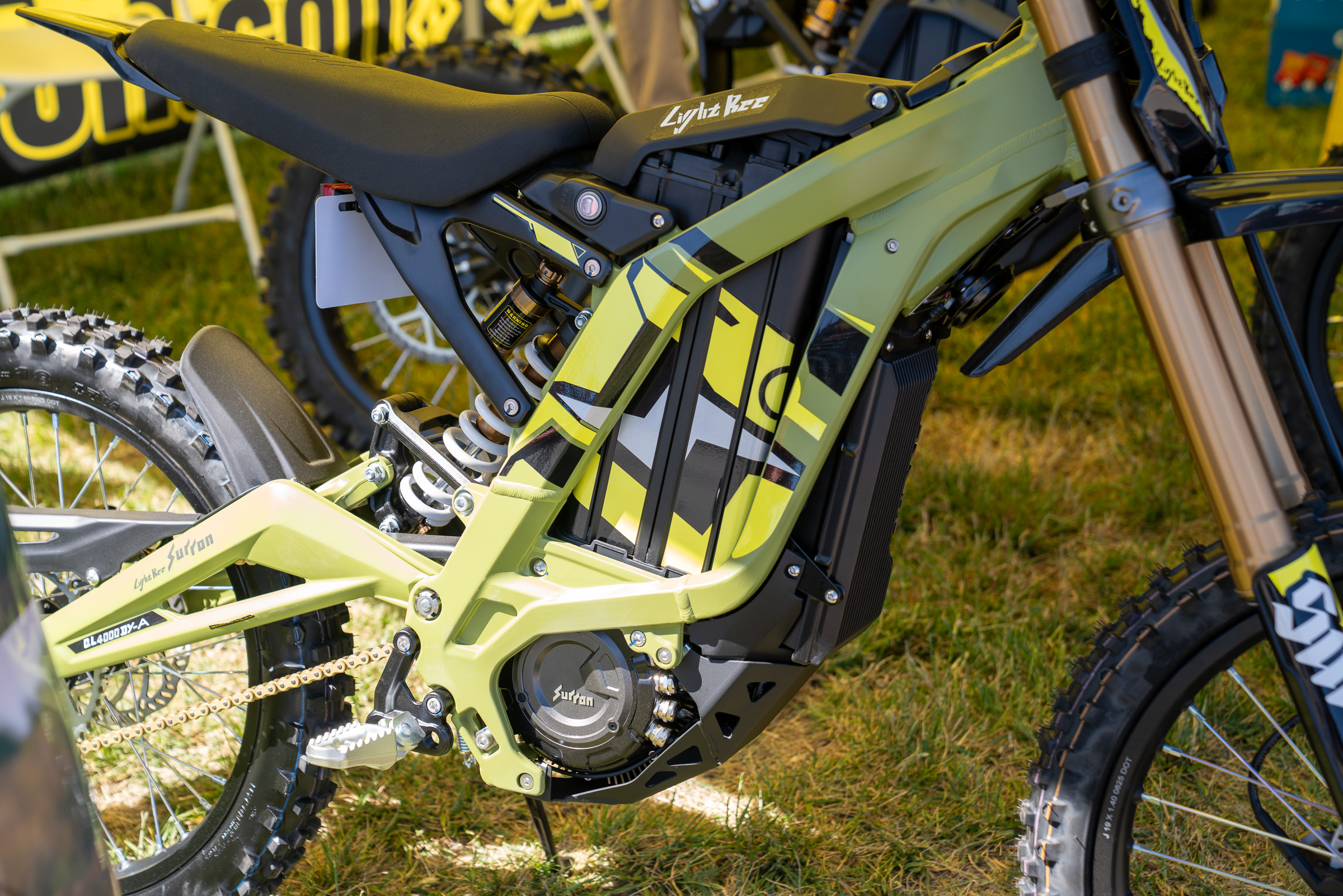
In a press release for the bill, Sen. Blakespear explained that “faster and more powerful electric motorcycles are being marketed as e-bikes, which is dangerous to children and adults. SB 1167 makes clear to consumers whether they are buying an e-bike, which has defined limits for power and speed, or something else.”
SB 1167 addresses the exact issue that People for Bikes raised regarding the New Jersey law. If passed, the bill will make it illegal in California for bike manufacturers to use terms like “e-bike” or “electric bicycle” on products that exceed the established 750W power limit.
However, as Singletracks previously reported, initial drafts of the California law included the words “continuous rated mechanical power” in reference to the 750W limit. However, the final bill, which has not yet been signed into law, removed those words, defining an electric bicycle as a bike with a “motor that does not exceed 750 watts of power,” which is essentially the same as the federal law. Even though the California law is ambiguous, some have interpreted the change in the final bill’s language from “continuous” power to simply power as an indication that the law is meant to refer to peak or maximum power. But that’s just one interpretation, leaving any limits unclear.
The law will apply to both online and brick-and-mortar retailers. Those wanting to purchase an “e-moto” can still do so, but without the “e-bike” label and with the understanding that the state of California essentially considers them a motorcycle. If ridden on the streets, the rider will need a license, registration, and insurance.
Washington’s new e-bike law
On June 11, 2026, Washington also took action at the state level. Similar to the proposed California bill, Washington’s SB 6110 makes a distinction between what is an “e-bike” and what isn’t.
Again, state lawmakers are looking at power output numbers for help. SB 6110 keeps the current e-bike classification system, making it clear that an e-bike cannot exceed the 750W standard.
The bill also makes it clear that an e-bike cannot exceed 20mph. This would exclude class 3 e-bikes, as their pedal-assisted speed reaches 28mph. However, the bill allows for the speed, noting that the higher speed isn’t achieved “on solely its electric motor.” The lack of a throttle distinguishes it as an e-bike.
Similarly, class 2, which does have a throttle, also remains classified as an e-bike because it doesn’t exceed 20mph.
Products that exceed the power output and speeds are classified as “electric motorcycles,” and will need proper licensing, registration, and insurance. If riders cannot obtain those items, they violate the law and may face penalties, including citations or impoundment of their e-moto.
The e-bike power race
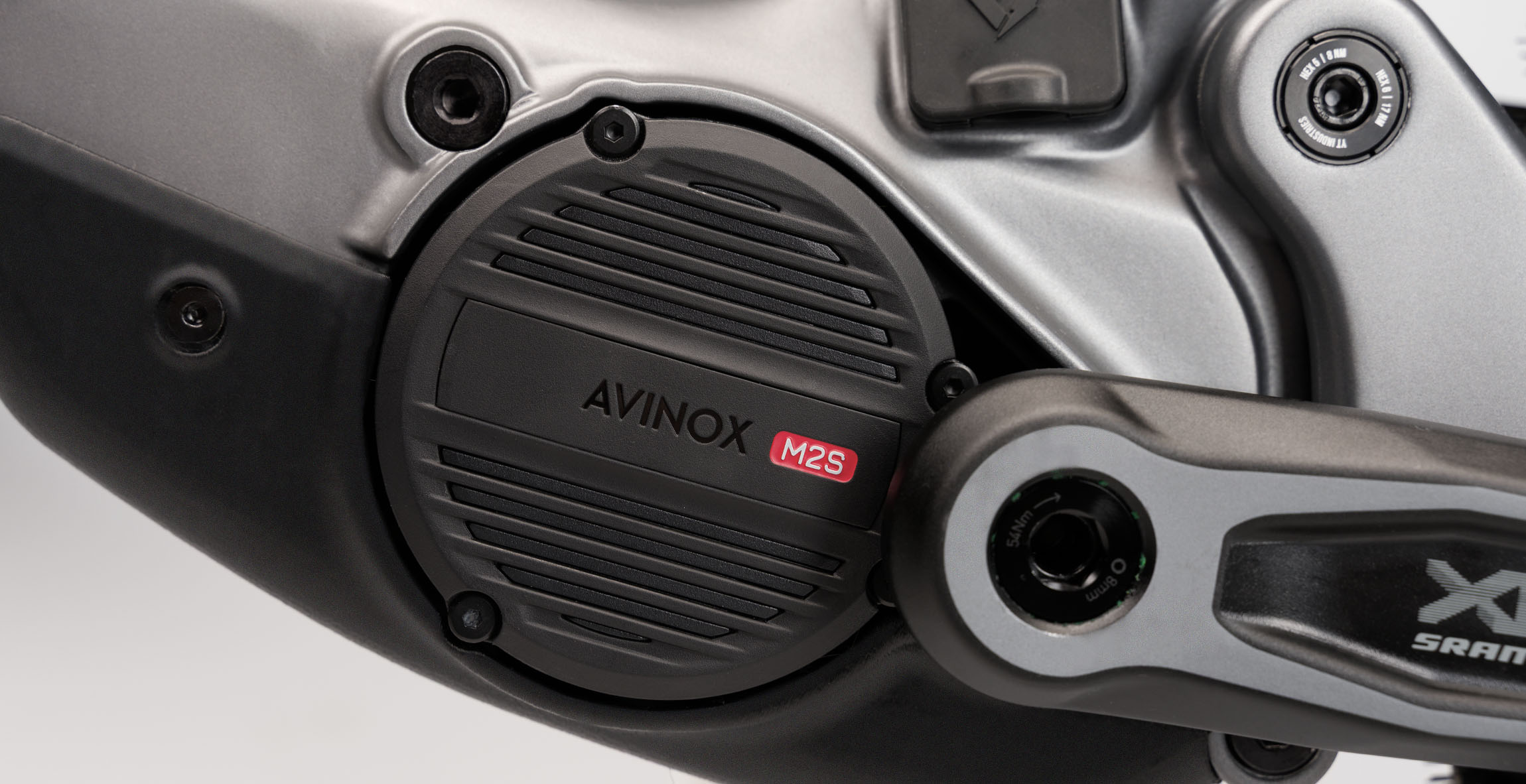
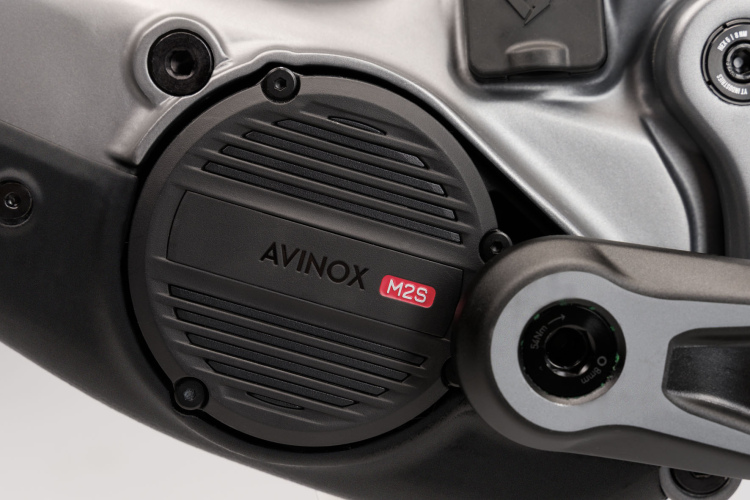
This would be a much more cut-and-dry conversation if e-bike manufacturers weren’t jockeying for the most powerful drive units. Just look at all the new e-bikes released this year speccing Avinox’s new M2S motor.
The problem? The M2S can output twice the power specified by the three-class system. And, of course, other brands are upping their power numbers to stay competitive.
Aventon’s new Ultro X drive unit boasts 850W of power in boost mode. Similarly, Specialized increased its drive unit power output, with the new 3.1 S-Works motors now rated at 850W. The non-S-Works bikes boast 810W.
So, how does a brand like Specialized deal with the potential of California’s SB 1167 passing? If passed, the California bike brand may no longer be able to call a Turbo Levo an “e-bike.” We reached out to Specialized and others with that very question, but haven’t heard back as of publishing.
Avinox allows customization of factors such as power output and torque, making it easy to fit their bikes into the class 1 category. Likely, we’ll see brands with drive units exceeding the 750W limit, tuning them down for future branding and sales. But that may not work in Washington, where SB 6110 also makes it clear what an e-bike is not:
“Any vehicle that is designed, manufactured, or intended by the manufacturer or seller to be easily configured in order not to meet the requirements of an electric-assisted bicycle, whether by a mechanical switch or button, by changing a setting in software controlling the drive system, by use of an online application, or through other means intended by the manufacturer or seller.”
So, that Avinox display screen that so easily allows riders to control power output might just push them out of the e-bike classification.
The news stinks. Why not follow Singletracks on Google News to bring more joy to your day?

21 Comments
Jun 27, 2026
Jul 4, 2026
Jul 2, 2026
Jul 2, 2026
Jul 2, 2026
Jul 2, 2026
Jul 3, 2026
Jul 2, 2026
Jul 8, 2026
Jul 9, 2026
This hole nonsense with manufacturers selling them as a bike is a loophole and will eventually need to come to some kind of end , They did this to themselves .Playing dumb is not going to go well for them. It’s why certain states are having to deal it sooner than others . If you think that they are not going to be subject to rules and regulations you’re naïve .So get ready the regulations are coming it’s inevitable . Deal with it !!!
Jun 28, 2026
I think we can all agree those state governments are poopy.
Note I specified the governments. I feel for the people behind enemy lines.
Jul 2, 2026
Jun 28, 2026
Jun 28, 2026
It all comes back to voting bad, complaining, then voting the same way again and expecting something different.
I feel for you guys behind enemy lines.
Jun 26, 2026
Jun 26, 2026
The potential for a bike to become a class 3 bike should not restrict its use as long as it is being used as a class 2 bike.
Jun 27, 2026
Jun 27, 2026
Jun 26, 2026
Jul 4, 2026
Jun 27, 2026