

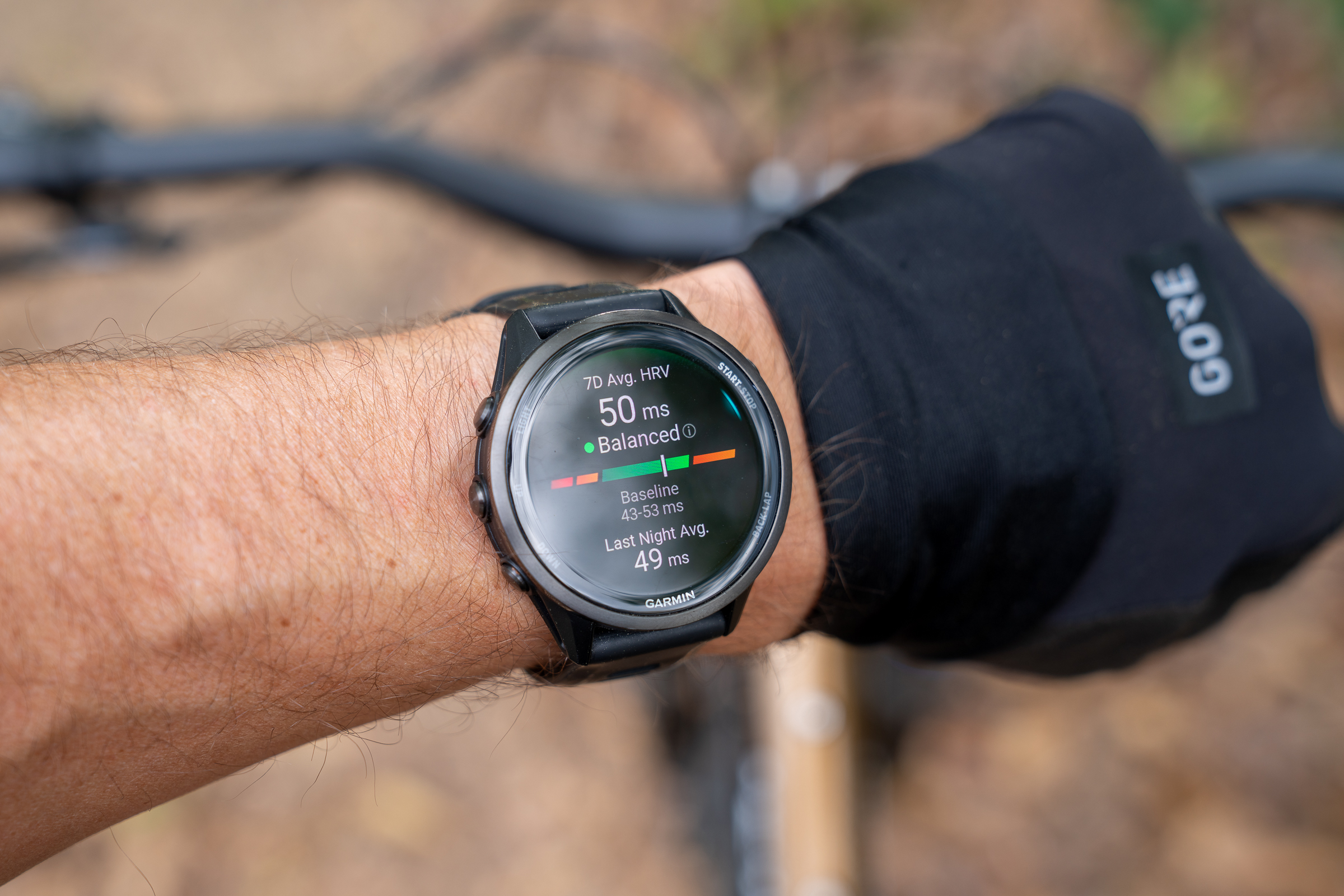
As we continue to get smaller computers we can wear on our wrists and around our chest, tracking data can become an obsession. Many of us now finish a ride with a sheet of data readouts: heart rate, power output, average speed, cadence, and more. And, as technology improves and becomes less expensive, there are inevitably more things we can track and measure, including some that required a visit to a lab 20 years ago.
Heart rate variability, or HRV, is one of the data points that’s becoming more common, but how does tracking or “improving” HRV impact our riding?
What is Heart Rate Variability?
“If your heart rate is 60 beats per minute, that doesn’t mean that each beat is exactly on the second like a metronome,” Sara Bresnick told us. “[HRV] is the time difference [between beats], the variability.”
Bresnick is a former physical therapist and professional XC racer based in Vermont. After professional racing and physical therapy, Bresnick built a successful coaching and bike fitting business.
The variability between heartbeats, as it pertains to HRV, is incredibly small, most often measured in milliseconds. Everyone’s HRV is unique and, well, varies, especially by age and gender, with younger people and men generally having higher variability.
Unlike many of the other data point figures that we may look at, HRV actually isn’t measured on a ride.
Rather, HRV is measured at rest. Bresnick shared that there are two common ways to measure HRV: during sleep and after you first wake up. And, by “first wake up,” we’re talking about while you’re still in bed. Fortunately, we now have many different devices that will monitor HRV, including the Apple Watch, many Garmin wearables, and the Whoop band. Before these devices existed, HRV likely would have been measured at a medical office with an electrocardiogram.
Why HRV is a useful metric
The quick answer is that knowing our HRV should tell us when we are good to train hard and when we need to rest. High variability, and you’re ready to go. Low variability, and it is time to rest.
Basically, the greater the variability, the better. This is where we start to get a bit science-y, so hopefully you can remember your sophomore year biology class.
HRV is connected to our nervous system, which has two distinct parts. There is our somatic nervous system, which includes muscles and bones and other things that you voluntarily control. Then there is the autonomic nervous system.
“We don’t control that,” Bresnick said. “It’s glands. It’s heart vessels and digestion and the stuff that just happens behind the scenes that we don’t even think about. HRV plays off the autonomic nervous system.”
Within the autonomic nervous system, two branches are constantly balancing each other: the sympathetic and the parasympathetic. The sympathetic prepares you for action or danger; it is fight-or-flight. The parasympathetic promotes recovery and stress release. It is slowing our heart rate and lowering blood pressure.
This is where HRV is affected: if the parasympathetic system is working well, our HRV will be higher.
“So when you’re at rest, your body is chilled, you’re not stressed, that parasympathetic nervous system is maintaining balance, like homeostasis within your body,” Bresnick said. “You’re going to have higher heart rate variability because your system is rested, chilled, and able to move that heart rate around more.”
A lower HRV is a good indicator of being stressed or overworked. It usually means that it is time to rest.
Tracking HRV (and accompanying issues)
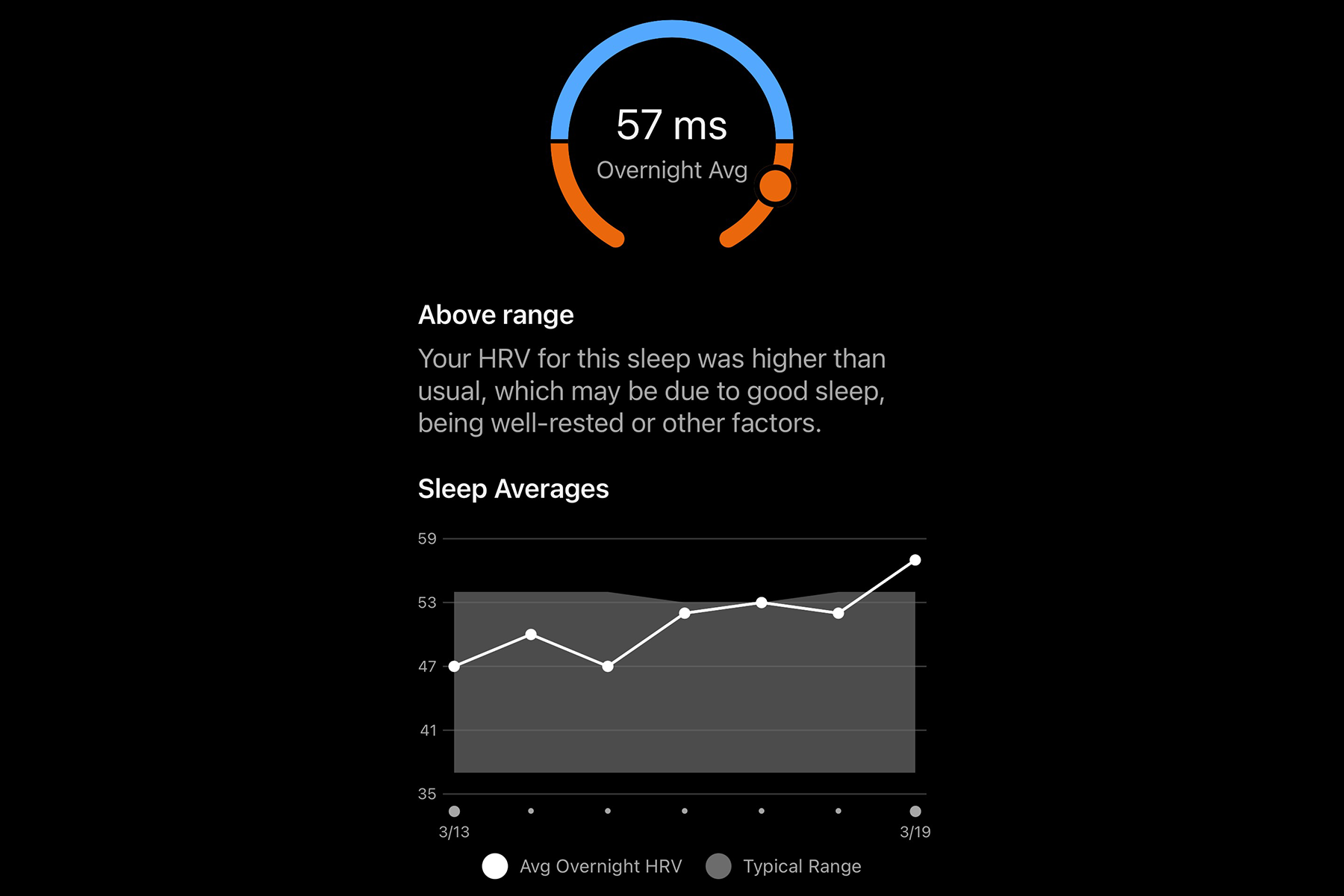
But what does it mean if HRV is much higher than a person’s baseline? This was a notification that Singletracks’ Editor-in-Chief, Jeff Barber, received on his device recently. So, we asked Bresnick, who wasn’t surprised. According to her, it is likely due to insufficient or inconsistent data.
Tracking HRV can be tricky. First, it must be tracked over a pretty long period of time–at least a few weeks, but for quality results, tracking takes a few months. And this is just to get a baseline understanding of how much your heart rate varies.
But the big thing is consistency. HRV needs to be measured each day at the same time and with the same device.
Then, there are the devices themselves. Each can be finicky, and each can have its own way of doing it. Simply adjusting a wristband too tight or too loose can throw off the readings.
What is a good number for HRV?
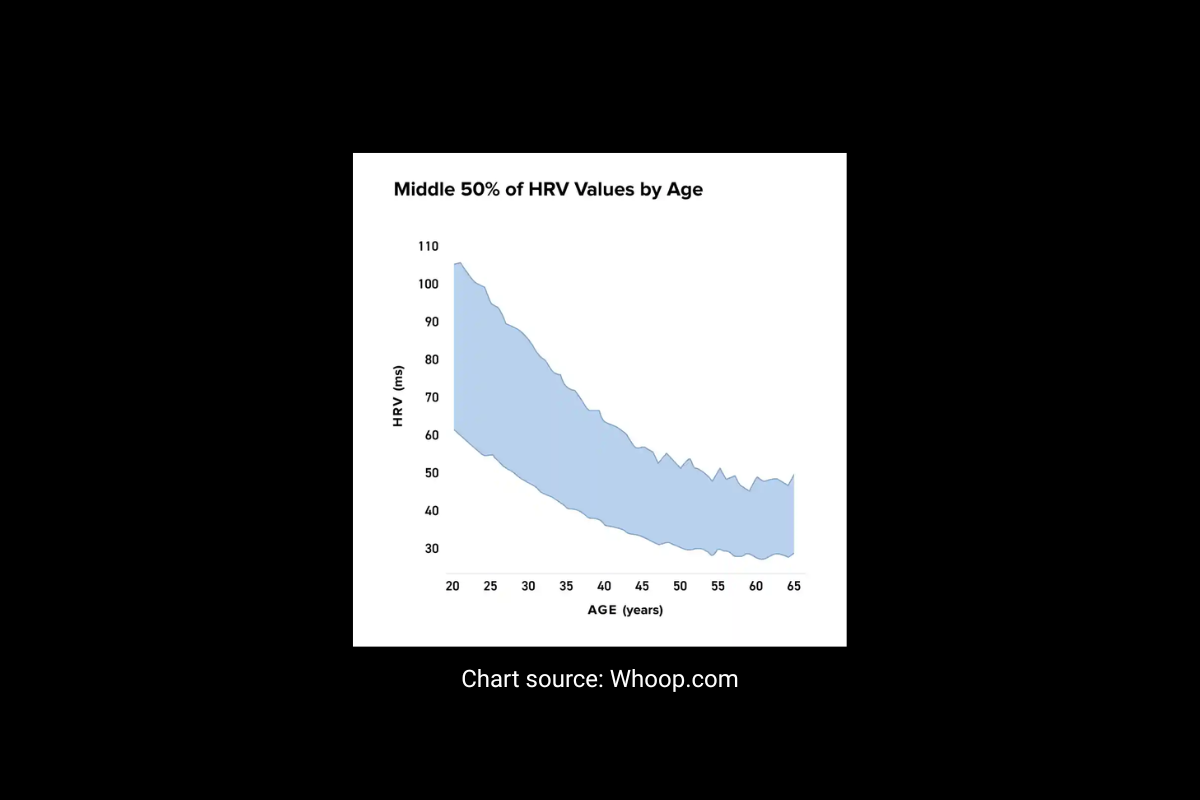
Though HRV is measured at a point in time, it’s the range over a long time period that’s important for an individual. Still, there are some general ranges and trends that can help put the number in perspective.
Quite a bit of the data on HRV ranges comes from the companies making devices to monitor HRV. According to a blog from WHOOP, the average reading for males is 65 (milliseconds) and 62 for females overall. Looking at age, the average for 25-year-olds is 78. Adding ten years drops the average down to 60, and another ten years drops the average further to 48. For a 55-year-old, their average HRV is 44.
Now, these numbers represent data collected from WHOOP users. WHOOP says “people using WHOOP tend to be athletes and/or health-conscious individuals looking to perform better at whatever they do.”
Improving your HRV
HRV is a data point. If tracked and measured correctly, Bresnick points out that low HRV can be a good indicator of needing rest. However, there isn’t strong data connecting HRV levels to performance.
“Something interesting is that before competitions, HRV tends to drop, and likely because people are stressed,” she added, “but there’s no correlation to poor performance with that drop.”
Unlike other data points we might measure, HRV isn’t something that can be improved on the bike. While it is a good indicator that we are overworked, simply resting may not increase variability levels. Too many other factors play a part, with stress being a significant indicator — and this includes things like work stress, relationship stress, and life stress.
Unless your stress comes from not riding enough, you might have better chances of increasing your HRV by seeing a therapist once a week rather than riding more.
But Bresnick does think HRV tracking can be helpful, especially when the data shows that variability is on the lower side. Along with more obvious indicators such as fatigue, HRV data (low numbers) likely serve as additional evidence of when rest is needed.
She also noted that low HRV (compared to your normal baseline) is a good indicator that you may be getting sick. Both Training Peaks and Garmin agree.
Putting HRV in perspective
Fancy marketing and consumerism likely play some role in all of this. Gadgets and wearables seem to have found a corner in the cycling industry, and while they can be beneficial, they aren’t necessary.
This is especially true when it comes to tracking HRV. Bresnick told us that she would never recommend a monitoring device to one of her clients. Rather than worrying about raising HRV, maybe we should focus on making sure our HRV isn’t low.
“It’s funny because I would say it backwards. Instead of trying to increase HRV, just make sure it’s not down,” Bresnick said. “Go to therapy, find ways to relieve stress, get good rest. Even if you don’t monitor HRV, make sure it isn’t down.”
And to do that, you don’t need the latest and greatest device.
Keep up with the latest mountain bike news by adding Singletracks as a preferred source on Google.






3 Comments
Apr 4, 2026
Apr 3, 2026
Apr 3, 2026