
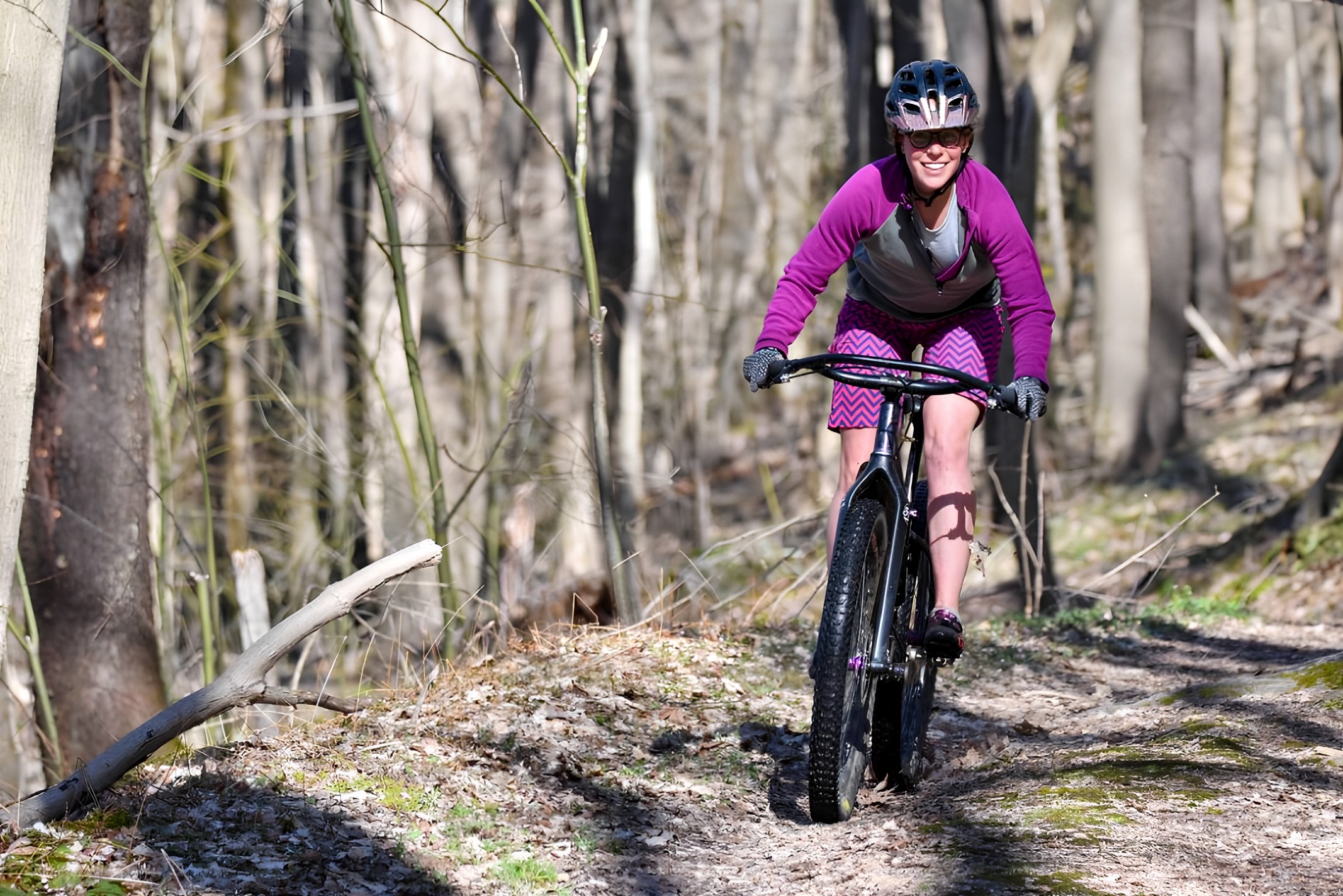
One of Pennsylvania’s largest state parks is preparing to build 37.5 miles of purpose-built mountain bike trails, according to a draft trail plan that was recently released. Ohiopyle State Park covers about 20,500 acres of land in southwest Pennsylvania, home to a section of the famous Great Allegheny Passage (GAP) bike path and providing the best whitewater paddling in the state. In addition, Ohiopyle already boasts at least 79 miles of existing trails, 25 of which are singletrack trails built by the Ohiopyle Biking Club.
The proposed trail expansion will dramatically increase the bike-specific offerings in the park, adding new machine-built trails that don’t currently exist.
The legacy of the Ohiopyle Biking Club
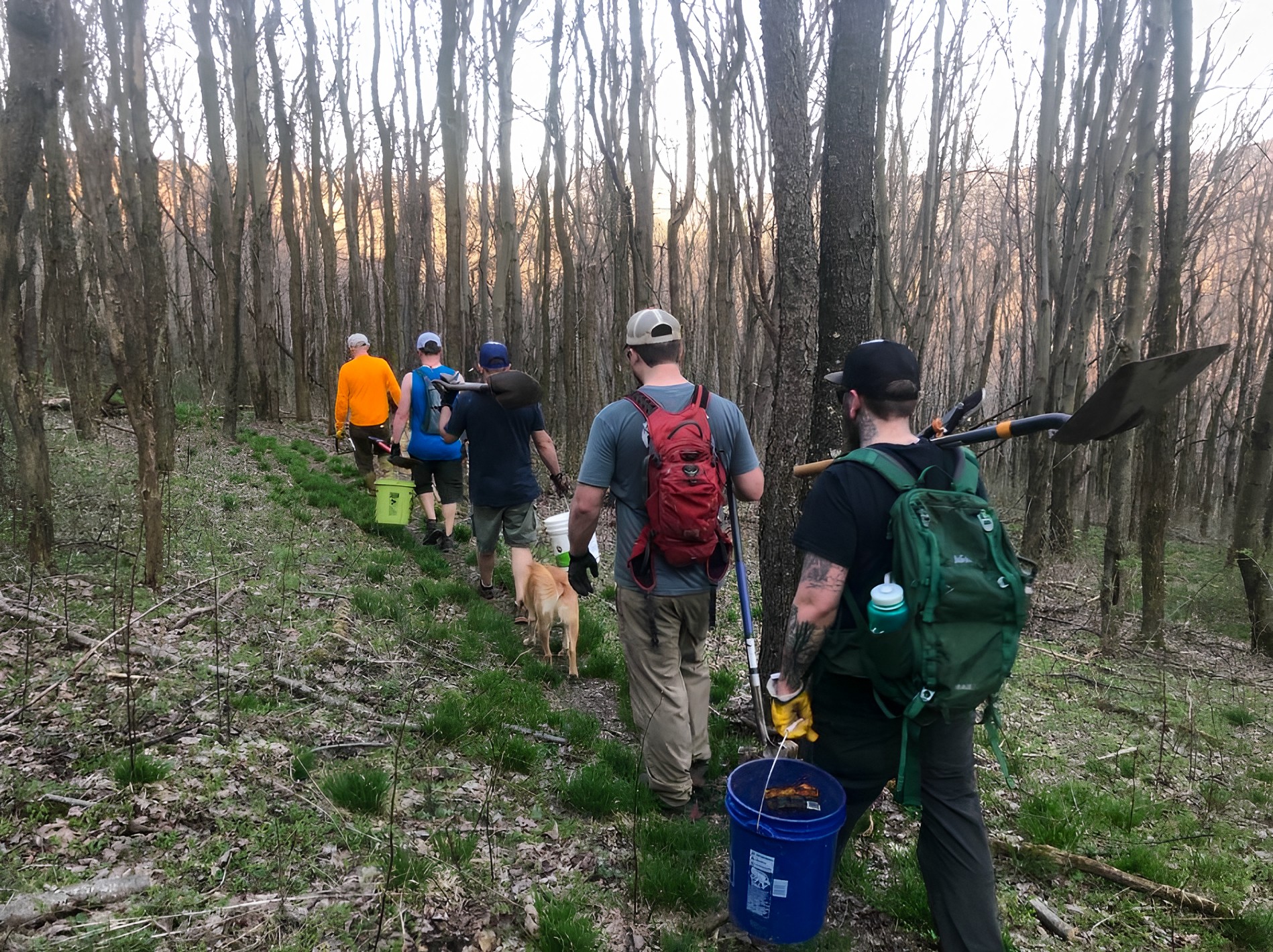
Scott Bortree and his friends began building trails in Ohiopyle State Park around 2012, beginning with the Oriole/Kim Trail, named in Memory of Scott’s late wife. After they built their second trail (Canyon Edge Loop), the park manager required the group to formalize as a club before building any more singletrack, and the Ohiopyle Biking Club (OBC) was formed. Bortree currently serves as President of the club.
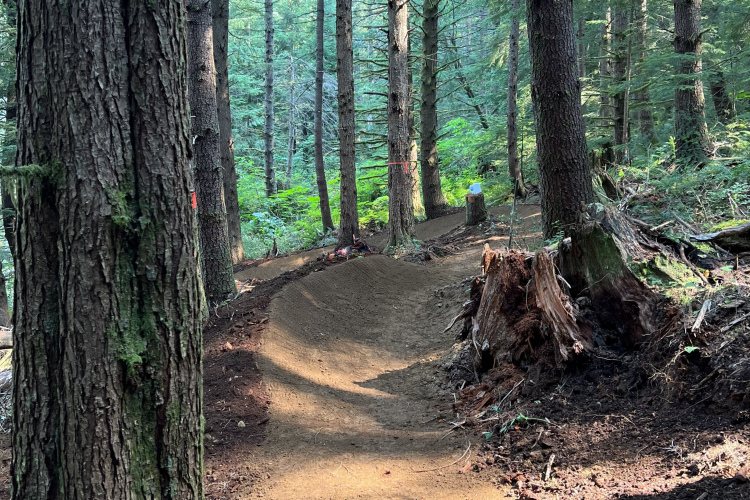
“Until a couple of years ago, every trail that we built was built by hand, by us,” said Bortree. “And we didn’t just take the brush out and call it a trail. We went in and built a tread and hand-built the trail and actually laid it out and thought about it and built some minor berms [on] some of the trails.
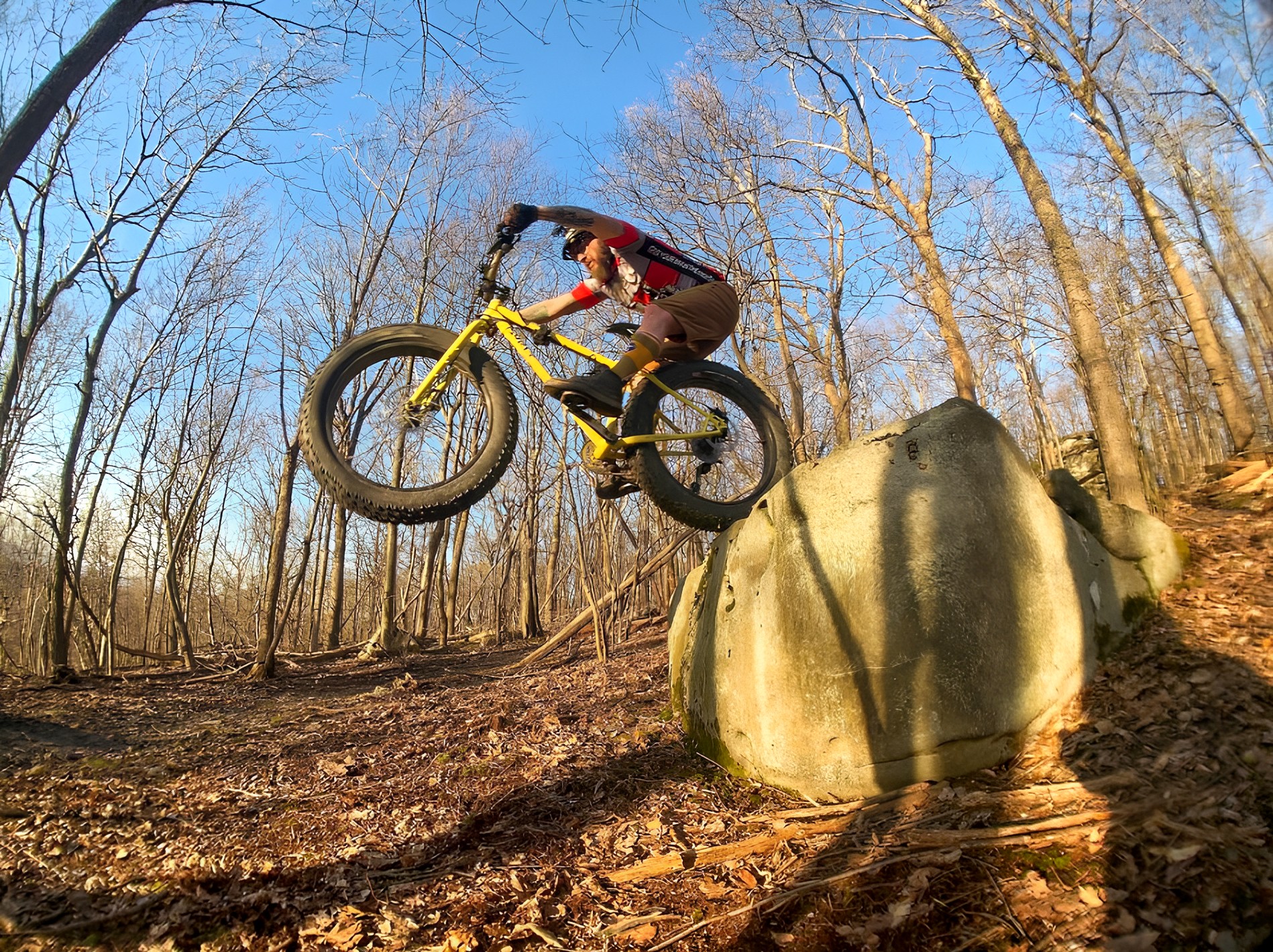
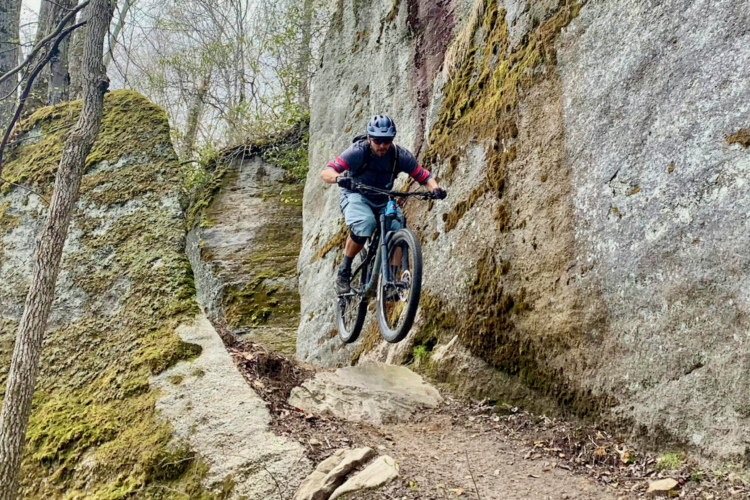
“And the Park was nice. They allowed us to run our trails close to big rock features that would allow people to ride off the big rock features if they wanted to. But we weren’t allowed to enhance that rock feature or like invite people onto it, but we’d run the trail close to it. If you’re a good enough rider and you want to, you know, jump a rock, you could do that.”
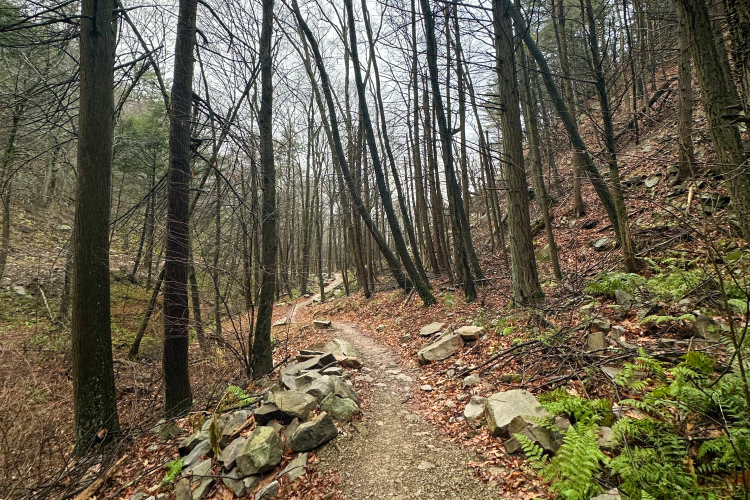
The OBC built 25 miles of organic trails over the years with this technical, feature-rich character. The OBC’s work created a great network of historic mountain bike trails on Sugarloaf Mountain that they’ve lovingly maintained for years. Despite the great singletrack, “our trails aren’t super crowded,” said Bortree, and he thinks there’s plenty of room for more riders to pedal in Ohiopyle.
Which makes the proposed trail expansion all the more intriguing.
The Pennsylvania Environmental Council took the initiative to propose a trail expansion
Eventually, the OBC began running into roadblocks while trying to get new trails approved. “We kept getting resistance from the park management,” said Bortree. “We’re always approved to just build a mile or two of trail. You get that approval done, and then you go back, and you start all over again. So it’s a pretty big battle to get those things done.”
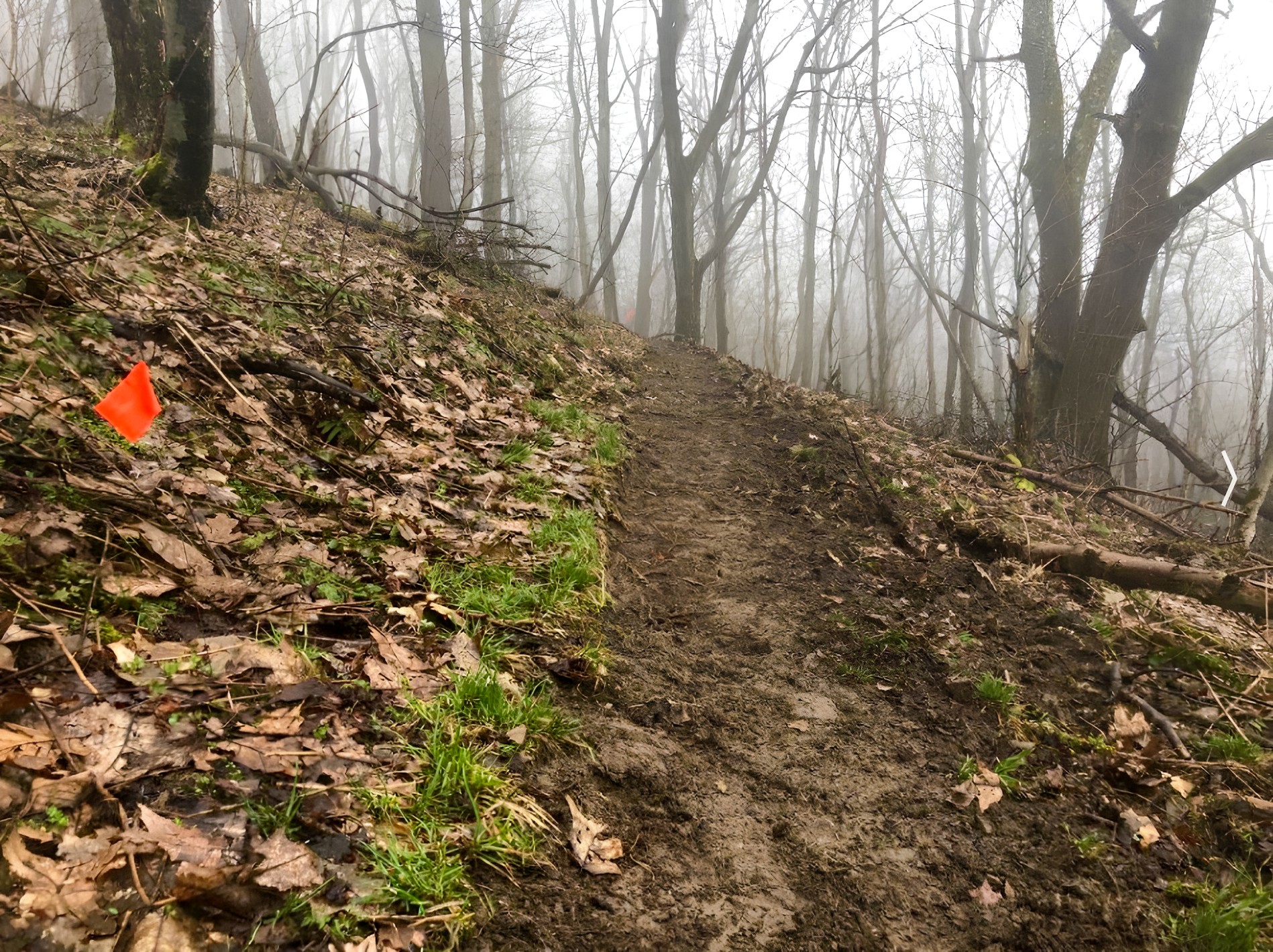
Due to the resistance, the OBC was pleasantly surprised when the Pennsylvania Environmental Council (PEC) created a massive trail development plan for Ohiopyle State Park in conjunction with the Pennsylvania DCNR. PEC is fundraising for and running the project, and they hired Kay-Linn Enterprises to do the design.
Scott Linnenburger is the mastermind behind Kay-Linn and has designed trail projects all across the country. In Pennsylvania, Linnenburger helped design the Jakes Rocks trail system, which was recognized with Pennsylvania’s “Trail of the Year” award in 2024. With such a renowned trail designer having laid out the project, the stage is set for the new 37.5-mile trail expansion to become one of the best mountain bike trail systems in Pennsylvania.
Ohiopyle could soon become one of the largest MTB trail systems in Pennsylvania
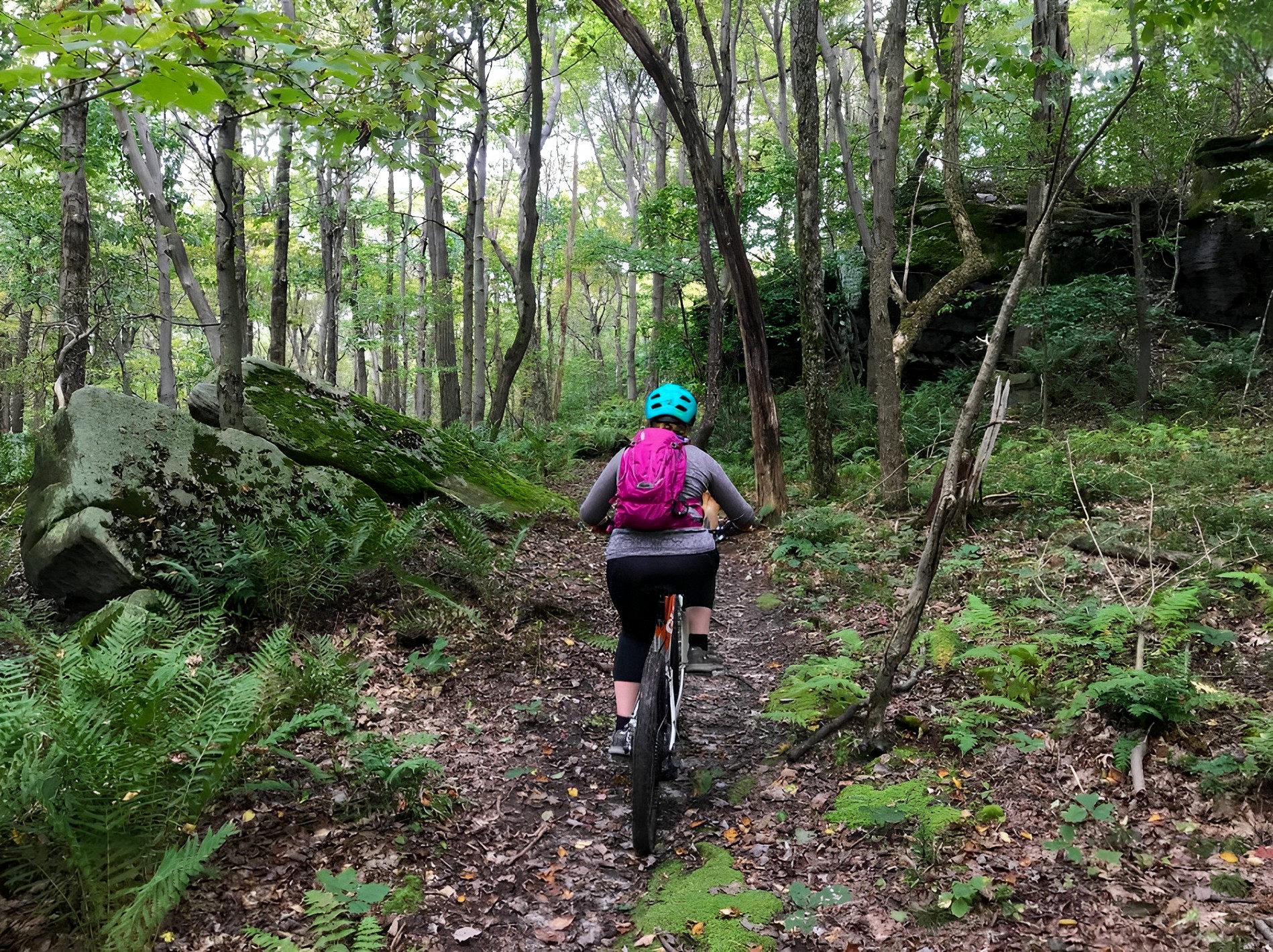
It’s not yet clear how many of the existing MTB trails will be rehabbed and incorporated into the new trail development. Bortree thinks that with the planned 37 miles of new trail, Ohiopyle will eventually be home to over 50 miles of purpose-built mountain biking singletrack, making it one of the largest trail systems in the state. The MTB trails in the park will be open to “human-powered traffic only,” meaning bikers, hikers, and runners. Class 1 e-bikes will also be allowed.
But it will take a few years to reach this grand vision. The trail development plan calls for a three-phase build-out.
Phase One: Building off the Clay Mines
The first phase of construction will see 2.35 miles of new singletrack built to improve connectivity around the recently built Clay Mines trails. According to the draft plan, the build-out will include a dedicated climbing trail up to the main Clay Mines junction, plus new connector segments linking the Clay Mines and Sugarloaf trails to the Baughman Rock Overlook Trailhead. Combined with the existing Rock City Trail, those new segments will create a larger loop that didn’t exist before.
“Phase one hasn’t even been bid yet, but they’re still thinking that’s going to be bid, accepted, and built this year,” Bortree said. PEC and DCNR are aiming to break ground in September 2026, with construction wrapping up by November. The draft plan frames this opening salvo as “proof of concept in efficiently bringing high-value projects to fruition.” While they’re building these first few miles, PEC will be able to focus on permitting and funding for the larger phases.
Phase Two: The town section and the ride into Ohiopyle
The true trail expansion begins in phase two. The plan calls for 16.4 miles of new construction in 2027, building off the phase one work and connecting all the way from the Borough up to the Sugarloaf Recreation Area. Roughly 8.7 miles of stacked loops will climb from the existing overflow parking area up to the Baughman Rocks Overlook Trailhead, with the lower two loops built wider and smoother as beginner- and family-friendly trails. These lower loops will be accessible to adaptive mountain bikes and offer optional challenging features tucked off to the side.
Higher up the slope, two more loops will introduce steeper grades, rougher tread, and more exposure. Stitched together, the northern legs of those four loops produce a continuous 450-foot descent from the ridge back to the trailhead. Another 7.7 miles of new trail will be built over in the Sugarloaf Area, including a 5.1-mile segment that perches along the canyon edge and climbs roughly 300 feet to the McCune Trail Access.
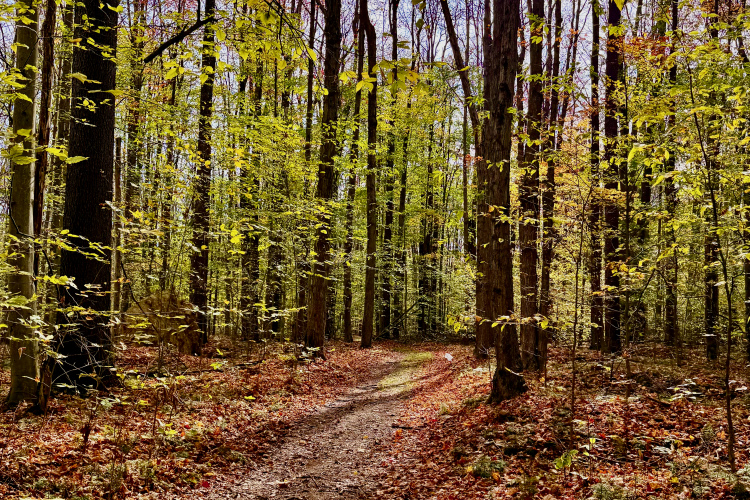
This is the phase Bortree is most excited about, as the town section has long been on his personal wish list. “I’ve looked at the layout, the scenario that I’ve wanted to build trails in for a long time. That’s one of the most beautiful sections to build in,” he said. “The woods are deep and dark, and it’s got nice rock formations that they’ll be riding around.” He estimates the average gradient through that section will land between four and six percent, with the exception of the final half-mile drop into town, which will require some real work to engineer.
As an added bonus, riders will be able to shuttle to the top and ride the trail straight down into Ohiopyle if they so choose. “If you shuttle up and start at the top and ride to Ohiopyle, that will be mostly a downhill ride,” Bortree said, noting that’s as close to a true downhill-oriented experience that the trail system will offer.
Phase Three: Pressley Ridge and the largest build of the project
The third and final phase is the biggest of the three at 18.75 miles, centered on the Pressley Ridge area — a 2,350-acre tract on the western end of the park that the Western Pennsylvania Conservancy acquired from the former Pressley Ridge Wilderness School and conveyed to the state in 2008. According to Bortree, the area “doesn’t really get used very much at all,” which makes it ripe for transformation into a trail network. The phase three build will include a brand-new trailhead just inside the entrance of the former facility, with construction targeted for the 2028 season.
The western side of Pressley Ridge will get roughly 10.5 miles of trail, stacked as five progressive loops climbing up the ridge. Two beginner-friendly, aMTB-oriented loops anchor the bottom, with intermediate options stepping up the difficulty as riders move higher. The southern trails will hug the canyon edges above an unnamed tributary of Beaver Creek. The crown jewel on this side is a 6.3-mile intermediate loop with about 700 feet of elevation change.
Over on the eastern side, another 8.25 miles of more challenging terrain awaits, with a 3.3-mile expert-level climb from Laurel Run crossing up to the ridgeline. Most importantly, a traverse from Pressley Ridge will connect back into the existing Sugarloaf trail network, tying the entire 37.5-mile trail system together as one continuous network.
The project will cost millions of dollars
The total construction cost across all three phases pencils out to roughly $2.74 million, according to the cost estimates in the draft plan. But the subtotals in the proposal only cover the construction line items themselves. The document also notes that construction management costs run roughly 15% of the total, with another 20% recommended as contingency, plus a $5,000 contractor mobilization fee per crew. Add it all up, and the all-in cost climbs to $3.7 million or more.
Which is probably what led to Bortree’s estimate. “It’s a $4 million budget,” he said, “so it’s a lot more money than [the OBC] could come [up with].” Bortree noted that DCNR is the primary public funder, with PEC handling much of the project execution and additional support flowing in from private donors.
The changing role of the Ohiopyle Biking Club
While technically the current document is still a “proposal,” with a professional trail system design already complete and extensive due diligence from the PEC and DCNR, Bortree appeared quite confident that most of the proposed trails will be built eventually. But having the PEC and DCNR run this trail expansion (and eventually bid out the work to a contractor) means that OBC’s role as a trail building club is now obsolete.
“Now that we’re seeing that the club is maybe no longer going to be the trail building club that we’ve always been, we’re working on developing ourselves more as a social club, and develop more family rides and group rides and events and things like that, and not just be a bunch of guys that go out and build trails,” said Bortree.
Still, OBC expects their trail maintenance role to continue. And with radically more trails to maintain, they’ll have their work cut out for them. “We do all of the tree cutting. We do all the maintenance on all the trails, on Sugarloaf, basically, and we’ve taken on more than what I thought we really should,” said Bortree.
He went on to explain that trail tread sustainability hasn’t been the main problem in the park to date — falling trees have. That’s largely because “our forests are dying” on the East Coast, according to Bortree. “The forest is changing, and when it changes, there’s a lot of downed trees, and we get big wind events. There’s a lot of trees that can come down.”
Bortee explained that over the years, trail maintenance by State Park staff has been hit-or-miss. “Some years they have a budget, they got people that will do things on trails, and some years there is no budget, […] they get a hiring freeze, or they can’t fill positions.”
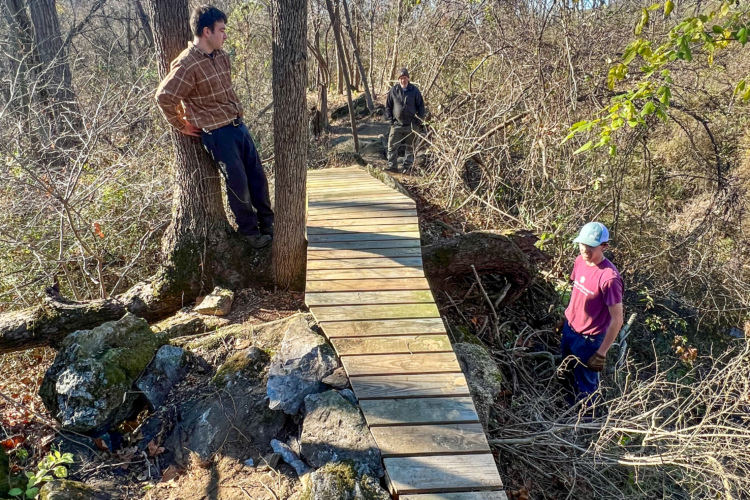
“But the bike club is very steady, and we’ve got a dedicated crew of guys with chainsaws and or hand saws. I always ride with a hand saw,” he continued.
With such an extensive purpose-built trail expansion in the works, it’s undoubtedly an exciting time for the Ohiopyle mountain bike community. But with that excitement comes a dose of nervous realism for the work that it takes to maintain such a massive network. After speaking with Bortree, it’s clear that the OBC is more than willing to tackle that challenge head-on.
Know about a new trail project we should cover? Whether you’re breaking ground on the next must-ride trail network or putting the finishing touches on a neighborhood flow trail, we want to hear about it. Drop us a line at [email protected] with the details, and your project could be featured!
The news stinks. Why not follow Singletracks on Google News to bring more joy to your day?

0 Comments