
In early 2025, President Trump signed an executive order mandating an increase in timber production on federal lands. To carry out that directive, the Bureau of Land Management (BLM) has put forward a proposal to open “approximately 2.5 million acres of highly productive timberlands in western Oregon.”
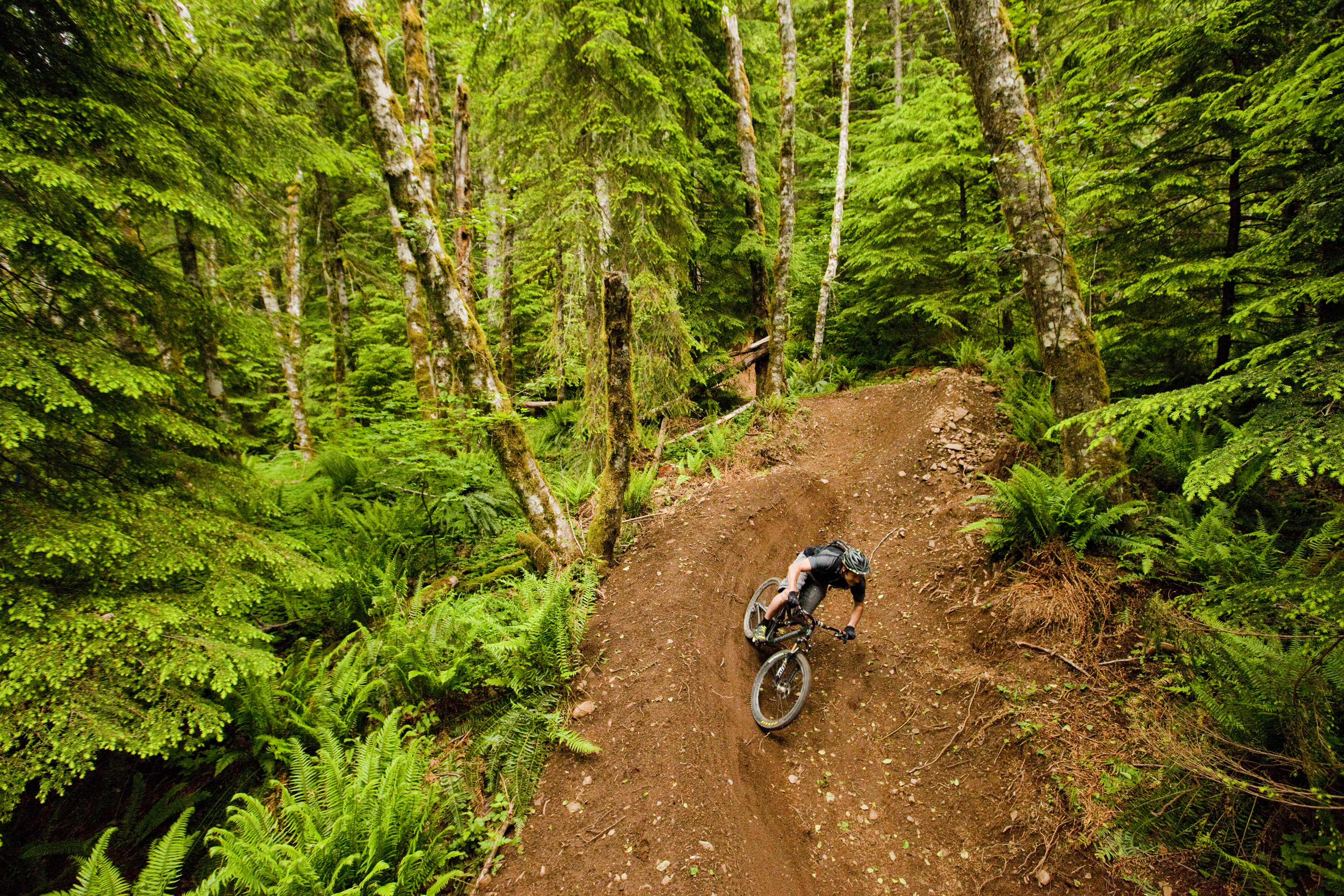
Unfortunately, the proposed lands include two of Oregon’s most popular mountain bike trail systems, including a marquee trail development that has long been upheld as a symbol of modern mountain bike trail development on public lands: Sandy Ridge, located between Portland and Hood River. Alsea Falls, located near Corvallis, is also threatened.
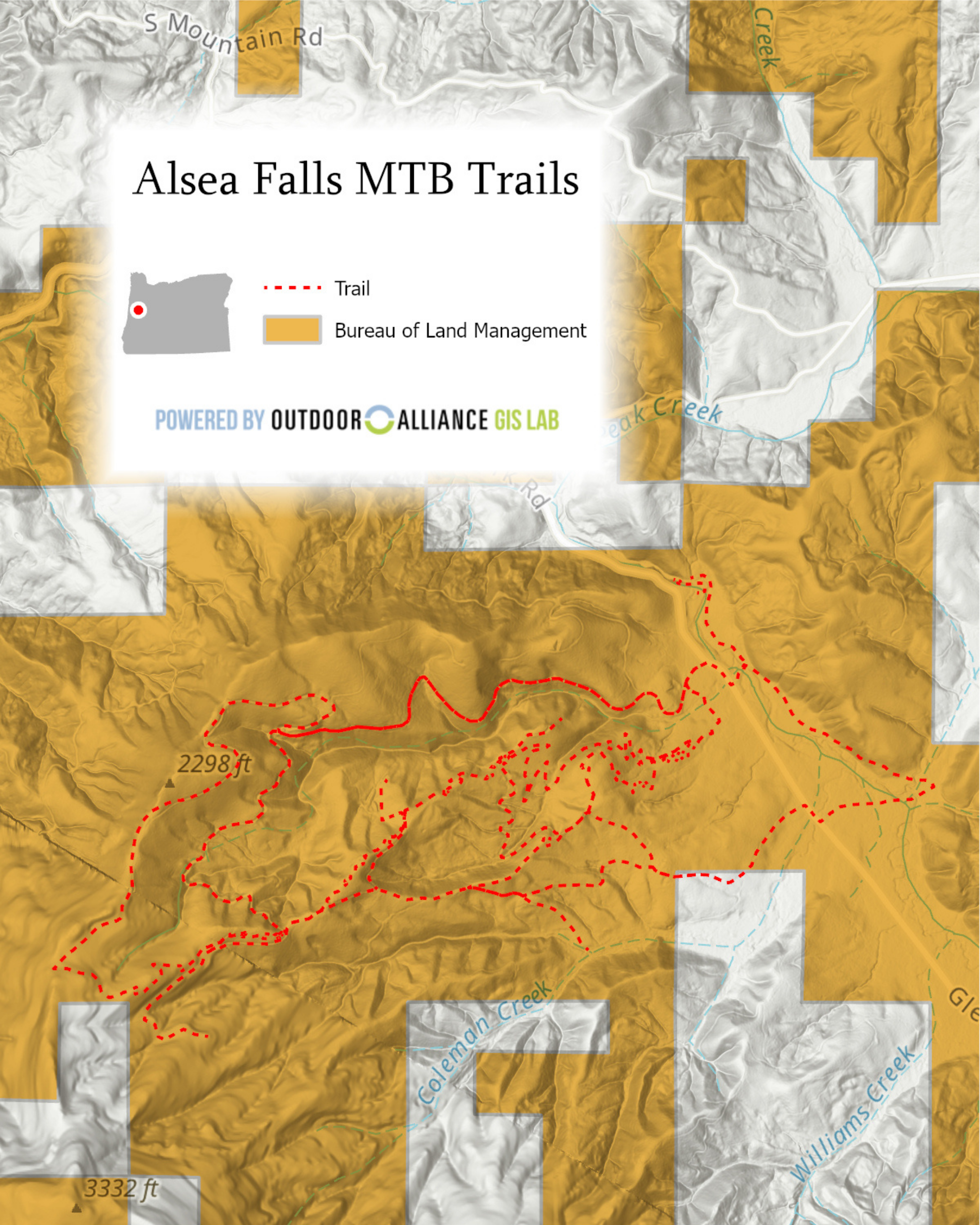
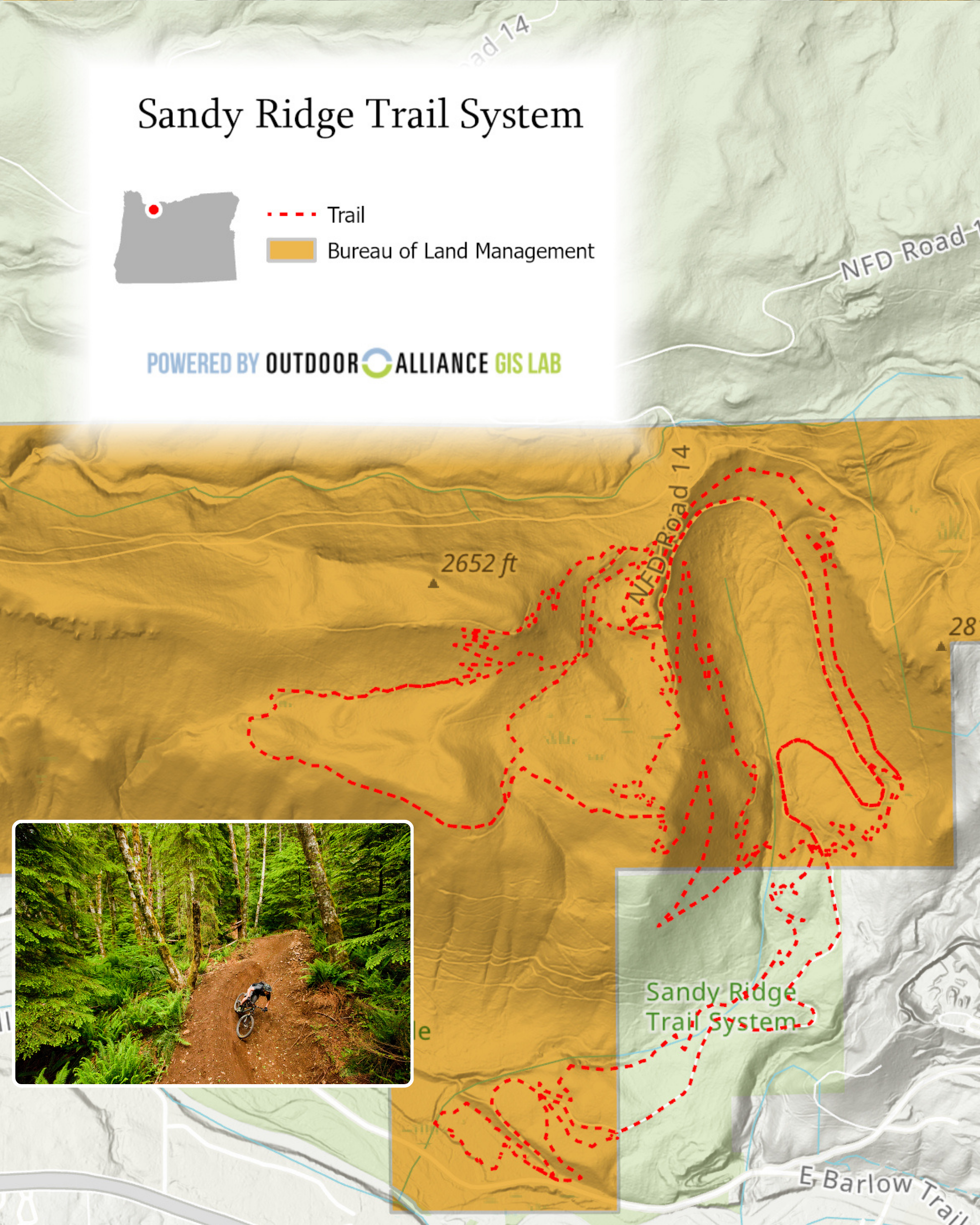
Maps from the Outdoor Alliance showing threatened MTB trails.
A return to commercial logging
While the press release from the BLM mentions “reducing the threat of catastrophic wildfires,” digging deeper into the documents published on the Federal Register reveals that the proposed change to the resource management plan (RMP) is actually a return to commercial logging. The document notes that historically, logging on BLM’s Western Oregon lands produced an average of 1.078 billion board feet per year, peaking at 1.638 billion in 1964. Present-day logging generates between 45 and 275 million board feet per year, with 2025 seeing 267 million board feet produced.
The Notice of Intent calls for “BLM-administered lands to provide a sustained yield of timber production consistent with the maximum productive capacity of the lands.” This would mean a roughly 400% increase in logging on these lands (257M to 1.078B), and potentially even more.
Logging at the 1960s and 1970s levels “created some of the ecological challenges that [the Pacific Northwest] has now,” said Jamie Ervin, Senior Policy Manager for the Outdoor Alliance. That historic logging destroyed much of the PNW’s old-growth forests, with very few stands remaining. The 2.5 million acres that are now proposed for logging include several notable stands of remaining old growth.
Above and beyond the ecological impact, the proposed 400% increase in logging could have a devastating effect on popular mountain bike trail systems.
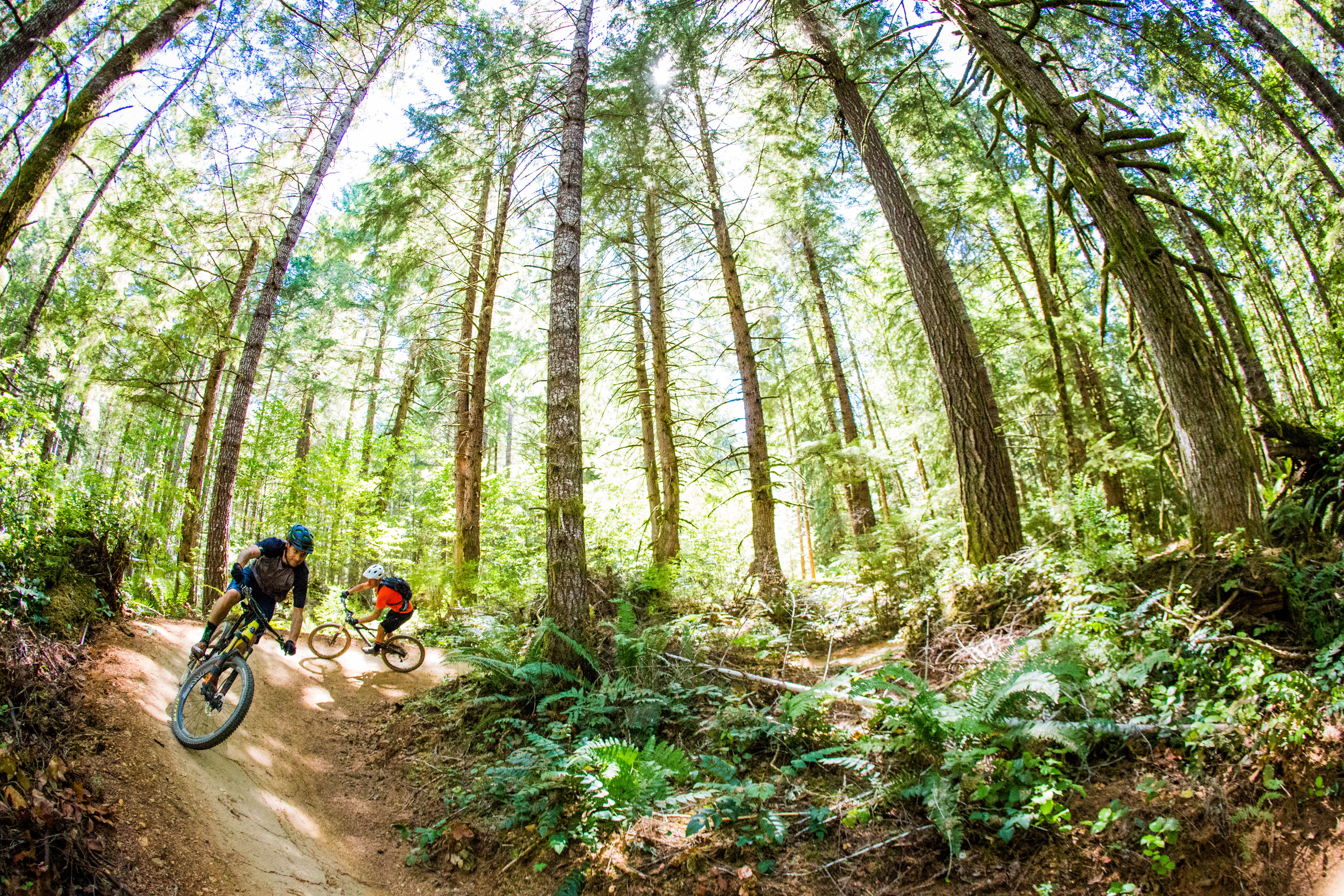
Sandy Ridge and Alsea Falls trail systems are threatened
Aside from what’s been shared above, very little concrete information is available to indicate precisely how the logging operations would play out. The current RMP update doesn’t approve specific projects — that would come later. But if approved, logging could have serious impacts on the incredibly popular Sandy Ridge and Alsea Falls mountain bike trails.
“Normally, this is much more of a community-driven process, where the BLM invests a bunch of time, talking with different stakeholders from all backgrounds,” said Ervin of the proposed RMP change. However, neither Ervin nor Nicole Brown, also of the Outdoor Alliance, are aware of any outreach from the BLM to the local recreation-focused organizations.
Both Sandy Ridge and Alsea Falls are located almost entirely on BLM land. While Sandy Ridge is protected by the Sandy River Area of Critical Environmental Concern (ACEC), after reviewing the documents, it’s not clear that even an ACEC will successfully protect an area from logging. It does appear that while Alsea Falls is in a designated recreation area, it’s not protected by an ACEC.
Sandy Ridge was lauded as one of the first truly modern mountain bike trail developments on public land in Oregon. In 2009, when it was built, purpose-built one-way flow trails were unheard of on BLM land. In many ways, the trail construction at Sandy Ridge helped pave the way for the modern trail development that we’ve seen sweep the country. Today, the 15+ miles of singletrack at Sandy Ridge remain exceedingly popular with riders from the nearby Portland Metro Area, with the expansive parking lot routinely filling up on the weekends.
Team Dirt built the ~13 miles of trails at Alsea Falls near Corvallis, and they have a second expansion phase in the works. “Being able to expand our trail network as part of our phase two plan at Alsea Falls is really important to growing our community, membership, and boosting the local recreation economy,” said Nicole Brown, Communications & Public Engagement Manager for the Outdoor Alliance and Board Member for Team Dirt in Corvallis. Alsea already boasts progressive mountain bike trails with downhill flow trails and jump lines, making it a popular stop in the Coast Range.
“Another thing about Sandy Ridge and Alsea Falls is that these places really bring people together. More people are discovering these trails, and Sandy Ridge just recently underwent an expansion to meet the demand,” said Brown. “These are destinations for the mountain biking community here in Oregon, and you meet a lot of people using the trails who are visiting from Washington, California, or other western states. This visitation helps support local and rural economies across the state to the tune of $9 billion.”
In addition, several notable non-MTB areas, like the Valley of the Giants and the Rogue River corridor, are also at risk.
Map showing potential logging impact in Western Oregon from this proposed RMP change. Source: Outdoor Alliance.
Only four days left to comment on the proposed RMP change
The comment period on this proposed RMP change was only open for 30 days, and it closes on March 23. That means if you want your voice heard, you need to comment now. The Outdoor Alliance’s comment form makes that extremely easy to do.
Even the short comment period is unusual. Draft RMP amendments with an Environmental Impact Statement (EIS) generally require at least a 60-day comment period, with major amendments and full draft RMPs taking 90 days. Only smaller amendments with an Environmental Assessment (EA) have a 30-day public comment period.
Comments from the BLM
Following publication, Singletracks heard back from the BLM. A BLM spokesperson clarified that they “have not yet developed a draft EIS for an RMP revision yet” and are currently in the scoping period. “We are asking members of the public to let us know how they use this public land and what we should consider and analyze as we develop our draft. This is why there isn’t much information on what the revision would look like—we are waiting to hear from the public before we develop potential alternatives.”
The BLM anticipates publishing the draft sometime this summer, and another public comment period will be available at that time. “It’s also important to note that, by regulation, any revision effort includes seeking input on ACECs and other land use designations,” said the BLM. “Asking the public for input on these areas is part of the standard process.”
Updated 11am Mountain Time with comments from the BLM.
The news stinks. Why not follow Singletracks on Google News to bring more joy to your day?





0 Comments