

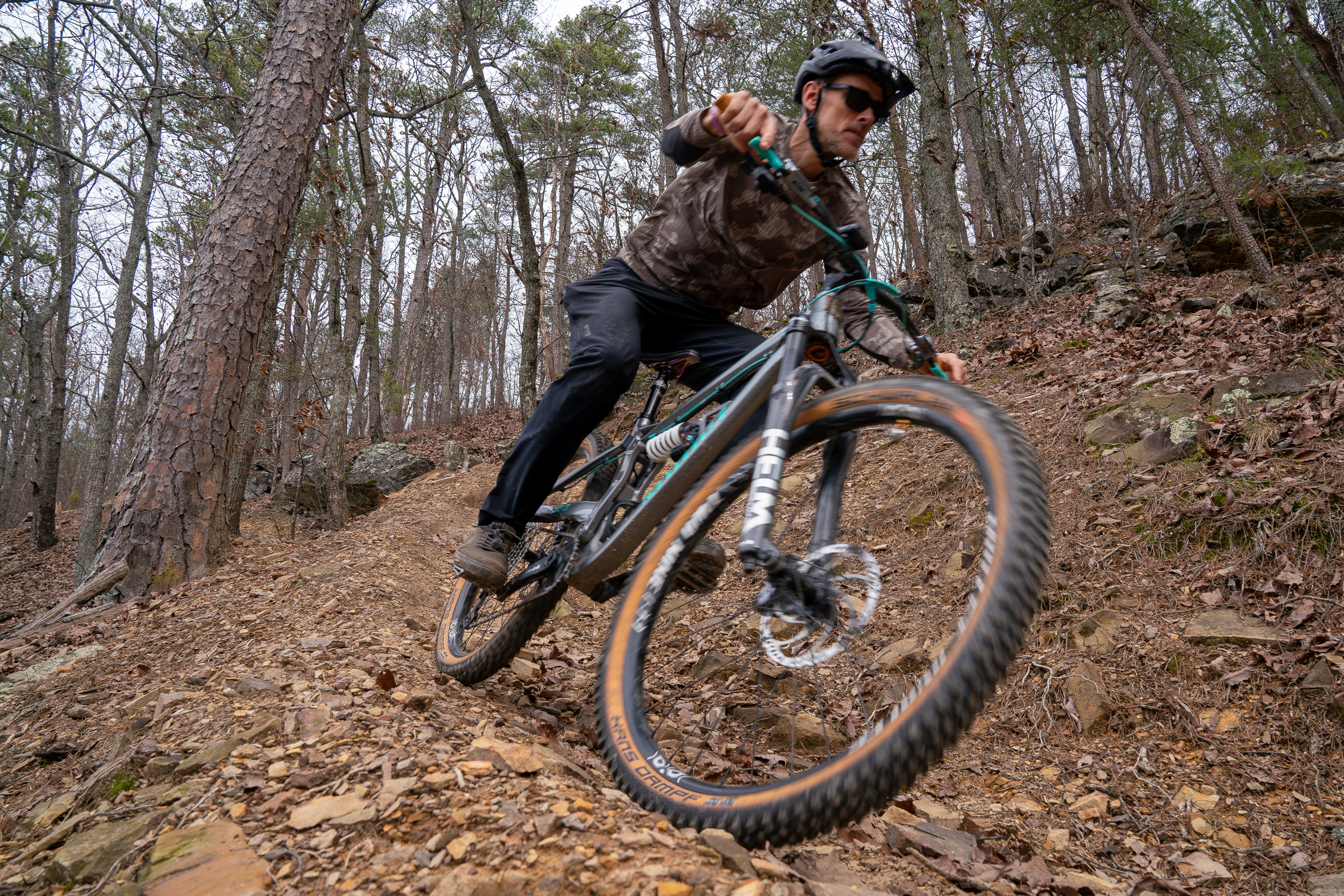
Central Oregon’s trails are the tale of two seasons. We have flowy and supportive summer trails on our west side, heading into the foothills of the Cascade Mountains. However, during the winter, we head east to rocky, steep, and loose trails.
And, needless to say, that can be a tough transition every fall.
Fortunately, I was able to connect with Josh Whitmore of MTB Skills Factory to get some pointers on riding in loose conditions. My takeaway was three skills that significantly improved my riding on loose trails.
1. Body positioning
“We get these really steep loamers that just go straight down the fall line,” Whitmore said about the riding in western North Carolina. “They’re so loose and steep that they’re hard to walk down […] and I’m supposed to ride a bike down this thing?”
But Whitmore assured me that there is a way. First, and likely the most basic skill that MTB Skills Factory comes back to with all its clients, is body position. Regardless of the skill at hand, they want their client’s mass centered over the bike. This increases stability and balance, key components to riding loose trails.
Whitmore explained that they first like to teach riders a neutral position on the bike: standing tall, level pedals, chin over stem, arms and knees slightly bent. This is the “default position” riders should return to whenever possible.
Obviously, you can’t stay in this default position forever, and movement is inevitable. When we think of moving on a bike, there are three joints involved: the waist, knees, and elbows. But Whitmore feels most of us have the movement pattern out of order.
“So you can think about it like this: bending at the waist, bending the elbows, and then bending the knees later in that range of movement,” he explained. “The mistake I see most people make is that they just bend their knees, or bend their knees first, and then they end up kind of squatted, too far back, out of center, and the bike handles miserably like that.”
He explained that, especially in loose conditions, he sees riders mainly bending their knees. Doing so squats you down and typically puts you too far back on the bike. So much of bike handling in loose conditions is keeping equal traction on the front and rear tires. When you primarily bend at the knees and squat, most of your weight is on the rear tire.
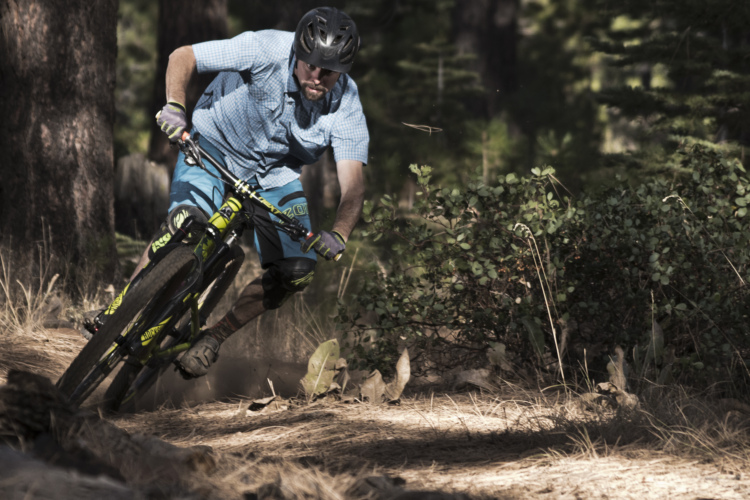
Now, Whitmore doesn’t leave bending your knees out of the equation. But if you can hinge at the waist, bend your elbows, and lower your chest a bit, it will help keep your hips higher. Now, you will still need to bend your knees to help absorb impacts, but doing so with your hips high helps keep your weight more evenly distributed between the front and rear.
This is the body position we’re looking for.
An entire factory of skills
Whitmore has a decades-long resume of either teaching mountain bike skills or racing professionally. Often, the two overlapped. A North Carolina native, Whitmore grew up during the mountain bike boom of the late ‘80s and early ‘90s, quickly finding himself as a World Cup-level racer.
In the late ‘90s, World Cup cross-country racing would become his full-time job into the 2000s. He stepped away briefly and began working in outdoor education before starting a second racing career, this time in longer-distance mountain bike racing. This switch would lead to eventual titles including mountain bike marathon national champion.
However, in 2016, racing took a back seat to coaching. Initially, Whitmore was working as an individual coach, booking as many clients as he could. And his schedule filled up fast, so much so that he began turning clients away and recommending them to other coaches in the area. After doing this for some time, he realized he could open a business and hire additional coaches to fulfill the demand he was receiving.
So, in 2020, MTB Skills Factory was born, and he and his team have been helping riders build their skills with tips and drills like these ever since.
2. Braking
“Especially for loose conditions, there’s a relationship between the traction of the tires on the surface and then how much braking force we can get out of them. You can imagine stopping a bike on tarmac versus a super gravelly road. You just get better traction [on the tarmac], right?”
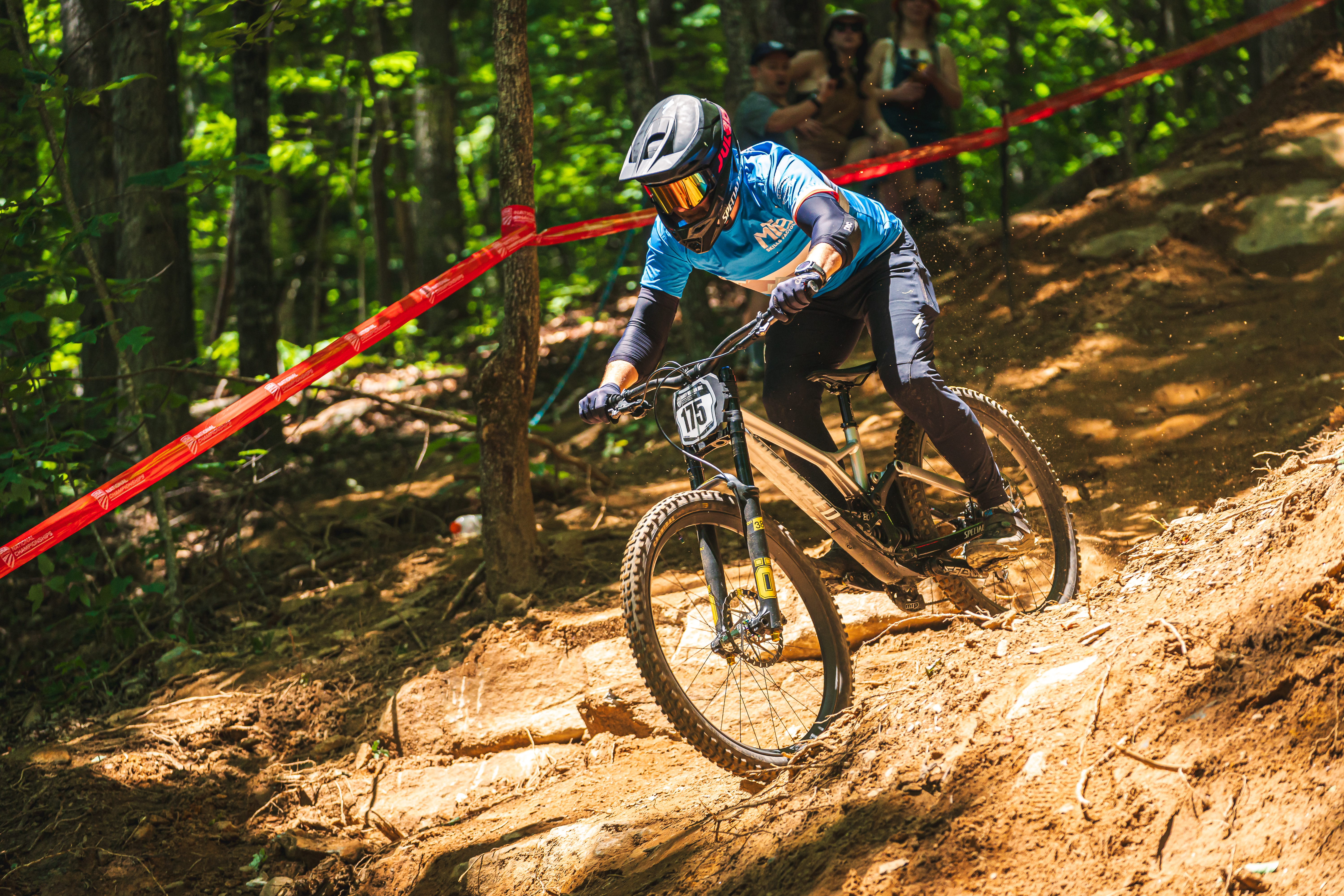
For braking, Whitmore explained that in loose conditions, it is important to be a bit picky about where you brake and how much you brake. With their clients, they try to create a connection between lever pressure and the bike’s traction.
Basically, in loose conditions, the tighter you squeeze, the less traction you have.
Making subtle braking adjustments based on traction takes time and practice. Whitmore shared that they will commonly practice this skill by finding a bunch of sticks and laying them side by side across the trail. The clients can then play with how much braking force it takes to lose traction over the sticks, and how much they can apply and remain in control.
On loose trails, knowing where to brake is key to knowing how much pressure to apply. Whitmore gave the example of the steep, loose loamers in his area. Especially where it is steep, the loamy dirt doesn’t provide significant traction, so he would likely look to the next rocky outcrop to slow significantly before getting back into the loam.
Conversely, the loam provides much better braking traction than a wet, rooty section. Here, he’d likely be off the brakes entirely, applying more pressure as he gets back into the loam.
How much you brake corresponds heavily with where you brake. It is important to pick solid braking surfaces, much like jumping from one lily pad to the next.
3. Line choice
Going hand in hand with where to brake is line choice. When the trail gets loose, line choice becomes critical not only for finding solid braking surfaces but also for finding solid areas of traction in general. These traction points allow us to make significant changes in direction despite a loose trail.
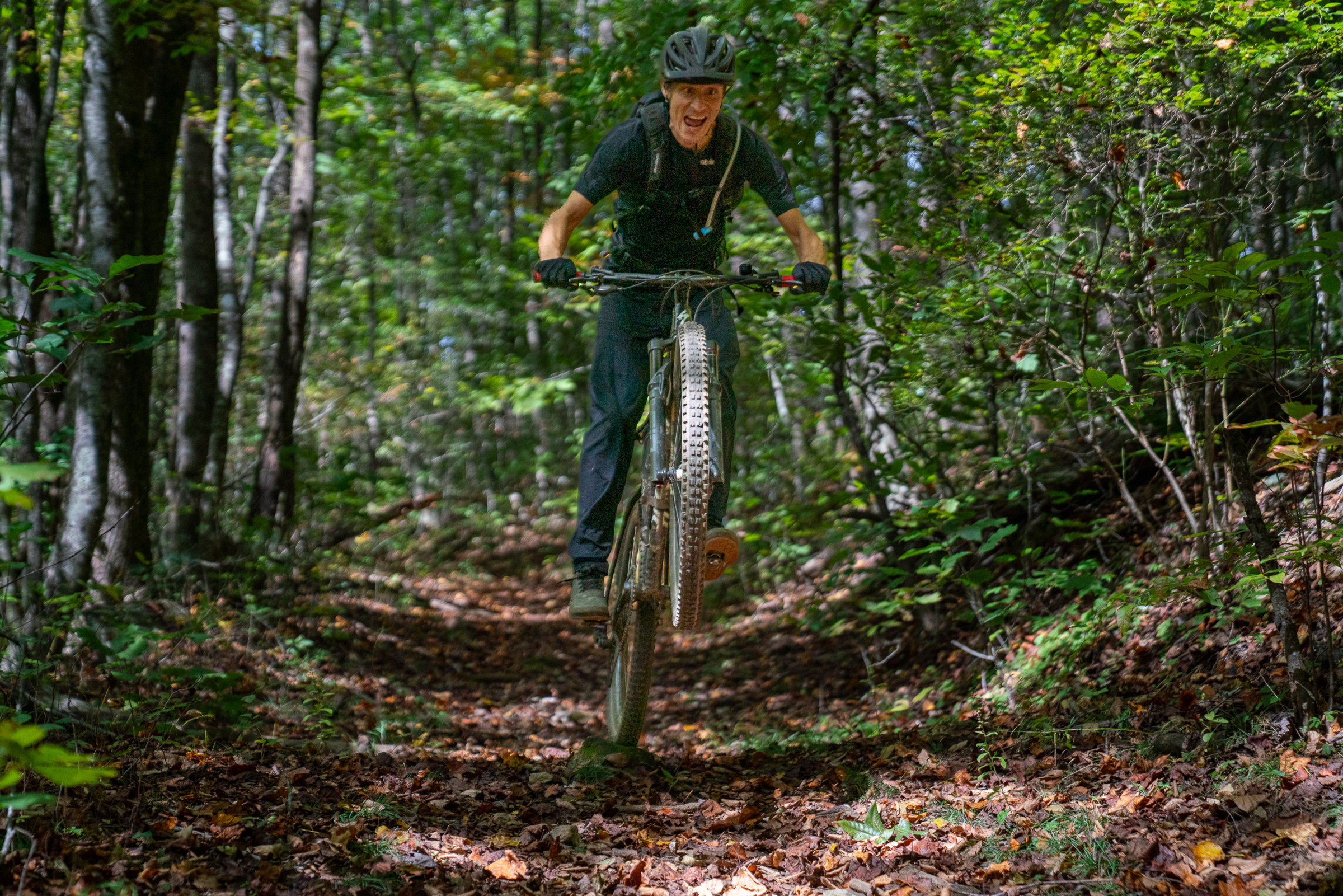
Our best chance of making it through loose terrain is to ride it in a straight line. But, as we all know, few trails are continually straight, and navigating directional changes is likely required. Better line choice means staying straighter through the loosest sections and looking for the “little islands of traction,” as Whitmore referred to them.
These islands of traction provide the support needed on loose trails. Whitmore explained that our best bet is to ride as straight as possible through the loose sections, looking for support where we can find it. There, we can change directions and continue straight through another loose section.
“Support could be a berm–that’s the most obvious thing–but it could also be roots, rocks, like just the subtle shapes on the trail that can be enough support to push off of to get some traction.”
And, obviously, line choice becomes crucial to navigate from spot to spot. Whitmore said the best thing to do is to walk a section beforehand and find your lines off the bike. But, if that isn’t possible, it is crucial to keep your eyes down the trail and not solely focused on the immediate section in front of you.
A bonus skill
Despite doing all the right things on steep and loose trails, Whitmore explained that at times you’re sort of just “managing chaos.” Often, getting through that chaos is actually a bit easier if you just, well, go faster.
Now, in no way are Whitmore or MTB Skills Factory recommending that we ride outside our comfort zone or beyond our skills. However, the faster you can get through a loose section of trail, the faster you can get back to better traction.
So, Whitmore added a fourth, bonus skill if you will. And it isn’t about riding fast. Rather, Whitmore’s last skill for loose trails is to ride with confidence.
All these skills are very cyclical. Better body position, knowing when to brake and how much, and better line choice all work together. As you become more consistent with these three skills, your confidence will increase. And as your confidence increases, you will become more proficient in these three skills.
Then you can feel more comfortable pushing your bike faster through the loose sections, hopping from lily pad to lily pad, managing the chaos.
Keep up with the latest mountain bike news by adding Singletracks as a preferred source on Google.

6 Comments
Feb 27, 2026
Feb 27, 2026
Mar 3, 2026
Mar 7, 2026
Mar 1, 2026
Mar 3, 2026