

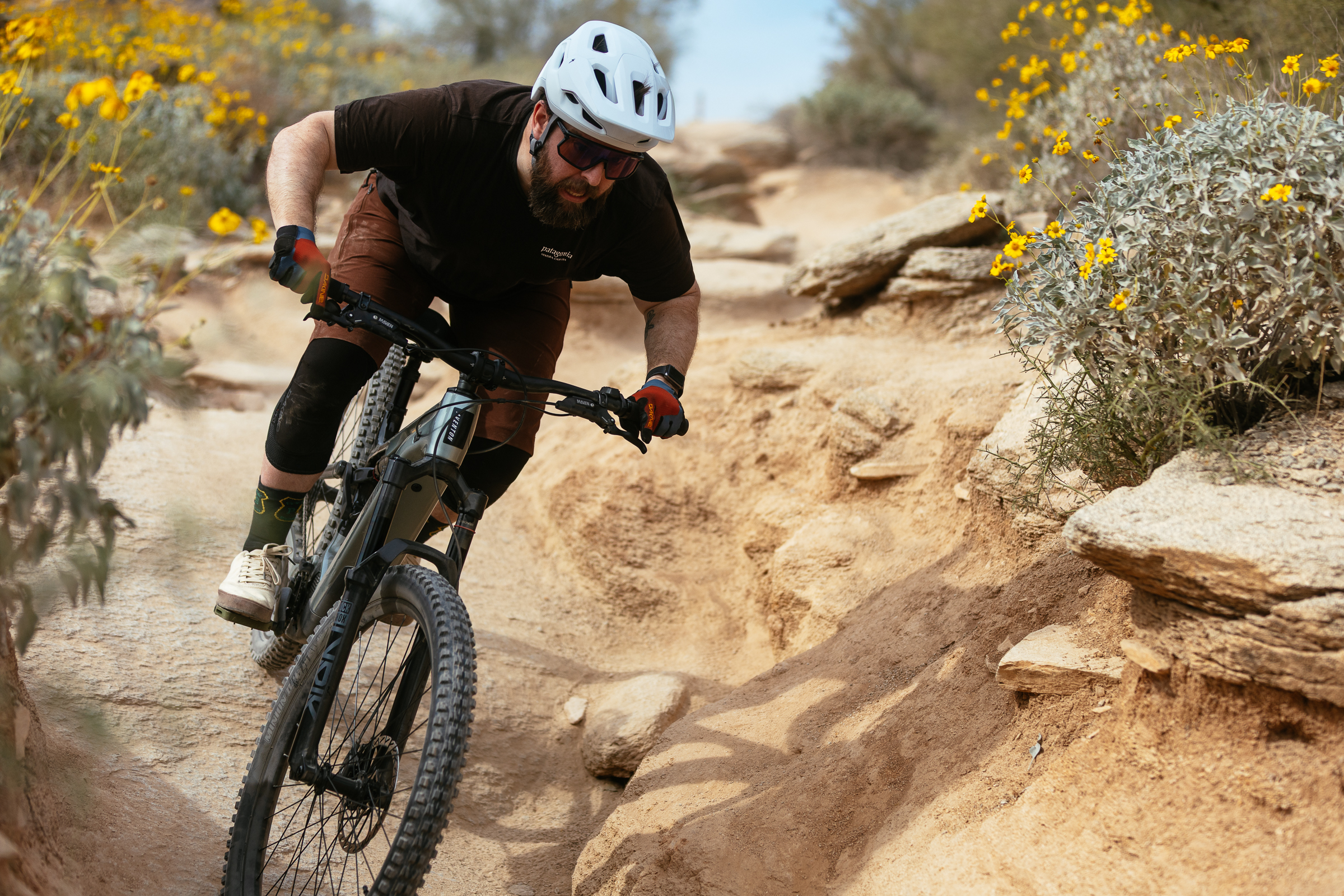
Aventon started making track bikes over a decade ago before going all in on e-bikes. But, not necessarily the e-bikes we’re used to. Aventon’s style was (and still is) commuter-style e-bikes with rear hub motors.
Two years ago, Aventon released its first-ever eMTB, the Ramblas. While the bike featured a mid-drive motor, the hardtail still left many, including Singletracks Editor-in-Chief Jeff, wanting more. It seemed that the Ramblas leaned too far into the commuter category and not the eMTB category.
Aventon is working to change that with their latest offering, the Current. With 140mm of rear suspension paired with a 150mm fork and modern geometry, the Aventon Current certainly looks the part. So, I was definitely keen on throwing a leg over the bike to see what Aventon had cooked up.
Aventon Current key specs
- 850W peak power, 110Nm torque, 800Wh battery plus optional range extender
- Price: $4,599 to $5,999
- Buy from Aventon
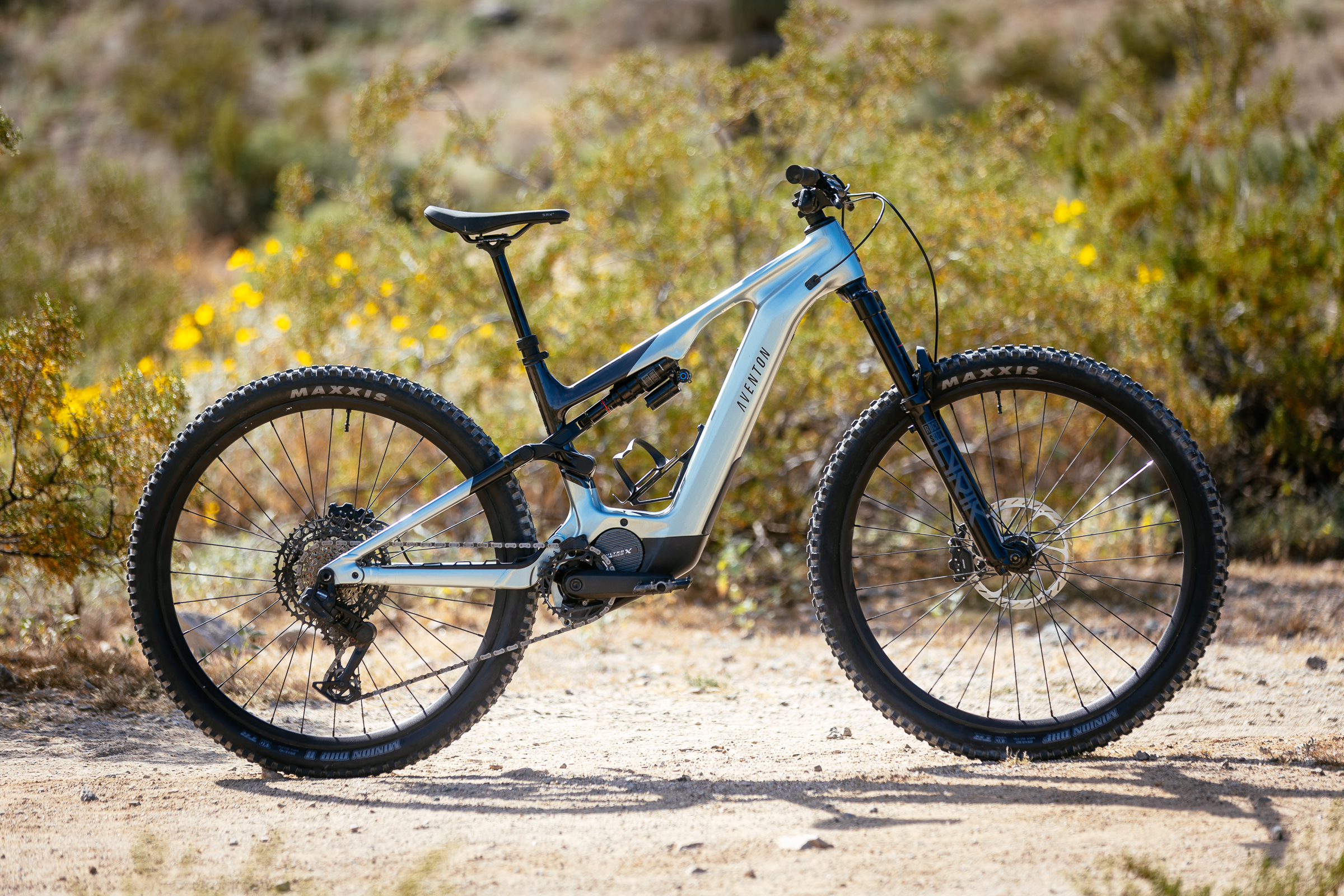
So, what did Aventon cook up for their first full-suspension eMTB? As I already mentioned, the Current has 140mm of travel delivered via a classic four-bar suspension platform. This is paired with 150mm of front travel and two 29-inch wheels.
There is no option to run a smaller real wheel, no flip-chips, or geo adjustments. What you see is what you get. And what you get is pretty damn good.
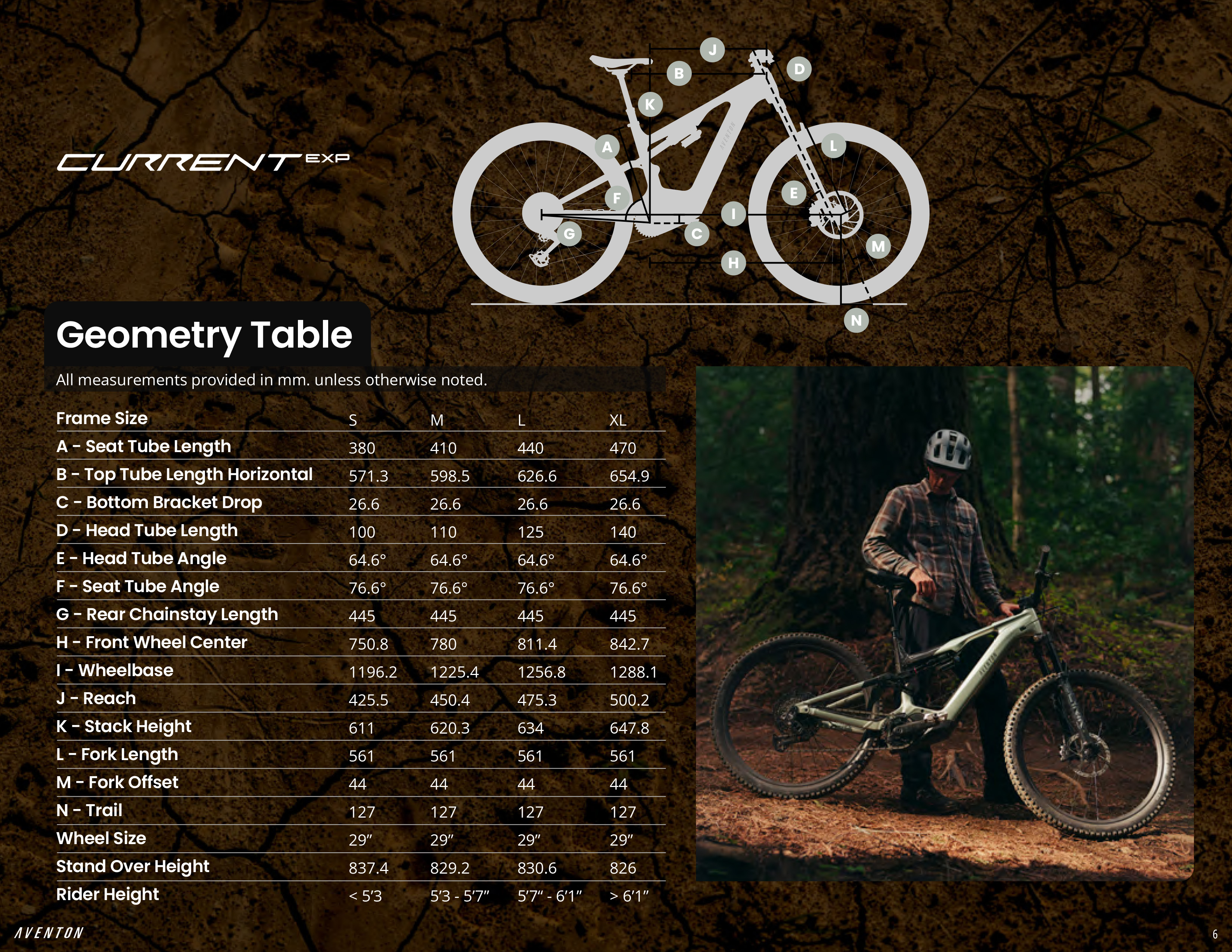
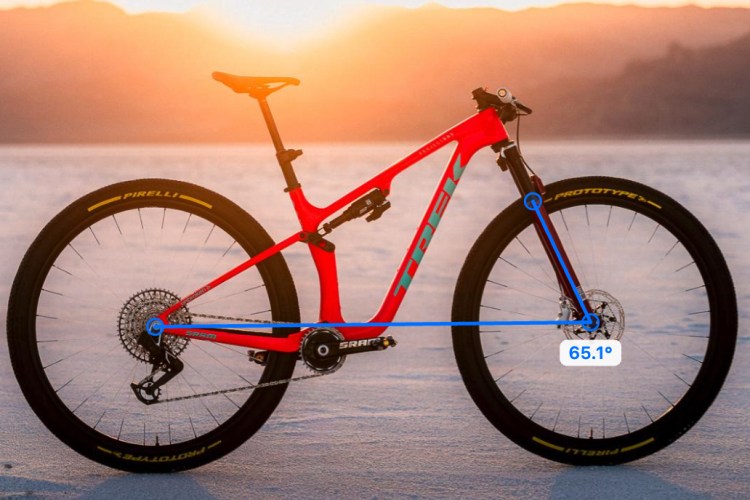
Fortunately, Aventon is up to date with modern mountain bike geometry trends, and they built the Current to suit them. My size medium has a 450mm reach, a 64.6° head tube angle, and 76.6° seat tube angle. All four sizes (S–XL) have the same 445mm chainstays. Combined with the other numbers, a 620mm stack on the size medium resulted in a sturdy 1,225mm wheelbase.
Aventon also did a pretty good job with the component spec. They offer two builds of the Current–a higher spec’d, carbon front triangle build (EXP) and a lower-spec’d aluminum front triangle build (ADV). Both builds feature an aluminum rear triangle.
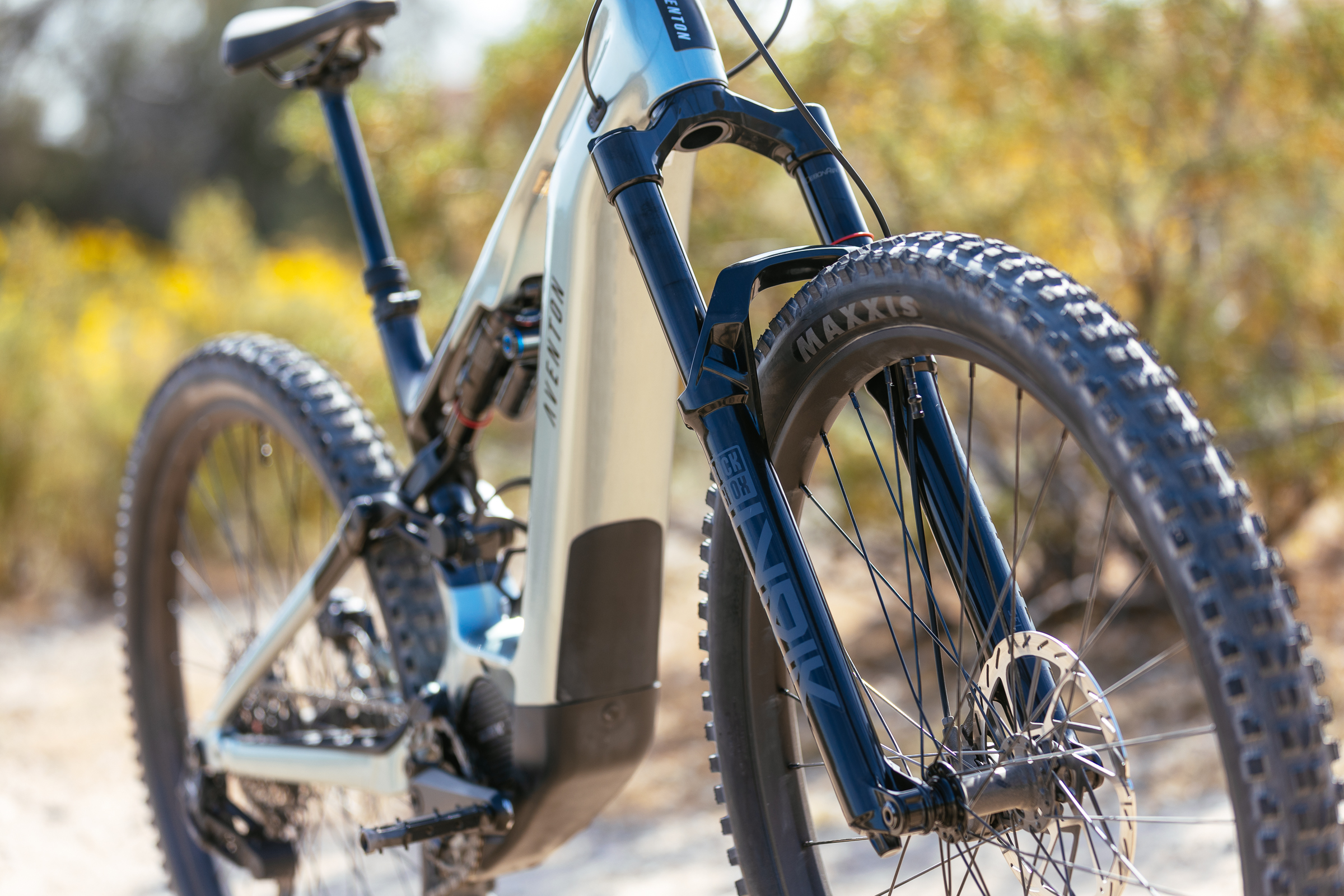
I tested the Current EXP. Standout components include the SRAM Maven Base brakes and SRAM S1000 Transmission drivetrain, which pulls juice directly from Aventon’s battery. RockShox takes care of the suspension with a Super Deluxe Select+ and a Lyrik Select.
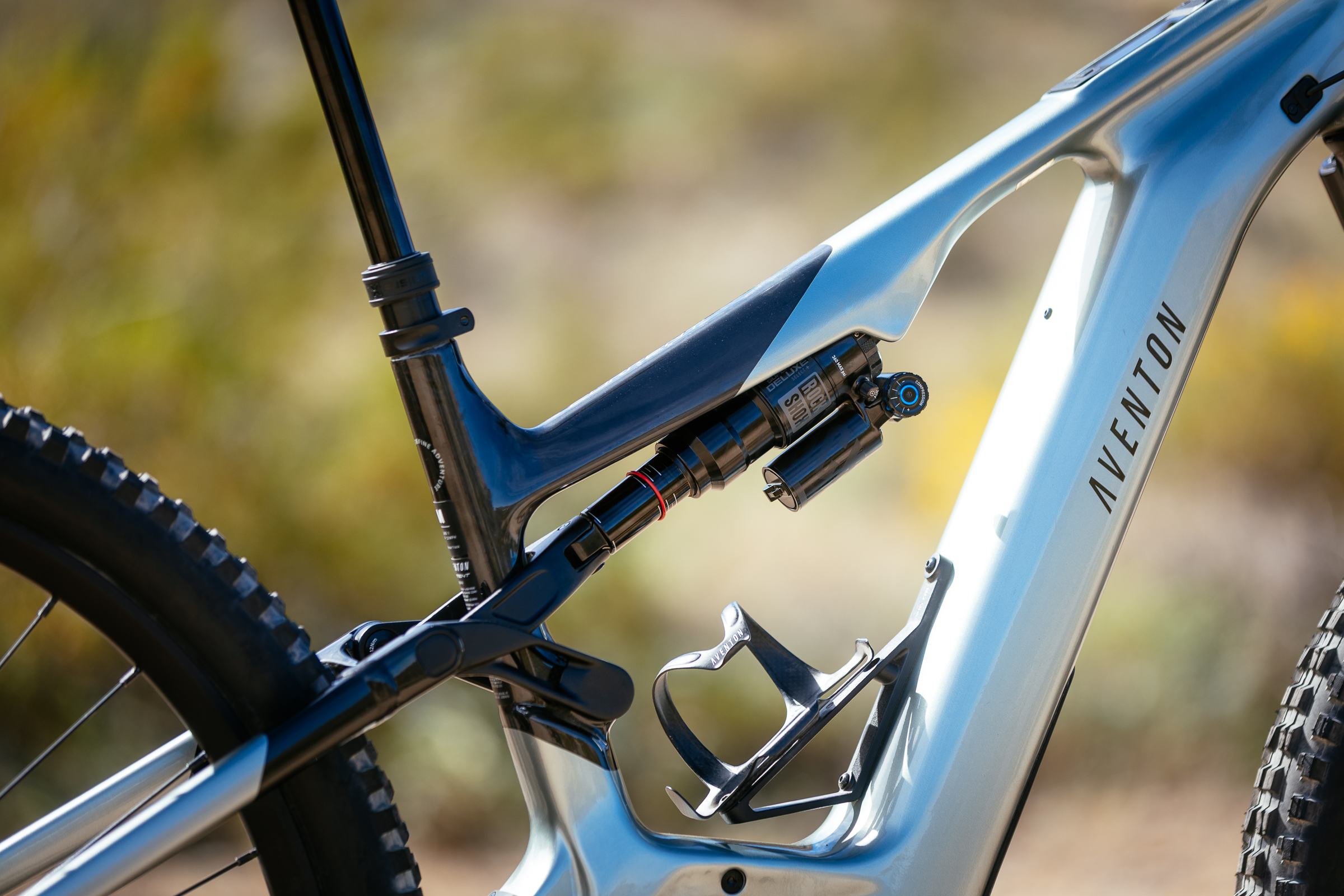
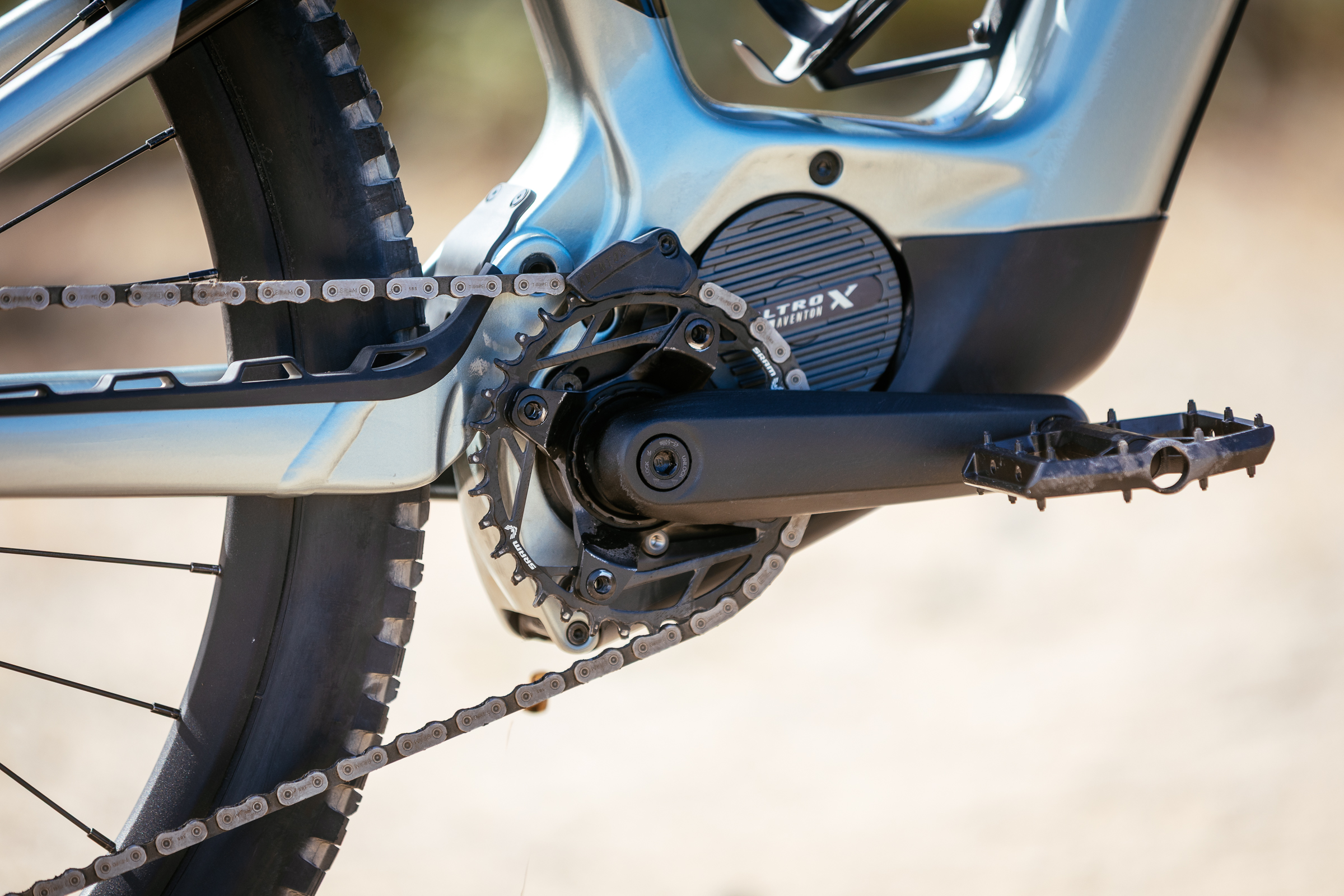
Most of the other touchpoints and components are in-house products. And, altogether with Aventon’s drive unit, the Current EXP weighs 53lbs. That is without pedals or proper tires (it was spec’d with Maxxis EXO-casing tires). But spec choice is something I’ll come back to.
Aventon Current motor and battery
Both builds are equipped with Aventon’s Ultro X drive unit and an 800Wh internal battery. The Ultro X is stout, delivering 750W of peak power and 110Nm of torque. This power jumps to 850W and 120Nm of torque when “Boost” mode is selected.
A touchscreen is integrated into the top tube, allowing you to switch between ride modes (there are five in total) and make changes to the settings. Aventon also has an app where you can really fine-tune the Current’s ride.
So, how does the Aventon Current ride?
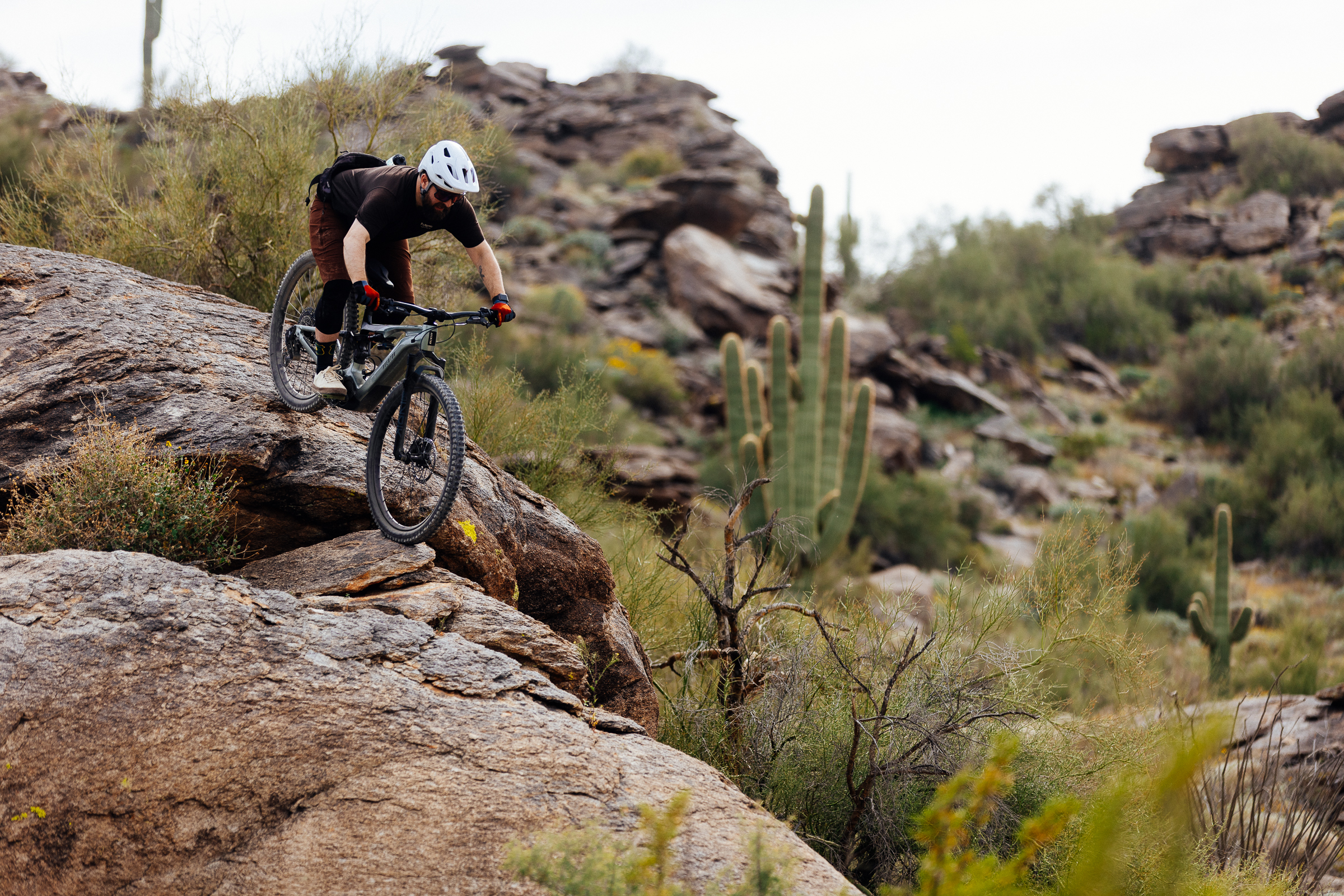
Well, it rides well. Aventon brought quite a few MTB media folks down to Phoenix to be the first to ride the Current. They later shipped a bike home for an extended test period because, as I found out, riding in Phoenix is very different from riding in the Pacific Northwest.
Discussing how an e-bike climbs can seem like a moot point. It has a motor, so of course it climbs well. And the Ultro X motor is no slouch; however, Aventon does a good job of managing the torque. Yes, it is a lot of torque, but it never feels like the Current was going to run out from under me.
Reviewer profile height: 173cm (5’8″) weight: 88kg (195lb) testing zone: Central Oregon, USA
There are five power modes–Eco, Trail, Turbo, Boost, and Auto. For most of the techy climbing and riding I did in Arizona, Trail mode offered more than enough power. Back home in Oregon, I’ve been switching between Turbo and even Boost for fireroad climbs. The extra torque and wattage of Boost mode last for 30 seconds, and you can press the button again immediately after it runs out.
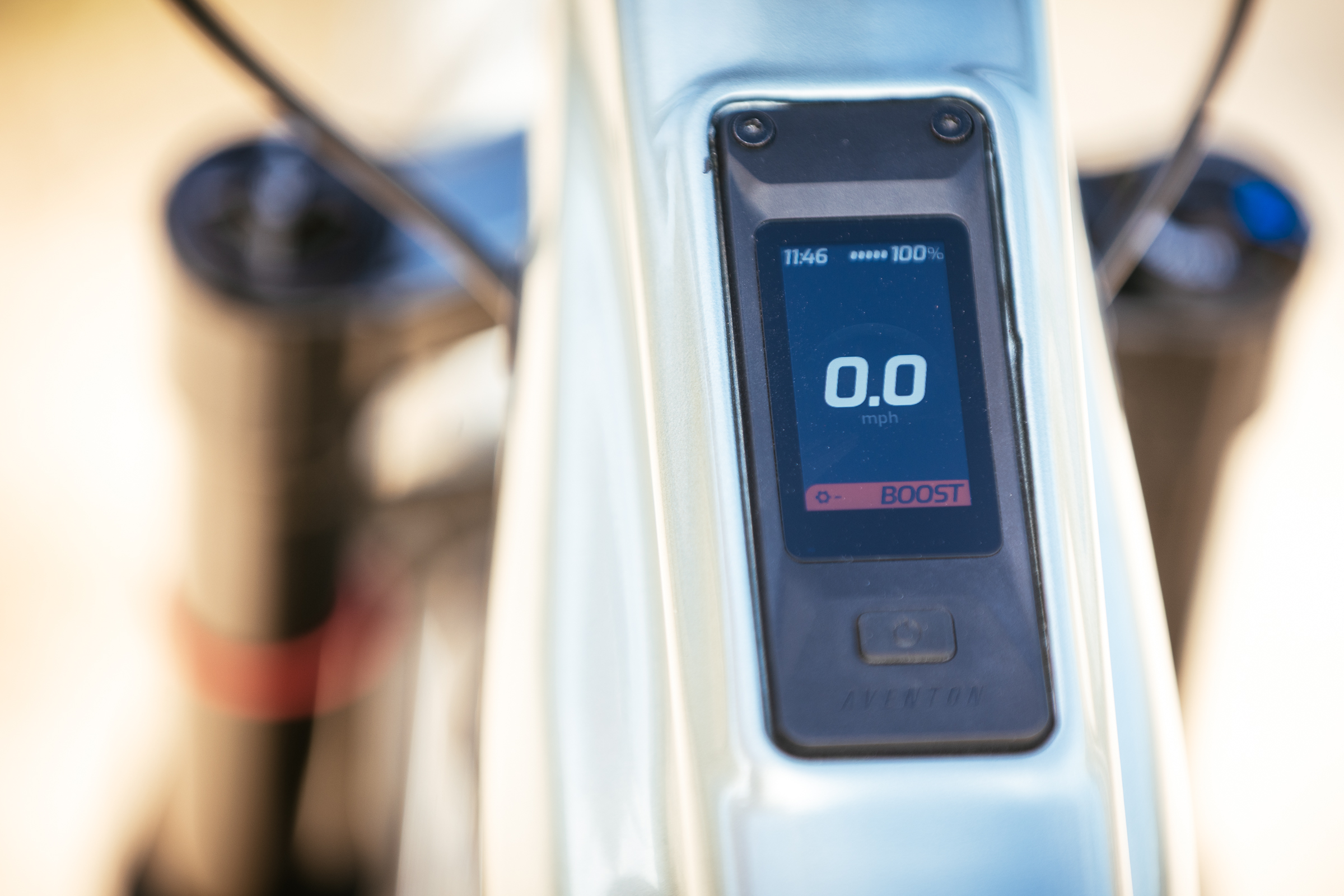
Two things on the Ultro X drive unit that really helped with climbing were turning the overdrive down and turning on Wheel Lift Control. Wheel Lift Control helps keep the front wheel down on the steepest climbs by sensing when traction is lost and slightly reducing the power.
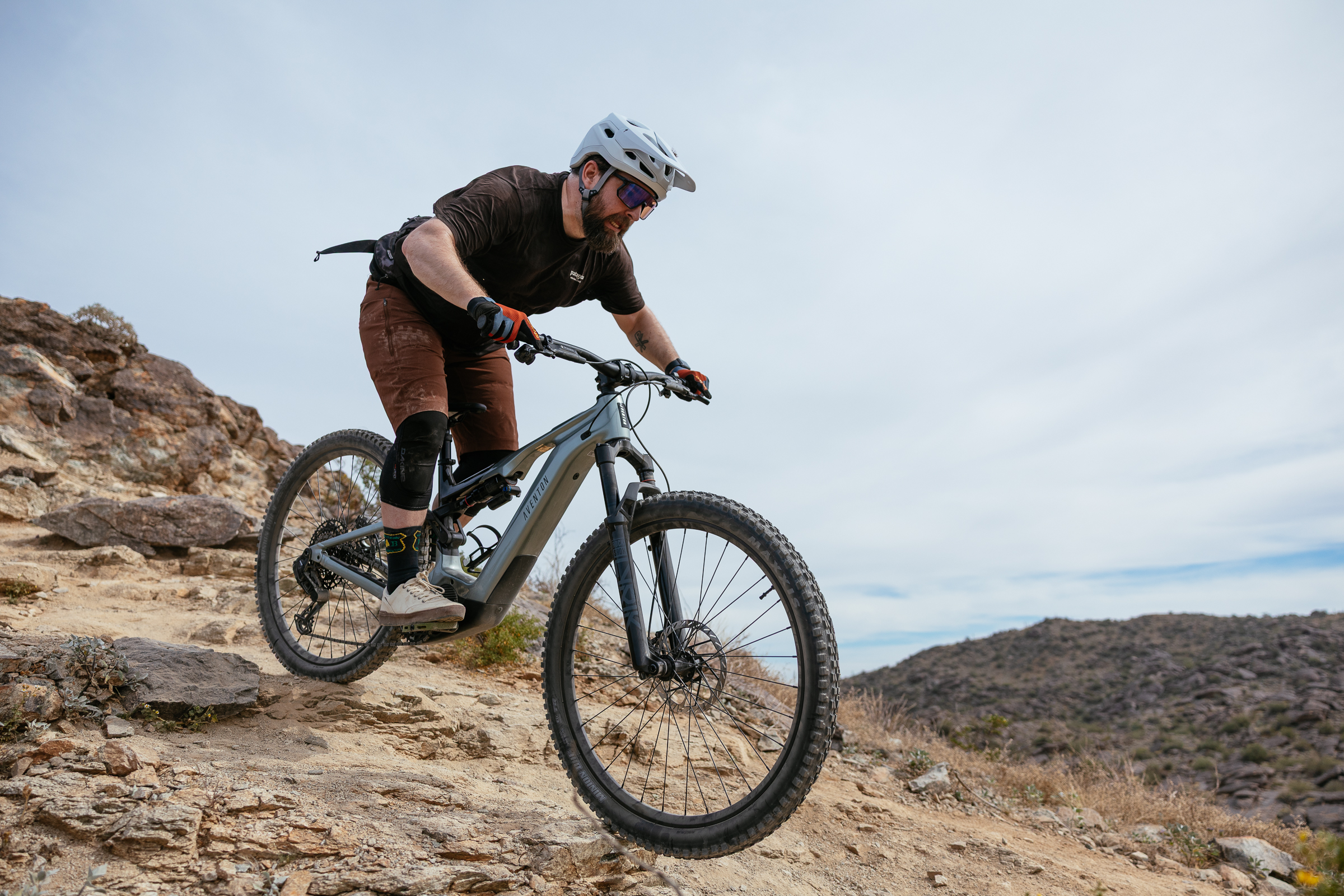
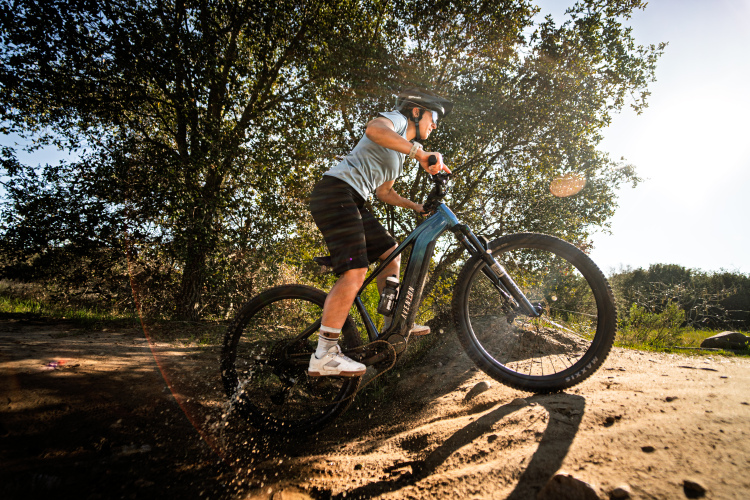
Ultimately, descending on the Aventon Current was good. The bike is very planted, which I believe is due in part to a very soft suspension tune and the bike’s 53 pounds. I didn’t feel that the rear of the bike was too stiff or too flexy, and I rather liked the stability that the 445mm chainstays provide.
And while the Current, with those longer chainstays and heavier weight, isn’t the easiest bike to get off the ground, that maybe isn’t what Aventon was shooting for. That said, with a bit of extra “umph,” the Current does get off the ground and feels steady through the air.
I had a few issues to address to make the Current more comfortable. First, I wanted the front end a bit higher, which I accomplished with higher-rise handlebars. Especially on steeper descents, that pushed my body back a touch, providing more confidence.
I also wanted a longer dropper post. My size medium was spec’d with a 150mm dropper, which is on the shorter side. Plus, the saddle clamp sticks significantly above the post collar, making the seat seem high. I accommodated this by inserting the post a bit further into the frame to get the saddle out of the way on descents.
The only other issue I had was a problematic SRAM Maven front brake, with the lever going right to the bar. After a bleed and after a piston massage, it would be fine for a bit, then become problematic again.
But once I got the Current dialed, it did pretty well. I felt comfortable on steep, rocky terrain and flow trails alike. But there were also issues with a super-soft suspension that, like some other aspects of the Current, really demonstrates the customer base Aventon is trying to reach.
A full-suspension MTB for casual riders
I certainly had gripes with the Aventon Current. For as much as I was impressed by the drive unit and geometry, the suspension tune was incredibly soft. I typically run around 185-195 PSI in a rear shock. On the Current, to get close to 30% SAG, I was above 250 PSI.
The fork wasn’t much better. And, yes, volume reducers were used. This ultra-soft suspension made the mid- and end-stroke quite harsh. If I used less air, I was clanking down hard and generally sitting too low in the travel.
Now, a soft suspension and other decisions on the Current could be based on the customer base Aventon is attempting to reach. The brand understands that they are not a “core” mountain bike company and isn’t trying to target “core” mountain bikers. They are trying to grab people looking to “get back into mountain biking after 10 years” or current Aventon owners looking for a bike to try trail riding.
For those consumers, a soft suspension tune will suit them best. These riders are also looking for suspension with fewer dials to fuss with, and components that just work and make things easy. I will absolutely shred Maxxis EXO tires on a 53lbs e-bike, but perhaps Aventon’s target customer will not.
This is why it is difficult for me to be too critical about the issues I had with the bike. With everything I thought was a negative, I could see why Aventon did it that way, or how a less-experienced customer base might not notice the difference.
Ultimately, they created a bike suitable for an entry-level rider but gave it to more advanced riders to put it through its paces. So far, it has held up.
Final thoughts
So, would I buy this e-bike? That is a tough question. First, the geo is at a good spot, and I have no concern there. The Ultro X motor also works solidly; however, it is a new offering, and only time will tell.
For me, the biggest issue is price. Aventon typically lives in the $1,500 to $2,000 e-bike price range, but the Current is significantly more. The Current ADV retails for $4,600, while the EXP I tested is $6,000.
Yes, $6,000 can be half of what some other eMTBs cost, but it certainly isn’t chump change. And, it is right at the entry-level for other brands, while also being somewhat “entry” itself. For comparison, a Specialized Turbo Levo Alloy is $6,100. A Marin Alpine Trail E2 is actually less expensive than the Aventon Current, at $5,280. Yes, the Alpine Trail has an aluminum frame, but I would argue that the spec level is much better on the Marin.
Aventon says they aren’t trying to go after the “core” mountain bikers who create spreadsheets and compare specs. But, for $6,000, I think just about anyone, regardless of experience, is going to shop around and at least ask a buddy who is in the know.
Pros and cons of the Aventon Current
Pros
- Solid geometry
- Planted ride feel
- Powerful drive unit
- Simple platform that just works
Cons
- Soft suspension (hitting target customer base?)
- Component choice (again, target customer base?)
- The price will make it tough to compete with established brands
Bottom line
Ultimately, if we look at the Aventon trajectory, things are looking up. They entered the eMTB market two years ago with the Ramblas and now have a solid full-suspension offering. There is no doubt that the Current can handle a thrashing from an advanced-level rider, but it would need some upgrades to make that happen.
I’m looking forward to what they have next!
Keep up with the latest mountain bike news by adding Singletracks as a preferred source on Google.


3 Comments
Mar 17, 2026
Typo?
Mar 18, 2026
Mar 16, 2026
Travis, looks like the weight of that bike at 52LBS is getting your strong arm attention. Is that sweat glistening off your arms?
Having once own an Aventon Ebike at 64lbs, this one at 52 LBs is still too heavy for me. Especially for lifting over gates and big logs. Hard enough getting my current 39# ebike on the bike rack. Nope, not a game changer by far. So far, the AMFLOW is the most attractive bike for me. Also, this is a Class 4 bike too!