
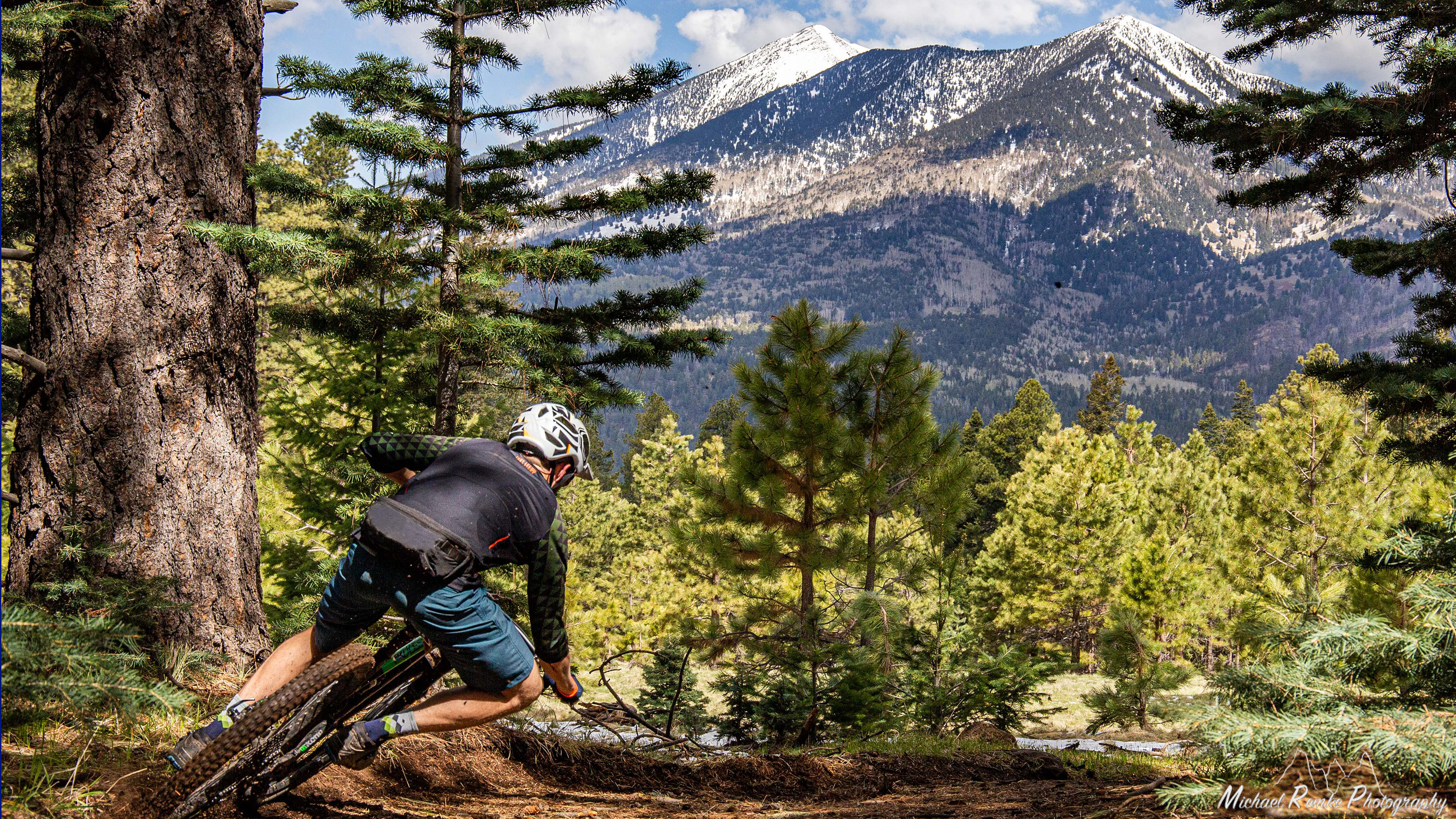
Arizona is filthy rich with mountain bike trails, but most of those singletrack riches are historic routes that have existed for decades, if not centuries. Only in recent years have purpose-built mountain bike trails entered the Arizona scene, and unfortunately, most of the new downhill-only purpose-built trails aren’t all that long.
“Honestly, in [Arizona], you’re hard pressed to go find 1,000-foot continuous downhill that’s purpose-built for mountain biking,” said Joe Hazel, Trail Coordinator for the Flagstaff Biking Organization (FBO). Hazel would know: he’s ridden all across the state and been deeply-engrained in the local MTB scene for decades. While many of the modern trails in networks like Hawes and Bean Peaks are true works of art, they don’t offer the massive, extended downhills that many riders are looking for. Whether existing trails like Red Mountain Rush (just over 1,000 vertical feet) qualify as “purpose-built” is perhaps debatable, but regardless, Hazel has a point.
“Honestly, in [Arizona], you’re hard pressed to go find 1,000-foot continuous downhill that’s purpose-built for mountain biking.”
Joe Hazel, Trail Coordinator, Flagstaff Biking Organization
The FBO has received approval to build two purpose-built downhills in the Mount Elden Dry Lake Hills (MEDL) that promise to bring the gnar and provide the upper end of skill progression for advanced mountain bikers in Flagstaff. Both descents will offer just over two miles of downhill and 1,200 feet of vertical drop from top to bottom.
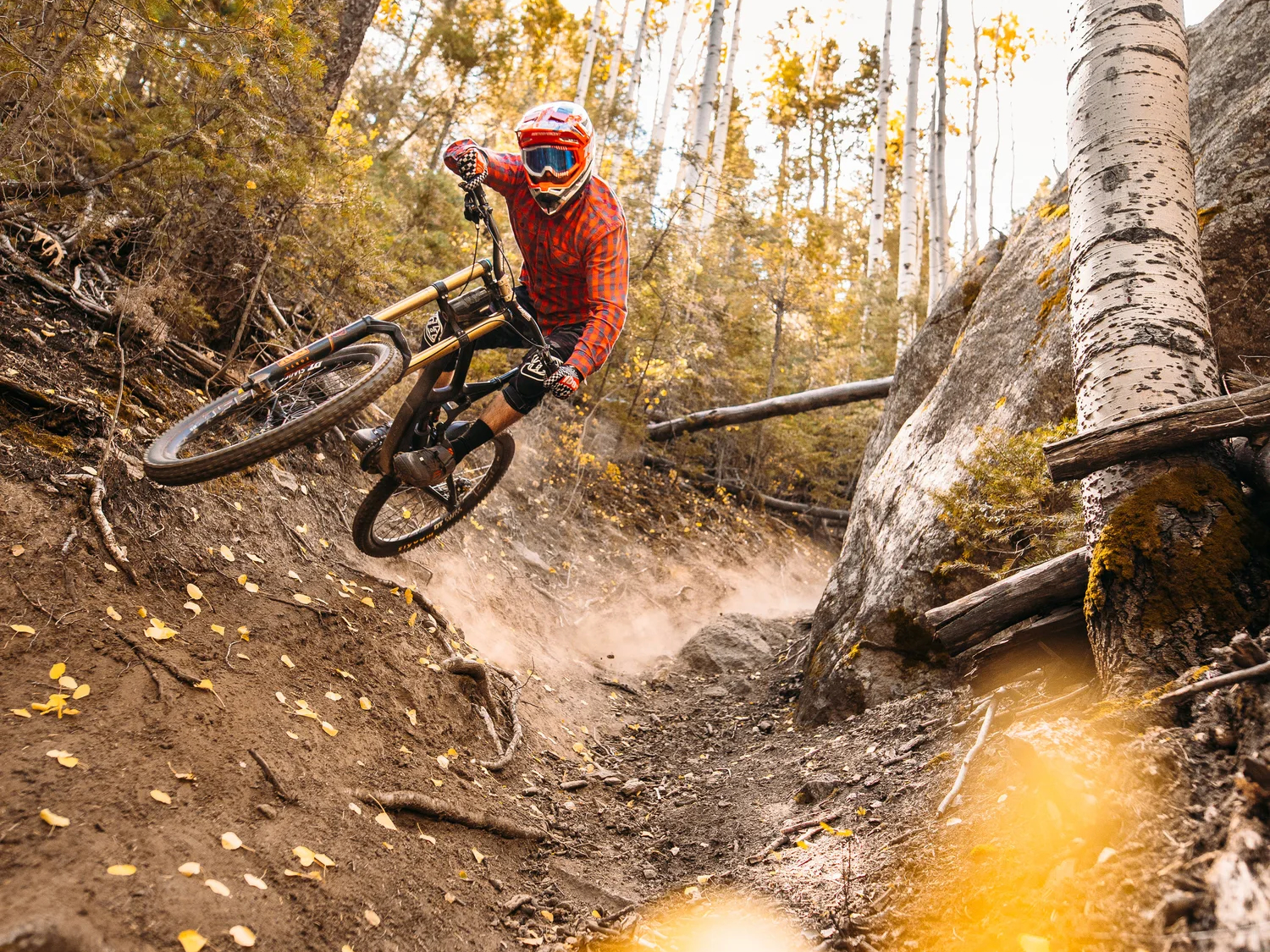
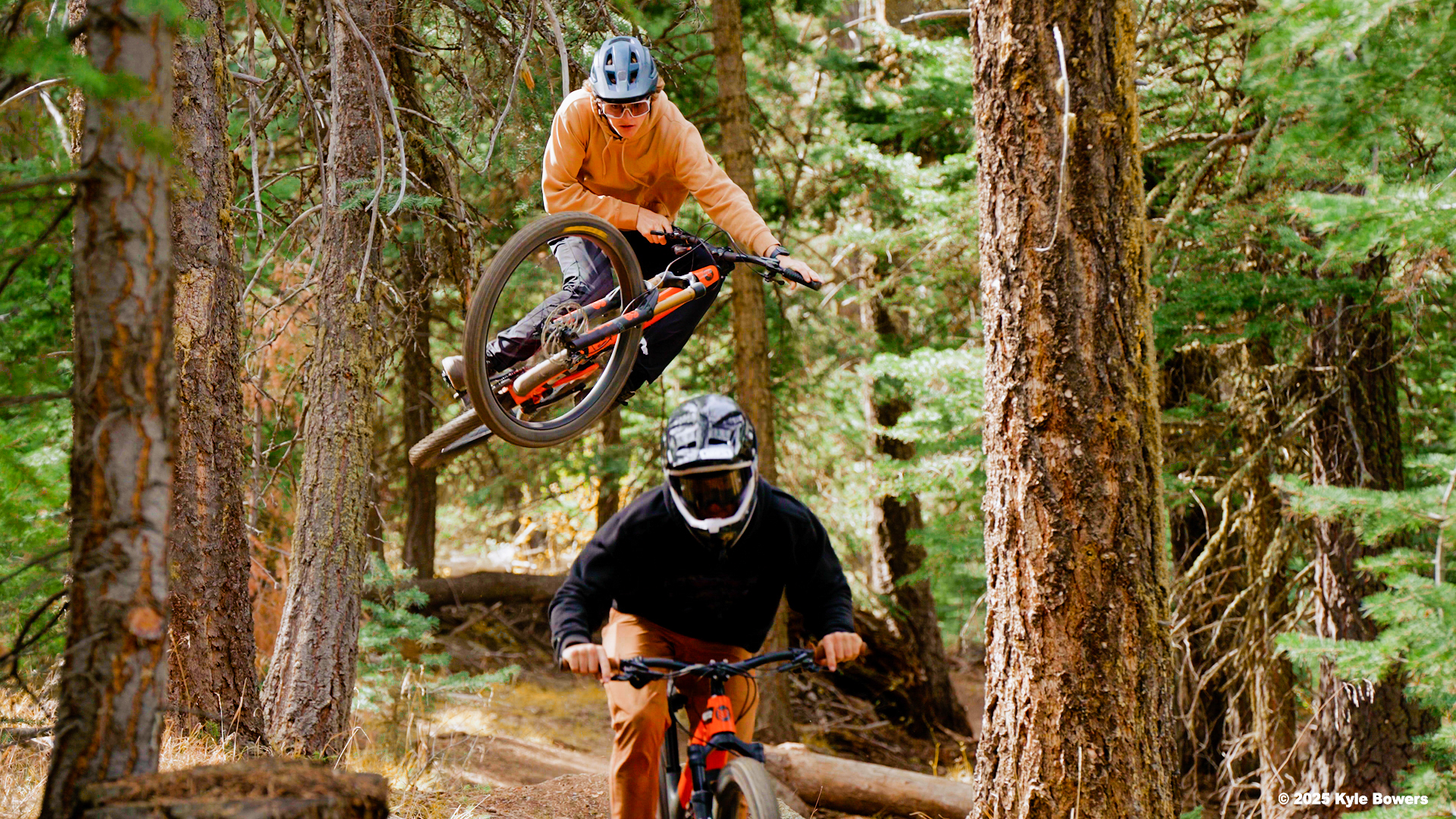
Tech gnar and big jumps coming to Mount Elden
The MEDL Recreation Planning Project was proposed in 2020 by the Flagstaff Ranger District and subsequently adopted. The plan calls for adding 60 miles of new singletrack to the region on top of 50 existing miles — a huge win for local trail users.
86% of the network’s trails are shared use, but mountain bikers were lucky to get four directional single-use trails approved. Two of the new downhill trails were opened in 2024, and the other two have now been signed off for construction. The FBO is actively fundraising to build these trails in two phases of development.
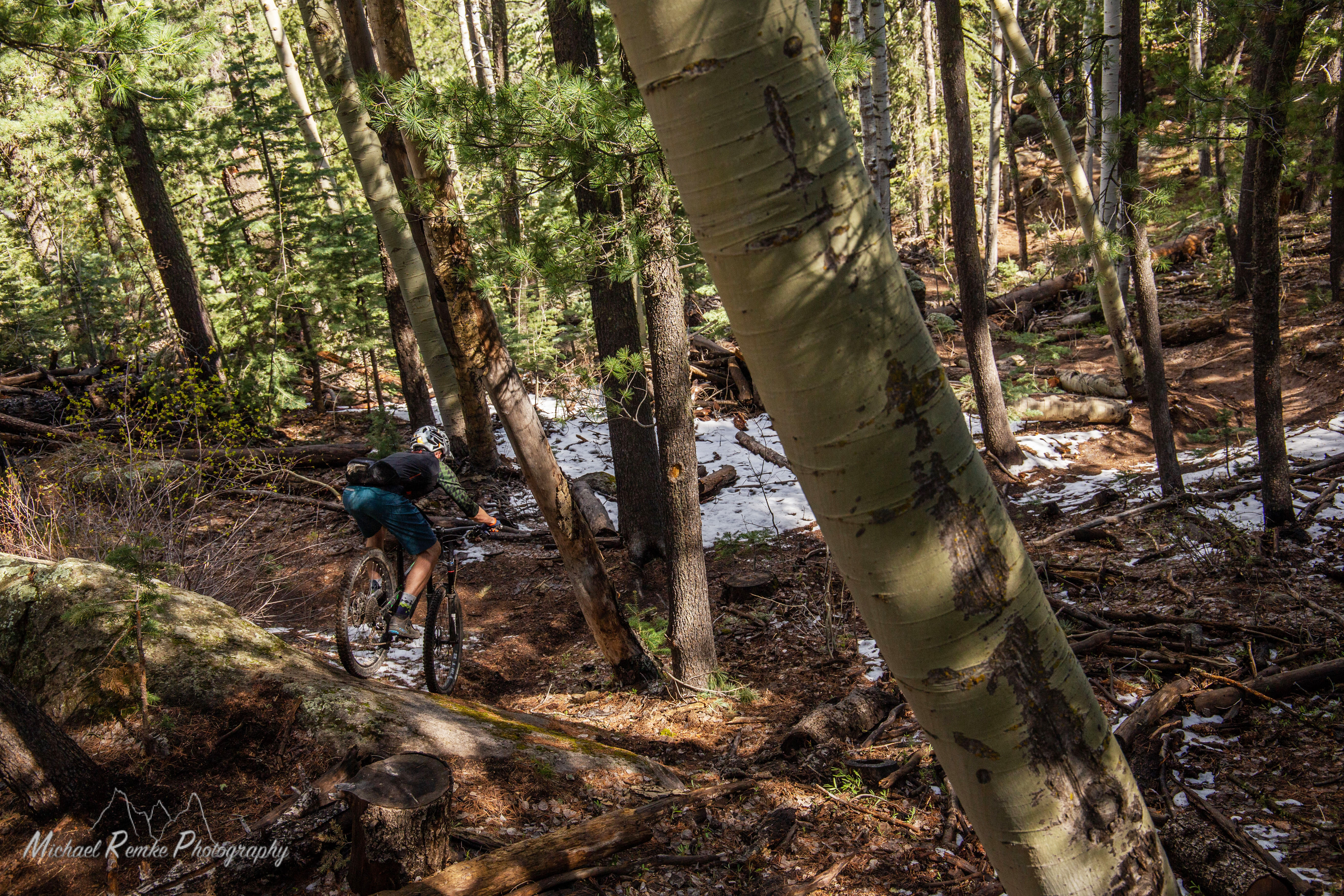
Phase one: adopting an existing social trail and building a new jump line
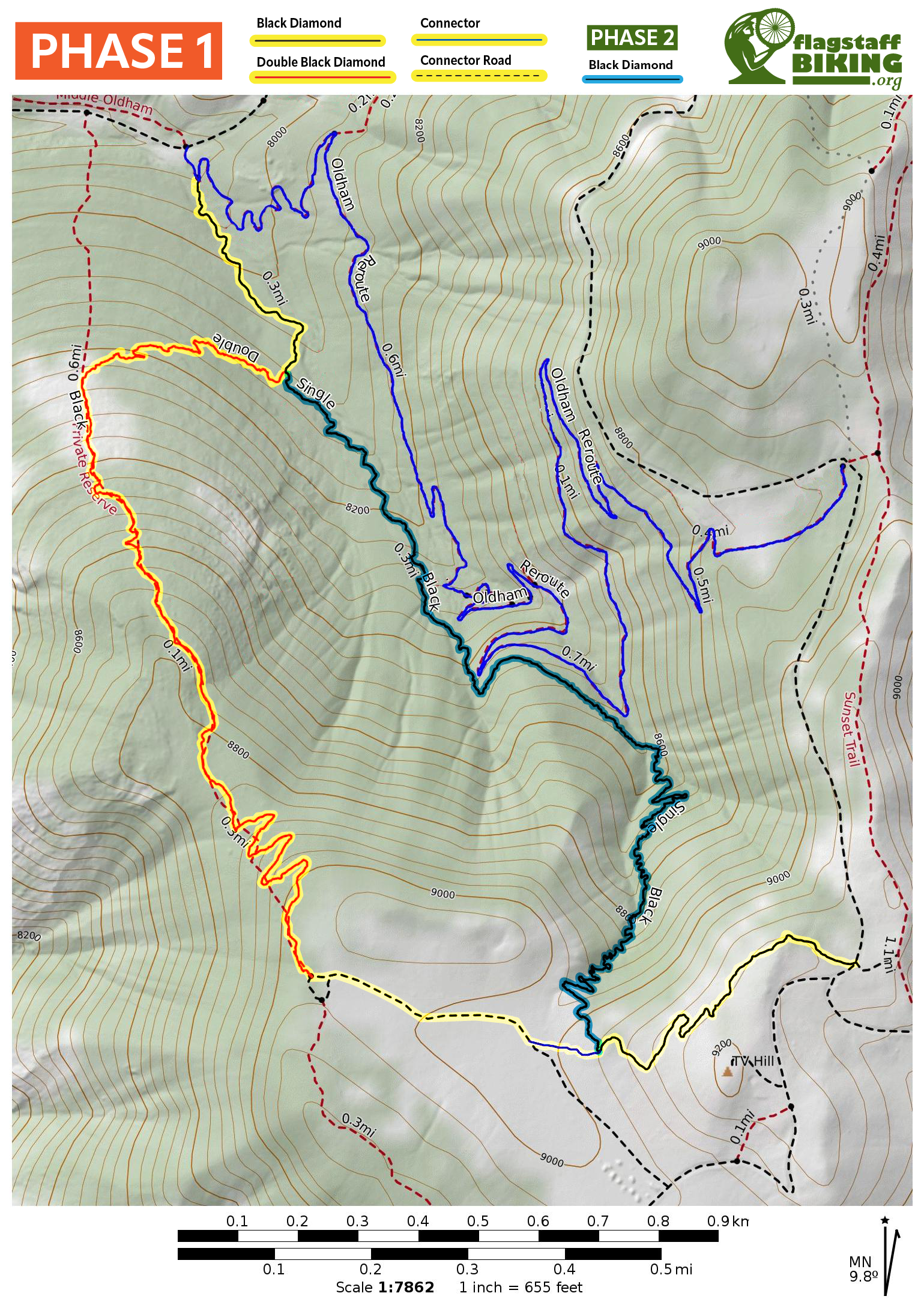
The first phase of trail development, which Hazel hopes will begin on August 1, 2026, will start by building a single black jump line at the top of the descent. This jump line will serve as a warm-up before riders get to the true gnar. To bring this vision to life, FBO is bringing in Momentum Trail Concepts, a builder with a proven track record on everything from jump lines to steep technical gnar.
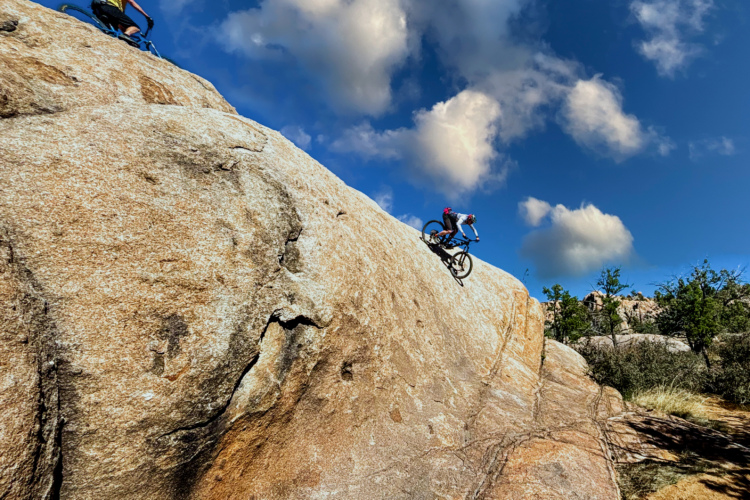
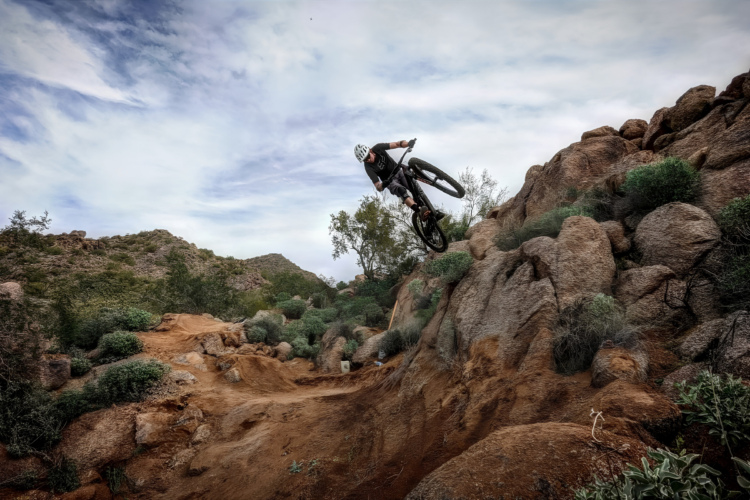
The jump line will funnel into an existing social trail known as Private Reserve: the gnarliest trail in Flagstaff. “Private, off the top of my head, I think is 18% grade, so it’s steep,” said Hazel. “It’s steep, and it’s technical, and it’s got big rock drops, some gap jumps, some slab riding. It’s really cool. It has that Squamish flavor, or Whistler Valley — kind of that steep, raw tech.”
Private Reserve was illegally built in 2005, and even though it’s remained an unofficial trail, “it was really Private Reserve that put Flagstaff on the map in terms of steep tech. I mean, it was all, you know, off the grid, word of mouth type stuff.”
“The current trail is, well, I call it a ‘rain trail.’ Like I would only go ride it after a rain so that I had good grip, good traction… but you’re on your brakes the whole time,” said Hazel. “Like a lot of [unofficial] trails, it suffers from enormous sustainability issues.”
Momentum will work to address sustainability issues on Private Reserve while maintaining the trail’s demanding double black character. “The idea is open it up a little bit, gain some sustainability, and bring in a little bit more flow while still keeping the challenge.” Hazel hopes the rehab will let riders stay off the brakes a bit more and rip the trail even faster. The existing trail will need to be rerouted in a few places to accomplish this goal and to avoid a Mexican spotted owl habitat zone.
Phase two: a steep, fast black diamond tech-flow trail
If fundraising goes well, Hazel hopes to build phase two in 2027. This 1.4-mile build will split off from the first phase just above Private Reserve. So, for both downhills, all riders will begin with the single black warm-up jump line, and then they’ll get to choose: uber-gnarly double black tech or a high-speed black diamond tech-flow trail.
Hazel said that the phase two jump line will be like “Full Sail on steroids,” referencing the now uber-popular intermediate jump-filled trail that opened in 2024. “We’re calling it ‘tech flow,’ but a steep tech — I mean, it’ll have some aspects of a flow trail, but lots of natural terrain features, and it’s going to be steeper than Full Sail.”
The trail “is going to be fast,” and it will make the most of the natural terrain. “It’s going to use some canyon walls. You’ll go up on a wall, come around, big berm, big berm, features, [and] short sections of 14, 15% grade, but very short,” said Hazel. “Then you come into a big berm with a big g-out, big grade reversal, maybe catch some air, you know, and then do it again. [And] then sprinkled in with some rock features and stuff.
“So it’s not going to be formulaic at all, like on […] older flow trails where it’s roller, roller, berm, jump, roller, roller, berm, jump. It’s not going to be anything like that.”
Once the tech-flow trail wraps up, it rejoins the bottom of the phase one trail for a roll out of the canyon to the nearby forest service road.
Getting to the top
While a dirt forest service road runs from the bottom of the planned trails to the top, the road has been closed to public vehicle traffic in recent years due to damage from the 2019 Museum Fire. The road is still used by utility vehicles to reach radio towers on top of the mountain, so it’s possible that at some point in the future the road could open for shuttle traffic — but it’s not guaranteed.
But riders won’t be forced to grind up the road. In fact, a multi-use climbing trail, known as Upper Oldham, has already been built to the top of the new downhills.
“Now, Upper Oldham was an old legacy trail going back, oh, it might even have been 100 years old,” said Hazel. “It was the old pack animal trail up to the radio towers, or, at that time, the fire lookout. And there’s even [an] old telegraph line that went up to the fire towers.”
The trail was also heavily impacted by the Museum Fire and subsequent flooding. It “had fallen into huge disrepair. We’ve basically given up maintaining it. I mean, it was just an old, super steep pack animal trail.”
The MEDL plan called for adopting Upper Oldham and realigning the trail, which the Forest Service completed in year three of the project. The new machine-built trail runs for 3.1 miles up to the top of the mountain, and is now a rideable, enjoyable climb.
Upper Oldham climbs up the same valley as the new downhill trails. It had to be built before the descents so “we knew how much real estate we had to play with on the trail design for the downhills,” said Hazel.
Once the downhills are built, mountain bikers will have epic all-singletrack loop options with ripping purpose-built downhills.
The build timeline is funding-dependent
While the Forest Service built the Upper Oldham reroute, FBO isn’t planning on any help from the USFS to build these new downhill trails. “They’re a bit hamstrung right now,” said Hazel, speaking of recent Forest Service budget cuts. “We went from a trail crew of 12 to two, and somehow, by a stroke of magic, they were able to get two other seasonals hired back on last year.” But with a trail crew of four, there’s only so much they can get done.
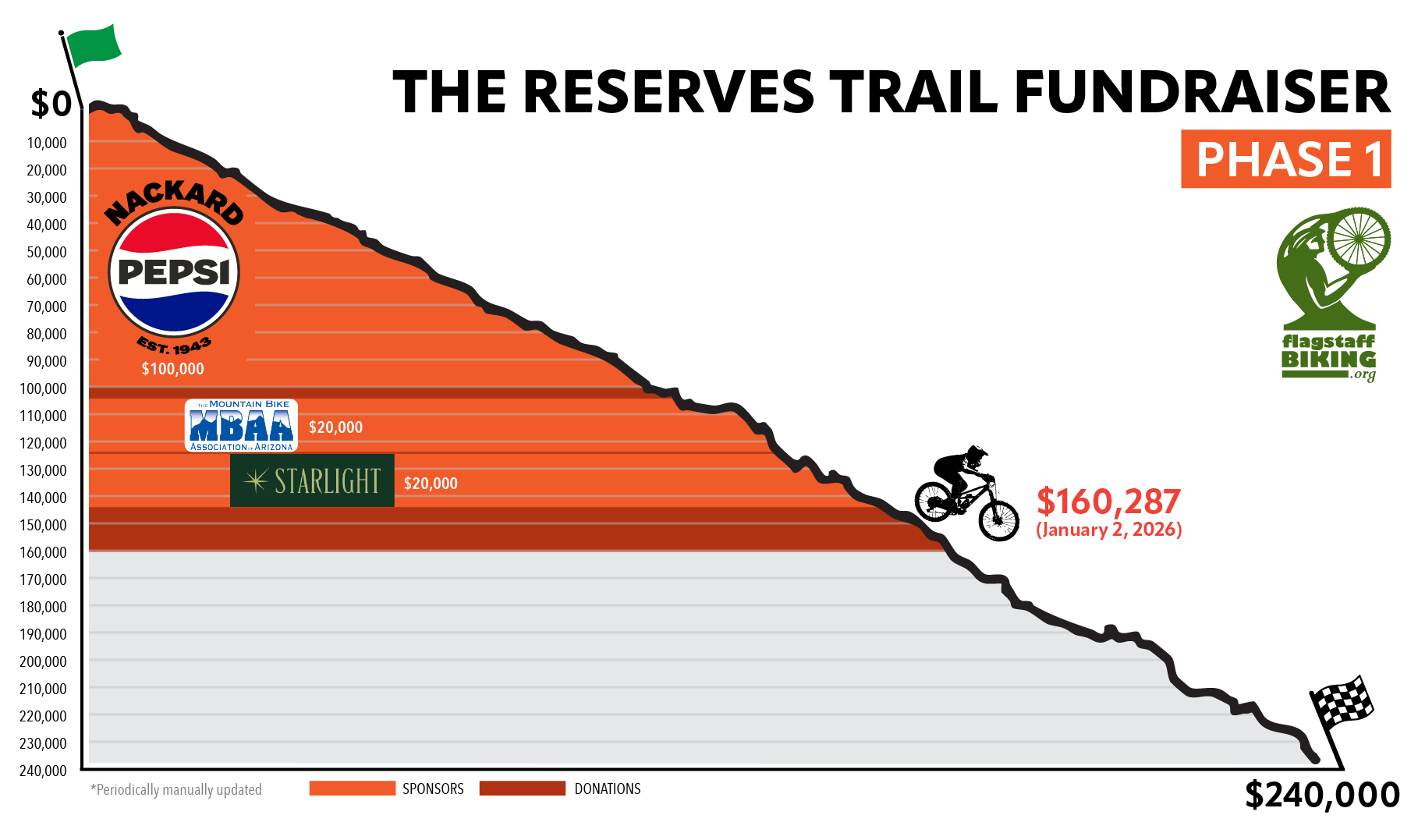
Due to that limited capacity, FBO decided to fundraise $400,000 to hire Momentum Trail Concepts to build these two trails. $240,000 will cover phase one, with the remaining $160,000 for phase two. Interestingly, FBO isn’t pursuing grant money and is, instead, focused on fundraising through the community.
“We thought about going after an RTP grant, but we just don’t think it’s a real good fit,” said Hazel. “I mean, these trails are really […] only strictly for mountain bikers, and only a segment of that population at that. Maybe 2% of the mountain biking population will be riding these trails, and so we’re going to just try and do it with community funds.”
FBO has created a website to coordinate fundraising efforts, and as of January 2, 2026, they’ve already raised $160,287 for the phase one build. Major donors include Nackard Pepsi ($100,000), The Mountain Bike Association of Arizona ($20,000), and Starlight ($20,000).
Hazel is optimistic that they’ll meet their phase one funding goal and be able to break ground in August, but he said that if the funding doesn’t come through, the project timeline will be pushed back. If you want to help FBO get these radical new downhill trails built, be sure to visit Flagstafftrails.com to donate.
Know about a new trail project we should cover? Whether you’re breaking ground on the next must-ride trail network or putting the finishing touches on a neighborhood flow trail, we want to hear about it. Drop us a line at [email protected] with the details, and your project could be featured!
Keep up with the latest mountain bike news by adding Singletracks as a preferred source on Google.


0 Comments