

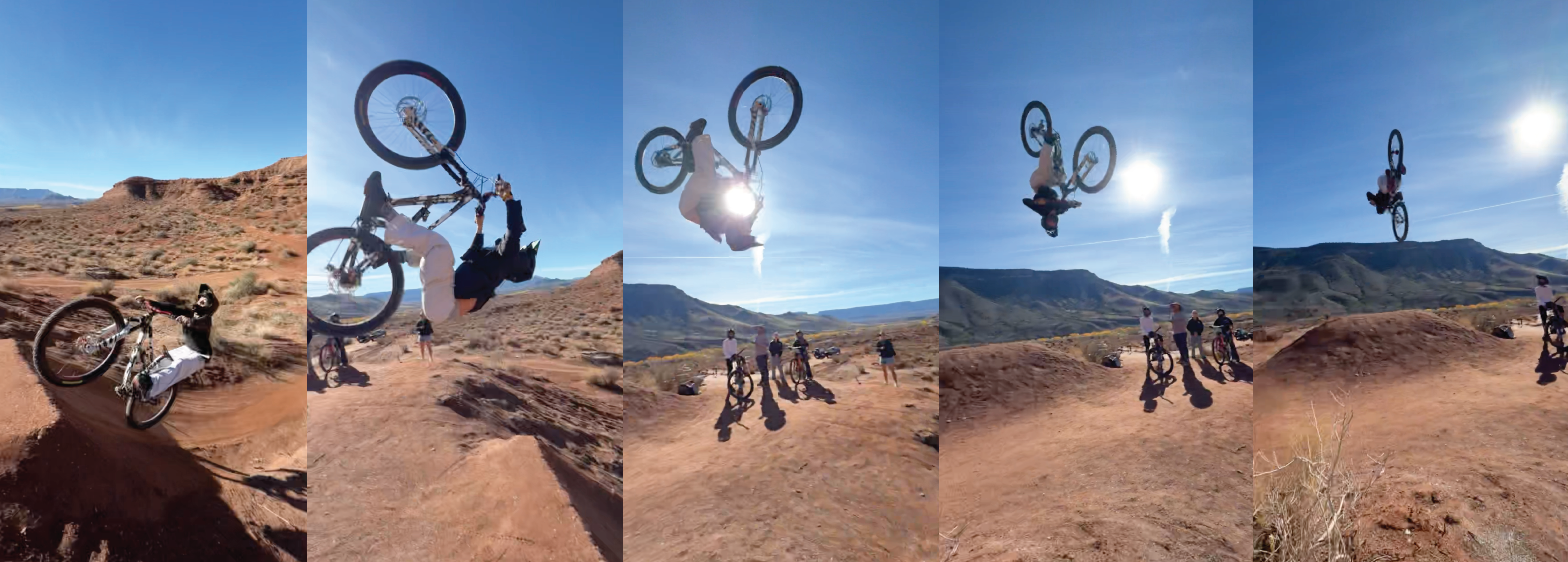
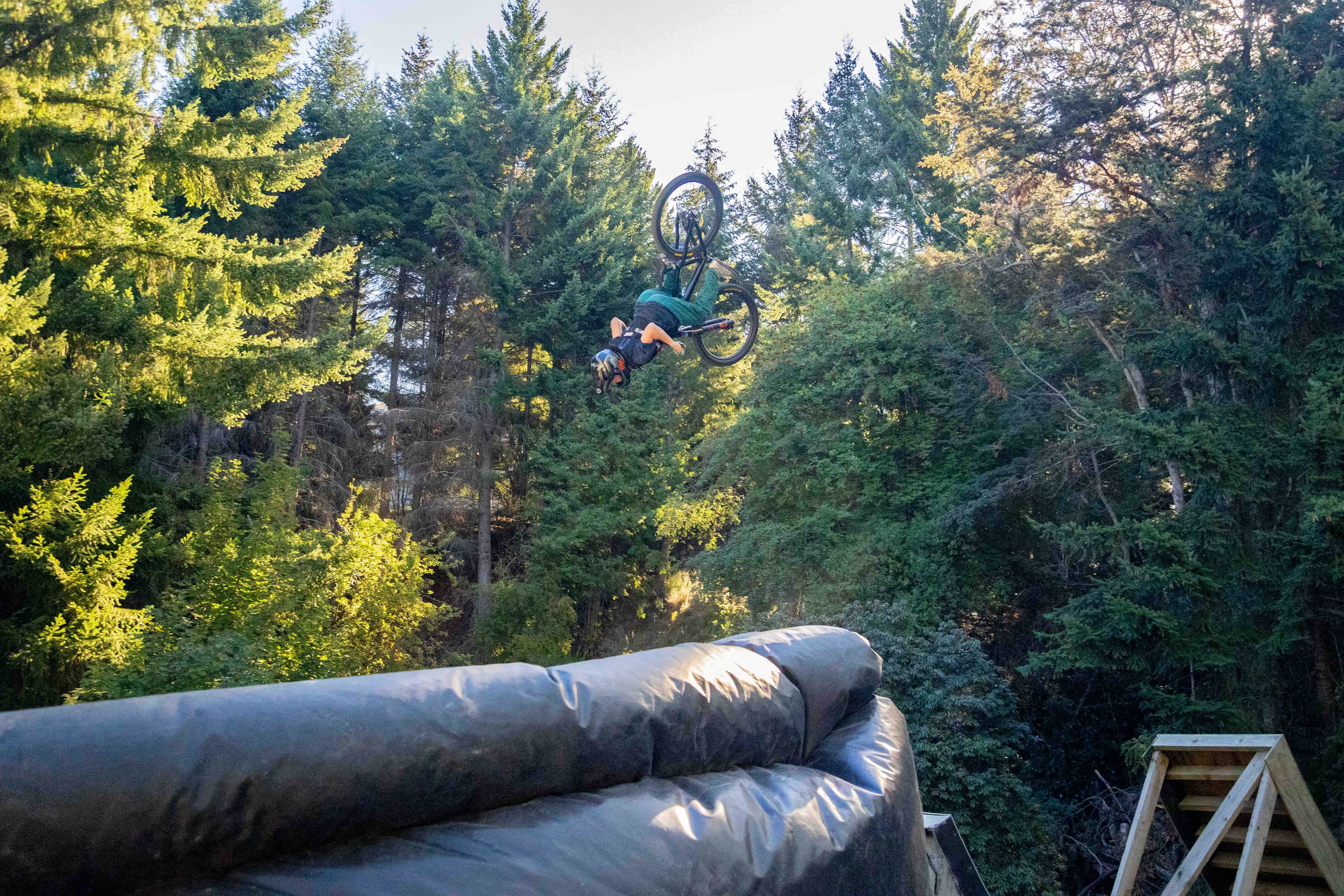
A 14-year-old launching backflips off massive jumps in the Utah desert is going to catch some eyeballs. Carter Metcalfe has racked up over 150,000 Instagram followers doing exactly that, with his channel generating over 600 million views. But scroll back through his earlier posts, and you’ll notice something else: a kid struggling to get words out between involuntary tics, fighting to simply speak on camera.
Carter has Tourette’s syndrome. And as he and his family discovered through one of the most challenging periods of their lives, mountain biking would become far more than just a way to film cool tricks—it would play an instrumental role in helping him manage his symptoms.
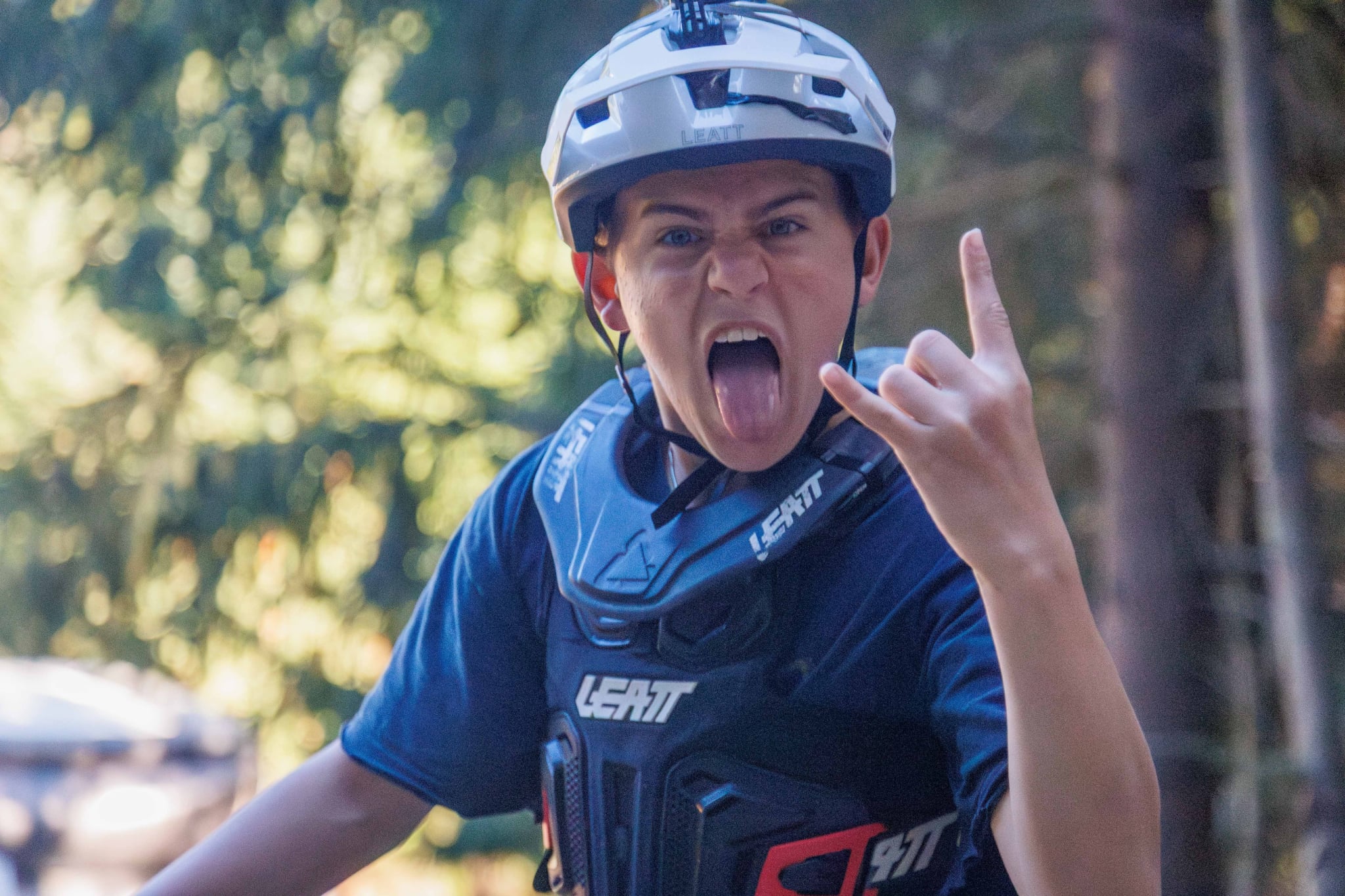
‘It started with twitches’
If you view one of Carter’s more recent IG clips, you probably wouldn’t know he has Tourette’s. Scrolling back through previous posts shows a different story, as he struggles to get words out between his tics.
Tourette’s isn’t something that Carter “caught.” It is a neurological condition with a cause that has more to do with genetics than anything else. This means Carter was predisposed to Tourette’s, and neither he, his family, nor his doctors really know what brought the condition on.
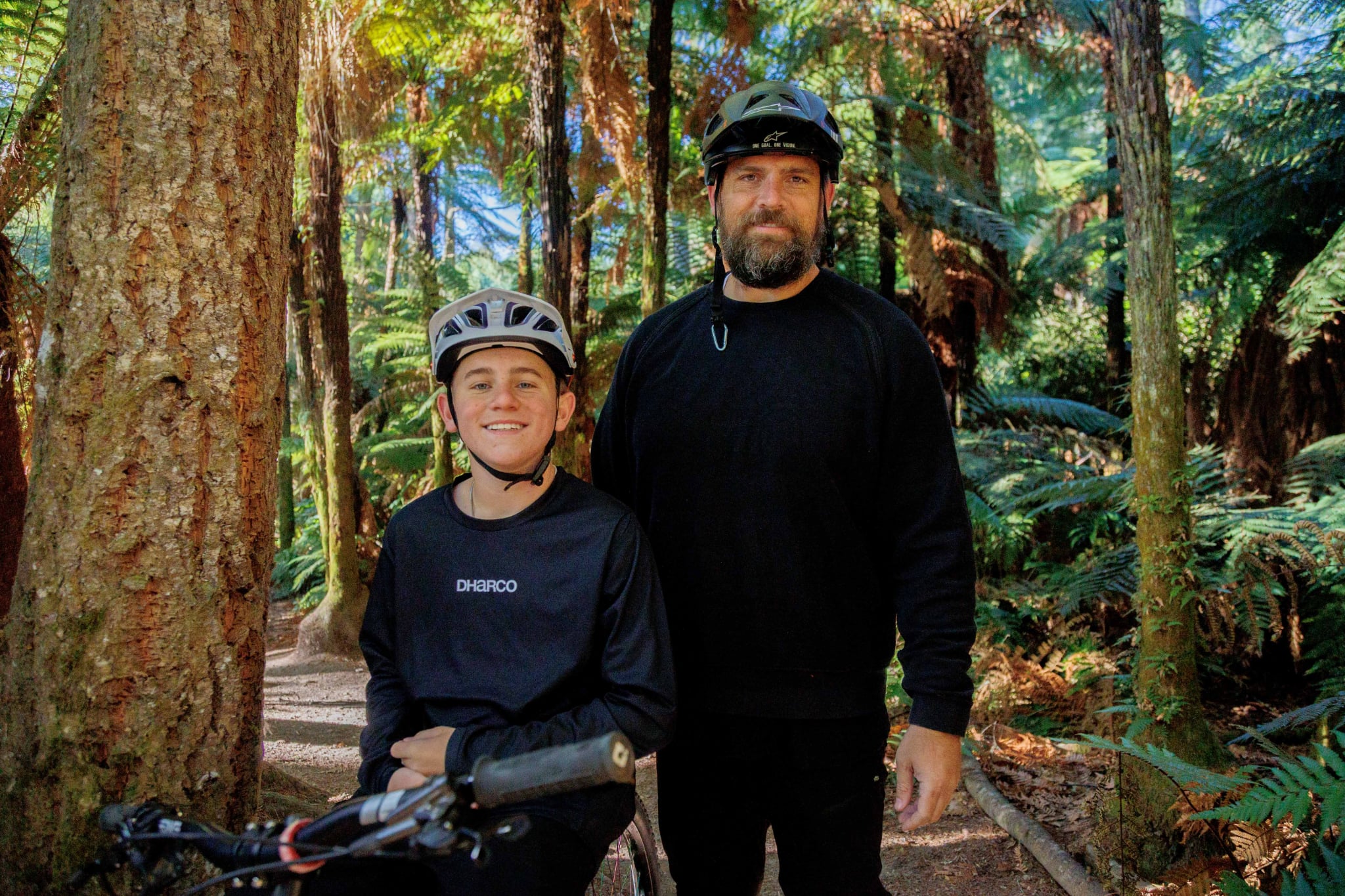
But they have a good idea. On a mountain biking trip at Deer Valley, Carter’s dad, Chris, had a major crash that nearly cost him his life. “I punctured both my lungs, broke all my ribs, broke both arms, and chipped my spine,” Chris told us. “And Carter witnessed it all.”
Initially, Carter thought his dad, who didn’t get up, was joking. Then he saw a bone sticking out of his arm. Carter got help from other riders, who flagged down a Deer Valley bike patroller. Shortly after, Chris was moved down the mountain on an ATV to a waiting helicopter.
“When I saw the helicopter take off, [I assumed] he died,” Carter explained. “And I didn’t have a phone, so I was just at the resort, sitting in the office by myself for like three hours.”
Fortunately, Chris would recover, though the road back was long.
Chris said that it started with twitches that they noticed Carter developing around the one-year anniversary of his accident. First, they appeared in his arm and then his leg, lasting for about a month and causing a considerable amount of pain. Later, one would develop in Carter’s neck, which made it all but impossible for him to talk.
After many doctors’ appointments, the Metcalfes heard the same word: Tourette’s.
“A lot of the doctors that we’ve talked to think that reliving that trauma on the year anniversary was likely one of the triggers [that brought on the tics],” Chris told us.
And then came the bullies…
As Carter’s tics got worse, so did the bullying. Chris said he watched Carter, a leader on his lacrosse team and a popular kid at school, basically shut down.
As they progressed deeper into this journey and sought ways to help Carter, the Metcalfes chose to pull him out of school at the recommendation of his doctors. Tourette’s syndrome can be exacerbated by anxiety, which created a vicious cycle for Carter concerning school.
Lacrosse also had to be put on hold.
“I had to drop out of school. I was on this lacrosse team that was really hard to get on. I had to stop that. I had to quit everything, and I was just at home all day,” Carter said.
Understandably, he was pretty depressed. Chris wanted to give Carter something to look forward to, something other than just home. So they decided to start filming a daily mountain bike video.
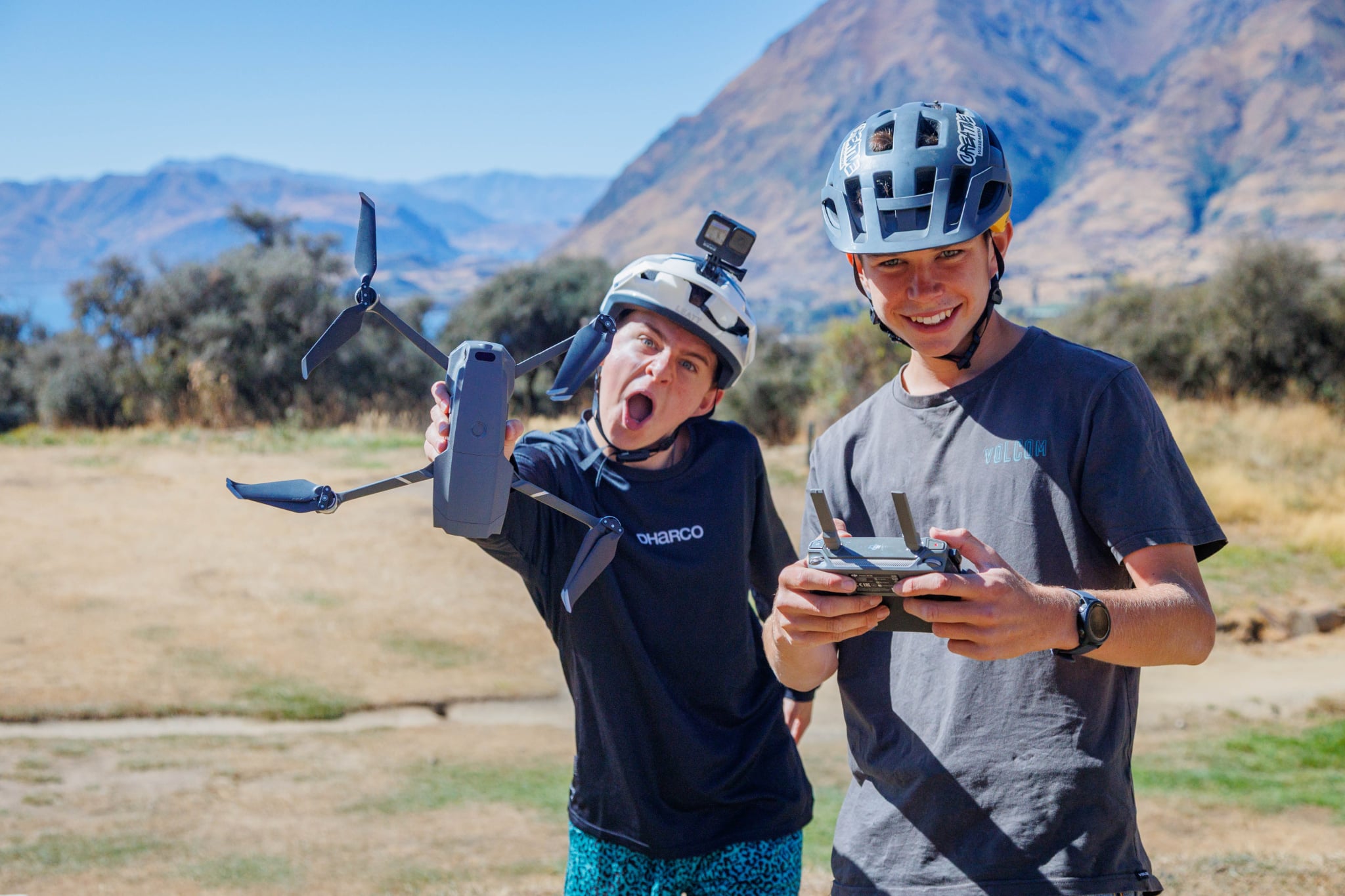
Making videos
The videos showed Carter riding his bike and living with Tourette’s, and people began to respond. Not just casual viewers, either—big names in mountain biking started reaching out to Carter. Cam Zink and Robbie Maddison were in his comments and DMs, liking the posts. Christian Pepper, pro mountain biker and social media wiz, reached out to help Carter with his posts, and countless other likes and positive comments followed.
But then something weird happened. Chris and Carter began to recognize that when a post hit around 200,000 views, the negativity poured in, but so did other messages. Parents of kids with Tourette’s, or the kids themselves, began reaching out to Carter, thanking him for the inspiration. In the end, the good clearly outweighed the negativity. For him, it was enough to keep going and making videos.
Wheelies
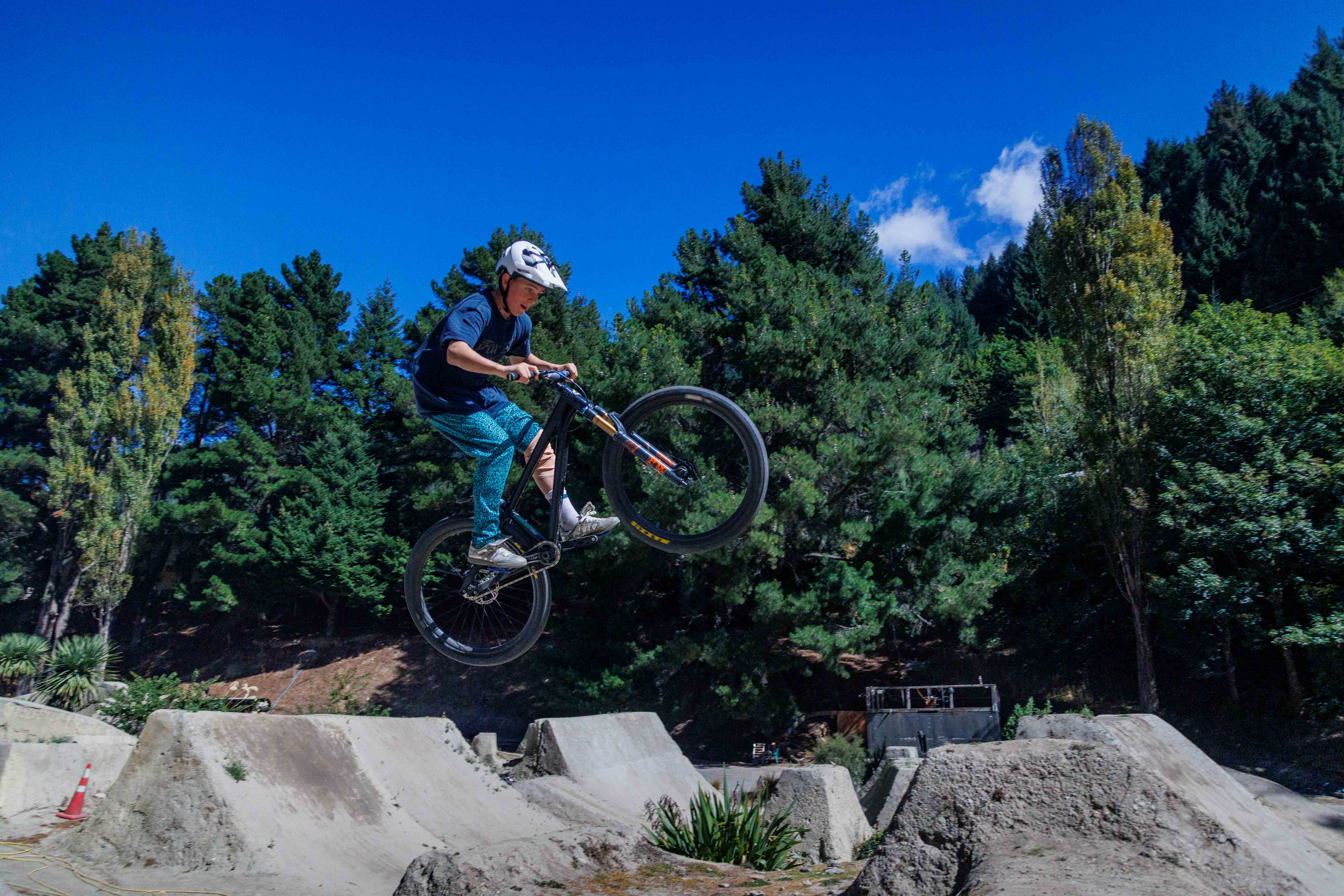
It certainly didn’t happen overnight, but Carter’s tics gradually became less frequent, and mountain bikes—more specifically wheelies—played a significant role.
Riding his bike helped calm Carter’s tics, but learning to wheelie seemed to nearly shut them down altogether. And we’re not talking about popping a quick wheelie—Carter was riding them for half a mile at a time.
“I think like being so terrible at [wheelies] and just trying to focus on it. It was this level of focus that I had to have that kind of bypassed the part of my brain that was causing the tics,” Carter said. “And the only reason it would stop was because of the blisters.”
The wheelies helped, but the Metcalfes found that just riding his mountain bike was also helping Carter. Tourette’s is commonly associated with things like ADHD and OCD, and exercise is a common remedy.
As Carter’s time on his bike increased, so did his skills and confidence. While all of these trended upward, his tics trended downward.
From Tourette’s to no Tourette’s?
So mountain biking cured his Tourette’s?
No. Carter still lives with the condition, and while his tics have significantly decreased, they are still there.
In fact, his tics have been so nonexistent in recent posts that commenters accuse Carter of faking.
“Everybody thinks they’re an expert; they’re like, ‘That’s not Tourette’s’ because when they think of Tourette’s, they think you burst out swearing,” Carter said. In fact, the swearing outbursts many of us associate with the condition are actually relatively rare.
Carter and Chris give mountain biking quite a bit of credit for his healing. Most of what they show on Carter’s channel is just that, but it is also family, faith, and regular teenage boy stuff.
What they don’t show is the countless doctor appointments and different medications he takes. Does mountain biking help? Absolutely. Is Carter’s drastic improvement also the result of working closely with doctors and taking prescribed medicine? Of course.
For Carter and Chris, the good far outweighs the negativity on social media. In fact, Carter kind of chuckles at the negative comments, knowing that the “haters” have actually put him in the position he is in today. Deals, sponsors, and trips are all due, in part, to the haters.
“Haters making me money.”
The Metcalfes’ trip to New Zealand
From IG to the big screen
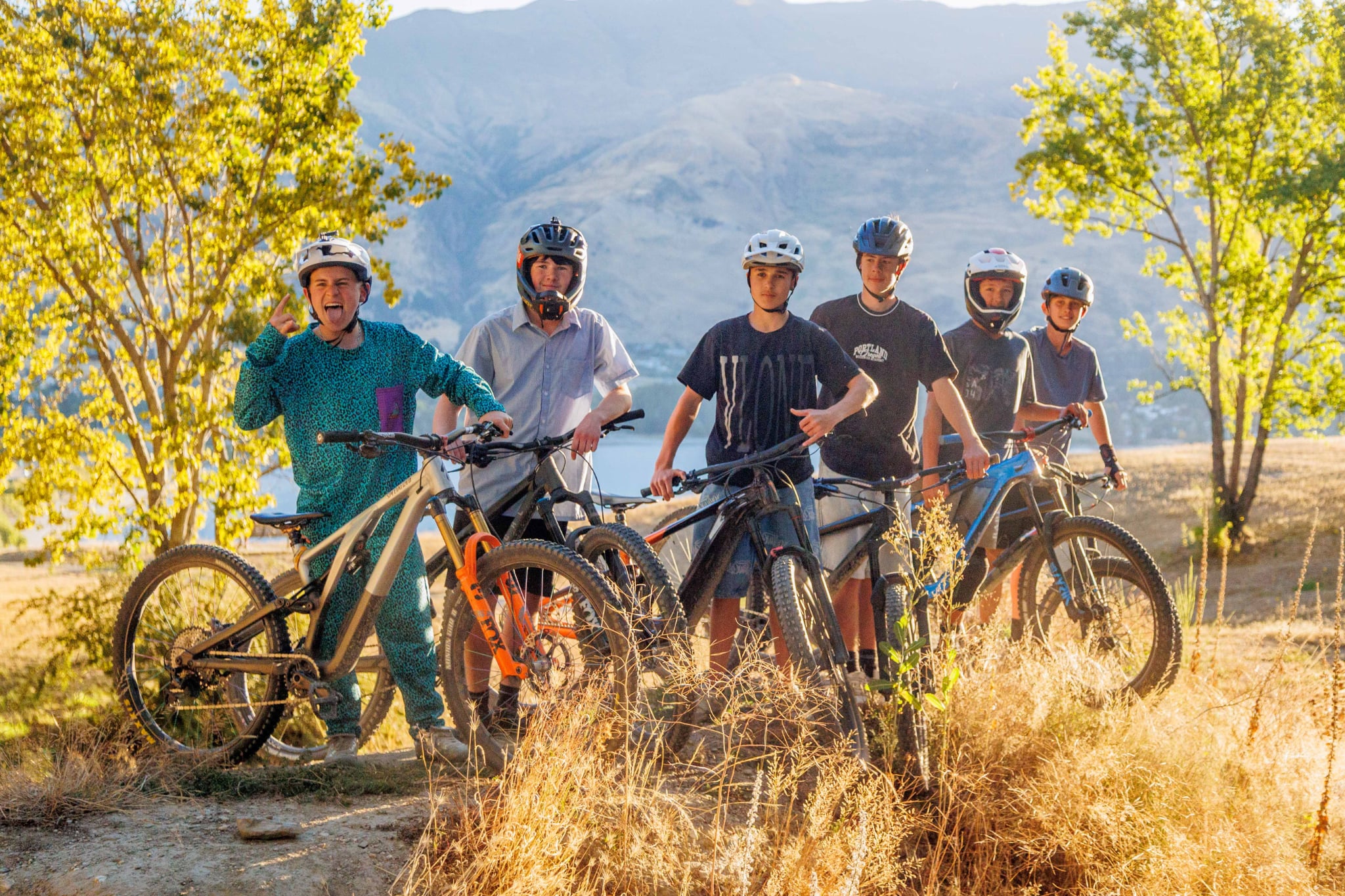
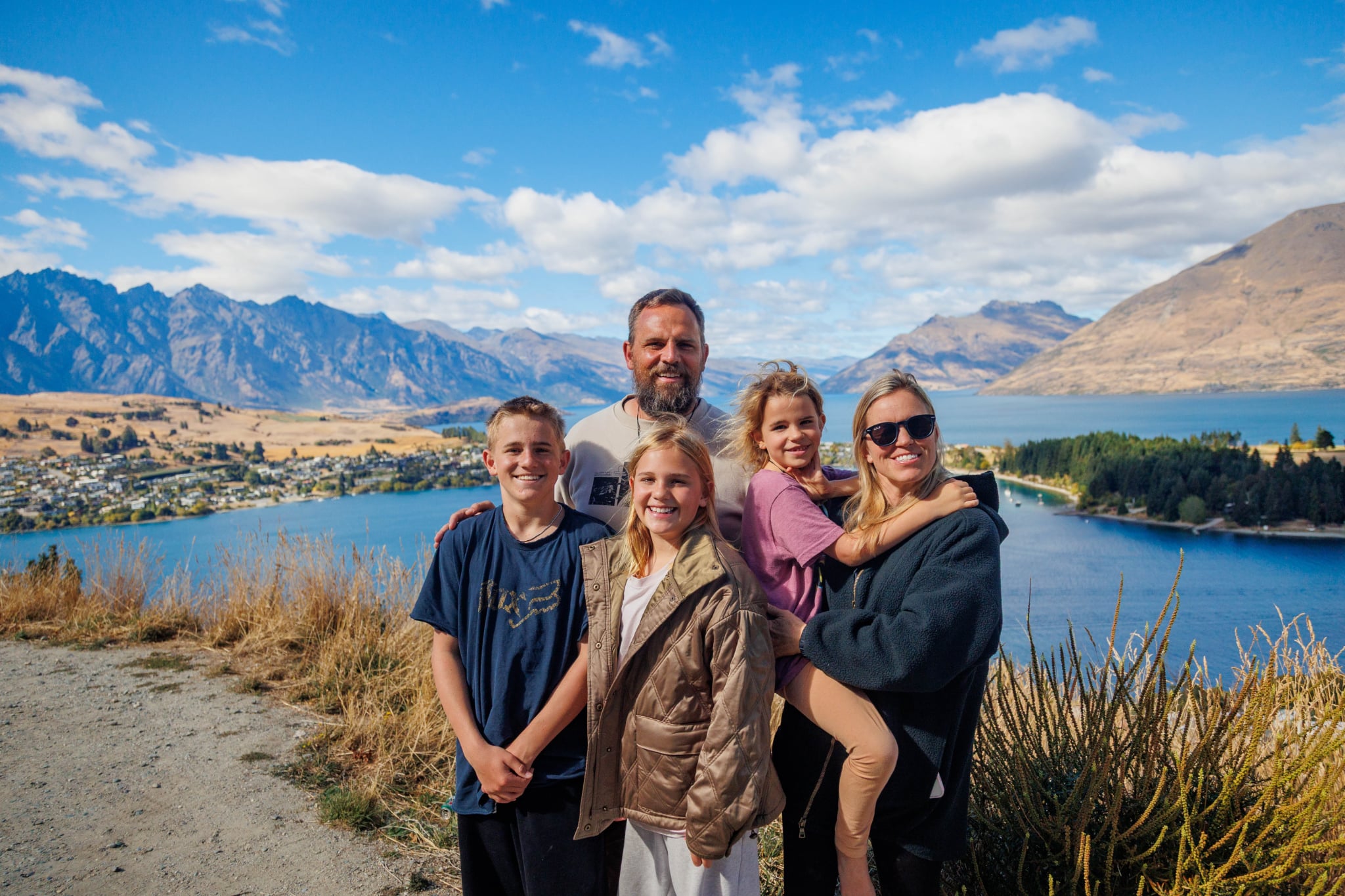
With hundreds of millions of views over the past few years, Carter’s story has reached around the world. Recently, a filmmaker from New Zealand reached out to the Metcalfes about making a documentary about Carter.
A fellow mountain biker himself, this filmmaker was inspired by Carter’s story, connecting especially with the experience of being bullied. While the film will document the Metcalfes’ trip around New Zealand and Carter’s adventures on two wheels, it is more than another shredit. The film will also focus on the incredible resilience of kids, like Carter, and how they can overcome difficult circumstances.
And do some pretty crazy things, like backflip a massive jump in Southern Utah.
The Metcalfes are in the final stages of funding the documentary. If you’re stoked on what Carter is doing, consider supporting the film.
The news stinks. Why not follow Singletracks on Google News to bring more joy to your day?



3 Comments
Jan 12, 2026
Jan 16, 2026
Jan 21, 2026