

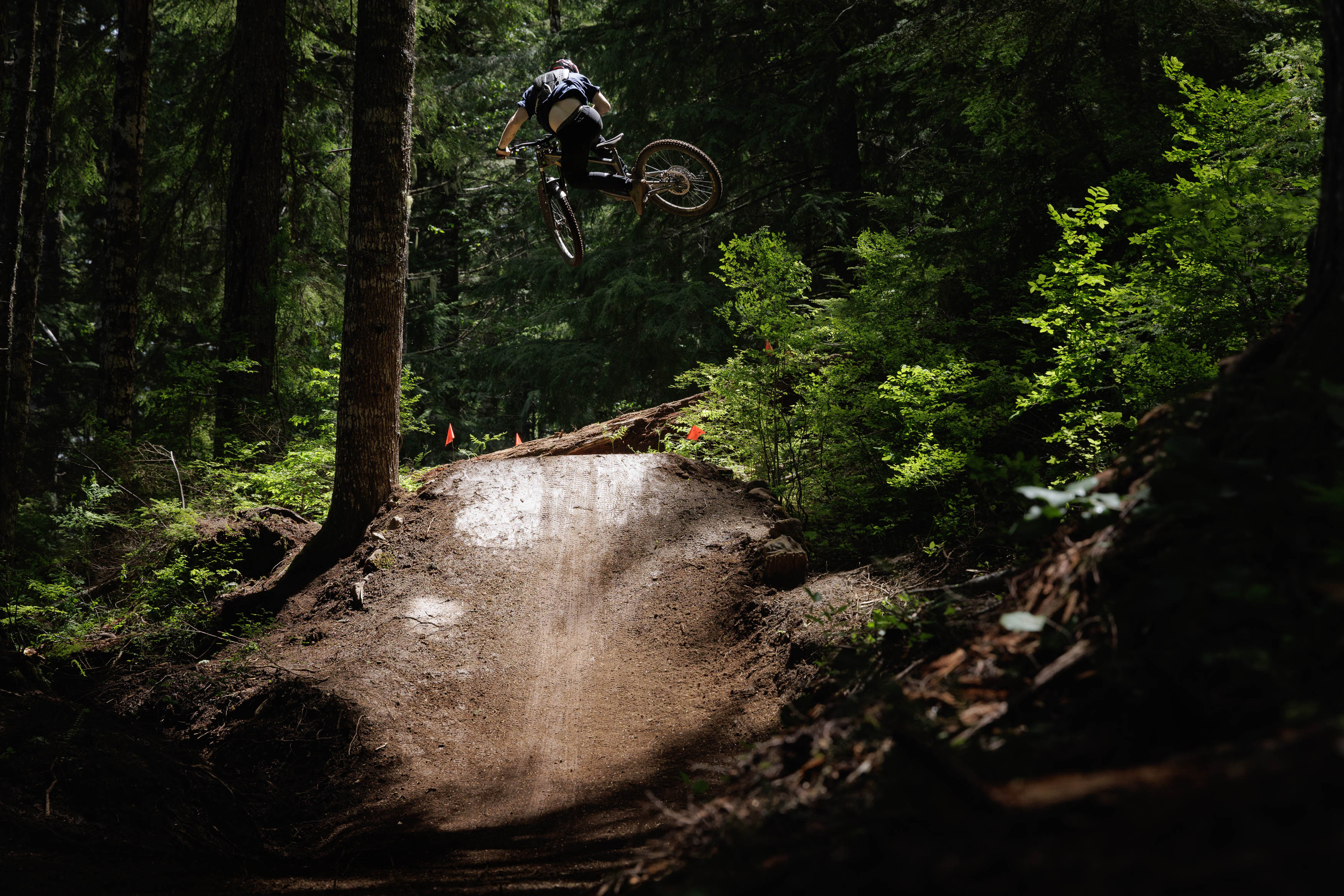
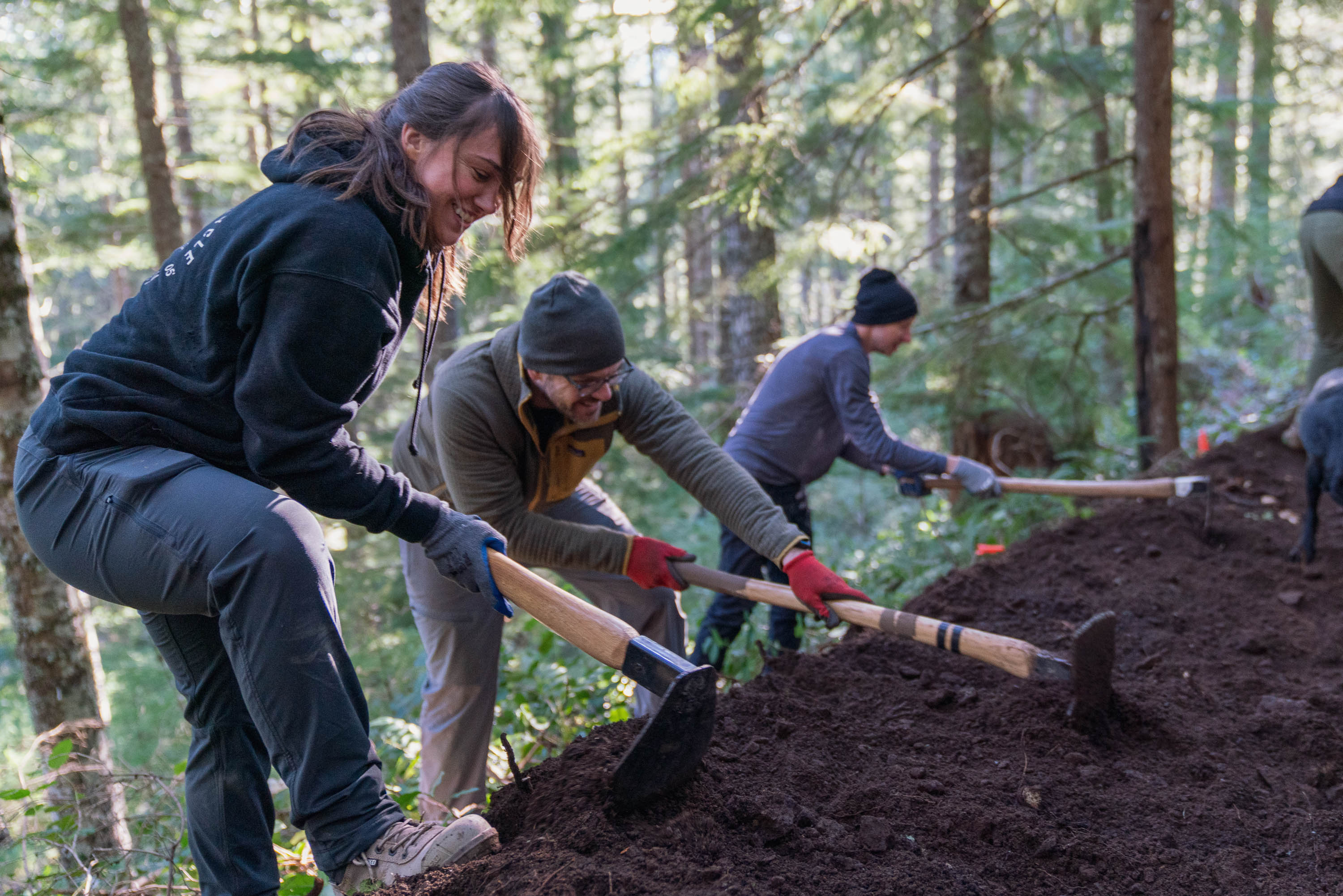
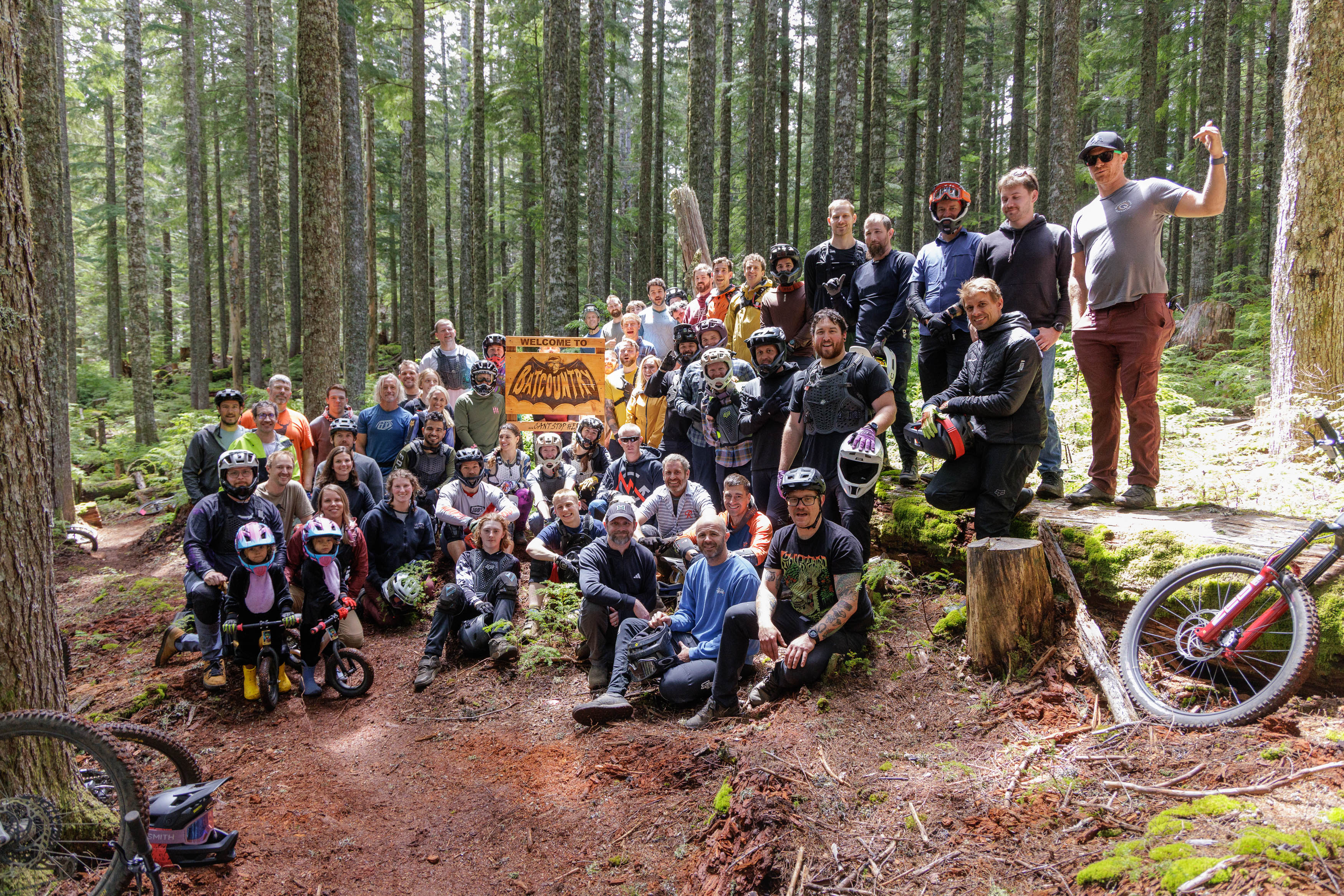
Dig days at Drift Creek in the Tillamook State Forest are an impressive sight. The sheer number of vehicles lining the access road and volunteers on the trails would lead you to assume that the Westside Trail Federation (WTF) is one of Oregon’s largest trail organizations. The WTF has been a nonprofit since 2007, and they’ve built some of Oregon’s best singletrack.
How a small group of volunteers became WTF
The small group had big plans. In 2019, they began building what would become an iconic Oregon trail—Fear and Loaming.
As Fear and Loaming came together, more riders began hearing about the trail and wanting to lend a hand however they could. Clearly, there was a need for the type of trail WTF was envisioning.
After completing Fear and Loaming in 2021, WTF would go on to build two other trails, Bat Country and Gnarstow. These two trails cemented the trail organization’s reputation for building advanced-level, technical singletrack that rivals many of the state’s secret loamers.
Fear and Loaming was just the beginning at Drift Creek
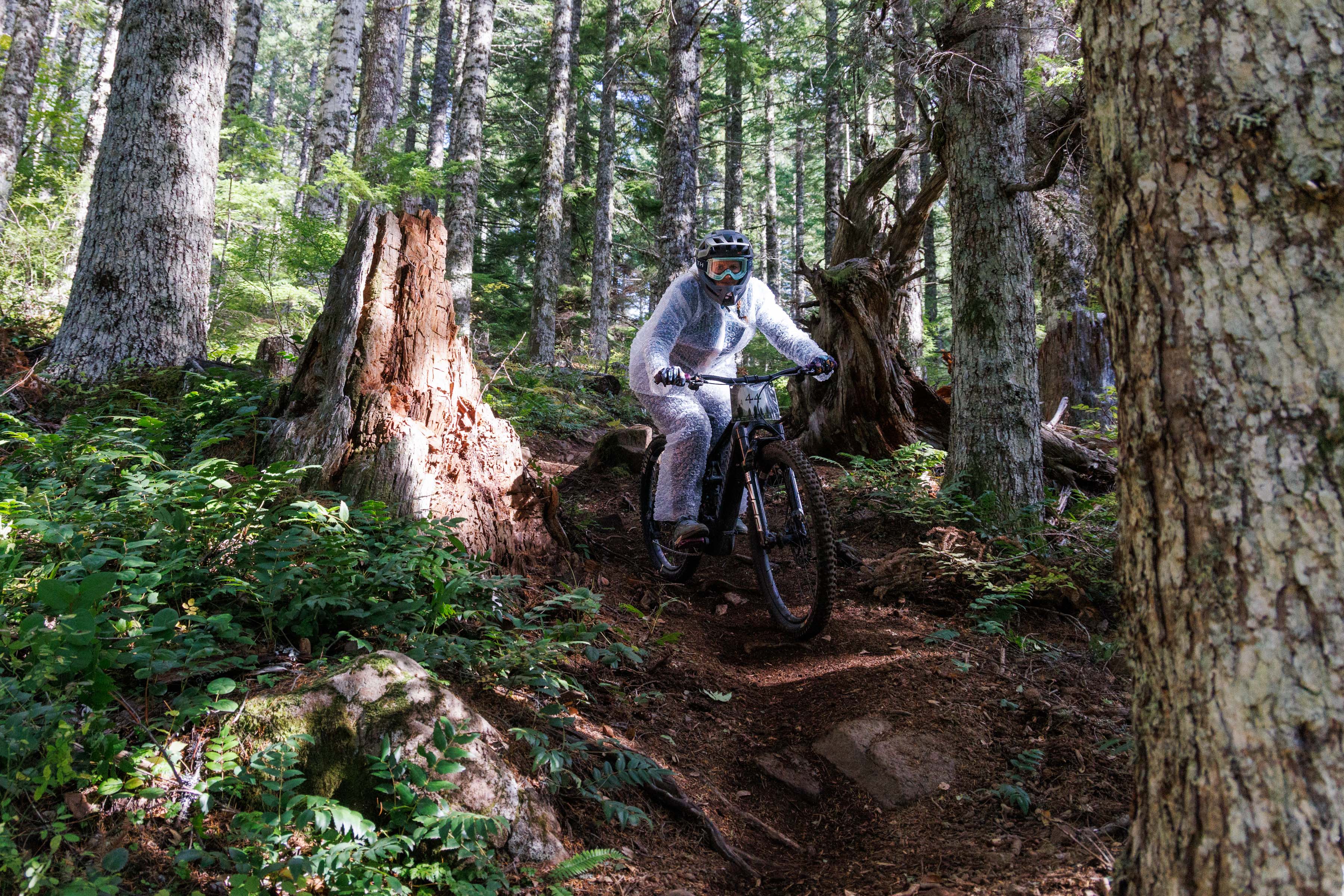
Fear and Loaming descends over 2,300 feet back down to the Drift Creek Trailhead. Its four-plus miles were built by hand, entirely by WTF’s army of volunteers.
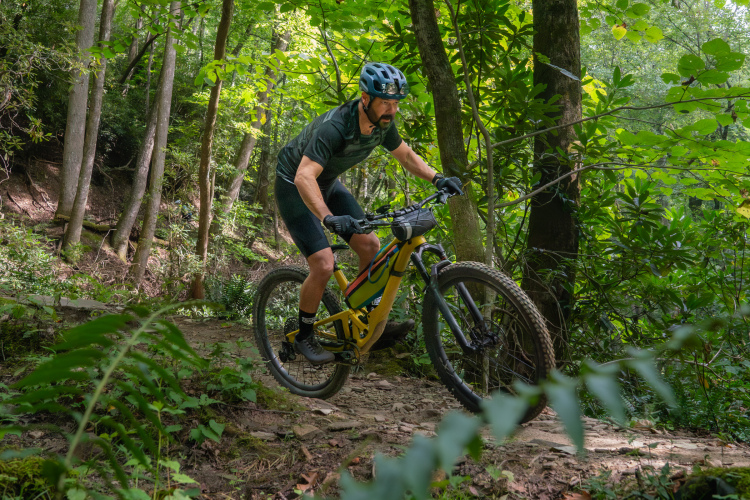
Word quickly spread about this new massive descent. Fear and Loaming had a couple of things going for it. First, like the other trails at Drift Creek, it’s just a damn good trail. It easily earns its advanced-level, black diamond rating with high-speed sections, rough and chunky tech, and steeps.
Fear and Loaming also has quite a few significant drops, step-downs, and doubles mixed in. Line options are abundant, making the trail a different experience each time you ride down.
The other reason so many started heading out to Drift Creek was shuttle access.
“This was a kind of shuttle-only zone,” Kidd said. “Fear and Loaming is great; it was really appealing to the longer-travel riders.”
A nearly seven-mile shuttle road twists through the coastal mountains, taking riders to the top of the Drift Creek trail system. The road is gravel but well-maintained, with front-wheel-drive sedans able to reach the top easily. This reality, paired with the fast, technical descent, appeals to the long-travel crowd, making Drift Creek a common zone to see downhill bikes.
And this is precisely what WTF wanted. From the beginning, the organization was unapologetic in its desire to build steep, rowdy descents, something not commonly found on public land in northwest Oregon. Well, not legal trails, at least. Kidd explained that, as they discussed this reality with the Oregon Department of Forestry (ODF), the land managers were highly accommodating.
“[ODF is] on board. They understand that it’s important for this segment of riders to have advanced trails because we’ve all seen what happens when you don’t legalize trails for that segment of riders,” Kidd explained. “Those are people who are very motivated, have tools, and are more than happy to go out and build their own stuff.”
But here they never had to, and no current trail at Drift Creek was a former social trail adopted into the network. ODF worked alongside WTF for each build, even approving Bat Country and Gnarstow, which would push the envelope even further.
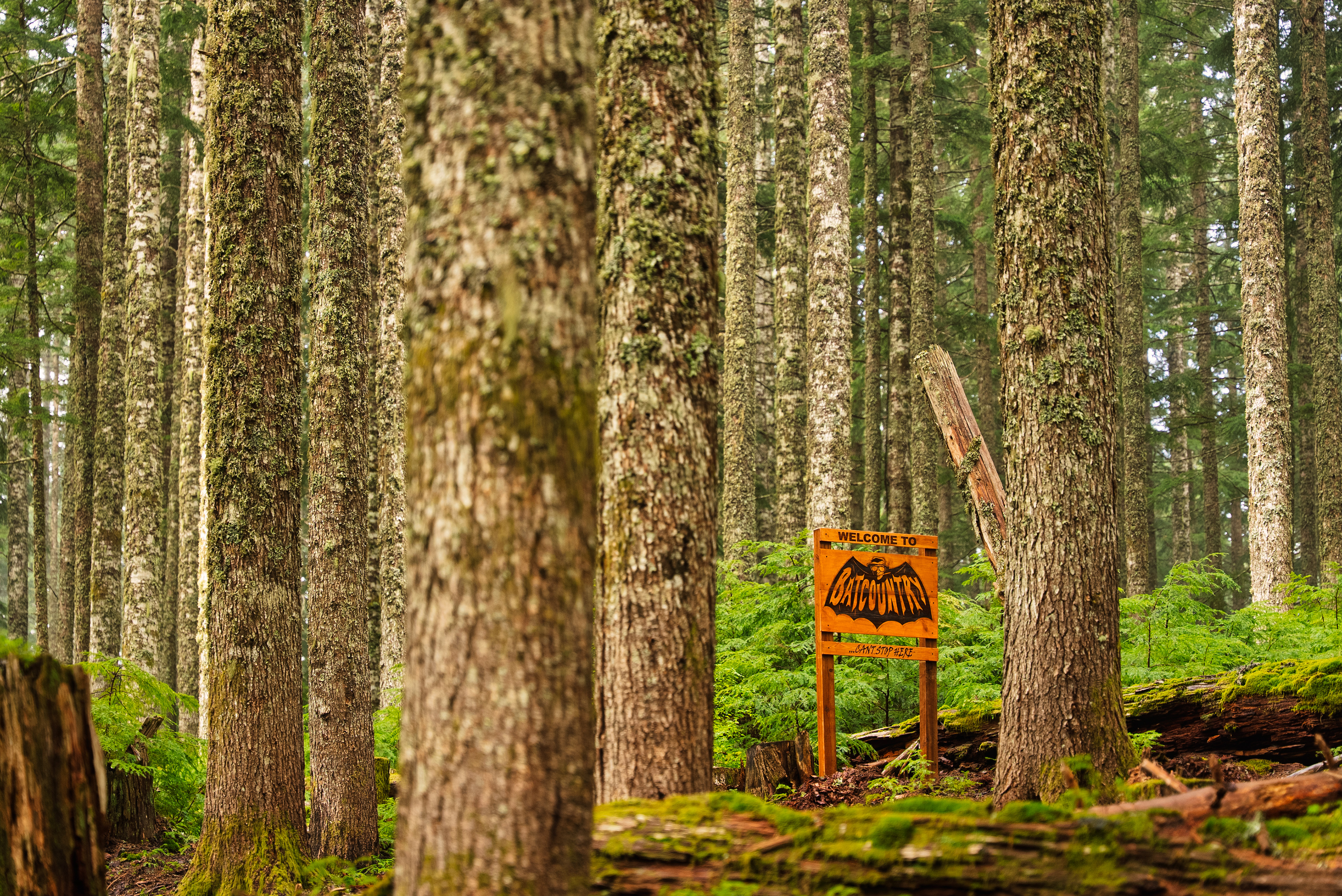
The next two builds got even steeper and more technical
Immediately following the success of Fear and Loaming, WTF built two more trails that rivaled Fear and Loaming’s advanced rating. The first to open was Gnarstow in 2024, which easily earned its double-black rating.
Starting from roughly the same area as Fear and Loaming, Gnarstow drops over 1,300 feet in a mile and a quarter. The trail is extremely steep, rough, and rooty, with mandatory chutes not for the faint of heart. There are also some gaps and drops sprinkled in here and there, but, for the most part, Gnarstow is as raw as singletrack can get.
While most of the trail features are mandatory and require a high level of bike handling and skill, there are a few B-lines in place. However, the alternative options WTF provided on Gnarstow are more challenging than anything found on Fear and Loaming.
It’s a proper, gnarly descent, and it is absolutely legal.
Running parallel to Gnarstow is its little brother, Bat Country. Completed in 2025, Bat Country branches off at the start of Gnarstow, taking a bit more time to reach essentially the same spot. Bat Country drops roughly 1,300 feet in just under two miles.
While not as steep and technical as Gnarstow, Bat Country still delivers and is easily a step above Fear and Loaming, while maintaining the same black-diamond rating. It has many of the same attributes that make Gnarstow so spectacular, but on a slightly smaller scale.
While Bat Country still has steep sections, there’s more recovery time between them. Bat Country also has a few more doubles, with some growing to a fairly sizeable distance, as well as chutes and drops. Here, however, the B-line options are more manageable.
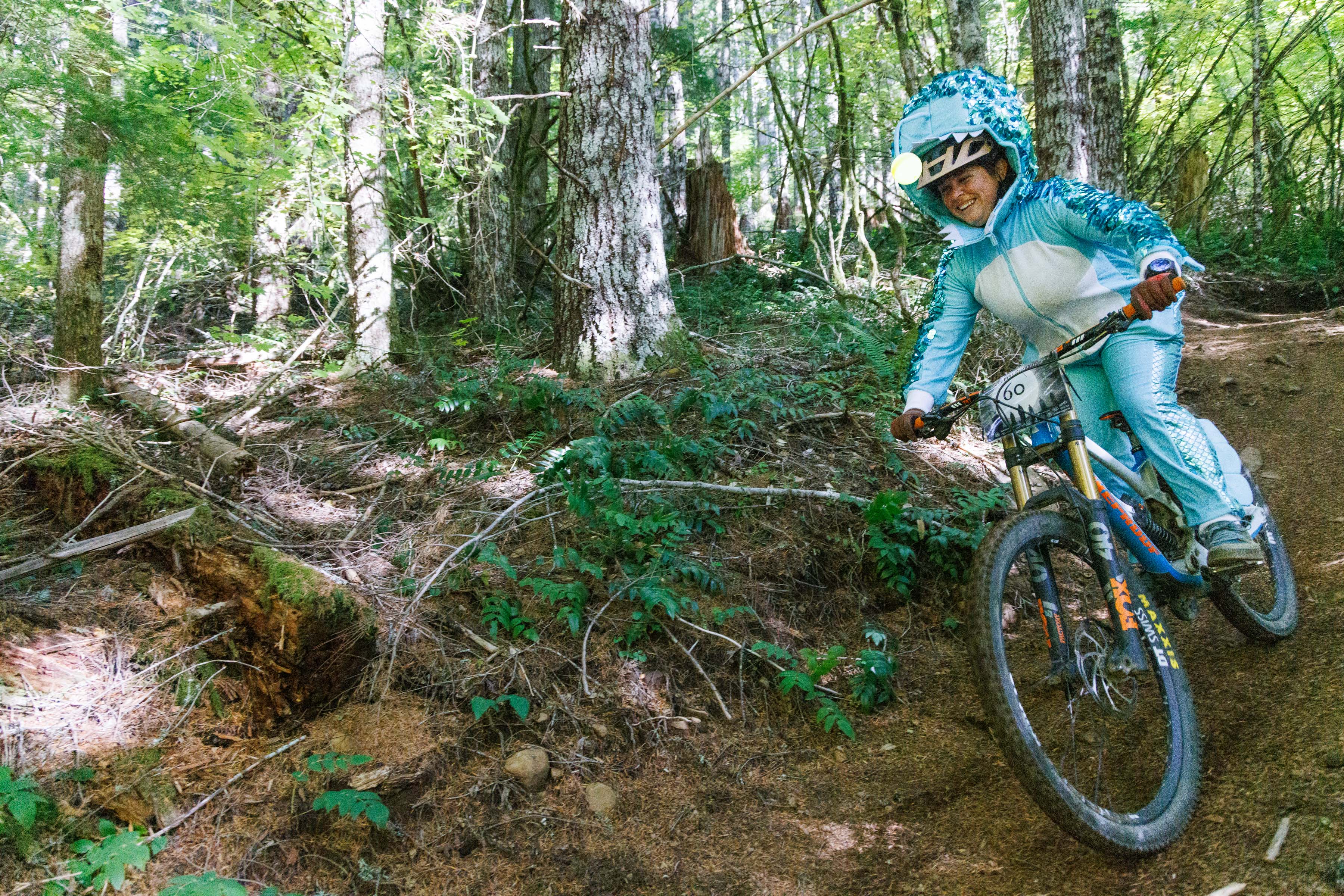
New Trails at Drift Creek
WTF has big plans for Drift Creek. Currently on their radar is a new trail that’s a little step in a different direction than they are used to.
“[We’re planning] an adaptive-friendly, progressive blue jump line with black and double-black options,” Kidd said, giving a comparison to a popular Whistler Bike Park trail. “So think Crank It Up, with some more spicy stuff on the outside.”
The new flow trail, dubbed Electric Snake, will twist two and a half miles down in roughly the same area as Bat Country and Gnarstow. Kidd told us that once completed, Electric Snake will be the longest blue jump line in the Pacific Northwest.
There is also a climbing trail in development that will take riders from the Drift Creek Trailhead to the top. Right now, the only way up without a shuttle is to pedal the gravel road. It’s a manageable climb, but the winding route through the forest adds unnecessary miles.
A new climbing trail will also help connect the current trails at Drift Creek. While Fear and Loaming descends mostly south, Gnarstow and Bat Country head to the east, ending at an entirely different location. A climbing trail will help connect everything, making sections more lapable and providing easier access back to the top.
WTF is the story of a small organization that gathered a considerable following and created phenomenal trails. As a 100% volunteer-run outfit, building three of Oregon’s best trails in just six years would have been impossible without that army of volunteers.
Currently, the organization is fundraising to move forward with the new trails. Kidd said they are targeting a phase one goal of $85,000 and would love for those who have been stoked on Drift Creek to consider donating. While funds are always needed, WTF is fortunate to have many volunteers.
But don’t let that stop you from joining them on a dig day!
Article updated at 2pm Mountain Time on January 20, 2025, to reflect that the Westside Trail Federation has been a nonprofit since 2007.
Know about a new trail project we should cover? Whether you’re breaking ground on the next must-ride trail network or putting the finishing touches on a neighborhood flow trail, we want to hear about it. Drop us a line at [email protected] with the details, and your project could be featured!
The news stinks. Why not follow Singletracks on Google News to bring more joy to your day?



2 Comments
Jan 21, 2026
Jan 22, 2026
Anyone interested in getting more MTB access to trails in CA, please take the Trails survey. When asked, mention we want mtn bikes allowed on trails less used by hikers.
https://www.myinput.com/californiatrailssurvey