singletracks is mountain biking
Sign In | Create Your Account | Site Map | Help  


Old Hardtail to New Commuter: How to Convert Your Rig for the Daily Grind

Wednesday, October 19th, 2011

After upgrading to that shiny new full suspension, disc brake equipped, 25 pound trail slayer, your trusty old hardtail got relegated to the back of the garage. You look at it from time to time and remember the good times you had on it: your first crash, your first all day epic, that trip to Moab where you carried it down Portal Trail

You think about riding it, but the new bike gets all the trail time and it makes you a little sad inside.

Photo courtesy of eliwestfall

Okay, so that’s a bit over-dramatized, but what if you could re-purpose that old hardtail and get regular saddle time on it again? One option is to convert it to a singlespeed; another is to turn it into a dedicated commuter bike, which are not mutually exclusive options, by the way.

When I started bike commuting about 5 years ago I thought I needed/wanted a road or ‘cross bike. I even started shopping around for one, but I soon realized that another bike was not in my budget at the time. I took a hard look at my Specialized Rockhopper and realized several things about it:

  • The frame is very well built.
  • It has excellent geometry.
  • I knew for a fact that I could ride it long distances comfortably.
  • It has pannier rack mounts.
  • It has bosses for two water bottle cages.
  • It can easily handle a load consisting of me, a laptop, clothes, etc.
  • It can drop off curbs, hit cracks, and even survive detours into the dirt when the bike path is under construction.
  • I paid $150 for it, so if it ever gets stolen, it’s not the end of the world.

The perfect commuter bike was sitting right there, ready to go!

At that time it was still my mountain bike, so I swapped tires twice weekly and removed the rack for trail use. This article, however, will cover what I learned when I did get that shiny new trail bike and turned the Rockhopper into my full time Curbhopper.

First you will need to assess your bike’s current condition, any parts that need upgrading or replacing, and any options you might already have installed.

Maintenance

  • Replace the chain and cassette.
  • Get the wheels trued.
  • Check the headset, bottom bracket and hubs for proper adjustment. Re-lube if necessary.
  • Replace the brake and shifter cables.
  • Replace the brake shoes.
  • Check all bolts and fasteners for tightness, rust, etc.
When commuting, you will likely be riding in traffic, dodging cars, and powering through intersections. That is not the time to miss a shift or snap a chain! Make sure the bike is in perfect mechanical condition. At some point you will thank yourself.

Upgrades

Knobby tires and front suspension are great on the trail, but on pavement…not so much. In order to make a truly dedicated commuter bike, these need to go.


There are a number of rigid steel forks on the market. These are sized to allow for the travel your bike used to have, and can come with V-brake or disc brake tabs.

Here are some decent models to consider:

eBikeStop carries Dimension steel forks in both V-brake and disc brake configurations. They range in price from $35 – $55.

When I converted, I spent $45 on a Tange steel fork, with V-brake tabs, but these seem to be getting a little scarce.

Surly makes a great steel fork for $100 with both V-brake and Disc tabs.

Whatever fork you choose, just be sure to match the brake mounting tabs to your intended brake type, and pay attention to 1 1/8th inch threadless vs 1 inch threaded steerers.

For tires, the issue is not so much the tread or the width, but more importantly the maximum air pressure. On pavement, a firmer tire rolls easier and you want as many psi as possible. I have 1.5″ wide Bontrager Hardcase Comfort tires that will take 85psi. Loaded with me and work stuff, these hold up great and roll fast. Here are some tire choices that are currently available:

Kenda Kwest (100psi 26×1.5 model) $20.50

Schwalbe Marathon $41.95

WTB Slick (with Flatguard) $19.99

Bontrager H2, H4 or H5 $20.99 – $46.99

Racks and Bags

With the fork and tires sorted, the next step is to give your newly created urban assault bike the ability to carry stuff. A luggage, or pannier rack is the first item to decide on. Most older mountain bikes have pre-drilled and tapped mount points for just this purpose. Topeak is the leader in this segment and their rear racks integrate seamlessly with their own line of bags while also supporting bags from other brands. The center of the rack acts as a de facto fender, and they have a built-in tab for mounting a tail light. One model is even disc brake compatible.

If you don’t have rack mounting tabs, you will need to use a seatpost rack. These don’t support as much weight as the frame mounted type, but they are suitable if it’s your only option.

Next you will need to choose a bag for transporting your stuff. If you do not need to transport a laptop, there is a huge selection of bags available. Make sure to allow room for a change of clothes, lunch, and personal items. Better quality models have compression straps, bungee cords and built-in rain covers. If you also need to transport a laptop, not to worry: there are bags designed specifically for this purpose. The Delta Metro Elite is an affordable choice that can hold a 17″ laptop with plenty of room left over for clothes and files, and it has an integrated rain cover. I have this model and it works ok, but the mounting system is a little weak. The mounting hook broke after about a month of use, but Delta replaced it for me without a hassle.

If you’re serious about bike commuting, the primo line of bags to check out comes from Arkel. These high quality bags are pricey, but they are very well made and can hold up over years of commuting. The Bug model is fairly compact and can hold a small to midsize laptop via an optional padded sleeve. Off the bike, it quickly converts to a backpack. The aptly named Commuter is the workhorse of the line-up. It swallows larger laptops and a ton of stuff and includes the  laptop sleeve.

Lights

Whether your whole commute is in daylight hours, or if you stretch into dusk in the spring and fall, a good set of lights can be a valuable purchase, and they may even be required by law in some places. A good quality ‘blinky’ tail light is a good idea regardless, as it helps motorists see you, even in bright sunlight. Here are several good models:

Planet Bike BRT-3 Can be direct-mounted on the Delta rack above. This is the light I use. $9.99

Niterider TL-5.0 Convenient seat post mount. $6.98

Blackburn Flea Small, light-weight, rechargeable and insanely bright. This is a popular model among full time bike commuters. $29.99

As for a headlight, there are a number of decent models in the $30 to $50 range from the above vendors, but if you already have one for nighttime mountain biking, you can just use that. If you don’t have a light, I would still recommend a mountain biking light such as the MagicShine MJ-808 P7 for $89.99, the CygoLite Pace 350 for $149.99 or the Light & Motion Stella 400 for $269.99. Any of these lights will work well for commuting, as they all have Hi, Medium and Flash modes for night time illumination or daytime visibility, as needed. I have the MagicShine and I love it.

This how-to is intentionally comprehensive and results in a well appointed, full-time commuter bike. You can start with the basic maintenance, street tires, and a backpack and make the rest of the modifications as time and money permit. Hopefully this helps you get that great old hardtail out of mothballs and back into circulation!

If you already have a converted commuter bike, go ahead and drop a link to a photo of it into the comments.

Dakine Syncline MTB Short Review

Thursday, October 6th, 2011

The Dakine Syncline features an “all-mountain fit” with a 14.5″ inseam. It has a conveniently removable Italian-made Comp chamois, ventilated mesh lining, zippered hand pockets and leg vents, a heavyweight rib knit back stretch panel, side waist tab adjustments, polyester birdseye waistband, and a crotch gusset for an increased range of motion.

But what does all of that even mean? Nothing if it doesn’t translate into a comfortable ride out on the trail.

Out on the Trail in the Syncline

I first tested the Syncline shorts during a long day of shredding the Evolution Bike Park at Crested Butte Mountain Resort. The baggy fit easily accommodated some beefy knee pads without any catching or binding. Thanks to the removable chamois, I think you could easily wear a hip and tail bone protector under these shorts and still feel very comfortable (although I haven’t tried them with one yet). The exterior of the Syncline short is much heavier and tougher than a cross-country short (as you’d expect) since it’s built to survive a few tumbles off the bike now and again without getting shredded to pieces. I’ll admit I took a couple of spills, and the Syncline shorts thought nothing of them.

When is a pair of downhill shorts just another pair of shorts… and when is it something more?

Obviously, the Syncline is designed for the downhill aficionado, and with all of these DH-specific features and its durable build, it excels in this category.

I was surprised to discover that the Syncline performs well in a number of other applications, too.

Cross-country

Despite the fact that these shorts hit below the knee, they ride very well even on cross country rides. I guess the “all-mountain fit” lives up to its name, by keeping them from catching on the knee or saddle. There were several chilly, early-morning rides in Crested Butte when I threw the Syncline on for a little extra warmth, and they were both comfortable and toasty! Obviously, because of the heavy, durable exterior they wouldn’t be ideal for hot summertime rides, but as the temps continue to cool here in North Georgia I am looking forward to many fall rides in the Synclines,

Commuting

The cooler fall temperatures have also convinced me to start commuting to school again. As a result, my Syncline shorts have been seeing significant use as a pair of commuter shorts. They’re the perfect mix between bicycle comfort and classroom style. I don’t have to  destroy my taint on the uphill slog to campus, and I don’t have to pack an extra pair of shorts to change into before class. Dakine’s Phantom pattern (tested) is low-key enough to not draw any weird stares from my fellow English students. Want to sport a different style? The Synclines are available in 5 different colors.

Bottom Line

From the big hit bike to the carbon hardtail to the commuter, the Syncline shorts provide stellar performance and classy style!

MSRP: $135.

Many thanks to Dakine for providing the Syncline shorts for review.

Mission Workshop: DZR District Shoe and Rambler Backpack

Thursday, July 21st, 2011

During the summer months I have a lot of free time which allows me the pleasure of kicking it a bit more often and taking leisurely rides here and there. Sometimes I just don’t want to bust out my full kit and shoes to go for a ride in town. For these types of rides I love to carry around the camera, laptop and other gear but a regular hydration pack isn’t big enough; I need something that’s larger, water resistant, and expandable. It turns out Mission Workshop has some pretty cool gear for just what I am looking to do (or for commuting if that’s your thing). Today I’ll be reviewing the DZR District shoe and the “Made in the USA” Rambler expandable cargo pack.

The DZR District shoes are SPD-compatible (time, CB, Shimano) but most importantly, they’re comfortable. Even with the recessed SPD cleat installed I found walking around comfortable without compromise. The secret is the reinforced area where the cleat is attached which balances stiffness, power transfer (on the bike), and comfort.

Up top there’s a mix of durable canvas and leather with a neat reflective strip integrated into the design on the side along with a highly reflective logo on the heel of the shoe cup. This shoe has a fairly roomy fit (which I love) yet still close fitting enough that you can unclip easily without tearing off your shoe. In the box you also get a set of plugs in case you decide to take your cleats off the shoe and want the plate covered up.

I’ve found myself wearing the DZRs a lot recently as my “go to” shoe for nearly everything I do (except when I decide to hit the DH trails). But for hopping on my bike and heading to the coffee shop or gearing up for an urban assault, these shoes are perfect!

A while back I was hemming and hawing about finding a daypack I could use to carry a bunch of stuff like my camera gear, lunch, and water along for errands and leisurely rides around town. Now the Rambler is not a true camera bag (no segmented padding) but it serves my needs nicely for now (all my lenses have their own padded bags anyway).

The Rambler backpack features a cavernous, weatherproof main compartment that can transform from a 1350 cubic inch pack to an unzipped 2700 cubic inch monster. The uninterrupted main compartment, even when zipped down, easily fits my camera body, telephoto lens, books, and other supporting gear (laptop) when I am on the trails or in the city taking pics. Unzipped I have enough room for other clothing plus snacks (my favorite PB&J sandwiches).

The pack features two other slim sleeves – one right at your back and the other on the front of the bag. Both sleeves could be used to fit a thin laptop in a pinch. On the very outside of the bag there is a smaller zipped compartment for keys, wallet or your breath mints. The opening flap can be used as either a “roll-top” or in a traditional “flap-down” configuration.

The overall construction is a mix of durable weather proof materials (except the expandable fold), with collapsed dimensions of 13″x 19″ x 5″. A carbon fiber frame adds support and the urethane-coated zippers should last a long time. The main straps are padded and about 2.5″ wide with an adjustable-height sternum strap. An optional waist belt is a good addition if your gonna get aggressive on your bike as it adds a measure of stability to the whole system.

I used the Rambler as my commuter / carry a ton of stuff pack. This is not a true hydration pack as it is a bit too heavy and does not breathe that well. But if you’re a person who commutes to work this may be a great solution for carrying an entire change of clothes, a laptop, and a lunch on your bike.

I typically rolled with the Rambler in the zipped up, 1350 cubic inch configuration and looped my tripod on the outside when I was in the city taking pics and stuff. On one occasion while shopping I even fit my heavy Kryptonite lock in one of the sleeves and did some shopping with my DJ bike with no worries about the added weight from the lock.

As you can see from the photos, this is a very rectangular bag which makes it ideal for carting stuff like books and boxy items. The only problem I found is when I carried a bunch of small things they tended to fall to the bottom of the pack which required me to dig to find them again. Perhaps a few small elastic sleeves would really make the main compartment that much more useful. All in all this is a decent pack for those who are riding hard on the urban scene. Heck I even found myself using this bag on the slopes to carry my gear in for some photos of the DH riders on the trail.

Check out the Mission Workshop website – you might be surprised at what else is out there for bikers other than spandex and polyester! The DZR District shoes are available for $85 MSRP and the Rambler Backpack goes for $239.

Thanks to the folks at Mission for sending the gear for review.

Sometimes The Only Thing Left To Do Is Cyclocross

Friday, February 11th, 2011

Yup, it feels that way sometimes.

When Jeff sent me the email informing me I was picked to be on the Singletracks blog team, I almost turned him down. At the time I sent in my application I was living in Philadelphia, a 15 minute ride from the sweetest trails imaginable in Fairmount Park and I had a stable of bikes in the garage to suit my mood on any given day. But by the time his email came I had moved to Madison, Wisconsin for a new job without a single bike. I was living in a hotel (still am) and didn’t even know where the trails were. But I’m working on it.

Seeing as it’s winter in Wisconsin at the moment, hitting the trails isn’t in the cards right now so I’ve done the next best thing: I bought a bike that will be my workhorse and jack-of-all-trades: a 2011 Trek Gary Fisher Collection Presidio cyclocross bike. I chose the bike for the sweet steel frame and great 2×10 drivetrain but most of all for the ability to mount fenders. Bad weather and wet roads have never been an excuse to keep me indoors so I wanted the bike to be ready for anything. So on went a pair of fluted Velo Orange aluminum fenders and now me and the bike stay nice and dry (well, drier anyway).

When the snow started coming down I was happy to have a good headlight for visibility and the Bar Mitts to keep my hands cozy.

On my first ride in over a month it felt great to start getting back into shape for when the snow melts. I’ll be using this cyclocross bike as a commuter, a light off-road steed, and an around town bike to tackle the snow covered trails that tie Madison’s neighborhoods together. Today I got in 35 chilly, hilly miles doing a dry run on the route I’ll take when I start commuting to the office. It’s humbling to realize how little time I spent in the big ring, but after a winter lazy spell you’ve got to start somewhere.

Since the cold, snowy weather will be around for a while longer (so I’m told by the locals) I’ll have some non-singletrack posts to fill the time until the thaw. I’m almost through reading the book Bicycle Technology and a review will be up soon. I’ll also be starting an MTB-specific strength training program to get pumped for the season. Hopefully between that and my cyclocross miles I’ll be ready for the dirt in short order.

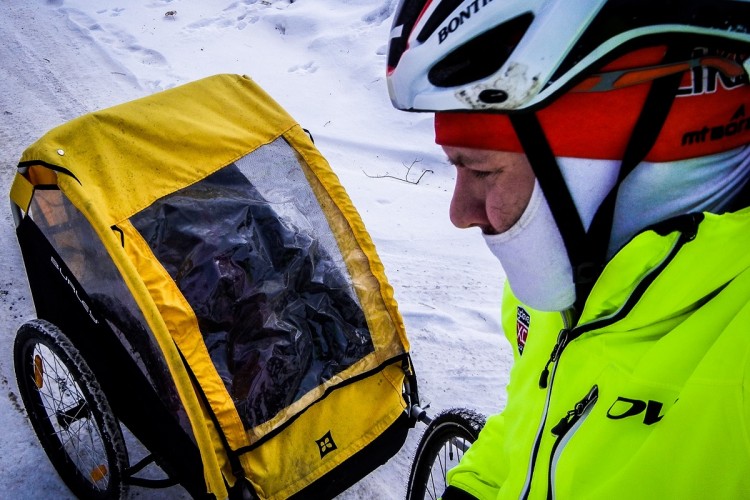
And the sooner I can ditch this gear, the better.

When the snow is flying and the wind is blowing, the less skin exposed, the better.

Bike Commuting Steps Up Your MTB Game

Tuesday, February 8th, 2011

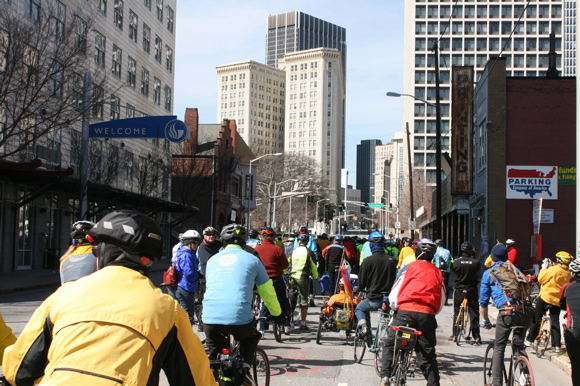
With all the responsibilities we have, finding enough time to ride can be difficult. Commuting to work or school by bike can be a great way to spend more time in the saddle, especially considering that part of that time would be spent commuting anyway.

I started bike commuting several years ago after my first trip to Moab where it took me 5 1/2 hours to complete the Slickrock trail. I was seriously out of shape, and the only cure was to ride more. Combine that with $4 a gallon gas at the time and a paved bike path taking me to within several blocks of work, and bike commuting was a no-brainer.

Often the hardest part of bike commuting is getting started. But once you establish a good route and invest in a few items to make the ride go smoothly, you’ll forget about that old gas guzzler and will be amazed at your fitness after just a few short weeks. Here are a few tips to get your wheels rolling.

Route Finding

The way you bike to work may or may not follow the normal car route. Google Maps has a cool ‘bicycling directions’ feature that can give you an overview of your planned route, but don’t trust it implicitly. Once you have a general route, do a weekend test ride. This will help you make any adjustments to your path plus it will give you an idea of how long the ride will take.

Clothing and Equipment

A few people ride in their work clothes but for myself and others, this isn’t the best idea due to sweat issues. I wear the same thing I would wear mountain biking and carry a change of clothes with me. I wear cleated bike shoes that look casual/outdoorsy but you could also leave a pair of street shoes at work. Some folks use a backpack to transport work stuff but depending on how much stuff you have, this can get heavy. If your bike has the tabs for it, consider getting a decent pannier rack or, if you don’t need to carry a laptop, a simple ‘trunk’ type bag should work. If you do carry a laptop, check out something like the Cannondale Cypod.

Safety

Keep your bike well maintained and adjusted and carry tools and spares for basic repairs. Most of us commute in areas with excellent cell coverage so remember to pack your phone in case your bike becomes disabled. As for vehicular traffic, ALWAYS assume that drivers don’t see you and/or don’t understand who has the right of way. Malicious drivers are pretty rare, but I see dumb things on my commute all the time.

Lights

Even if your schedule keeps you well within daylight hours, having lights is still a good idea so that motorists can see you. There are a number of inexpensive headlights and ‘blinky’ taillights on the market designed specifically for commuting. If you already have lights for night mountain biking, you could use those as well (though some may be heavy and/or bulky).

The Bike

At first I used my only bike, a hardtail mountain bike, for both mountain biking and commuting. While any bike will get you there and back, hardtails, ‘cross bikes, and road bikes are definitely better suited to the task. I have since upgraded to a full suspension ride, but I kept my old hardtail and turned it into a fully rigid, dedicated commuter.

Bike commuting isn’t nearly as much fun as hitting the dirt, but as a way to get in those extra miles it’s a great alternative to sitting in traffic. Just look at these two photos and decide for yourself.

photo right: by MSVG.

Mountain Bike Rider Captures Bad Drivers on Helmet Cam

Thursday, May 27th, 2010

Check out this video from CNN.com:

Poor guy commuting on his mountain bike nearly gets hit by cars on multiple occasions. He says he rides with the helmet camera now as a witness because he’s had so many near misses and it seems like a good idea to us. Maybe he should try riding with flashing red and blue lights to get drivers’ attention. :)

Keen’s Commuter Bag

Thursday, December 10th, 2009

19

Since some of us use our mountain bikes for more that just hitting the trails so I thought I’d talk about a great accessory I found for the morning commute. The Keen Commuter Bag is a bike courier-style side bag with a few tweaks to make it even more stylish and versatile for the workday rider.

One of the things that makes the Commuter Bag (MSRP $100) unique is its green design and manufacturing process. Using recycled aluminum for the clips and recycled rubber for the base, Keen is working hard to make a positive impact on the environment with this bag and many other products in their line.

The Commuter features a water resistant main compartment and a padded sleeve which is suspended to keep your laptop comfy (fits notebooks up to 15.4″). The bag also sports water bottle pockets on both sides, each large enough for a 20 ounce bottle. Inside the main compartment there are several pockets for organizing pens, pencils, business cards, etc. Even with all these pockets and compartments, the bag isn’t too bulky – 16.1″ x 16.5″ x 5.1″ – which is just barely wider than a laptop itself.

The strap system is great and holds the bag neatly to either side of your body without slipping. Adjusting the bag is pretty easy: just set up the sternum strap on either side (right or left), place the shoulder pad in the correct position and away you go! There’s even a dedicated pocket to store the strap when it’s not in use.

1617

Riding around town with my laptop, a small camera, and some snacks I found the bag gave me the freedom to move about without slapping the bag with my knees when pedaling. The bag stayed securely on my shoulder and didn’t try to sneak around front like other shoulder bags I’ve tried. Best part about this bag is that when I got crud on it from my rear tire I just used a bit of soap and water and most of the stains came off with a brush and a little elbow grease.

If your day includes a mixed bag of biking and doing business around town, the Commuter Bag from Keen may be a nice addition. Save the earth by commuting and buying this bag made from recycled materials!

Thanks to the folks at KEEN for providing the Commuter bag for review.

Bike to Work Week

Friday, May 8th, 2009

bike-to-work-week

Next week is bike to work week and while not *officially* a mountain bike event we thought you’d want a heads up. SFGate.com published an article with commuter fashion tips from none other than Mr. Gary Fisher himself and it’s worth a read if you’re killing time waiting for the weekend to start. It seems apparel companies are getting smarter about designing clothing that works well on the bike but also looks good for work (one woman even claims it’s easier to bike in high heels than to walk in them). I wouldn’t know about that myself.

The League of American Bicyclists website has a listing of bike events around the country during the month of May (national bike month) – find your local ride and bike to work next week!


Site Map | Advertise | Partners | Contact Us | Terms | Privacy
Campground Reviews | Hiking Trails | Trail Running | Skiing / Snow Sports | Mountain Biking
Copyright 2012 Blue Spruce Ventures LLC | Atlanta, GA
singletracks.com is yet another slick Review App