singletracks is mountain biking
Sign In | Create Your Account | Site Map | Help  


Mountain Bike Night Riding 101

Thursday, November 10th, 2011

NO BRUNCH!!!

We’ll come back to that in a minute…

If you’re reading this article chances are good you’ve heard your buddies raving about how awesome it is to ride at night or perhaps you want to check out 24 hour racing. Whatever the reason, you’re intrigued and you want to give real, “on purpose” night riding a try.

Creative Commons License photo credit: jp3d2k

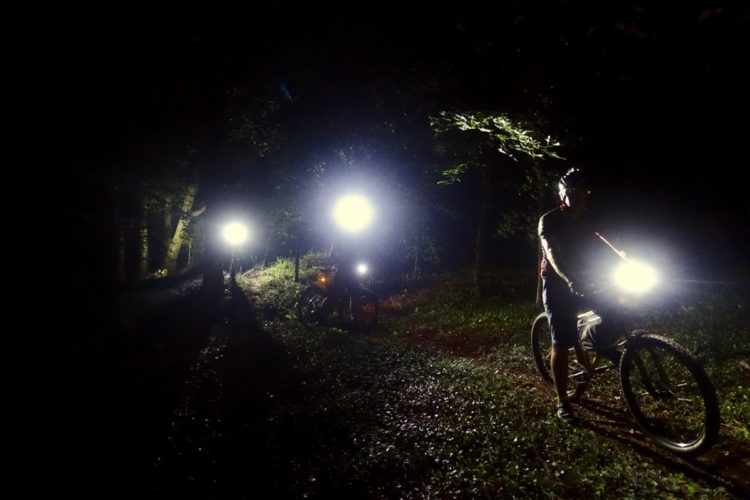
As the days get shorter, night rides can be a great way to extend the season as long as the weather allows. Hitting the trails in complete darkness also creates a completely different viewpoint of the trail. While daytime lends to seeing the scenery and other big picture stuff, darkness narrows your focus to just what’s in the beam of your light. It becomes just you and the trail. Obstacles look different, the smells are more noticeable, and occasionally the night looks back at you…

Gearing up

Clothing: Once the sun drops, even if the ambient temperature says 60° or warmer, it will feel colder. The cold will be most noticeable in your extremities, so if you have some warmer gloves and shoes, you’ll want them. A vest or light jacket will round out your night-time clothing needs. It’s also a good idea to wear reflective clothing if you’ll be sharing part of your route with cars.

Eyewear: The first time I rode at night with decent lighting I was shocked at how much gravel my front tire kicked up! If your regular riding shades have clear or yellow lenses, you can use those. Otherwise look at getting some clear protective eyewear. Home Depot carries safety glasses in the $5 – $20 range or you can get modestly priced shooting glasses at sporting goods retailers.

Creative Commons License photo credit: xJason.Rogersx

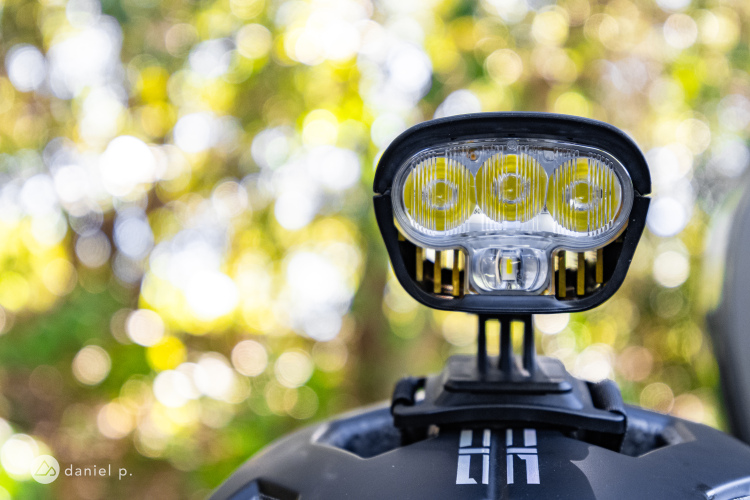
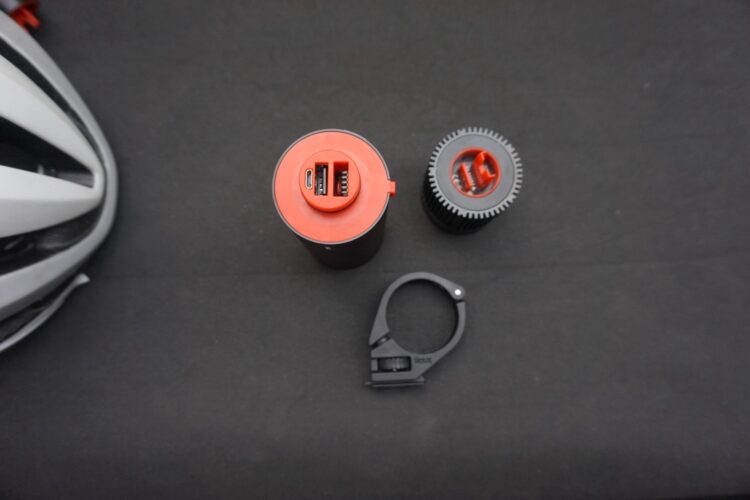
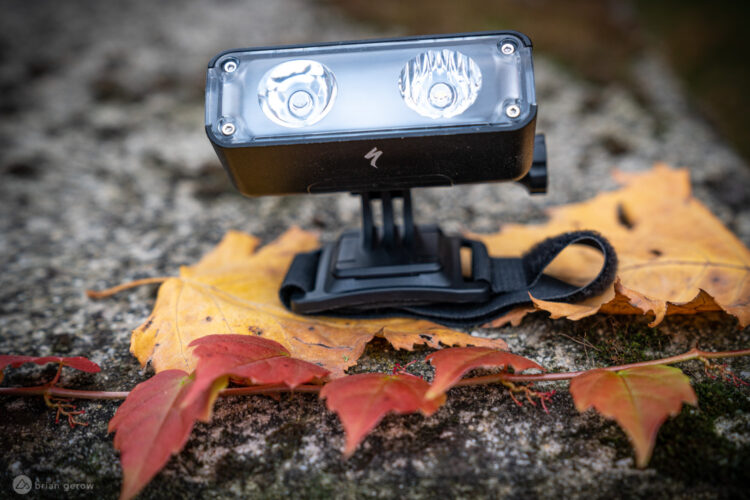
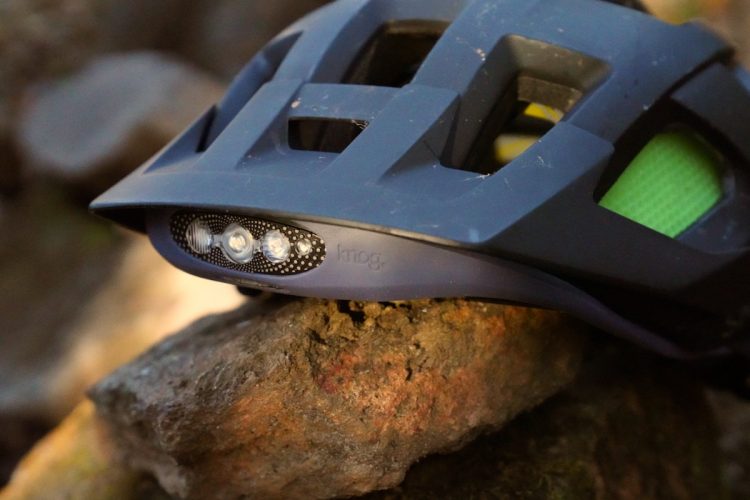
Lights: A decent light is a must-have for serious after dark riding. The first few times I tried night riding I used a 70 lumen Princeton Tec head lamp that happened to snap into my helmet visor. I convinced myself it was good enough and I was able to muddle along the trail without killing myself. Later, when I raced in a 24 hour race for the first time, I borrowed two 350 lumens lights; one for my handlebars, and one on my helmet. I was blown away by the difference! Suddenly I could ride at full speed over technical terrain – in the middle of the night! The point is, for serious night riding, you need a serious light. The cycling light market has exploded recently, with advances in LED and battery tech making them brighter and more affordable than ever. Here are a handful of suggestions to get you started, but definitely ask around at the LBS and among other night riders. Like all things bike related, there are as many opinions as there are consumers.

Magic Shine 900.  This is the light I have and I love it. It’s under 100 bucks and mounts in seconds. My light has held up well and its 700 actual lumens are perfect as a single light for recreational riding. My only complaint is that when it’s helmet mounted it’s noticeably heavy and sticks up in a way that can snag on overhead branches. (It comes with a bar mount, helmet mount is an extra $10).

Spoke Grenade SG-1000. A little more money, a fair amount brighter. They also ding you for the helmet mount. Come on guys, really?

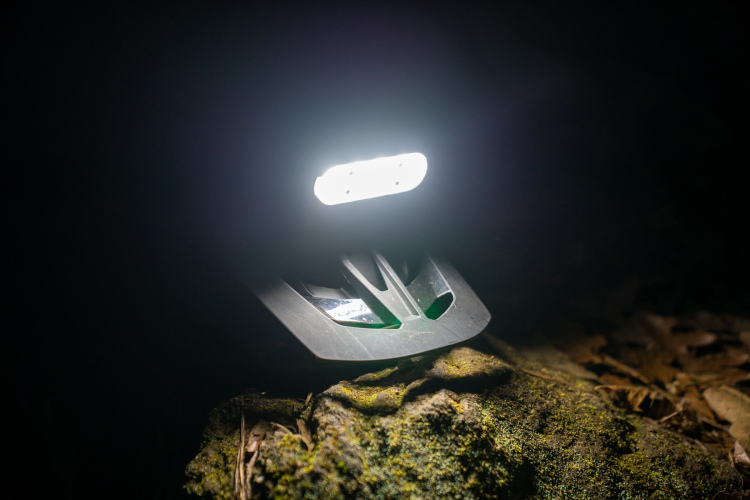
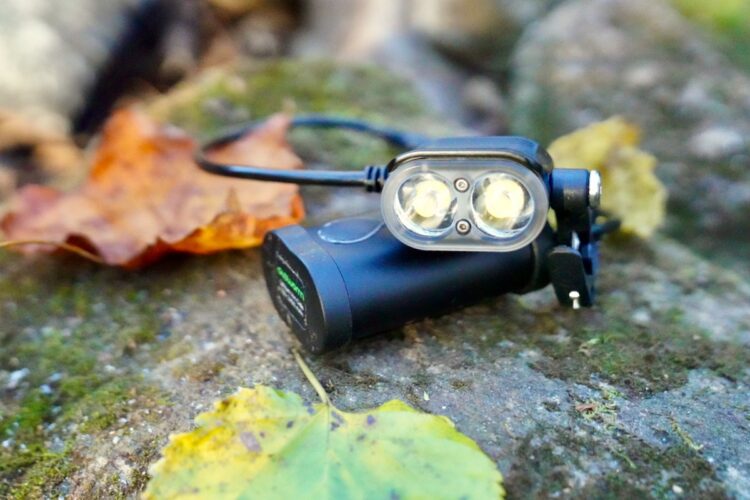
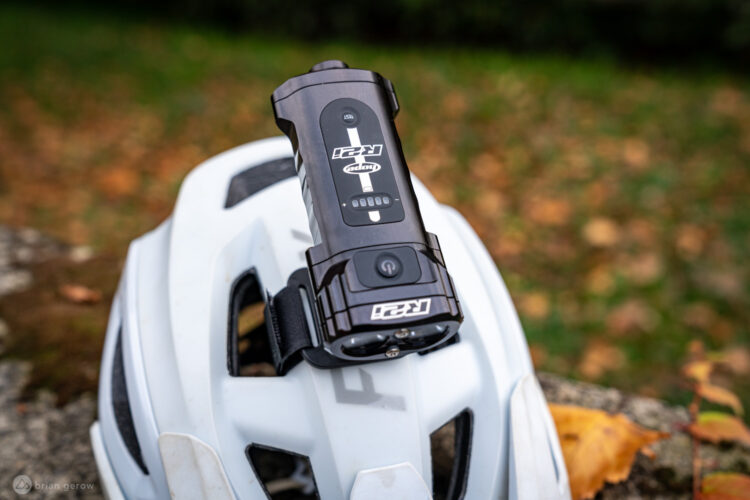
Amoeba. These are hand-made by a fellow mountain biker right here in Colorado. The light, battery, and charger will set you back $220, and it sticks to your helmet with velcro. He also sells car chargers, bar mounts and upgraded batteries, and he may even create a custom light for you if you have lots of money and a convincing personality. Several of my riding buddies have this model and its biggest advantage is how it mounts. It lays pretty much flat on your helmet (see photo left), with the light head in front and the battery in back for a compact and counterbalanced fit that won’t weigh you down or catch on branches. Brilliant!

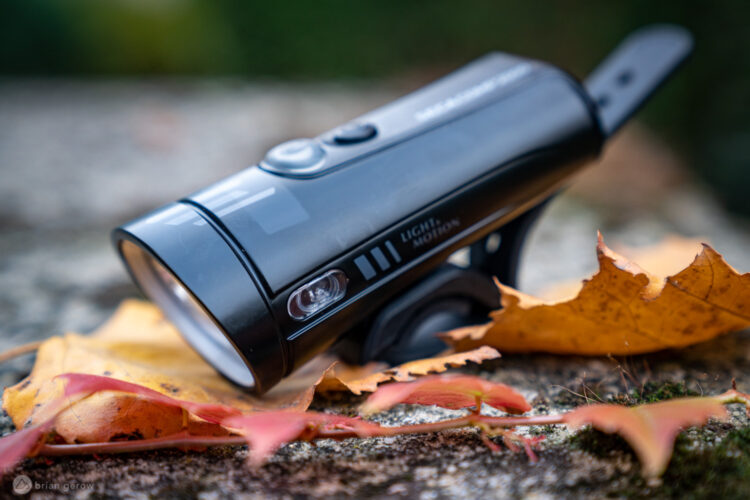
Light & Motion Seca 1400. This is an example from the high end of the scale. It may cost $560, but picture the headlights from a German sports sedan mounted on your handlebars. Yeah, it’s that bright.

Whatever model you choose, if you get just one, you’ll want it on your helmet, so that it points where you’re looking. The ultimate setup is two lights, one on the bars and one on the helmet, but for non-racing use, one light in the 600+ lumen range is fine.

Although it’s not strictly necessary, a small tail light can be handy to prevent getting rear-ended if you stop suddenly. This model is small, inexpensive and mounts easily to a hydration pack or jersey pocket.

Choosing a trail

For your first ever night ride, you may not want to go on that black diamond gnar-fest that you shred during the day. Lights tend to flatten trail obstacles, making it hard to judge the height of drops and the size of rocks. Assume that every obstacle is bigger than it looks and practice riding by ‘feel’ until your eyes adjust to the way things look under the lights. Starting out with an easier trail that you know really well will help. Once you get more practice, head back to the technical stuff and go nuts.

One thing to keep in mind is that not every trail or park area is open at night. A lot of trails where I live are in county open space parks that close an hour after sunset. Park Rangers are usually ok with rides ending later than that, but they can and will write you a ticket for heading out after the park is closed. Just do a little research and make sure it’s legal.

That’s it! Put on some warm clothes, get a decent light, practice on some easy trails, and soon you’ll be a seasoned night rider. You might even find yourself preferring it over daytime riding!

Oh, as for that opening comment, enjoy this video about Ben Stiller’s first night mountain bike ride.


Light & Motion Seca 900 Ultra Bike Light Review

Monday, October 12th, 2009

picture-390

Calling these bike lights “Ultra” is an understatement. There really should be a warning label on the box saying “DANGER! Do not look directly into the light as permanent eye damage may result.” After fully charging these monsters I plugged them in, lightly tapped the switch, and POOF! I can’t see. OK, so maybe the label would just be for people like me :)

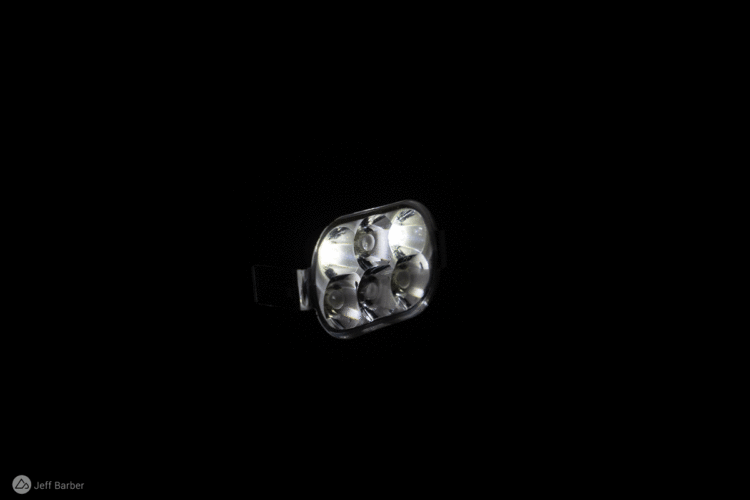
Light & Motion introduced the Seca 900 Ultra bike lights (MSRP $699.99) this year for the serious rider and XC marathon / 24-hour racing crowd. These lights come with six Cree R2 LEDs which are the highest rated LEDs available anywhere. And as if it wasn’t enough to have six R2s in this lamp, Light & Motion also designed a very high quality reflector to efficiently direct and sculpt the beam pattern to maximize light output (this is key and where other lights fail). The Seca 900 includes a nine cell 11.1V  Li-Ion battery capable of tossing out 900 true lumens* for 3.5 hours of run time on the high setting. Other settings include medium (450 lumens for 7 hours), low (250 lumens  for 14 hours), and a flash setting that will run for 100+ hours.

The included Multi-Chem smart charger uses the ultra-efficient Delta temperature method of charging. This method basically monitors the temperature of the battery over the charging cycle to ensure that the battery gets both a full charge while not overheating. And it does the job in just 3 and a half hours.

picture-402

picture-391

The graphic on the right shows the test data for the Seca 900 and you can see that it produces more than the advertised 900 lumens. Actual light output during testing was more like 953 lumens but for sake of honesty and accounting for possible production variances Light & Motion keeps the rating at 900 (besides, Seca 953 just doesn’t have the same ring to it). You can also see most of the light is in the light-blue to white area of the spectrum which keeps everything as bright as possible.

Light & Motion uses a custom array to optimize and maximize the light pattern for night riding. The Seca 900 features a gem shaped beam that’s flat on top and converges toward your tire in a V-shape. Extra light converges toward the center of the beam for maximum distance.

Installing the Seca 900 Ultra literally took less than 5 minutes on my bike. The handle bar mount is a one-handed breeze: simply loop the light through the mount, stretch the strap to secure it on the hook, and adjust the angle. In setting the angle you’ll want the outer pattern to just touch your tire with the lower edge of the spot about 20 feet in front of the bike. Installing the battery was a matter of simply feeding the strap through the adapter slots, slipping the battery into the adapter, and strapping everything down securely.

picture-404picture-403

On the trails I have to say these are by far the most powerful set I have tried. These lamps toss so much light it’s literally like riding in a perfect bubble of daylight. Even when the terrain got bumpy or required a lot of steering, I felt very comfortable thanks to the light intensity and pattern. I found I could go as fast as I wanted without fear of missing a root or obstacle in the shadows. The video below shows me on a pitch black trail with no external lighting. The only light in the video is coming from the Seca 900 which basically has about as much power as a nuclear reactor. Notice how the light illuminates the trail even when cresting bumps!

The Seca 900 system also includes something called “Race mode” that allows you to quickly toggle between low and high intensity light settings for climbing and descending (respectively). This means fewer clicks to get to the two light modes you really need during the race!

Overall I can honestly say if you can afford to spend the extra bucks on this bike light, you will not be disappointed in any way. With the Seca 900 Ultra you’re getting a superior product with incredible battery life and leading on-trail performance in a svelte, easy to use package.

If you don’t think your riding isn’t quite up to the level of the Seca 900, consider giving the Stella 300 Dual a try. At half the cost of the Seca 900, this system is a bit more affordable and provides enough light to navigate dark trails with a good degree of comfort.

* One lumen is defined as the amount of light produced by a light source that emits one candela of luminous intensity over a specified angle. This is a more consistent way of measuring output rather than using Watts.

Technical specification from Light & Motion:

Battery Type: 9-Cell Li-Ion
Battery Weight: 486g
Mounts: Helmet, Handlebar
Modes: Race, Cruise, Flash
Charge time: 3:30min
Charger: Multi-Chem Smart
System Weight: 686g

Run Time (HR:MM)

  • High – 3:30
  • Med – 7:00
  • Low – 14:00
  • Flash – 100+

Output (lumens):

  • High – 900
  • Med – 450
  • Low – 225
  • Flash –


Site Map | Advertise | Partners | Contact Us | Terms | Privacy
Campground Reviews | Hiking Trails | Trail Running | Skiing / Snow Sports | Mountain Biking
Copyright 2012 Blue Spruce Ventures LLC | Atlanta, GA
singletracks.com is yet another slick Review App