singletracks is mountain biking
Sign In | Create Your Account | Site Map | Help  


Archive for the 'MTB Gear' Category

Genuine Innovations Air Chuck SL CO2 Inflator Review

Thursday, January 5th, 2012

I’ve always found small tire pumps to be annoying at best, and even though they will eventually fill a fat MTB tire with air, I’d rather get on with my ride. CO2 inflators provide pretty much instant gratification.

There are a number of CO2 inflators on the market, some of which even include a built-in manual pump. Regardless of the design, they all function the same way. After attaching to a steel CO2 canister and pushing the inflator head onto the valve stem, a trigger or some other mechanism releases the pressurized CO2, inflating the tire in 2-3 seconds!

Enter the Genuine Innovations Air Chuck SL. This model dispenses with the extras and provides just basic inflation functionality. It weighs 21 grams and is available at many local bike shops, as well as big retailers like REI. It generally runs about $20, and comes with one CO2 cartridge to get you started.

Since I frequently participate in group rides, my little inflator gets a lot of use. It always inflates tires correctly, and we have used it on 26×2.5 tires as well as 29×2.2. With a stock 16 gram threaded cartridge, it barely has enough oomph for a really high volume tire, but it is enough to get you out of the woods. Another nice feature is that the trigger mechanism allows a quick burst to pre-inflate the tube, and then the rest once the tire is mounted. Some inflators are all-at-once.

Click the pic to the left for a short video demo.

Pros:

  • 21 gram weight means you’ll hardly know it’s there.
  • Excellent quality of machining and assembly.
  • Works with any threaded CO2 cartridge.
  • Easy to use and fills tires in seconds.
  • Compatible with Schrader or Presta valves. (I have used mine on both)

Cons:

  • So small you can lose it in your pack or on the ground. Seriously, it’s tiny.
  • One of the frills this lacks is a cover over the cartridge. Thus the cartridge gets frosty cold when it’s discharged. Keep your gloves on while using it!
  • Tire refills are limited to the number of cartridges you bring on a trip.
  • Barely enough pressure for a really big tire. If you run huge tires, look into the ‘Big Air’ CO2 cartridge. The Air Chuck is compatible.

For all regular rides I bring this inflator, one cartridge and a tube in my Camelbak. For longer rides I attach a seat bag with a second tube and CO2 canister. For really epic rides, I also bring my Topeak Mini Morph pump. (Watch for a review on that later)

CO2 cartridges run about $4 at the LBS, which is ridiculous in my opinion. I get my 16 gram threaded cartridges from Amazon in a 12-pack for $19 with shipping. This works out to $1.58 per cartridge. Amazon sells bigger boxes of them, so you could drive the per unit cost even lower with a group or club order.

Manual tire pumps will always have a place on the trail, but if you race, are a weight weenie, or just enjoy speed and simplicity, then check out the Genuine Innovations Air Chuck SL. You won’t be disappointed!

Peeling the Bark Off: The Magicshine 1000 in Action

Monday, January 2nd, 2012

This time of year really messes with my mountain bike mojo. Yes it’s cold, but the mountain bike industry makes all sorts of doodads that allow tough guys and girls to keep riding in damn near any conditions, no matter how sack-shrinkingly cold it gets. If I really need to get out and ride I’ll do it, enjoy it, then go back inside and warm up with a slanket, a flagon of grogg, and a very high thermostat. But the real bummer of this time of year is how it follows the roughest day of my mountain bike year: Daylight Savings. Whoever thought of “falling back” should be dipped in Power Goo and thrown to the roadies.

The changing of the clocks is the twist of the knife at the end of the long, slow dwindling of the evening sunlight. Memories of warm nights leisurely shredding your local singletrack, unhurried and enjoyable, fade away and you find yourself frantically calculating if you can get your gear together and to the trailhead in time to get a good ride in before the sun retreats below the treeline. But there’s a weapon that modern technology has provided us: the battery-powered trail light. Helmet or handlebar mounted (or both), they can kick out enough candelas to rail full speed down that descent as if it were high noon in August. Just bring your credit card, because bright, high quality gear usually comes at a dear price.

But wait! Enter: the MagicShine. Modern. Attractive. Bright. And at 10 Lumens per dollar it’s cheap. (If you’re looking for another adjective, you’re a greedy bastard). For comparison, lights from Cygolite, NiteRider, and Lupine fall somewhere between 2.5 and 5 lumens per dollar. But remember the old bike maker’s mantra: “Lightweight, durable, inexpensive. Pick two.” In the case of the MagicShine, as in all of life, there are compromises.

First I’ll heap praise on this little fella. It’s bright. 1000 lumens, 2+ hours on high no problem. It’s feature rich. High, medium, low settings with a battery life LED indicator in the translucent power switch. Recent improvements to the battery case are great: now you get a weather tight, compact package that can be connected via integral Velcro strap to all sorts of tubes. Stupid simple light mounting. One beefy O ring to wrap around almost all diameter bars, the helmet mount piece (not included but available as an accessory), or whatever else your twisted little imagination can come up with. If that’s not enough, it ships with a spare ring.

So, how’s it work?

This thing beats back the shadows. On one of my first nocturnal excursions with the MagicShine I was accompanied by a Big Time parts & accessory manager in the bike biz. He, the guy with every hookup and bro deal there is to be had, compared our lights and admitted the MS was The Bomb. Well, yeah. And on top of all those lumens it was a third the price of his kit. Less weight too. As Gob Bluth would say: “COME ON.” Hang on, there’s a BUT…

As we stated earlier, you get lightweight, rugged and inexpensive – but you can only pick two.

A) This one clocks in at 312 grams for the light and battery. Compared to some other systems that claim to put out a similar number of lumens, the MagicShine is right in the ballpark. And for some perspective on how lightweight serious lighting has gotten, that’s about the same as 4.6 Clif bars, or a can of post ride Oskar Blues Dale’s Pale Ale, the single greatest beer to enjoy after a good ride. Says me.

B) Way affordable. $99 bucks gets you a legit-looking presentation box with weatherproof battery, wall charger that charges said battery in around 4 hours, light head, 2 sizes of O ring mounts, and an extension cable for using in your hydration pack (or fanny pack if you’re Napolean Dynamite).

C) Rugged: ahhhh, hold on a second. I’ll be the first to admit I use gear in a less-than-dainty manner. In my mind it should work in the toughest conditions or it’s a waste of my effort carrying the thing out into the woods in the first place. Maybe you also have ‘packing neuroses’ as I do, but after agonizing over each tool, spare tube, extra layer, etc. (and the decision about whether the grams are worth lugging up the hills), I expect that if I brought it it’s ready in every contingency. If it’s going to fail, better to do it on my local trails where I can limp home instead of scuttling the trip I’ve planned for 6 months.
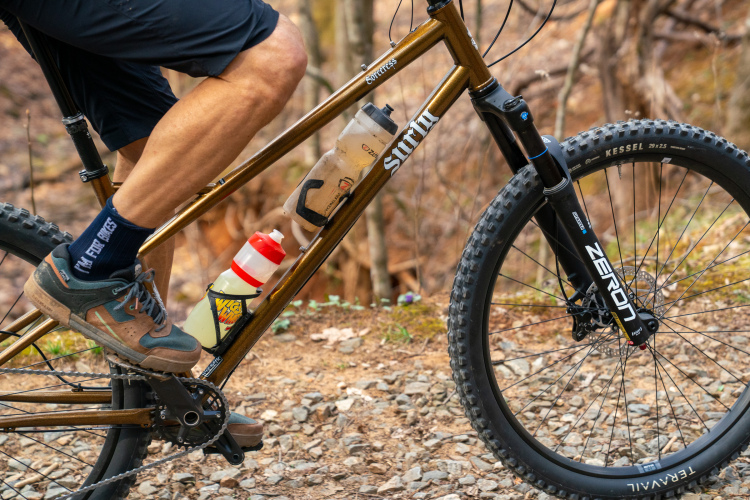
Anyway, where was I? Oh, the delicate electrical connections of the MagicShine. I used it on a handful of 0’Dark thirty road rides and night MTB rides, took it on one motorcycle camping weekend, and then two weeks into commuting on my new ‘cross bike in my new wintry corner of the world it started to cut out while riding. Not the sort of thing you want becoming a habit when you’re bombing full daytime speed down your favorite descent in the pitch black of night. Granted, I’ve traveled with the light kicking around on my carry-on bag, it has gotten its share of bumps and cable tugs, but felt like a brief life of reliability for my high output buddy.

Still, I think the fact that I promptly bought a replacement speaks to how much I like the MagicShine. For the money it still is at the top of my packing list when I’m planning any night ops on two wheels.

Giro Xen Gloves Review

Friday, December 30th, 2011

A couple of months ago I received a cache of Giro gear in the mail for my reviewing pleasure. Among the goods were a pair of Xen gloves.

Photo by Sydnah Swails.

Specs

The Xen is a heavily ventilated glove that is designed to breathe well and ride comfortabl,y even in the hottest temperatures. Along with ample ventilation, the back of the hand features knuckle protection in key locations in case something goes awry. The “Super Fit” palm has minimal padding, and is made of “Clarino” that is “tailored to minimize excess material, so you get maximum control and comfort,” according to Giro.

The Test

I have used the Xen gloves in a variety of riding conditions from cross country to all mountain to downhill. In all cases, I can honestly say that I have been very satisfied with these gloves!

Giro’s description rings absolutely true. The palms have very minimal material, and despite the minimalistic approach, these may be one of the most comfortable pairs of gloves I’ve used this year. The comfort provided by the Zen vastly outdistances the most recent pair of full-fingered gloves I reviewed here on the blog.

The index and middle fingers have extra grip for the brake levers. Photo by Sydnah Swails.

As for comfort in high temps, I haven’t had the chance to test these during the extremely hot months but I have worn them into the 70′s and down into the 40′s with no problems. These gloves are definitely designed for the summer months, though, so going any lower than the upper to mid 40′s will probably be uncomfortable.

Ventilation and Knuckle Protection. Photo by Sydnah Swails.

It is important to note that while these are aggressive full-fingered gloves, they aren’t specifically designed with downhilling in mind. While there is a little bit of knuckle protection, if you are looking for a full-on DH glove you might want to try something with a little more padding. If you are an aggressive all-mountain rider, though, these gloves split the difference between XC and DH perfectly!

Cons

The only question I have when it comes to the Xen gloves is, “How durable are they?”

I’ve had a small issue with some stitching coming out on one of the fingers. I’m not sure if I snagged it on something and tore a stitch out, allowing it widen into this hole, or what exactly happened.

I also have a much smaller hole forming on the knuckle of the thumb of the same hand. It is highly unlikely that I caused this one to happen in any way:

Bottom Line

This is a great glove that offers incredible comfort and great ventilation, and while it can work great for almost any style of mountain biking, it seems to be intended for all-mountain riders. While the durability of these gloves may be questionable, at an MSRP of $39.99 they are worth a look.

Many thanks to Giro for sending out the Xen gloves for review.

WTB Nano Race 29er 2.1″ Tire Review

Friday, December 23rd, 2011

Specs

The WTB Nano Race 29er 2.1″ tire features an Aramid bead, DNA rubber, and a lightweight casing. The Aramid bead and lightweight casing definitely help drop weight, and at only 560 grams this tire is light and fast and definitely intended for use as an XC tire. According to WTB, the DNA rubber is a “fast-rolling 60a durometer rubber compound [...] specifically formulated for high-performance riding in a variety of conditions.” As for the Nano’s design itself, WTB claims:

“Its micro-knob design and large supportive casing conquer rough racecourses and roll with the punches on long trail rides. The elevated centerline tread rolls quickly on asphalt and hardpack, while the numerous working edges track predictably in ‘dust over crust’ conditions.”

Let’s see how accurate this description is, shall we?

Test

I’ve put close to 600 miles on the Nano as my rear tire on the Ibex Maroc. Over the course of my extensive test, I was very surprised to discover that despite being relatively narrow and so low-profile, the Nano provides excellent traction!

I think that the Nano’s traction in a variety of conditions can be attributed to the tacky DNA rubber. Despite having “micro” knobs, this tire seemed to stick to most stuff and provided plenty of power as I climbed up and ripped down the mountain, whether I was in Colorado or Georgia.

I’ve found that the description WTB gives above is pretty much spot-on. This tire is great in hardpack and “dust-over-crust” conditions, and I would add that it also handles well in rocky conditions (as long as the rocks are dry).

Negatives

As you might expect, this small-knobbed tire came up short in a few areas. Anytime the conditions were somewhat wet, the Nano started having difficulties. And it particularly hates wet roots. Trying to climb up a damp, root-infested slope that’s a little off-camber? Forget about it.

As I mentioned above, the Nano features a super-tacky rubber compound. While tacky rubber equals good traction, it doesn’t equal longevity. At about 400 miles, the Nano was already showing significant wear, and looked ready to be replaced. After 600 miles, I am in dire need of a new tire.

Before / After 400 miles.

After 600 miles.

Final Verdict

Due to the low weight and the extremely low-profile knobs, the Nano is a fast rolling tire! As the “race” designation obviously indicates, this tire is meant to be raced. It’s not really designed to be an everyday, do-it-all tire for the average Joe but if you’re looking for speed on a dry course, be sure to give the Nano a try!

MSRP on the Nano Race is $65 per tire.

cSixx 150gm Carbon Chain Tensioner

Thursday, December 22nd, 2011

I’ve been playing around with a cool new chain retention device from cSixx for a while now. cSixx (pronounced simply as “six”) hails from South Africa, and they presently offer two chain retention devices: the 150gm and the lighter weight 110gl. I had the pleasure of testing the full-on race version, the 150gm.

Specs

The cSixx 150gm really does weigh in at the advertised 150 grams, thanks to a mixture of weaved carbon and a section of kevlar/carbon mix at the bash area. All the fasteners are aluminum for further weight reduction, with the exception of the three bolts which hold the 150gm to the ISCG05 tabs on the bike. The guide comes with an adapter for ISCG, just in case your ride doesn’t have tabs.

Installation

Installation of the 150gm requires you to remove the cranks which is just about the hardest part of the installation. If you need to install the adapter, then you also have to remove one of the spacers and swap it with the adapter. Other than that, the installation instructions are very clear, with a mix of simple instructions and great illustrations. Once the guard is in, install the cranks and follow up by double checking that the pulley lines up with your chain (using the supplied washers). Afterwards, the taco and idler pulley should be set to your correct chain ring tooth count (32-42). Finally, thread the chain through and you are set.

The Test

I ran the 150gm for about three months on trails all over the region. This guide has taken a good amount of hits: everything from larger logs to the rocks of the Frankenstein trail at Seven Springs (which are mainly large boulders). Needless to say, the 150gm survived with minimal surface damage thanks to the reinforced Kevlar section. There were no other problems, either.

I did notice that I had some chain rub on the taco portion, and that it was just a bit too narrow. To remedy that issue, I ended up placing a 1mm washer behind the outer plate and the rubber spacer that goes to the inner plate. That helped reduce the rub that happened when the rear cassette was on the 11T cog. One great thing about the 150gm is it wasn’t affected by dry lube like some other brands.

For the entire duration that I had the tensioner installed on my Banshee Legend, it had no dropped chains or any other issues.

The cSixx retails for about $200. Contact cSixx for further details and to find distributors.

A quick thanks to the folks at cSixx for sending down the 150gm for review.

Wheels4Life Teams w/ Crankbrothers to Auction Dream Bikes

Thursday, December 22nd, 2011

This could be your dream bike.

Hans Rey’s charity, Wheels4Life has teamed up with Crankbrothers to auction some amazing mountain bikes with all the proceeds going to the charity. The goal: to raise $50,000 which is enough money to buy 500 bikes for folks in developing countries who need basic bikes for transportation.

The first bike up for auction, an Ibis Tranny, is all tricked out with SRAM XX components and Crankbrothers Iodine 3 wheels, Cobalt seatpost and grips, and of course Eggbeater 11 titanium pedals. The Tranny frame itself is carbon, the rear triangle comes apart for easy packing, and this small frame weighs just 3 pounds. The estimated MSRP for a build like this: $6,500. And it’s a hardtail 26er. The bidding started at $2,500 but we don’t expect the price to stay that low for long.

Tomac Supermatic 120

You can check out the full list of Dream Bikes that are going up for sale including the maxed out Ibis Mojo SL-R, Scott Genius LT, and Tomac Supermatic 120. Also be sure to check out the Wheels4Life website to learn more about this worthy bike-related charity.

MTB Drivetrains 101: What’s the Big Deal About 2×10?

Wednesday, December 21st, 2011

You have probably heard terms like 3×9, 2×10, or 1×9 thrown around in discussions about mountain bike gearing. In case you are not familiar with the jargon, here is a quick review.

When someone says 3×9 (pronounced “three by nine”) they are referring to the setup of the chain rings and cassette on their bike. The number 3 is how many chain rings they have on the front and 9 is the number of cogs on the cassette. Therefore a 1×9 would be 1 chain ring and a 9 speed cassette, etc. You get the idea.

A typical 3×9 crankset from RaceFace.

Additionally, chain rings and cassettes come in different sizes. Both are measured by the number of teeth they have, and if you’re mathematically inclined you can use this info, along with the wheel diameter and length of your crank arms, to calculate your total effective gear ratio. I am not mathematically inclined, so let’s just skip that part.

For years mountain bikes have employed a triple front chain ring and a 7, 8, or 9 speed cassette. This is a tried and true design and it gives you an extremely low granny gear for long, steep climbs, and a decent big ring for haulin’ the mail on flat or downhill sections.

However, there are some limitations to this setup.

Weight: Three chain rings weigh more than two … or one.

Clearance: When crossing logs, rocks, etc, the big ring can scrape, and bent or broken teeth are generally the result. (On the chain ring, not necessarily your teeth.)

Crossing Your Chain: This is discussed at length in this forum post but here are the cliff notes. Every rear derailleur has a range of gears that it can handle. It is usually expressed as a number of teeth, and on a typical 3×9 system it will be somewhat less than the difference between your largest chainring and smallest cog, or vice versa. Shifting into one of these extremes will result in poor pedaling efficiency and will accelerate wear on your chain and gears.

Derailleur Cage Length: The greater the difference between your large and small gears, the longer your derailleur cage needs to be to take up the chain slack. The longer the derailleur cage is, the more likely it is to get whacked on stuff.

One obvious solution is to just get rid of the big ring and maybe replace it with a bashguard. Many riders, especially here in Colorado, have done just that, leaving the small and middle rings. This is a workable solution, however without that big ring, long stints on the flats can be really tedious.

A ‘ghetto’ 2×9 setup with a bashguard installed.

So what is a modern mountain biker to do?

Enter the 2×10 setup!

But wait, isn’t that essentially what the bashguard setup is? 

Not exactly…

A typical 3×9 setup will have something like a 44t-32t-24t chain ring setup, (t = number of teeth) and an 11-34t cassette. There are some variations such as older 8 speed cassettes with 11-30t or 32t, and newer 10 speed cassettes with 11-36t. The latter is the norm on most 29ers.

So what those clever bike engineers have done is take the traditional triple chain ring and “split the difference” with a two ring setup. The current offerings from SRAM employ a 26t-39t setup, whereas Shimano has a 26t-38t or a 28t-40t.

Okay, I get the concept, but why do I care?

Admittedly, a 2×10 setup is the very definition of compromise, as there isn’t as big of a big ring and the granny gear is a little less granny and a little more gear, but there are some advantages.

Weight: Comparing otherwise identical Race Face Turbine crank sets, the double shaves 55 grams off the weight of the triple.

Clearance: While not as radical as the old school two ring setup, the new style 2 speed cranks are still smaller than the traditional big ring so it will scrape less (and yes, there are bashguards for a 39t big ring).

Crossing Your Chain: This is my favorite feature. On a 2×10 setup you can use all 10 gears with either chain ring; there is no chain crossing. On the trail this simplicity is awesome.

Derailleur Cage Length: Depending on your exact setup, you can most likely get away with a shorter, mid cage rear derailleur.

I recently made the switch from 3×9 to 2×10 and I am completely sold on the concept, however, it may not be for everyone. The slightly smaller big ring isn’t much of an issue, but out here in the mountains the lack of a true granny gear is very noticeable. I found myself needing to keep up a slightly higher cadence in order to avoid stalling out when climbing. It was brutal at first, but once I got used to it, I really liked it. And after a month or so, I found myself significantly faster on climbs.

There is nothing wrong with a traditional 3 chain ring approach or a homebrew 2x with a bashguard, but if you’re bored with your current setup and want to shave a little weight while losing some complexity, then you should definitely give 2×10 a try.

Review: 2012 Fox RP23 with Adaptive Boostvalve

Friday, December 16th, 2011

A few weeks back I reviewed the 2012 Fox TALAS RLC FIT. While I was reviewing that fork I also had the new RP23 installed to control the rear of the bike. Add those two together and you have a lot of butter. It’s a silky-smooth ride for sure, even on the roughest of terrain.

Specs

Fox’s 2012 RP23 with Adaptive logic boost valve is a significant upgrade over the previous model. The most obvious change is the color; well, it’s not so much a color change as a coating change. Not only did Fox coat the air piston in Kashima, but they coated the air sleeve with it as well. This year’s RP23 is all Kashima – a nice upgrade for sure. Another significant change lies in the way you set the dampening, with revamped compression/rebound and platform settings, making it much more user-friendly.

Now before you get all excited and rev up your car, ready to race out and get one, there are a few things to consider. First up: tuning the shock for your ride. Before I received my shock I had to let Fox know the bike model, as Fox tunes the dampening shim stack to the leverage ratio of your bike. Grouping builds in a few tune levels, this ensures the shock has the best control over your rear wheel. As a result, a product such as this is best purchased new, or at least from a someone who used it on a bike with the same leverage ratio as yours.

The Adaptive logic boost valve is pretty easy to use and gives you the freedom of absolute control. The design of the valve allows you to choose one of two platform options. The climb/sprint mode has the full level of compression for those uphill rides or sprints.  Then, with a flick of the switch, the shock opens up to one of three levels: full open, medium, or light. The full open works great for faster descents and rougher terrain on a slope. The other two settings, the light and medium, are great to fine tune to the terrain that you’re riding when not climbing.

At this point you’re probably wondering how much of a weight penalty you’re looking at to use the RP23. The good news is that they are pretty light, but they aren’t the lightest out there as this shock is still all aluminum. A 6.5 x 1.5 comes in at just over 200 grams. My 7.5 x 2″ unit comes in at 213 grams (without spacers), making it one of the lighter units I have tested in that length. I am still amazed at how light people can make these things.

Installation

Installing the RP23 is pretty easy. On most frame sets you only need to remove the two bolts holding the shock in place. I always recommend replacing the hardware that attaches them with new stuff (sold separately), simply because the old hardware has already been worn in and, in most cases, worn out. After all, wearing out the new bushings that come with the shock is no fun.

To set up the rear shock, you will need a high pressure shock pump and a friend. In order to get things set the right way you need to prep yourself. Get your gear on so you are at your riding weight. For example, I weigh in at 205lbs with hydration pack (filled with water) and all of the munchies that I would take on a normal ride.

So hop on the bike and pedal around, bouncing a bit to get things all settled, then stop by your friend without dismounting and have him/her set the o-ring back against the air sleeve while remaining in your riding position. Then carefully dismount and measure the distance from the o-ring to the air sleeve. In my case I wanted to see 1/2″ of sag (25% sag). It took a few tries to get the air pressure right at about 165psi, but it’s necessary to take the time.

Once that was set I concentrated on my rebound setting. I went out and hit a familiar section of trail with a good mix of features. I was trying to identify a packing-down feeling (too much rebound) or a bucking feeling (too little). Either of those feelings needed to be tuned out. In the end I played around between 3-5 clicks clockwise.

The next setting was the adaptive logic part. That was pretty easy to set (three choices), and was accomplished on the same trail section. You’re looking for good control over the wheel with little or no wallowing feeling out back. On the jumps, look for too much travel. If that is the case, bump it up a level. I ended on the highest setting of 2 on that dial, and after that I used the ProPedal lever often on the climbs.

The Test

So how did the new Rp23 feel on the trails? Keeping up with the rest of the Fox line up, the RP23 performed superbly, as I mentioned in my opening statement. The Rp23 is very smooth, with no stiction that I could detect.

My usual riding spots are Kelso and the Don. Both spots offer up a wide range of terrain, with Kelso having more aggressive slopes and rocky patches that make a great test track for shocks, really showing how they interact with the terrain. The Don has a mix of technical terrain with webs of roots all over that also challenge the shock in the rutted stuff.

The RP23, in my opinion, feels a bit softer than many other similar shocks, and I found that I spent a lot of time with the ProPedal on. I did play with the air pressure by adding a bit more, but I found that it just made it harsh–not exactly what I was looking for. The shock is a bit more active compared to other units which tend to ramp up quicker.

After my test I decided I need to rethink how suspension should work. The plusher feel did offer up more traction and having a more active wheel helped the bike follow the terrain a bit better, providing more contact over the surface. I guess that is what they mean by a “bottomless feel.” Overall I have to say that the RP23 is at home on any bike up to 5.5″ of travel. After that you may want to consider something a bit more aggressive.

All in all it’s a great shock and a nice upgrade for when you want more control over your ride. Fox has the Rp23 pegged at $420 MSRP which is a premium price for a rear shock, but still not too far from the cost of the other brands at this level.

I would like to thank the folks at Fox for sending down the RP23 for a review.

2012 DH Bike Dream Build: Santa Cruz V-10 Carbon

Wednesday, December 14th, 2011

Can you think of anything more exotic than Carbon? Neither can I. Introducing the gorgeous 2012 Santa Cruz V-10 Carbon!

I seem to recall that Gordon Murry, a well-known engineer in motorsports, once said, “If it looks fast, it probably is.” Well, it turns out he’s right.

It all started back at Interbike while chatting a bit with the boys from the Syndicate and asking their feelings about the bike. Seeing that they were all smiles, I had to put one together. Besides, at the show this bike just looked so hot! After talking with a few other manufacturers I put together my own wish list of parts that I, and I am sure others, would like to see tested on the slopes. The actual build that comes with the V-10 Carbon is already a great build… I just wanted to see how far I could go. A few emails to Easton, Fulcrum, SRAM, Schwable, and Spank, and I was on my way.

But I still had a few hours of sweat equity to put in. Unfortunately, when it comes to custom bikes, you have to do one of two things: either build it yourself or pay someone else to do it. Of course I chose to do the former and over the next couple weeks I’ll be sharing some how-to articles about my build.

First Impressions of the Santa Cruz V-10 Carbon

So far I’ve already managed to get in a few rides aboard the V-10. The first thing I noticed was how incredibly light the bike felt. Every pedal stroke going into the trailhead at the slopes was pure acceleration! I managed to get the last DH bike I built down to 36.4lbs; the V-10 Carbon first came in at 32.42lbs. That’s a massive difference in weight! I also found that even after I removed half a degree of head angle to slacken up the steering (more on that in a later article), the bike was still very nimble at speed. And speed is the big key here.

The V-10 feels like it was meant to be in the air. When the bike leaves the ground, the light weight makes for a very flickable ride. On the ground the bike is lightning fast and can change direction with minimal steering input. You would think that the light weight would mean that the bike is fragile. So far, I have had no issues: tossing the bike into rock gardens was not an issue. The 14.5″ high bottom bracket helped at keeping the cranks and pedals away from stray rocks and boulders. I kept the bike in 10.5″ mode seeing that I preferred the slightly plusher ride, and the added travel didn’t hurt anything either.

I didn’t have a chance to tune the bike much after going a bit too fast over a road gap early in my test, which cut the day short. But up until then the bike was getting more and more comfortable with every tweak of the compression and rebound settings. I will not divulge the settings a this time, but will wait until I give a full review of the bike itself.

In short, if you have a chance to give this beast a ride: do it! This is an amazing bit of technology from the folks at Santa Cruz.

Price

So what kind of price are you looking at when assembling a dream bike like this one?

Here’s a quick cost break-down:

Frame: $3250
Headset: Included
Fork: $1700
Wheels: $960
Tires: $89 x2
Cassette: $350
Cranks: $395
Chainguide: $200
Pedals: $125
Handlebar: $110
Brakes: $245 x2
Shifter: $100
Rear Derailleur: $235
Seatpost: $135
Saddle: $174
Ti bolts: $175
Chain: $75
Grips: $20
Total: $8672 (give or take a few dollars)

I would like to thank the folks at SRAM, Santa Cruz, Fulcrum, Schwalbe, Spank, WTB, and Easton for sending down the gear for this build.

Fulcrum Red Fire DH Wheelset Review

Monday, December 12th, 2011

When I think about Italian-made cycling products, I almost always think about road racing gear. Swinging by the Fulcrum booth at Interbike this year changed my perspective. After looking over the lineup of wheels they are sporting for mountain as well as road, I knew that I had to set up a few reviews!

I manged to get my hands on Fulcrum’s top-shelf DH wheelset: the sexy Red Fire.

Tech

With their machined rims and straight-pull spokes, an untrained eye may mistake the Red Fires for a red set of another familiar brand that paints their DH wheels yellow.

Fulcrum’s Red Fire wheels don’t just hide behind fancy red anodizing, though – these wheels are something that any serious rider should take a good look at. Starting at the rim, the Red Fire has some important technical features which enables these wheels to handle serious abuse. The most obvious is the milled inner surface, designed to remove weight where it is not needed, while keeping plenty of material around the 32 asymmetrically-drilled eyelet-less holes.

Note: the holes do not go through to the inner rim surface, making these rims UST compatible. Not only is the inner surface not drilled, but the added safety ridges keep the tires firmly in place even at lower pressures (I ran them as low as 22 psi). To facilitate installation when running UST tires, the inner profile has a smooth, curved drop center which allows for both ease of installation and seating of the tire.

To ensure the rim stays round, the Red Fires are welded and milled to increase hoop life and strength. The easy-to-source stainless steel butted straight-pull spokes by Sapim are a great additional feature for this wheelset, so getting a few spares from your LBS shouldn’t be an issue (266 mm). Both front and rear wheels are laced up with 32 spokes in a conventional three-cross pattern.
The wheels feature beefy large-diameter aluminum hubs which house the industrial bearings in double rows on each side of the hub, with a few more in the cassette body for good measure. Speaking of the cassette body, the steel body runs a 3 cam pawl spring arrangement similar to that of the popular Easton Havoc series. What sets these apart is the locking bearing adjustment, which is a nice touch and well-worth the extra 6 grams or so that it adds. The front 20mm and rear 12mm through-axles round out the package and ensure that you’re getting a solid-performing duo.

Installation

In the box you get instructions, tire levers, spoke tools and a small stub of a nipple. Do not toss these parts out! The little nipple is magnetic, and the powerful earth magnet that is supplied (also in the package) is used to move your spoke nipples into place in the off chance that you break a spoke. So keep that gear safe.

Installing a set of UST tires on the Red Fires was a snap. I normally use an air compressor to mount tubeless tires, but using a quality floor pump like a Topeak Mountain will work with these tight rims. The inner 23mm width is generous enough to form a decent profile. I typically use 2.4 – 2.5″ tires and both have no issues with squirming on the rim or ballooning.

Although you can install a regular non-UST tire on these wheels, why would you? This is a question that my inner circle of friends have all asked themselves, and now they are running UST tires (those that can afford UST wheels). We all agree that it seems like the best way to go. I went with Muddy Mary and Fat Albert tires and using just a floor pump, it took little effort to snap the beads into place (spray a bit of soapy water on the bead first). A cassette and rotors was next, and away I went!

The Test

Testing was done at a smallish hill that my friends and I frequent that’s not well known to many besides a few core riders. This place has all the elements a larger hill has – from rock gardens to table jumps to big step ups and step downs to some of the best groomed, high speed berms in this part of Ontario. The only problem is there isn’t a lift… so down you fly… and up you trudge.

I was out shredding with a number of other riders whose opinions I really trust (including Bob_the_Builder), and we had a real go of it!  The first thing I noticed is the super-silent cassette body. I was kind of worried that it wasn’t working because it was so quiet! The engagement on the cassette is bang-on, like Easton and Mavic, requiring very little movement of the crank to engage. Definitely a positive point.

I hardly noticed the 2,200 gram weight. Standing alone on its own merits, I would say this is a fast-rolling set of wheels (stay tuned for a shoot-out test in the future). With a few pedal strokes and gravity on my side, these hoops helped propel the bike up to speed in no time.

Due to the relatively low weight, stopping these wheels is a non-issue. The Red Fire did very well on the big hits and rock gardens, with no signs of damage despite plowing them (sensibly) through rock gardens and sessioning step-downs and jumps over and over again. I was impressed at how laterally stiff the wheels felt when tossing the bike in the berms. Some wheels with straight-pull spokes tend to ping a tad if the wheel bends – but not these – which is a testament to how well-built and strong a wheel can be made. I have not had to turn a spoke to date: the Red Fires are still spinning smooth and free of dents!

All in all this is a great wheel set! They aren’t the lightest out there, but they hold up well to abuse and offer excellent performance. A pair will set you back around $960 and are priced similarly to the other top brands.

A big thanks to the folks at Fulcrum for sending the Red Fires down for review. Stay tuned for more from Fulcrum, and be ready for a wheel shoot-out in the near future!

Holiday Gift Guide for Mountain Bikers

Thursday, December 8th, 2011

If you’re looking for a unique or inexpensive gift to give a mountain biker this year, you’re in the right place: this year’s holiday gift guide features some great finds! Here is the gear the Singletracks blog team is hoping to find under their Christmas trees.

Mountain Bike Bar Mitts ($64.95)

photo: barmitts.com.

I recently moved to a cold place. With climate in mind that leaves me two choices for riding in the extreme dead of winter: don’t do it or gear up appropriately. As shown in one of my first posts from the arctic north, I have Bar Mitts for my cyclocross/commuter bike. The same company also makes neoprene hand protectors for mountain bike bars, and that’s the missing link in my quest to rail the trails far into the saddest, darkest time of year. -Luke_E

Velo Stickers Bike Name Stickers ($17.95)

I’ve always wanted to ride like a pro mountain biker, though sadly it looks like that ship has already sailed. Still, I can look like a pro with a 10-pack of personalized Velo Stickers! Slap these on your bike fleet to ID your rig in a crowd (like at the Snake Creek Gap Time Trial bike drop off) or to look like a team rider. I like the simple, white American Flag version but for an additional fee you can even customize stickers for your club or team. -trek7k

Incredibell Brass Duet ($12)

If I were asking for a bike part for Christmas it would be a bell.  Wait – don’t leave!  Hear me out first.  I have a bell on my single speed, a Brass Duet that makes a wonderful “DA-DING” noise (you can hear it on the website linked above).  I bought it to use for races to let people know I’m approaching and would like to pass when I’m riding too hard to talk in complete words/sentences (which happens a lot when climbing on the SS).  But I ended up leaving it on my bike all the time, because, well, it’s a lot of fun.  Seriously.  Doesn’t matter who you’re riding with, or how tired they are, or how much they’re suffering up a climb, when you ring a bell, everyone smiles, everytime, guaranteed.  Now I just need one for my geared bike.  -dgaddis

Trail Building Tools (from $29)

High on my mountain bike wish list this Christmas are a couple of trail building tools. While riding a mountain bike is fun, designing, building, and then riding a trail is even more fun! In order to make my hand-built-trail dreams a reality, I’m asking for a Pulaski and a McLeod in my stocking this Christmas (yes, I have a very large stocking). A Pulaski is great for breaking up hard soil, chipping in bench cuts, de-berming trails, and clearing out awkward roots, small trees, and branches. The McLeod is the perfect tool for raking sticks and leaves out of the trail tread, nicking low points, and finishing the tread by grading the outside edge with the blade. If you can only have two trail tools, pick the Pulaski and the McLeod for their incredible versatility! -mtbgreg1

Spank Spike Pedals ($125)

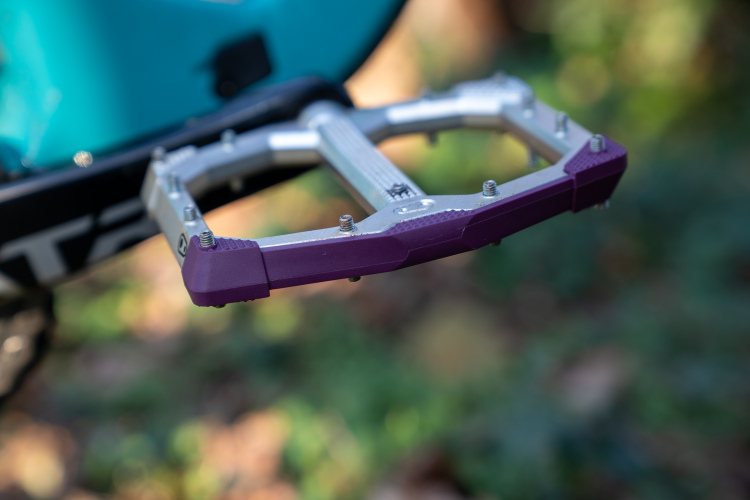
The Spank Spike is a great stocking stuffer for anyone who just loves the feel of a good quality flat pedal. Now that special someone (yeah, you’re special too) can rest assured that these pedals can take serious, long-term abuse on the slopes. The Spike represents a big leap in pedal design with an ultra thin profile, forged body, and an IGUS bushing and inner bearing. The added spin adjustment is the cherry on top, allowing the rider to select how much free spin he wants.  -element22

Smartphone Cases and Mounts (from $29)

If you don’t know what to get someone, a smartphone accessory is usually a safe pick. I’ve been looking for a safe and convenient way to use my iPhone on the trail and this year a couple products caught my eye. Topeak makes a Bicycle Handlebar Mount iPhone Drybag ($29.99) that can be mounted to your handlebars or stem to keep your phone dry and secure during the ride. The Optrix HD Sport case ($79.99) transforms your iPhone into a mountable helmet camera for capturing video footage on the trail, though sadly it’s only available for pre-orders at the moment. Throw in an app store gift card and you can turn an ordinary smart phone into a trail-ready GPS, helmet camera, and point and shoot camera that also happens to make phone calls. You know, in case you need to dial 911 after a nasty crash. :) -trek7k

Santa Cruz V10 Carbon ($3,350, frame only)

OK, so you won the lottery or got a fat Christmas bonus and want to get a kickass gift. Well the Santa Cruz V10 Carbon fits that bill nicely. For starters, the V10 totally destroys the perception people have about what DH bikes should look, feel, and ride like. Forget the fact that you could easily build it to less than 33lbs. Nevermind the 10 inches of VPP travel and all the other technical highlights that Santa Cruz packs into this puppy. This bike just looks sexy under the tree – super clean and not a weld in sight on the main triangle. Built up you’re looking at a $7,000 World Cup level gravity ride! -element22

Schwalbe Muddy Mary and Big Betty Tires (starting at $52)

If you’re the kind of rider who finds himself spending a lot of time pointing downhill, I have two great tires for you: the Muddy Mary and Big Betty. Both ladies offer great traction and, depending on compound choice, will trade off tread wear for increasing levels of traction. A good choice for most will be the Trail star compound or the even longer-lasting Pace Star. These beastly tires range in cost from $52 – $89 dollars each. -element22

What’s on your Christmas wishlist this year?


Final Review: Focus Black Forest 1.0 29er

Monday, December 5th, 2011

It’s clear at this point that in general, 29ers are here to stay, and even with incredible developments in full suspension technology, 29″ wheels are allowing hardtails to see a resurgence in popularity due to the way those big wheels help smooth out the bumps.

The 2011 Black Forest 29er from Focus is yet another entry into this market segment. Focus Bikes are designed and fabricated in Germany, and they are quite popular in Europe. They are just now starting to gain traction in the States via retailers Jenson USA and Performance Bike. The 1.0 model carries an MSRP of $2,100 and sells for $1,725 at JensonUSA.com; there’s also a 2.0 for $1,250 and a 3.0 for $875.

Please Note: This is a review of the 2011 model. While I was writing this article, Focus released the preliminary specs for the 2012 model, which I will also discuss below.

The Ride

After logging hundreds of trail miles on my full suspension Giant Trance, I was nervously excited to try out a hardtail 29er, and the Focus did not disappoint. It has all of the characteristics that I liked about my old 26″ hardtail like fast acceleration and tight handling, but it rolls over trail obstacles much better. I have taken the Black Forest on a number of ‘epic’ rides and it is a comfortable way to spend the day in the saddle.

The bike carries great speed on the flats, and it climbs like a mountain goat on steroids. When pointed uphill, this thing is unstoppable. I have to ding a few points for descending, however, due to the steep 72° head angle (**see 2012 specs below). I was able to descend everything I normally would, but I had to really pay attention to my weight transfer and overall body position. The big wheels definitely help, but overall I feel like the head angle is just too steep for routine duty on technical trails. On the flipside, steering is snappy, uphill switchbacks are a breeze, and I have cleaned large obstacles on the Focus that I was never able to conquer on my full suspension 26er. The relatively short chainstays make it easy to loft the front end, and it even likes to catch some air when the mood strikes.

Components

I covered the SRAM 2×10 setup and other components in detail in my preview post and since then everything has held up very well (other than one brake lever that was sacrificed in a crash). Otherwise, nothing has broken or required anything more than minor adjustment. The Rockshox Recon Silver fork has performed as expected. The X7 crankset is stiff and tight, the X9 shifters work well with the X9/X0 derailleurs, and shifts are always smooth and crisp. The Avid Elixir 3 brakes, which are pretty common in bikes at this price point, have given me no issues. The DT Swiss hubs and wheels have remained tight and true, and the Continental Race King tires have had no flats. Overall the Black Forest is a well thought out and solidly built bike.

Minor Complaints (**see 2012 specs below)

I’ve already mentioned the steep head angle, and I also noticed some flex in the front wheel when pedaling hard and really reefing on the handlebars. I think the big wagon wheels are just too much for the traditional 9mm axle.

The Rockshox fork with remote lockout didn’t give me any problems, and it soaked up the big bumps without complaint, but it was a little harsh at high speed over choppy terrain.

Earlier this season I tested some Geax AKA tires and they completely spoiled me. The Conti’s on the Focus were ok and didn’t let me down. They roll really fast and have nice volume for a 2.2″ tire, but they don’t have anywhere near the traction or cornering prowess of the AKA’s.

At first I was pleasantly surprised by the included ergonomic grips, but they are not lock-on and they almost immediately spun around such that they were no longer ergonomic, becoming instead rather painful. I cut them off and replaced them with some Crank Brothers lock-on foam grips. German bike company Focus, meet German grip manufacturer Ergon. Problem solved… ;)

das Bike

**The Rest of the Story…

This is where I was going to say what a good first effort this was for Focus as they broke into the 29er hardtail market, but that in comparison to similarly priced models from Giant and Kona… yada, yada – but then I went over to the Focus website and checked out the 2012 Black Forest 29er 1.0. It’s like they read my mind! They addressed every gripe that I had! Here are the highlights:

  • Fox 32 Float 100mm fork with what appears to be a through-axle.
  • Shimano XT drivetrain.
  • Magura MT2 brakes
  • A 70° head angle!!!
  • Lock-on grips

Clearly Focus has listened to us riders and in one model year they have taken their flagship 29er from a fast, fun bike that was sketchy on technical downhill and transformed it into a bike worthy of all-day epics that can also be a contender on race day. The graphics are more refined, the geometry is dialed in, the components are stepped up a notch, and I’m guessing that they made it lighter too. Make no mistake, Focus intends to have a piece of the 29er hardtail pie, and with their demonstrated attentiveness to riders’ wants and needs, they deserve it! If you’re considering a 29er hardtail for your 2012 stable, then dieses Fahrrad should be on your short list.

A big thank you to Focus for letting me shamelessly abuse spend time with the Black Forest 29er. (And also for the replacement brake lever) :D


Site Map | Advertise | Partners | Contact Us | Terms | Privacy
Campground Reviews | Hiking Trails | Trail Running | Skiing / Snow Sports | Mountain Biking
Copyright 2012 Blue Spruce Ventures LLC | Atlanta, GA
singletracks.com is yet another slick Review App