singletracks is mountain biking
Sign In | Create Your Account | Site Map | Help  


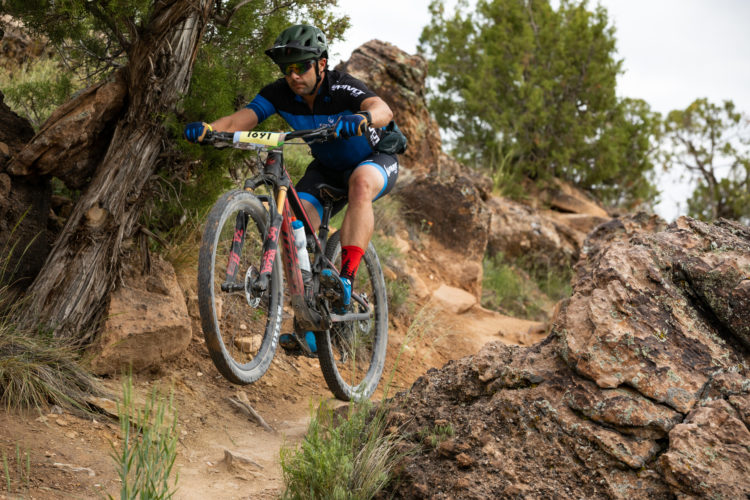
Victor Alber: Team Florida’s Mountain Bike Specialist

Wednesday, November 30th, 2011

photos: Don Feeley.

“The whole weekend was a mud fest.”

This is how Team Florida’s premier mountain bike racer Victor Alber sums up the 2011 Collegiate Mountain Bike Championships, which were held in Angel Fire, NM from Oct. 28-30. The town, a popular ski resort destination that boasts elevations of nearly 11,000 ft., was a far stretch from the terrains he normally covers in Florida. The elevation and ice-covered soil posed some challenges but didn’t prevent him from posting some very impressive results.

Alber compared the elevation to the restrictor plates used to limit engine power in NASCAR. “I could push my legs, but it was only so long until (my) heart rate (went) through the roof.”

Alber examined the task at hand and barreled forward, earning a seventh-place finish in the cross-country race and ninth place in the short-track event to put the finishing touches on an incredibly impressive 2011 season.

For somebody who reaches the podium in nearly every event he enters, it might seem a little odd to learn that Alber admits to spending nearly all of his time training through road cycling.

“You can control your efforts a lot better, and you don’t beat up the bicycle.”

Despite the tendency to train on the road, Alber will quickly admit that his true passion is mountain bike racing. He began riding seriously at 14, and he found himself competing within a year.

When asked why he prefers mountain biking over road cycling, he said, “It’s more of an individual sport. You control your own race, and it’s not just about how strong you are. It actually takes technical ability.”

With multi-day races heavily scattered through the year, it’s pretty remarkable that Alber is able to churn out such dominant performances while balancing training, racing and school.

“It’s all about time management. School comes first, so I try to get my work out of the way so I have time to ride,” he said. “I also find that riding helps my ability to get schoolwork done, if that makes sense. Sometimes getting out there and riding can help me clear my mind so that I can get back and focus on my work.”

Alber also emphasized the point that mountain biking doesn’t always have to be such a serious, stressful event.  He said his favorite race of the year was the first race of the season, the ETSU SECCC Dirty South Weekend in Johnson City, TN. With a huge turnout from schools throughout the southeast, the Dirty South Weekend was a great way to start things off.

“It’s a fun time traveling with a bunch of friends, meeting new people and starting out the season. And it wasn’t as stressful [as the National Championships].”

Of course, nobody starts out on top—you have to work your way up there. In Alber’s opinion, you’re never too old or young to start.

“My dad started at 40, and that really helped me to start riding. Here in Gainesville we have an awesome cycling community with GCC (Gainesville Cycling Club), Team Florida and all the bike shops. So there’s a wide range of skill and ability, and there’s a lot of group rides so anyone can go find a group.”

Victor finished 4th in the individual D1 omnium at Nationals and also won the SERC/US Cup East Pro championship this year. Singletracks.com is an official 2012 Team Florida sponsor and we’ll be posting some of their MTB race reports throughout the year.

10 Thoughts from My First Mountain Bike Race

Friday, October 28th, 2011

I’ve been a serious mountain biker for a little more than 6 years now. I enjoy exploring new trails, traveling the country, and pushing myself and my bike to the limit. I always try to improve my times and my technical handling skills… but somehow this continual progression has not led me to the competitive realm of mountain bike racing.

Until now.

The Baker’s Dozen 13-hour endurance race this past weekend was the first time I had ever raced my mountain bike competitively. As a serious rider just getting into the racing scene, I thought I’d write up a few random thoughts I had during my first competition (in no specific order):

  1. Passing isn’t that difficult. I was surprised to find that passing and being passed on the singletrack wasn’t nearly as difficult as I thought it’d be. In fact, with an endurance race format such as this, there was very little passing taking place in general.
  2. You can be competitive without being a jerk. We had some stiff competition with the other teams, but it was easy to be competitive and still joke and laugh at the same time.
  3. The right equipment can make your life easier and make you a faster racer, but it is not essential. Riding with the right gear and a lightweight bike was a definite bonus, and I could easily feel the advantages of having certain pieces of high-quality equipment. However, there were many people out on the course with whatever gear they could find… and I think everyone had a great time anyway! The guy who took second place in the solo class rode with flat pedals, shin guards, and a downhill jersey and downhill shorts.
  4. Quitting shouldn’t be an option. There were quite a few teams that quit well before the end of the race. What’s the point in coming out if you aren’t going to put your all into it? A direct corollary of this truth: “Just because you’ve raced before doesn’t mean you’re hardcore.”
  5. Only ride one lap at a time. As trek7k mentioned in his race report, riding one lap at a time is definitely the way to go in a team race. Even some of the two-man teams were switching off every lap.
  6. It’s more fun on a team (misery loves company). Having teammates to cheer you on really bolsters your resolve. Also, hanging out at the pit all day and talking about mountain biking with whichever teammate wasn’t on the bike was just a ton of fun. It’s nice to take a break from the computer, from work and real-life, and just think about riding bikes all day.
  7. Small roots can take their toll after 4 hours of riding. During our pre-ride I noticed that the course was pretty bumpy, and I correctly predicted that riding lap after lap on a hardtail would take its toll. Long story short: it did.
  8. Small amounts of time add up quickly. We were only an average of one or two minutes per lap behind the first place team in our category, but it quickly added up to a 44 minute deficit by the end of the race.
  9. Racing is fun. What’s more fun than getting to hang out with like-minded folks and spending all day riding mountain bikes and eating great food?
  10. Endurance racers do it better. After experiencing an endurance race, a regular 10-20 mile cross-country race seems like it would just be anticlimactic. Training for weeks or months beforehand, only to spend an hour or two on the bike? Eh, I’ll pass. Getting to hang out and ride all day from dawn until well after dusk was a lengthy, all-encompassing experience.

What thoughts do you have about mountain bike racing?

Singletracks Goes Racing at the Baker’s Dozen this Weekend!

Monday, October 17th, 2011

For the first time ever, three of the World Famous Singletracks.com Bloggers will be teaming up for a mountain bike race!  This coming Saturday, October 22, mtbgreg1, trek7k, and myself will be entering the Baker’s Dozen mountain bike race at the Lick Fork Recreation Area near Edgefield, SC.


This area will be jam packed with racers and pit set ups on race day.

The Event

The Baker’s Dozen is a 13 hour race with the emphasis on fun instead of competition.  It’s a race targeted at the average mountain biker, not the guy who has a coach and power meter and gets excited at the idea of doing hill repeats.  It’s laid back, relaxed, and a good excuse to spend an entire day outside surrounded by bikes, old friends, new friends, food, and fun times.  The entry fee is nice and low – only $55 for IMBA/SORBA members and $65 for non-members.  All proceeds are used for mountain bike advocacy and trail repair and construction in the Augusta, GA area.  Dirty Spokes Racing will be handing timing duties, and SORBA-CSRA has a bunch of stuff to give away plus there will be a drawing every hour to give away some prizes.  At the end of the day custom engraved pint glasses will be awarded to the top 3 riders/teams in each class.


Mile markers make it easy to meter your effort and keep an eye on your pace.

The Course

The Horn Creek trail is a bit of a hidden gem.  We have a lot of great trails here, most of which are closer and offer a lot more miles, so Horn Creek doesn’t get a ton of traffic which is a shame because it is a lot of fun!  Some sections are out in the open through areas that have been logged in recent years.  Other sections flow through thick forest on picture-perfect bench-cut singletrack.  There’s a lot of roots, some bridges, a few rocks here and there, and some hills.  The race course starts with a mile of paved and gravel roads through the campground which gets you to the six mile singletrack loop, and another mile of roads brings you back to the finish.  The singletrack goes right past the start/finish area, giving teams a heads up that their rider will be finishing a lap in a few more minutes.


The  Horn Creek trail is a pretty fast trail, even though some sections are a little rough.

Formal Invitation…and some smack talk

Come hang!  Race solo to see what you’re made of or get a team together and spend the day hanging with your buddies.  If you get a 3-person team together you can even go head to head with Team Singletacks!  You won’t beat us, but you can try.  ;)   Pre-registration is still available, but closes at midnight on Wednesday October 19th. Day-of registration is also available, if the race doesn’t sell out, and prices go up $10.  Camping is available for only $7 on a first-come-first-served basis.  But, if all the tent pads get filled up you can still set your tent anywhere inside the park.  Mtbgreg1 and I will be camping Friday night, so drop by and say hello if you do camp.


The open sections of the trail have great sight lines and really let you rip.

Internal Competition

Team Singletracks is going racing just to have fun…but we’re also racing against ourselves.  We’re going to see who can have the fastest average lap time over the course of the day and here’s your chance to get in on it.  In the comments section tell us who you think is going to throw down the fastest average lap times.  If you get it right, we’ll send you some sweet Singletracks stickers.

Hope to meet some of y’all at the race!  Be sure and stop by our pit and say hello – just look for the tent with the Singletracks banner.

Get all the important details on the race HERE.

Pre-Race Mountain Bike Prep

Tuesday, September 6th, 2011

There’s a big race coming up.  You’ve spent weeks, or even months, preparing yourself, riding as much as possible, watching what you eat, and even ditching friends and family so you could train.  You are ready… or, at least as ready as you will be!  The last thing you want is a mechanical to put you out of the race, wasting all the hard work you’ve put into preparing for the race.  Here are some tips to make sure your bike is as ready to race as you are.


If you have to travel to race, be sure to take everything you need.  Make a list, check it twice.

“Success depends upon previous preparation, and without such preparation there is sure to be failure.”

While I’m not sure if Confucious really said that, I am sure it’s good advice.  Getting the bike ready starts long before the race, two or three weeks out actually.  You wouldn’t wait to do all of your training until the day before, would you?  So why wait to check the bike until the day before?  The night before a race is NOT the time to be doing major work on your bike!  Starting early will give you time to replace any worn parts (which you probably don’t have laying around and will have to order) and get them broken in before the race.  Here’s what you should look into:

Tires:  Check your tires for wear and damage.  Inspect the sidewalls and the tread, look for cuts, bulges, embedded debris, anything that could cause a failure.  If you’re not confident in a tire, replace it.

Brake Pads:  How much life is left in your brake pads?  Is it enough to get you through that 50 mile race if it rains?  Having an extra set to carry with you just in case isn’t a bad idea.  Brake pads are like toilet paper – there are nasty consequences for running out.


A tire failure can ruin your day in a bad way.  Make sure they’re up to the task.

Stans:  How long since you last topped off the sealant in your tubeless tires?  If you shake the wheel and don’t hear Stans splashing around inside, you need to add some more.

Drivetrain:  If your ride is shifting smooth, then great, move on.  If it’s not good, figure out why and get it fixed.  Take it to your favorite LBS and let them tune it up, replace what’s worn out (chain, cassette, cables, etc).  If you had to replace the cables, be glad you’re smart and got it done early.  Now you have time to break them in and get the initial “stretching” over with and get the system re-tuned so it’s running like a sewing machine on race day.

Hidden Dangers:  When was the last time you checked your chainring and cleat bolts?  Probably never, right?  Most of us never think about them.  Well now is the time to check – I’ve read too many race reports where someone lost one of these critical bolts and were not able to finish the race.  You don’t want to be That Guy.  (example:  3 days before the 50 mile Fools Gold my buddy Ross discovered that 2 of his chainring bolts were missing and another was loose!)


A well tuned and clean drivetrain goes a long way towards having a good day on the bike.

Final Prep

On the night before the race you need to get all of your stuff taken care of.  That way, the morning of the race you don’t have anything to do except get dressed and get to the start line.  Get your clothes laid out, food prepared and ready, pack your hydration pack with whatever tools you’re taking.  Here’s a good checklist for prepping your bike the night before:

Tire Pressure:  Get your tires aired up to whatever pressure you plan on using.

Drivetrain:  Wipe away as much dirt and grime as possible and re-lube your chain.  A smooth, quiet drivetrain goes a long way toward making you feel good on race day.

Hidden Dangers:  Check those chainring and cleat bolts one more time.


Check your cleat bolts!

Go Get Some

Alright, you’re ready – get some sleep, you’ll need it!  In the morning all you have to do is eat, fill up your bottles/hydration pack, get to the venue and put on your riding clothes.  Oh, and don’t forget to take that all important pre-race potty break!

Fool’s Gold 50 MTB Race Report

Friday, August 26th, 2011

The Fool’s Gold 50 and 100 mile mountain bike race is presented by 55Nine Performance and takes place in the mountains of North Georgia.  It utilizes lots of forest service roads, some double track, and some sweet singletrack – including Turner Creek, Moss BranchBare Hare, Bull and Jake mountain trails, and Black Branch.  It’s got about 7,000 feet of climbing for the 50-mile route and double that for the 100 milers – they do two laps of the course.  As part of National Ultra Endurance Series it draws some of the fastest professional endurance racers in the country – but it also draws lots of regular Joes looking for a challenge, like me.

Background and Game Plan

This would be my third time tackling the 50-mile race.  In 2008 it was the first big mountain race I’d ever done and I had no idea what I was doing.  I made two big mistakes – I used a 1×9 drivetrain with no chain guide, and my nutrition plan consisted of water and two gels.  That didn’t work well at all.  Without a chain guide the chain bounced around like crazy, so at the bottom of pretty much every downhill I had to stop and put the chain back on the front chainring.  And I didn’t have nearly enough calories, and no electrolytes at all, so cramps started about halfway thru the race.  I finished with a time of 6:30.  In 2010 I DNF’d after 6.5 hours and only 30 miles due to horrible conditions.


I don’t think the hotel really understood the value of all the bicycles in their “secure” holding room.  I say “secure” because while they claimed it was secure, there was no control over who came and went into the room.  But as far as I know, none of the bikes “walked away”.

My goal for the day was to finish in less than six hours.  The plan was to spin a nice easy gear all day to save my legs and keep from cramping, and to eat every 45 minutes whether I wanted to or not.  I decided not to use a hydration pack and just used two big bottles instead, which I filled with Gatorade GPro.  I carried more drink mix in a few ziplock baggies and each bag had enough for two bottles.  I also took 4 Hammer gels and a package of Clif Bar Shot Bloks.  I had intended to take a flask of Hammer gel as well, but I accidentally left it at the car.  I carried everything in my jersey pockets so I had nothing to send ahead to a SAG stop.

Race Day


The three Augustans just a few minutes before the start.  From left to right: Ross, Ted, me. 

After a late start getting out of the hotel and a semi-hectic morning, me and two friends from Augusta, Ted and Ross, lined up together at the start.  The race was based out of the Monteluce Winery (a new start/finish location for this year) and began with a paved 3.5 mile neutral roll out behind a pace car.  I hit my top speed of the day, 40.7 mph, and lost sight of Ted in just a few minutes which didn’t surprise me at all.  Ted is strong and I knew he’d beat me by a wide margin.  Ross and I hung together for a ways but he eventually pulled away from me on the big climb of the day.  My pride wanted to turn up the pace and stay with him, but my brain knew I needed to ride my own race and not worry about anyone else.  So that’s what I did.  I hoped to catch Ross later in the day.


The 100 mile racers getting ready to start.  These folks are crazy.  The 50 mile field was almost twice this size.  Photo:  GeorgiaMTB

We climbed for a long ways at the beginning; at least, that’s how it felt to this relative flatlander.  Pretty much from the time we hit the gravel at 3.5 miles all the way to just past the 16 mile point it felt like we were climbing.  There were actually a few short downhill sections, but they were over so quickly I hardly noticed them.  SAG 1 was at the top of the big climb.  I topped off one water bottle then hit the big descent of the day, and killed it.  The next six or seven miles were all downhill, mostly on a gravel road but then on some singletrack.  While my fitness and climbing legs aren’t as good as many of my fellow racers, my bike handling is better and I’m more willing to take risks – I passed a ton of people on the descent.  In fact, I didn’t get passed on a downhill or on singletrack all day long unless I was stopped to eat.  It took me two hours to reach SAG 1 at 16 miles, but only 40 minutes to reach SAG 2 at the 25-mile point.
If you’re keeping track, that means I made it about halfway in only 2:40 – I was well on my way to making my sub-6hr goal.  I knew I’d be going slower near the end, but hoped I had enough of a buffer to still make the goal.  I didn’t stop at SAG 2 and rode onto a singletrack-heavy section of the course and had a blast.  My average speed between SAG 2 and 3 was really low though – it took me an hour and twenty minutes to cover the 10 miles.


SAG 2 was also SAG 3 – we came by this spot twice.  Most racers stopped at least once here, and the volunteers were awesome.  Photo:  GeorgiaMTB

A few miles before SAG 3 I caught up to Ross on a steep hike-a-bike section of trail and we stayed together for the next 10 miles or so.  We both stopped at SAG 3 where I refilled my two water bottles, drank about a third of a can of Coke, and ate a few M&M’s before Ross and I headed out.  That was when I noticed my seat bag was wide open… and empty.  My tube, two CO2 cartridges, a power link, tire levers, and a multi-tool were laying on the ground somewhere behind me.  If I had any mechanical issues at this point, I was screwed.

After SAG 3 my legs didn’t feel good the rest of the day.  I felt like I was slowing down, having to use a lower gear than I would have liked.  Then I had a mechanical and lost sight of Ross at mile 40.  My chain shifted past the big cog and got jammed between the cassette and spokes.  AHHH!  This happened to me at a XC race not too long ago and afterwards I adjusted the limit screw on the derailleur and fixed the issue.  But somehow it had come out of adjustment – a good bit too – and it was easy to see that the derailleur and big cog didn’t line up.  I’m still not sure how this happened since I had been using that big cog off and on all day long with no problems.  Since I had lost all my tools I couldn’t adjust the limit screw to fix it either.  Luckily it didn’t take long to get the chain free, and I made sure to stay off that big cog the rest of the race and didn’t have any more issues.

About five and a half hours into the race it started raining.  Hard.  Luckily I only had to ride a little bit of singletrack in the rain, then I was back out on one of the forest service roads.  It had gotten hot, and the rain actually felt really good since it cooled things off.  When I reached mile 50 five hours and fifty minutes were on the clock – but I wasn’t done yet.  I was still on some God forsaken gravel road, and I didn’t know how much further I had to go, but I knew I still had that 3.5 mile section of pavement to get me back to Monteluce Winery.  And it was still pouring rain, which was no longer nice and cool – now it was annoying.


The Kenda arch signaled the finish line – and the end of a long day in the saddle.  The sun wasn’t shining when I came through, but I was still stoked to finally get there.  There was food under that big tent in the background, and it was awesome!  Photo:  GeorgiaMTB

I hit the pavement with only five minutes left to make my goal.  For some reason I thought I still had a chance – apparently I don’t do math well when I’m exhausted.  I would have needed to average 42mph, but for some reason I thought I only needed to average about 18mph.  I put my head down and used the last bit of the energy I had in a futile race against the clock.  I was amazed my legs were still putting out some decent power after this long in the saddle; I passed about a dozen people and nearly ran off the road braking too late into a sharp corner.  When my stopwatch said 6:00 I sat up a bit and slowed down a little… the near-crash scared me, no point in risking a spill now.  I crossed the finish line with 54 miles behind my tires and 6hrs and 10mins after I started, with the rain still pouring down.  Ross had beaten me by ten minutes, and Ted kicked both our butts with a time of 5:20.  The winner of the 50-mile race finished in 3:55 which is crazy fast.  What’s even crazier is the winner of the 100 mile finished in only 7:11!!  He rode 50 miles further than I did, and he only needed an extra 61mins to do it.  Screw that guy.

Not A Bad Day

I finished in 92nd place out of 158 guys in the Open Mens class, and 134 out of 233 total 50 mile racers.  I didn’t make my sub-6hr goal, but I’m still really happy with my race.  The course was a little longer than I expected and I couldn’t have done it any faster.  I stuck to my game plan and rode my own pace and didn’t worry with anyone else, although I may have pushed a little too hard in the first half.  My bike was 99% perfect all day long.  The course was a lot of fun, everyone else out there was friendly and having a good time.  The volunteers at the SAG stations were great, and the post-race lasagna was amazing - big thanks to those guys and gals who volunteered so the rest of us could ride.  Congratulations to all the winners and all the finishers.  Since I didn’t make my goal I guess I’ll just have to try again next year!

Thanks to 55Nine for hosting a great race, all the volunteers who made it easy for us to just focus on turning the pedals, and GeorgiaMTB for the photos.

Race Report & What I Learned at My First XC Mountain Bike Race

Monday, June 6th, 2011

I did my first ever cross country (XC) mountain bike race recently.  I’ve done a bunch of longer distance endurance races (6hr, 50 mile, 100k’s, etc) and a few short time trials, but this was my first mass-start, short distance, high intensity race.  It was crazy!  It was both frustrating and fun at the same time, and I can see how people get addicted to it.  I learned a lot that day, so read on to hear how my race went and to see if XC racing is something you might enjoy yourself.


The SS class seemed to be the most eager to start.  432 even false started!

The Race and Course

The race was put on by Gone Riding and was a dual-series race for the South East Regional Championship and the Georgia State Championship.  The course was a flatish rooty and rocky 10.5 mile loop at Dauset Nature Trails in Jackson, GA.  There was only about 900ft of climbing per lap, but there were tons of roots and way more rocks than you would expect to find in middle Georgia.  It was a rough course, but the conditions were hard packed and fast.  There were 3 classes:  Base (XC3) Sport (XC2) and Expert/Pro (XC1).  Base did one lap, Sport did 2, and Expert did 3.  Everything I read suggested first timers race in the Base class, so that’s exactly what I did, in the 19-29 age category.

I knew the pace would be fast the whole time, so for about 15 minutes before we started I rode up and down a long mellow gravel road climb.  I pedaled an easy high cadence at first, then did some sprinting to send my heart rate up to redline a few times.  I arrived at the start line, heart rate up and already sweating, just minutes before we went off.  There were 8 of us in my class, and no one looked slow.

On Your Mark, Get Set, GO!!

No really – GO!!!  As soon as they said “go” it was a full out 100% effort sprint.  We had about a quarter of a mile on a gravel road before we entered the singletrack.  Almost immediately two guys somehow got tangled up and crashed hard at what had to be close to 20mph.  I entered the singletrack at the back of the now 6 person pack.  The pace never slowed down – it was fast, aggressive riding the entire race.  Balls to the wall, hard as you can go.  If you don’t feel like you might puke, you’re not trying hard enough.  After a mile or so I made a pass and moved up to 5th, and kept pushing myself.


Me booking it through the woods.  Be mindful of the trees!  Photo: Mark D.

Around the 4 mile mark I had almost reeled in the two riders ahead of me – I was close enough they weren’t getting out of sight anymore.  Then on a rough climb I downshifted without easing up on the pedals.  This is when I learned my upper limit screw on the rear derailleur was out of adjustment – the chain jumped past the big cog and got jammed between the spokes and cassette.  I had to stop.  The guys in front of me quickly disappeared, and the 3 behind me flew past.  Before I could get the chain free some of the racers in the wave that started after my class had also caught and passed me, including my friend Chris.


One of the Pro classes tearing out of the start line.

Once I got the chain free I took off in earnest, trying as hard as I could to catch back up.  At a switchback there was another crash and I caught my friend Chris and a few other guys.  Chris isn’t slow, so I tried to stay on his wheel.  A short while later I passed Chris when he was in the wrong gear on a rocky climb.  He caught back up to me pretty quickly, but didn’t try to pass.  Knowing he was behind me made me push even harder.  Around 7.5 miles into the lap we catch a group of four racers, then my chain gets stuck between the cassette and spokes again.

This time it’s really stuck good, and I end up literally sitting on the ground next to the trail pulling and tugging on the chain trying to get it free.  A ton of people pass me.  There’s no way I can catch anyone in my class at this point: my race is over.  After what feels like an eternity a course volunteer/photographer comes down the hill and helps me get the chain free.  I finished the lap at a decent pace, but not nearly as hard as I was riding before.  No point in killing myself now.  A few minutes after I finish I hit the stop button on my heart rate monitor.  One hour and nine minutes on the clock, average heartrate of 181 bpm and a max of 206 bpm.  I told you it was full out!


Post-race watermelon really hits the spot on a 90 degree day.

Lessons Learned

The biggest lesson I took away from the race is that perfect bike set up is critical.  I had nearly 200 miles on that bike since building it up with no issues, but the race was the first time I rode it that hard – basically with reckless abandon.  Shifting while cranking as hard as possible on the pedals will show any imperfections in your set up!

Some other advice for those of you interested in trying an XC race:

  • Warm up is crucial!  The pace is fast the entire ride so starting cold will suck.
  • The ‘beginner’ class isn’t just for beginner riders – the leaders are very fast.  The winners in pretty much every class all averaged over 13mph (on a very rough course) - the sport and expert riders just did it for more laps.
  • Have realistic expectations.  Your only goal for your first race should be to finish without getting hurt.  The chance of you winning is very small.
  • Keep your head up.  Everything happens fast.  Crashes, people stalling, unexpected roots or rocks – you gotta see them in time to react.


The kids race was awesome!  Photo: Mark D.

All in All…

…it was a fun day, even though I was dead last in my class.  The atmosphere was much more laid back and relaxed than I expected.  Everyone was friendly and there to have fun.  I also thought the kids race was cool – get ‘em hooked young!  The only thing I didn’t like was the drive-time to race-time ratio – I spent about 5hrs in the car and only about 50minutes riding.  I probably wont do another one until I can combine it with a trip to visit friends or family.  I can’t wait to try another XC race though!

National Collegiate MTB Races this Weekend @ Northstar

Friday, October 16th, 2009

collegiate_mtb_racing

The National Collegiate MTB Championships are being held this weekend at Northstar resort in Lake Tahoe and the men’s and women’s cross-country races are kicking things off today. Tomorrow it’s short track and mountain cross and on Sunday the long travel bikes make their appearance for the downhill race. This year’s race is being hosted by the University of Nevada Reno and any USA Cycling collegiate-eligible team is welcome to compete.

punta_san_carlos_mtb1

It’s sad to think we’re already at the end of the racing season here in the US as cool weather and shorter days approach. Want to delay the end of summer riding just a little longer? Check out the Week of the Dead, a Mexican adventure full of mountain biking, surfing, paddling, and drinking set at the Punta San Carlos resort in Baja, California. This resort sounds super sweet with its own 60 mile MTB trail system, private landing strip (for your jet!), and direct access to some killer waves. If you’re looking to blow some coin, this definitely sounds like a fun way to do it!

High School MTB League Forming in Colorado

Tuesday, September 1st, 2009

colorado-hs-mtb-league

Cool opportunity to help get a high school mountain biking league going in Colorado. Details below from IMBA.

Help Bring a High School Mountain Bike League to Colorado!

You may have heard about the incredible success that the Norcal and Socal high school mountain biking leagues have enjoyed in California.

We now have a chance to launch the Colorado version — high-quality racing and a comprehensive bicycle education program designed for young riders. We are asking for your help to make the Colorado High School Mountain Bike Racing League a reality.

How can you get involved? Start with three simple steps:

1. Learn about the successes of the sister programs in California by watching this short video clip.
2. Forward this message to your riding friends, club members, cycling parents and anyone who might want to get involved.
3. Let us know if you’d be interested in attending a gathering (or hosting one) for like-minded supporters to help build momentum in your part of the state.

Our goal is to raise enough interest and support to launch the Colorado High School League in the fall of 2010. With your help, we can do it!

Preparing for a 24 Hour MTB Race (Part I)

Monday, August 31st, 2009

picture-31x

Just a few months ago yours truly was invited to compete in the Summer Solstice 24 Hour up here in ON. Fun times for sure, provided you’re physically prepared and have all the necessary equipment. One thing to remember in events like these is even if you think you don’t need something, you do. I am going to break this article up into two parts, each with several sections containing checklists of items you’ll want to bring for a great race.

PART I
Bike preparation
What to have on the bike
Riding clothes and accessories
What should be in that hydration pack

PART II
Base camp
Foods
Personal preparation

Bike Preparation

The first thing to keep in mind in an event like a 24 hour race is, unlike a regular ride, you will have to contend with anything mother nature tosses at you. Fortunately, if your bike has been prepared properly it shouldn’t be that bad. If the weather reports say it’s going to rain, you’ll be riding in mud – lots of mud to be exact. Once again it’s not like going out for a regular ride – those trails will very quickly be turned into slop.

You can eliminate a few worries by having your drive train bomb-proofed. How do you do that? For one thing, lubricate your components before the event using a lube that is slightly thicker than you would normally use. I tend to use a waxy oil – it clings a bit better and doesn’t wash out as quickly.

I also like to switch out my hollow pin chain for a more durable chain (such as the PC-971 from SRAM). I really like SRAM chains because of the Powerlink which provides a means to remove the chain on the trail without any tools. The Powerlink also makes removing the chain quick and easy so you can soak it in lubricant between laps.

To keep your drive train operating smoothly, it’s also a good idea to protect your cables from grime. I use the Gore Ride-on cable system which is sealed from shifter pod to the derailleur, keeping all the grime and water out of the cable itself. The last thing you want during a 24 hour race is a shifting jam so bad that you stop using your shifter altogether.

Choosing the right tires for race day course conditions can give you a big leg up on the competition. If it’s a dry day, a faster rolling tire is a good choice while a tire with a bit more tread is better for soft dirt. If you’re planning on riding in the rain you’ll need a mud tire. If you have a course with tons of fast switchbacks and turns, a tire with good transition knobs would be wise. On the topic of tires, if you have a spare wheel set it’s smart to set it up with a different type of tire so you can react to changing conditions.

To truly bomb-proof your bike, have it tuned up just before the race. You can follow one of my previous posts on servicing your bike to give you a good idea about what to check. For those who don’t have time to dig through the archives, start at the front of the bike checking wheel bearing smoothness/ looseness, brake operation, and the amount of brake pad life remaining (you may want to just put a new set of pads). On the topic of pads, if it’s going to rain, toss a set of sintered pads on your bike – organic pads will not last at all. Torque the handlebars and brake levers. Lube the shifter pods and torque all the bolts down on the front end (stem bolts, brake bolts, and rotor bolts) . If you have a FS bike, check the operation of all the bearings and pivots. Reset the pressure on your rear shock, checking for leaks using soapy water all around. Also check the front derailleur, cable clamp, and derailleur clamp bolts for proper torque. Test your rear brake action, torque, and pad life (replace as necessary). Check rear wheel bearings and cassette. Finally, examine the rear derailleur condition and movement.

picture-111

In a 24 hour race you are going to ride at night so you need a good quality lighting system or two. I use the Princeton Tec Switchback 3 along with a few other systems as back up. You may want to consider having two systems with you – one on the bike and the other on the helmet. Make sure your systems are functioning and fully charged for the event. Bring a spare battery if you can or at least plan a way to charge your battery when you’re not riding (car charger or a generator).

Bike Prep Checklist:

  • Get a tune up including nut and bolt check and new brake pads and chain
  • Bring an extra set of tires or wheels for different weather conditions
  • Pack spare parts (cables, derailleur hanger, nuts and bolts, chain, tubes, chainring and bolts)
  • Get a spare lighting system and batteries tested and ready to go
  • Consider a tail light as well (some races require one)

What to have on the Bike

Once your bike is prepped there are a few things you need to have on that bike during your race. The most important thing that should be on the bike is your timing chip (dongle or lap counting device). If that’s not on your bike, your laps won’t be registered! Also, don’t forget your number plate. Make sure the plate does not impede your cables or your steering. Bring a spare tube and an water bottle if you need it. Just remember that there will be mud flung onto everything!

Your Personal Riding Gear

picture-293Choosing the right clothing for a 24 hour race can be a daunting task. To be successful on the course, you need to stay as dry as possible. That means you need a few changes of clothing. Have at least 3 sets of shorts and jerseys – trust me, you’ll go through all of them. Bring clothing that will work with you during the evening portions of the race. Remember in some states and provinces there will be a big difference in temperatures in the evenings compared to the day time. Bring at least one windproof jacket and a pair of pants to keep warm during those hours.

Clothing checklist:

  • Helmet (and optional back-up)
  • 5 or 6 sets of socks
  • 4 jerseys
  • 4 shorts
  • 2 sets of gloves
  • 1 rain jacket and pants (wind proof and water repellent – consider Gore wind stopper products or Paclite)
  • Casual wear and warm clothing for when you’re off the bike
  • A 2L hydration pack which can also hold snacks for your lap (nothing too large – a simple pack like the Camelbak Octane XC will work)

What should be in that Hydration Pack

picture-292For those who choose to use a hydration pack during the race, try get one that will just hold the essentials. Remember you’re only going out for about 12 miles (17km) at a time. All you need for a lap is your water, nutrition and emergency items for fixing a flat tire (forget these and you’re running the rest of the way). For tire problems you’ll need a tube, inflator, and tire irons. You may also want to pack a simple multitool just in case something comes loose or needs tweaking due to mud buildup.

For on-trail nutrition, carry items that are easy to eat and digest – experiment with this one before your event. Get your electrolites and carbs from a gel like Hammer Gel or a sports drink in your hydration pack. You can also carry fruit like bananas (consume these items first) or nutrition bars. Just remember with any food item, especially nutrition bars, consume with plenty of water. For best performance, try to eat before you’re hungry and drink before you’re thirsty (just a tip).

In your Hydration pack (if you use one):

  • Hydration pack with enough water for one lap
  • Food items for one lap
  • Inflator, tube, and tire irons
  • A multitool
  • Spare chain links

Tomorrow I’ll be posting Part II of this article, including tips on how to set up your base camp, food to bring, and the tools you’ll want to have for more serious race repairs.


Site Map | Advertise | Partners | Contact Us | Terms | Privacy
Campground Reviews | Hiking Trails | Trail Running | Skiing / Snow Sports | Mountain Biking
Copyright 2012 Blue Spruce Ventures LLC | Atlanta, GA
singletracks.com is yet another slick Review App