singletracks is mountain biking
Sign In | Create Your Account | Site Map | Help  


Interbike MTB Suspension Report: Fox, Rockshox, Marzocchi, and More

Wednesday, September 21st, 2011

Mountain bike suspension manufacturers seem to have raised the bar yet again this year. Everyone from Fox and Rockshox to DT Swiss and Marzocchi to newcomer Formula was proud to show off their latest and greatest.

Fox Racing Shocks

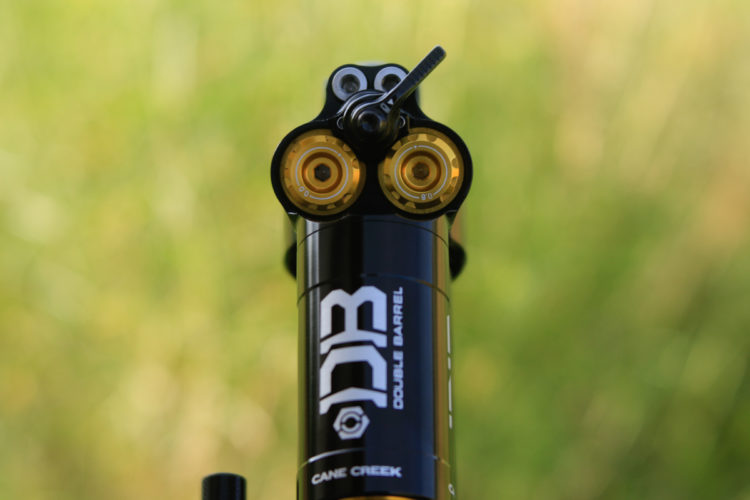
Stopping off at Fox first, I spent some time talking with Josie Jacques-Maynes, an accomplished mountain bike racer in her own right, about their 2012 line up. Fox is splitting the line into three categories: Factory, Performance, and Evolution with Factory being the highest end with all the latest and greatest. The entire 2012 line up gets new SKF low friction seals which improve sensitivity. The rich Kashima coating still finds itself on all the Factory line forks and now on the RP23, RP2, DHX Air 5.0, and the DHX- RC4 shocks.

Fox is also coming out with an all new longer travel 29er fork for 2012. There are two versions: a Float with 140mm of travel or a TALAS with 110/140mm travel. Up close you can tell FOX took their time to evaluate this fork before bringing it to market with careful consideration to both weight and strength. Coming in at 4.54lbs (TALAS taper steerer 15QR) this fork is begging to be tossed on a Yeti SB95 or similar long-travel 29er.

Fox is also nearly ready to release their version of the dropper seat post. So far what is clear is that it will come in two sizes (30.9mm and 31.6mm) and will feature a remote lever (natch). Checking the test model I did the wiggle test and lo and behold, this one had nearly zero side-to-side play compared to others on the market. Am I waiting to test one… YES.

As for the rear shocks I am stoked on getting ready to give a full review on the 32mm TALAS and RP23 shocks. This year’s RP23 has what Fox calls Adaptive Logic which provides a greater range of ProPedal tuning and increases the Boost Valve effectiveness.

Fox previewed a new technology still early in development that uses any Android device or Garmin GPS along with a special pump (with built in ANT+) to set up the fork. First you scan the QR code on the fork , then hook up the pump and the app tells you what to do next. Seems like a neat concept for setting up the fork correctly. The program even gives you recommended compression and rebound settings. This unfortunately is still under development but if executed well I can see it helping many riders get their suspension set up right.

Rockshox

Swinging by Rockshox and talking with Tyler Morland about everything SRAM, we went through all the numerous tweaks that Rockshox has made for 2012. Lower friction damper cartridges, Keronite on the top models, and tapered carbon steering tubes are just the start of what Rockshox has to offer this year. The really big news for Rockshox is the expanded offerings in the 29er markets. You can now get your hands on a SID, Reba, Recon, Revelation, and the lower cost XC versions for big wheel rigs. With travel options from 80-140mm, Rockshox is making sure you’re covered.

The all new Motion Control DNA damper cartridge is lighter and features greater adjustability and improved sensitivity. For all you gram counters, the lightest 29er SID weighs in at just 1450 grams – pretty damn light for sure. Jeff has posted a few articles about longer travel 29ers bikes and the Revelation 29er with its 32mm uppers and 20mm maxle will surely find its way onto many a Trail 29er soon.

On the longer travel side of things, the Lyrik gets major upgrades with a choice of a BoXXer-derived Mission control DH damper, a Dual position air system that will drop the travel down 30mm in just one 110°degree sweep, or the BoXXer-style solo air spring. Stiff 35mm stanchions and three choice of steering tubes will  round things out. The BoXXer gets tweaked as well with further improvements to sensitivity as well as some weight savings with the lowers coated in Keronite rather than paint. The Keronite is a very hard uniform surface, much like a ceramic compound which helps reduce weight while keeping strength high.

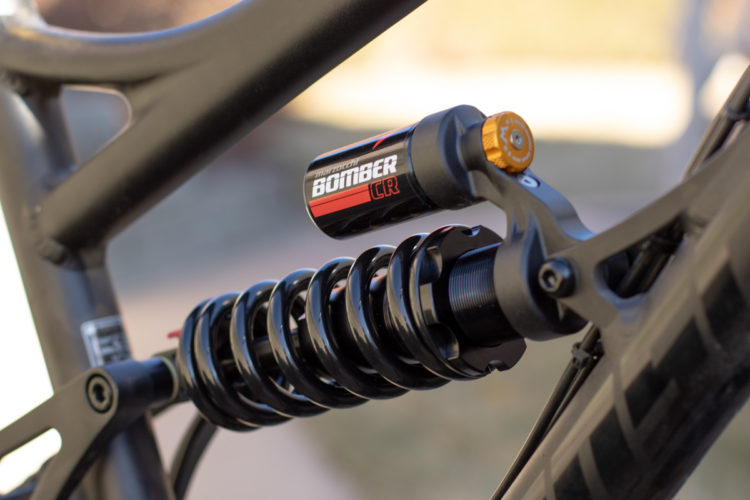
At Rockshox it doesn’t end with new forks. The photo above says it all. There are now white color options on the Monarch and Monarch Plus shocks and even a new carbon option on the Monarch which gets some versions below 200 grams. The Monarch Plus is now available and will pair nicely with a Lyric on those longer travel Trail or AM bikes.

Another new item from Rockshox this year is the Kage rear shock. The Kage matches the Domain series of forks and is a lower priced option to the Vivid line up. The Kage RC has pre-load, compression, and rebound adjustments and comes in at 402 grams (no hardware and no spring, 216mm length).

DT Swiss

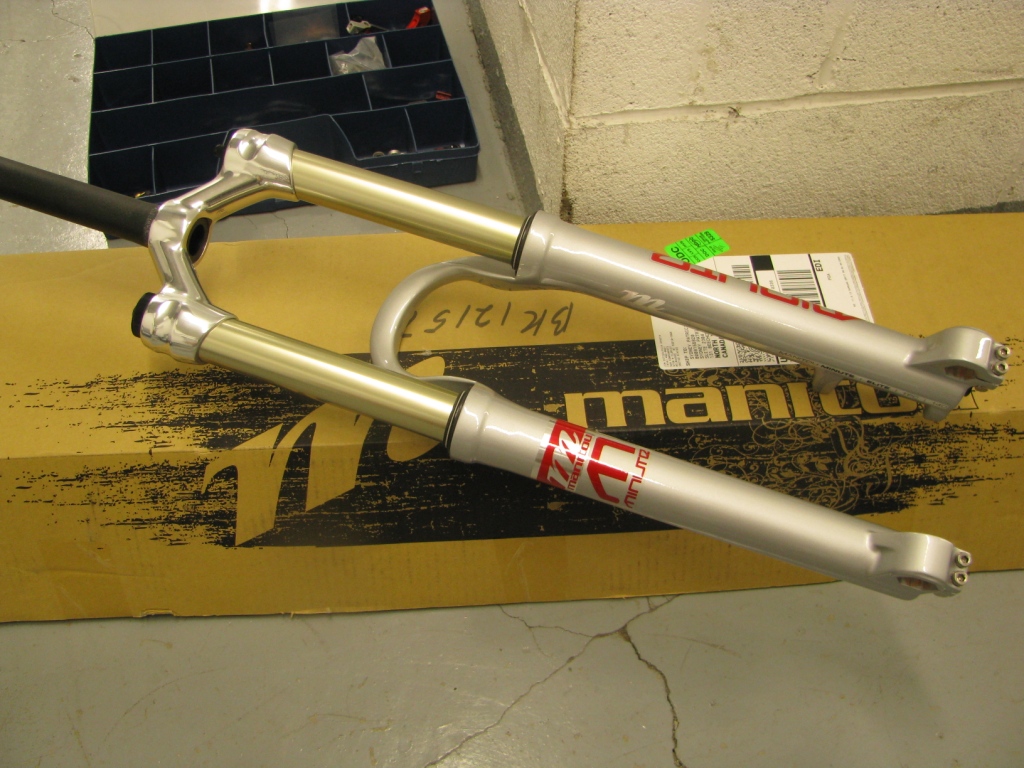
DT Swiss also made an appearance at Interbike this year to show off their suspension tech. The forks all have a very uniform look to them which could be a bit confusing but other than that you’re looking at a solid choice. For one thing the XRC 100 Single shot comes in at just 1170 grams with a carbon steering tube (with an unique internal rib for stiffness). The lowers are carbon as well with a reverse arch much like Manitou forks. The biggest fork is DT’s EXM 150 coming in at 1675 grams.

The EXM 150 features a magnesium lower with a polished center bridge called the torsion box. Controls on the EXM are much like many platforms with a threshold control and independent rebound and compression circuit adjustment (Launch Control). The ABS (Auto Balance System) is used for the damper which makes it easy to set up the air spring. The positive and negative air chambers set themselves automatically.

DT Swiss also offers the incredibly light XR carbon rear shock. At its shortest length, 165mm, you have a shock that is 142 grams. Pretty crazy but yeah, talk about light. The XR also gets a new air spring with the same ABS platform as the forks for precise set up. What I find unique about this shock is the threaded carbon canister. To date I believe this is the only carbon component that has threads right in the material. Using an aluminum damper shaft for the rest of the construction and carefully placed seals should keep this damper working for some time.

Manitou

Unfortunately Manitou was not at Interbike this year but they have a few refinements on the Dorado and R7. The big news for them is the release of the Marvel, the first for Manitou with a QR15, using the familiar hex that has been used successfully on their 20mm through axles. In addition to the Marvel, a tuning kit is being offered that will allow everyday riders to tune their suspension to perfection. For the rear suspension a tweaked Revox shock is coming this year. Stay tuned for a review on that soon!

Formula

Formula is making a debut this year with their very own fork design using 33mm stanchions for a good mix of stiffness and weight savings. Add to that a pull spring for small bump compliance and a main air spring for the bigger bumps and this promises a sensitive shock. The display models were QR9 with post mounts and it wasn’t clear if a 15QR is on the way. What you can see in the cutaway is the thin lowers and even the lower DU bushing, all designed to keep things as light as possible.

Marzocchi

Marzocchi was at the show showing off their latest line of extensive forks along with a display of legacy fork models. The line up has been revamped with new models and changes in the damper cartridges. The new Corsa Superleggera Carbon 29er fork features a one-piece tapered steering tube / upper crown and a weight that rivals some 26er forks at 1650 grams. This fork offers three travel lengths (80, 100, and 120mm) and is internally adjustable using a new hydraulic travel adjust system (Switch TA) that works completely independent of the damping system. Relying on hydraulics, the optional travel change of 40mm (on the 55 series) or 30mm (on the 44 series) automatically re-extends without pulling back up on the bars.

On the bigger side of things, the 66 hasn’t changed much over the last year, but the 888 RC3 Evo gets a new and improved cartridge and finally a 4-bolt mounting system for the stem.  The Roco line up of rear shocks sees a color change, now in black to tone things down a bit.

Unfortunately we didn’t have enough time to check out everyone at the show – we missed Suntour and X-Fusion – but hopefully next year we will stop by and check that out for you. Stay tuned for more coverage from Interbike!

X-Fusion Forks and Shocks

Friday, September 25th, 2009

picture-364

Walking around at Interbike you get to see a ton a great stuff up close. Yesterday I chatted with John Valera from X-Fusion about a few of their newest products. X-Fusion has already been around for a few years and has a pretty full line-up for 2010. The Velvet RC is an XC fork with 32mm stanchions and your choice of models with 80, 100, or 130mm of travel. X-Fusion’s all-Mountain fork, the Vengeance, has 36mm stanchions and 160mm of travel for the more adventurous rider.

X-Fusion also offers a wide and extensive range of rear shocks that will take care of just about anyone from XC to hardcore DH riders. All the shocks in the product line are of high quality and construction without any proprietary mounting hardware needed.

picture-365

John introduced me to the Vengeance front shock and some of the technical features are perfect for those who want to do a bit more. This fork basically includes everything a Fox does at a lower cost of about $799.99 MSRP. The Vengeance sports independent high and low speed compression controls on the lower right stanchion of the fork and a rebound toggle on the top of the right leg. The air spring pressure is also adjusted at the top of the right leg and the best part is that this fork weighs just 4.9 lbs.

The Velvet weighs in at 3.25 lbs and boasts different travel options, an external lock out, and rebound control.

The Vector HLR rear shock really caught my eye. This piece kicks it with an optional Ti spring (element 22 on the periodic table :) ), independant hi and low speed compression circuits, rebound adjustment, bottom out air pressure adjustments, and a bottom out volume control. Can you say NICE?

Check out the full product line and all the options at x-fusion-shox.com.

picture-369

How to Install a Front Fork

Monday, June 22nd, 2009

picture-44

Pretty much the biggest upgrade you can give your mountain bike is a new fork but the installation can seem daunting even to experienced MTB tinkerers. If you’ve been considering a fork upgrade but aren’t sure where to start, you’re in luck: here is the step by step procedure that nearly all shops will use to successfully replace your MTB fork. Once you get good at the procedure you could easily do this task in about 35 minutes but for the first time, allot yourself a good hour and a bit. No need to rush this job -the more care you take the better results you will have.

Read your manufacturer’s instructions

The very first thing anyone should do is read the installation instructions. I don’t care if you are an experienced mechanic or a bike tech, there is always something in there that you may not have know or forgotten, and funny thing it is usually the most important piece of information that you need.

Gathering  all the Tools

To do this job you need to round up a few items and tools:

Bike stand
Shop rags (to clean up remove excessive grease)
Allen sockets 3, 4, 5, 6mm (for use with your torque wrench)
Allen keys 3, 4, 5, 6mm
Side cutter (for removing old tie straps)
Soft face hammer
Chisel / standard screwdriver or crown race puller (Park tool #CRP-1)
Tape measure or ruler
Hack saw
Half round file with holder
Pipe cutter with new blade
Threadless saw guide (Park tool #SG-6 or similar)
Threadless nut installer (Park tool #TNS-1 or similar)
Tube that will fit over the steering tube and install the lower crown race
Torque wrench
Shock pump (high pressure up to 250psi)

You may need a new brake adapter if you are changing a fork that had IS (International Standard) mounts to one with post mounts but if your forks use the same mounting system you won’t need an adapter.

Warnings

This is IMPORTANT: If you do not feel you can do this, then don’t. Steering tubes are generally not replaceable so if you cut yours too short, then you’re outta luck. As always, MEASURE TWICE, CUT ONCE! When in doubt, read the last sentence again.  When cutting you should wear safety glasses and you should never use a file without a handle. Be careful not to nick the side of the steering tube with any sharp object.

Removing front wheel and top cap
picture-120

The very first step is to remove the front wheel. Next, release the top cap, take it off, and put it aside in a container so you don’t loose the bolt and cap.

Removing the front brake

picture-121

Most bikes today use post mount brakes and in this case, it’s a simple matter of removing the two bolts that secure the caliper onto the fork. If you have an IS adapter, (International Standard) remove the brake from that point. Make sure all the hardware is placed in a small plastic bag (these use different bolts and should be kept separate).

Removing Brake Hose

Most bikes have the brake hose attached to it in one of two ways: a small plastic mount or a plastic tie wrap. If your fork uses a tie wrap, carefully cut it off, avoiding touching your brake line. Otherwise, simply remove the hex bolt that holds the clip in place and move the brake hose and caliper away. Under no circumstances should you be removing the brake line from the caliper.

Removing Stem Assembly

Use the series of photos below for the following instructions.

picture-123picture-122picture-124

With one hand on the lower crown, hold the fork in position while loosening the stem bolts. The moment the bolts are loosened the fork will fall so better to be safe than sorry! Once you have released the bolts enough, remove the stem and bar as an assembly and allow it to sit on one side of the bike. Afterward, remove the spacers and top crown race and place them somewhere safe.

Remove fork

picture-45

Once you have removed the fork you’ll find the lower bearing race and seal which you’ll need to remove so pay attention to the orientation of the bearing. Your bearing may not look like the one in the picture (this is what is called a cartridge bearing) but bearings won’t stray too far from this design. Keep in mind cartridge bearings are packed with grease so check to see how smooth they are moving (twist them and feel for grittiness, the smoother the better). If your bearings are rough you may want to consider a new headset at this time.

Remove lower crown race

picture-47

If you plan on reusing your old headset you’ll need to remove the lower race; otherwise, skip this step. There are a two ways that you can remove the lower race: use Park Tools CRP-1 OR if you are careful enough you can use a sharp chisel or a screw driver and gently tap the race off by working around ring, removing it evenly. Just be careful not to hit the steering tube! Wedge the tool between the fork crown and race, prying it upward until it pops off. Once off, put the race with the other parts of the headset.

Measuring Steering Tube Length

picture-135Measure the existing steering tube from the mounting face of the crown to the end of the steering tube (you may want to record that number). Next mark the new steering tube with a felt marker.

If you’re placing a new headset and it is not the same as the one that came off, you’ll need to use another method to figure out the steering length. To do that, first measure the head tube of the bike, then check the manufacturer’s info for the stack height of the headset plus the spacers and the thickness of the stem. Add it all up and with that total number subtract 2mm and that should be the length that you need to cut.

Head tube length  +
Headset stack height  +
Spacer stack  +
Stem thickness  +

Subtract 2mm from that total (this is for the top cap clearance and space required to preload the bearings).

Mark and cut the fork

picture-136With the correct length marked on your fork you now have two options for cutting the fork. The first method is to use a threadless saw guide and a hack saw. Set your guide so that when the blade draws over your mark it sits just above the cut line – this ensures that the tube extension doesn’t get cut to short. Ease up on the last few strokes before cutting through – this will prevent a large burr from forming at the end that will have to be filed clean. Finally, carefully remove the saw marks off the top and file the edge at a 45 degree angle to ensure there is no burr or edge that can scratch you or components on installation.

The second method involves the use of a pipe cutter with a fresh blade (shown above). Just make sure to line up your pipe cutter just above the cut line and rotate evenly to get a clean cut.

Installing the star nut

picture-142This step really is really best accomplished using a star nut setting tool, though you could try to install it by other means (you will have a very hard time doing so). Screw the star nut onto the nut setting tool all the way, then line up the star nut with the steering tube (do your best at lining things up here otherwise you will have issues later). Tap the star nut in to place and make sure you set it in a minimum of 5mm. Some tools have a stop that will set the nut in the right way every time.

Install the lower bearing race

picture-144

Once the star nut is installed it’s time to install the lower bearing race. You can go and purchase the correct tool from a tool manufacturer such as Park or find yourself a tube that fits over the steering tube.  I fashioned the tube shown here myself and included a small nylon ring to protect the bearing race. Carefully tap the bearing ring in place and make sure the race sits squarely on the fork crown.

Install fork

picture-146picture-1451

Once the lower bearing race is installed you can go ahead and replace the fork. Remember to replace the lower bearing and seal, then install the fork. Next, install the upper bearing, keeping in mind the orientation of the bearing, then install the compression ring (make sure flat side up) and the top cover. If you plan on using spacers below the stem, install them now followed by the stem itself. You should end up with 2- 3mm of space. Finally you can replace the top cap and stem bolt. Do not torque anything yet.

Install the front brake and cable

picture-147

At this point you should be ready to install the front brake. When you have the brake loosely installed, make sure you’re using the correct bolt length (there should be 8 threads exposed past the caliper). Replace the front wheel with disk, being careful not to jam your rotor into the pads. Once the front wheel is correctly installed now you can set the caliper in place. The way I usually set up the brake is to slowly compress the brake lever, keeping the caliper as centered as possible when applying brake pressure. Slowly tighten the bolts down. Release the brake and spin the wheel while listening to make sure that the pads are not contacting the rotor. You may need to re-adjust the brake by loosening the bolts slightly and carefully moving the caliper until you don’t hear it rubbing when spinning the wheel. DO NOT stick your fingers near the rotor while in motion.

Once you are satisfied with the performance of the front brake, apply brake pressure again and torque the caliper bolts to the amount recommended by both the brake and fork manufacturers. If the fork you are installing states a lower torque value, use that one.  The final job is to keep the cable from rubbing on any moving parts. Some forks come with a convenient mounting point, others require a tie wrap.

Now it’s finally time to line up the wheel with the stem and bars. Stand in front of your bike and hold the wheel between your legs. With your hands grab the bars and wiggle them side to side, slowly centering the bars. Once set you can tighten the stem bolts a bit.

Now, double check to see if the bar is straight. Grab the front brake and rock the bike fore and aft while listening and feeling for a light clunk. If the front clunks you may have insufficient pre-load on the stem top cap in which case you’ll need to loosen the two stem bolts slightly and give the top cap bolt a half turn. Keep doing this until the clunk disappears. If the steering suddenly gets too stiff, you went too far on the top cap tension. Once you have the correct tension, line it up and now torque the stem bolts (use the correct torque from the stem manufacturer).

Now – you’re done! You did it!

Cheers.

Just a quick thanks to the folks at Manitou,Hayes and Opus for their support.


Site Map | Advertise | Partners | Contact Us | Terms | Privacy
Campground Reviews | Hiking Trails | Trail Running | Skiing / Snow Sports | Mountain Biking
Copyright 2012 Blue Spruce Ventures LLC | Atlanta, GA
singletracks.com is yet another slick Review App