singletracks is mountain biking
Sign In | Create Your Account | Site Map | Help  


Maxxis CrossMark 29er Tire Review

Monday, February 1st, 2010

crossmark_profile

In mountain biking there are very few “classic” designs that haven’t been torn to shreds over the years as tech advances to produce bigger and better MTB components. Sometimes, though, designers and engineers hit upon a design so effective that it withstands the test of time with very few tweaks over the years. The Maxxis CrossMark mountain bike tire is proving itself to be one of those product designs.

crossmark_top

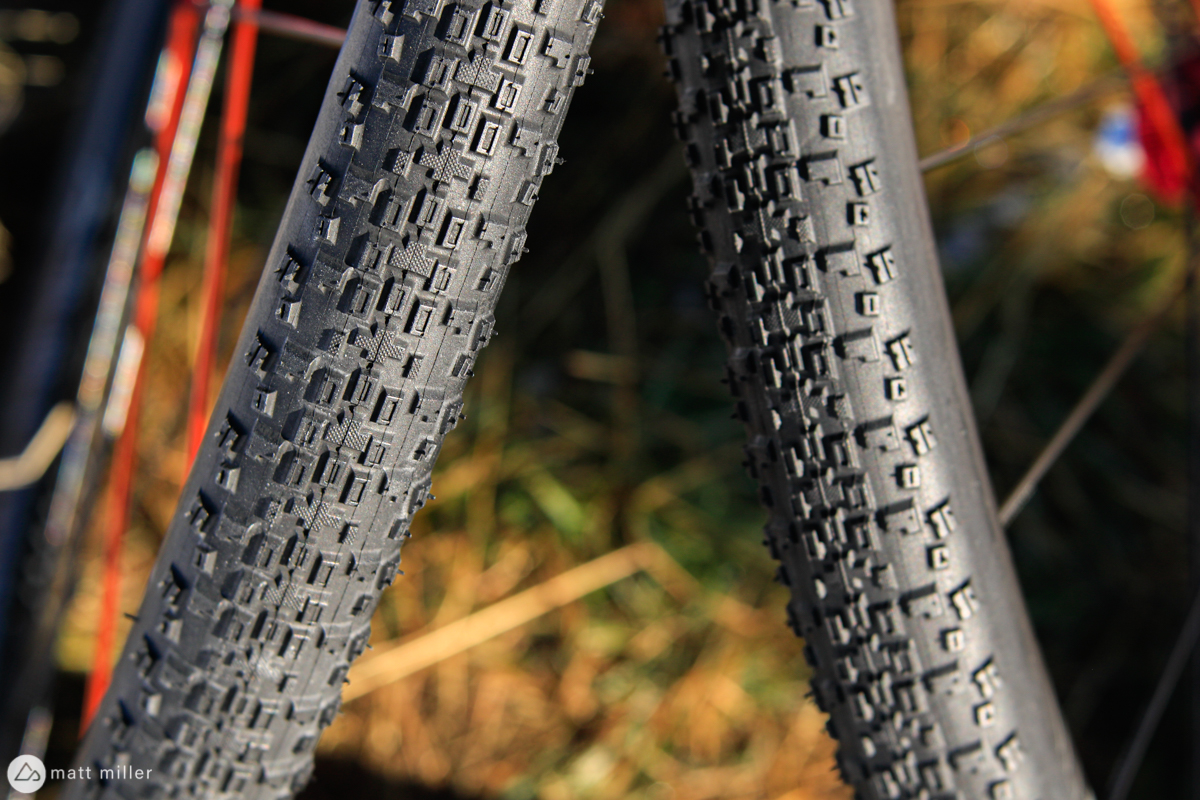
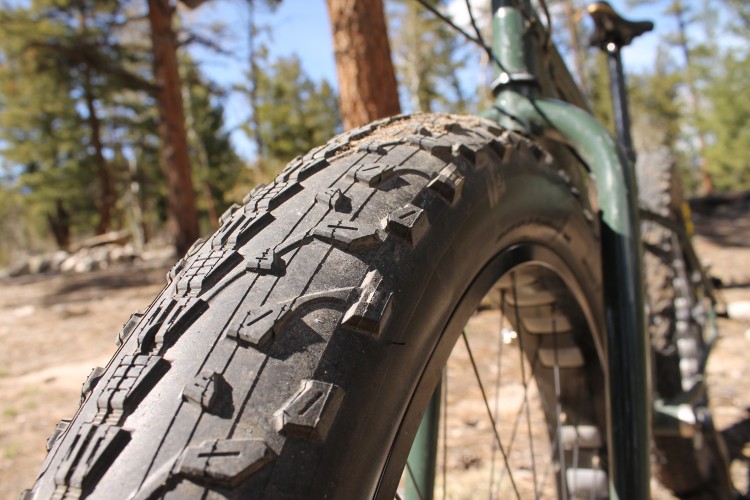
On a recent group ride at Yellow River, 3 out of 7 of us were riding CrossMark tires which isn’t too surprising given the versatility of these skins. The CrossMark features a directional tire tread with ramped intermediate knobs that can be ridden front or rear (or both), depending on conditions. As a front tire the CrossMark is tough to beat but if you’re riding in loose to muddy conditions you may want a rear tire with a little more bite (the Maxxis Ardent is a good choice). On hardpack trails the CrossMark rolls fast and efficient thanks to tightly-spaced center knobs while the raised and slightly wider spaced side knobs bite well in corners.

At 605g each, the CrossMark 29 is a fairly light tire, thanks in part to the lightweight 60 TPI casing. For those who aren’t familiar, TPI stands for “threads per inch” where the threads are part of the cloth reinforcement embedded into the tire rubber. A higher TPI allows for thinner tire walls which makes the tire more supple and lighter but also weakens the sidewalls, making them more likely to be damaged by rocks and sticks on the trail. At 60 TPI the CrossMark 29 is a durable tire that will stand up to a lot of abuse. For weight weenies with 26″-wheel bikes, the CrossMark also comes in a 120 TPI version for a roughly 10% weight savings.

Many tires claim to be low rolling resistance and sadly there isn’t a widely used measurement of rolling resistance out there (though in theory a test should be easy enough to develop). For me the best test is taking a mountain bike tire out on the road and listening to it hum. A loud tire on the road signals a tire that’s sucking energy while a relatively quiet one signals good efficiency. The CrossMark 29 passed the road test with flying colors and felt smooth with very little noticeable vibration on smooth surfaces.

crossmark_angle

Mud clearing ability is important for any XC tire and even though the CrossMark 29 isn’t designed for muddy conditions, the tire does a decent job at shedding the big stuff thanks to the moderate-to-shallow tread depth. The tiny cross pattern in the center does make it tough to get the tire completely clean and in my tests even miles of pavement couldn’t loose some of the stickiest bits.

The CrossMark 29 is faithful big wheel extension of the venerated CrossMark design and is a versatile tire any XC rider can appreciate. Blending high rolling efficiency with decent cornering control, the CrossMark is a big-wheel-friendly tire that is a solid choice for a wide variety of conditions. Get the CrossMark and you’ll always be in good company when you’re out on the trail.

Thanks to the folks at Maxxis for providing these tires for review.

Maxxis Aspen 26×2.25 MTB Tire Review

Tuesday, January 19th, 2010

aspen1

Here is an exciting new tire for those of you who are inspired by going really fast on your XC bike. The Maxxis Aspen 26×2.25 (also available in 26×2.10) is new to the Maxxis XC tire line-up and is a high volume, fast rolling tire that promises to deliver for mile after mile.

The 26×2.25 Aspen is a great balance between light weight (695 grams) (475 g for the 26 x 2.10 120tpi), durability, and traction. The race-inspired center tread is a low chevron, 3mm in height, that grips well enough in most terrain. The tread pattern depth increases to 5.5mm at the side knobs, which look like a cross between the Ardent and Minions DHF side knobs.  The 62/60 dual compound allows for low rolling resistance and long tread life in the center and good traction and stickiness in the corners.

One of the things I really like about Maxxis tires is the ease of installation and minimal need for tire irons.  For my tests I installed the Aspen tires on my Easton XC One wheels with a set of Maxxis Flyweight tubes. Just remember to add a bit of talcum powder to the tube before installation – this will further improve the ride and reduces any friction between the tube and tire.

Climbing

The low profile center knobs offer a surprising amount of climbing traction and control, both standing on the pedals and staying seated. The only time I had any real loss of climbing traction was in really loose soil, muddy, or slimy, rooted conditions. The low (3mm) center tread will load up with gunk quickly which poses a problem with in loose conditions but on the hard stuff  these tires rock.

aspen2

Cornering

As I mentioned before, the side knobs on the Aspen closely resemble a cross between the Ardent and Minion DHF side knobs, so as you might expect, cornering ability is pretty darn similar in comparison. Not surprisingly, they hold the line very well and the transition between riding upright to hard cornering is smooth and controlled. The transition knobs do a great job of quickly shifting traction and pressure to the side knobs and back again. However, in really loose conditions the tire started to show signs of slippage, but this is to be expected from a lower rolling resistance tire.

Braking

Braking performance was good but not great – if that makes any sense. Because these tires are so efficient, speed can really get away from you if you aren’t careful. Under normal braking conditions, I didn’t even notice the tires were there (this is a good thing). Under really hard braking, I did get the rear to break loose a couple of times, but it was still fairly controlled. Braking in the rough stuff was also above average thanks to the high volume of the tires.

Descending

If you’re into having fun, you’ll also want to use these tires to descend. Now do not confuse these with downhill tires, because they’re not. But when you get to point your XC rig down a hill, these tires do a decent job cornering and stopping. They’re not super grippy by design but they’re certainly good enough to halt that XC bike. These Aspens did clog up a bit but on sticky hardpack, but rather than totally loosing traction, they lost it gradually.

Summary

The Maxxis Aspen 26×2.25 ($56 MSRP) is a fast, smooth rolling tire that’s highly efficient and should work great on any XC racer or even a trail bike that spends most of its time on the harder side of things. Using these tires on rocks, hardpack, rooted trails, and near-frozen trails, these tires did great. On looser stuff like sand over hardpack and muddy patches, the Aspen was just passable. If your terrain is on the harder side of things, definitely give these mountain bike tires a try!

My overall ratings for the Aspen

9 out of 10 for rolling and efficiency
6 out of 10 for loose conditions
9 out of 10 for cornering (hard pack)
8 out of 10 for stopping in a straight line (firmer ground)

Specs from Maxxis:

Durometer 62/60 rubber compound
Usage: XC, XC race
Conditions: hardpack, loose over hard, rocky
TPI: 60
Size: 26 x 2.25
Weight: 695 grams (foldable)

Thanks to the folks at Maxxis for the Aspen tires for review.

Maxxis High Roller UST 2.5 Tire Review

Wednesday, December 9th, 2009

picture-76

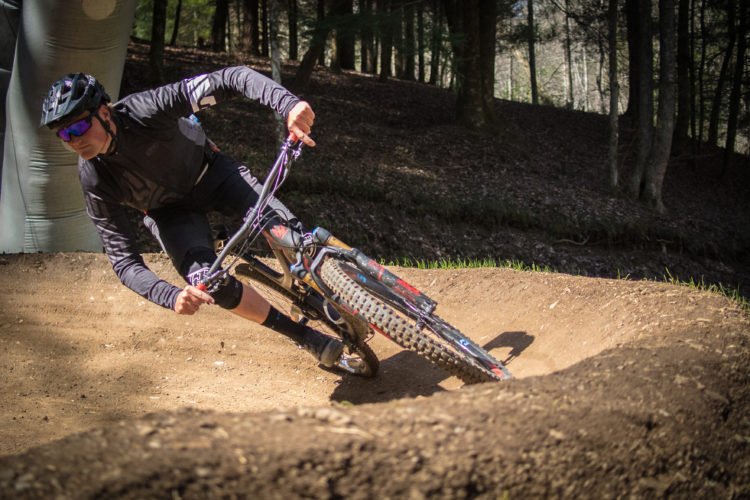
If a picture is worth a thousand words, what does this one tell you? Clearly there must be guide wires holding this rider up. Actually there are just two forces at play here: centrifugal force pushing the rider outward and a counter-reactive force being applied by the Maxxis High Roller 2.5 UST tires. For about $73 MSRP you can get these two-ply UST tires for your DH rig and while they may not be the lightest in the category (1,230 grams), they’re clearly some of the best gripping tires around.

The High Roller is super easy to install on any UST-specific rim – just remember to use a lot of soapy water to help seat the beads in place. When I installed these tires on my rims I made sure the bead was always in the drop center which made for an easy installation and required no tire irons. As with any UST tire, I try to avoid using any tools on the beads since I don’t want to risk damaging them. I used an air compressor to pop the tires into place in no time, inflated to 40psi, and was off to the trails!

picture-75I took these tires to Bob_The_Builder’s secret trail stash where we could really push the High Rollers to the limit. These tires offer very high levels of traction on surfaces that can be anywhere from soft to medium hard, both in loamy soil and even rock gardens. Speaking of rock gardens, I found that even with a full head of steam there were no issues with these tires. I can’t recall hearing a single complaint from my rims due to excess tire compression. I guess that extra layer of butyl really prevents rim dings.

The ramped knobs in the center of the tread kept me rolling quickly with surprisingly little vibration along the trail. The center knob tread pattern also produced great traction even on the rare occasions when the bike was pointed uphill. Stopping power is awesome and felt consistently smooth and grippy during decelerations (very important when it comes to switchbacks in the trail).

The angular side knobs really bite hard when you pitch into corners, keeping the bike pointed where you want it without the side-to-side squirm you may notice with other tires. I found the side knobs on the High Roller to be very stiff and secure compared to other tires where the side knobs are a bit softer and more flexible.

picture-73

I would definitely recommend these mountain bike tries to anyone who is going to hit the slopes in a serious fashion. If your rides include large drops, rock gardens, or heavily rooted trails, then these tires are for you. The dual-ply casing and great tread pattern will keep you sticking to the trails!

My overall impressions for the High Roller

8 out of 10 for rolling and efficiency
9 out of 10 for loose conditions
9 out of 10 for cornering
9 out of 10 for stopping in a straight line

Specs from Maxxis:

Durometer 42 rubber compound
Usage: All Mountain / Freeride  DH
Conditions: medium to wet
Size: 26 x 2.50
Weight: Rear 1230 grams (foldable)

Thanks to the folks at Maxxis for providing these awesome bike tires for review.

Maxxis Minion DH F/R Tire Review

Monday, October 26th, 2009

picture-399

I’m sure many of you already read my review of the Maxxis Ardents – if you haven’t what are you waiting for? OK, now that we’re all up to speed, I have another great set of tires from Maxxis that are perfect for those who don’t quite have the clearance for using the Ardents but need the same level of grip and control.

The Maxxis Minions come in two versions: a double-ply, 2.5″ DH monster and a more XC-friendly, single-ply 2.35” tire ($53 MSRP). The thinner, 2.35″ tires are just wide enough that they provide the rider with the extra control and traction that comes with more rubber plus the added volume to help reduce pinching and rim dings.

The Minions are sold as specifics meaning that the front tire tread pattern is different from the rear tire tread pattern. Clearly this is a good idea because front and rear tires have different functions. The front tread pattern is designed to roll efficiently and provide extra traction under braking as well as cornering. The rear tire is designed to keep itself clean and provide traction for acceleration as well as braking. Below you have the images of the tread patterns, front tire on the left and the rear on the right.

picture-3991picture-400

Installing these was painless and took me all of 10 minutes. This time I used new tubes also from Maxxis (FR-specific tubes that are 1.2mm thick) and a dusting of talcum powder. I inflated the tires to 40PSI (my usual beginning pressure) and I was off to the trails.

I decided to take these tires to 3 stages in Collingwood for the first test ride. I chose 3 stages for its fast rolling hills and switchbacks along with its variety of terrain types (rock gardens, hardpack singletrack, river crossings, and a few softer spots that never see the sun).

Starting off on a series of rolling hills that switch back to back and up and down gave me a good indication of how well the Minions hold a line while accelerating and decelerating. I was really impressed with how smoothly the tires rolled and how little energy was required to move these tires, thanks in part to the double row of center knobs. When I got comfortable and began to really lean hard into corners I got the same warm fuzzy feeling I got with the Maxxis Ardents. Tire squirm was virtually non-existent with zero additional roll or pitching. The Minions delivered true tracking through corners.

Smashing these into rock gardens and rougher terrain I felt comfortable enough right away to pretty much go at the pace that I usually like to travel – fast or faster :) . All kidding aside, the Minions felt like they were tracking like a well-behaved bloodhound. Even when the tread got wet these did a decent job holding their own over rocks and rough roots. On especially smooth, slick rock and slimy, mossy roots the Minions didn’t grip so well, but then again, what tires do?

All in all, if you’re thinking about getting these tires I’d say go for it. Of course if you’re a pure XC racer kind of person then these may not be for you – stick to something skinnier and lighter.

My overall impressions for the pair

8 out of 10 for climbing
8 out of 10 for rolling and efficiency
8 out of 10 for loose conditions
8 out of 10 for cornering
9 out of 10 for stopping in a straight line

Specs from Maxxis:

Durometer 60a rubber compound
Usage: All Mountain / Freeride
Conditions: medium to wet
Size: 26 x 2.35
Weight: Rear 835 grams (foldable) / Front 830 grams (foldable)

Thanks to the folks at Maxxis for providing these tires for review.

Maxxis Ardent 2.4 MTB Tire Review

Friday, October 9th, 2009

picture-353

Maxxis is a name in MTB tires that needs no introduction. The company has been around for over 40 years producing high quality tires for almost everything that rolls, especially mountain bikes. This time around I tested the Maxxis Ardent 2.4 (MSRP about $50) which is one of the newer, large volume tires for the freerider / trail rider.

The Ardent is categorized for aggressive trails and medium to wet conditions with an emphasis on cornering control. If you look carefully at the photo below you can see two rows of very sharp and aggressive side knobs which will really grab and hold your line through the corners. Featuring a 60 TPI casing and 60a rubber compound, these tires will take rocky abuse and should last a long time.

picture-355Installing the Ardents along with a set of the Maxxis Freeride tubes (26x 2.20- 2.50, 1.2mm thick) on my Mavic Crossmax SX rims (removing the tubeless valve stems), took very little time at all. In fact I spent more time gathering the talcum powder and necessary tools to remove the valve stem than actually installing the tires and I didn’t even need a tire iron. The job took about 5 minutes per tire to dust up the tubes with powder and slip the Ardents on the rim (minding direction). Inflated the tires to 40psi and I was off.

I decided to take the tires to the 3-stages trail which is right next door to two great spots – Blue Mountain and Kolapore. 3-stages features a run that’s about 1km of just winding downhill with tight and twisty turns, lots of rooted sections and rock gardens plus tight singletrack which provides a great cardio workout. Basically 3-stages is the perfect place to put these tires through their paces!

Climbing with the Ardent tires was pretty awesome, especially considering this is meant to be an all-purpose tire. The aggressive multifaceted center tread really keeps this tire going in almost any type of terrain, grappling at everything and propelling the rider forward. Even getting caught up on rooted sections going up or down didn’t sway this tire’s progress. Likewise, the stable casing and tread really kept this tire pointing in the desired direction without any hints of wandering. The tough casing also helped absorb the abuse of step descents without a hint of trouble even when barreling through rock gardens and rooted terrain. This tire is like a laser with exacting tire placement on demand.

The Ardents really made me feel comfortable in the corners and I quickly learned to trust them when hitting the turns hard. With tons of grip and absolutely no squirm, I never even felt the tire roll when I was threading my way through tough rock gardens.

While the Ardent tires will run comfortably on nearly any trail surface, they really shine on terrain that is slightly on the softer side of things. I found that the great traction the Ardents offer drops off a bit when hitting dry hardpack or dust over hardpack. The tire basically seems to push more when it encounters hardpack and in these conditions it gets just good traction – not great. Hitting rivers and muddy spots was a no-brainer as these tires shed the gunk and kept moving along, ready for more.

picture-356

Overall I gotta say the Ardent is one of my favorite tires in this size category. They are not uber-expensive, they wear well, they’re super stable, and most of all they offer tons of traction. These tires are like the stability control system on a Porsche Turbo: they make anyone look like they are as good as an F1 driver.  I wouldn’t hesitate in recommending these to anyone who loves to ride.

My overall impressions:

9 out of 10 for climbing
9 out of 10 for rolling and efficiency
9 out of 10 for loose conditions
9 out of 10 for cornering
9 out of 10 for stopping in a straight line

Specs from Maxxis:

Durometer 60a rubber compound
Usage: All Mountain / Freeride
Conditions: medium to wet
Size: 26 x 2.4
Weight: 855 grams


Site Map | Advertise | Partners | Contact Us | Terms | Privacy
Campground Reviews | Hiking Trails | Trail Running | Skiing / Snow Sports | Mountain Biking
Copyright 2012 Blue Spruce Ventures LLC | Atlanta, GA
singletracks.com is yet another slick Review App