singletracks is mountain biking
Sign In | Create Your Account | Site Map | Help  


Archive for the 'MTB Gear' Category

Dakine Sentry Jersey and Sentinel Glove Review

Thursday, November 3rd, 2011

Sentry Jersey

The Sentry Jersey from Dakine is a baggy t-shirt-style jersey designed for downhill mountain bikers. It features a very roomy design to accommodate bulky pads and body armor underneath. Special features include mesh panels that run down the side for excellent ventilation, an anti-bacterial fabric treatment, an eyewear chamois located on the left interior sideseam, and eye-catching sleeve graphics.

Wearing the Dakine Sentry jersey, Sentinel gloves, and Syncline shorts.

Based on my personal experience with the Sentry, this jersey breathes very well even with serious body armor on thanks to the mesh side panels and lightweight fabric. I was actually surprised at how light this jersey is, and yet somehow it still feels durable enough for shredding. It’s lightweight which makes it comfortable on a cross-country or all-mountain ride, but it does feel pretty baggy without body armor. No worries – this jersey is meant for the chairlift!

Downhilling at Crested Butte Mountain Resort in the Dakine Sentry, Sentinel, and Syncline.

I really like the subdued graphics on the Sentry – to me they’re understated but stylish, not bright and obnoxious like many DH jerseys I’ve seen. The Sentry is available in black, burgundy, and concrete (tested).

The Sentry offers an excellent blend of comfort, style, and performance. And for only $50, it’s hard to go wrong!

Sentinel Glove

Dakine’s Sentinel full-finger glove features padding on the knuckles for plenty of protection, an adjustable velcro closure, and a D30 flexible palm that features synthetic suede and a one-piece seamless construction. The two brake fingers on each hand feature silicon grip for maximum control.

The seamless palm construction completely eliminates any possible pressure points. However, the stiff d3o padding can definitely take its toll if your hands aren’t up to the challenge. The first several days I used these gloves I developed some serious blisters, but after a couple of months of use those blisters have transformed into durable callouses, and I can ride for hours without a problem. I have noticed that the uniform padding gives me more control on the trail – there’s nothing to dull the feedback from the front end, providing a very snappy, precise feel.

Despite being full-finger gloves, the Sentinels feature excellent venting and are comfortable even on cross-country rides in 80 degree heat. If the temps get much warmer than 80, though, I’ll probably be reaching for a fingerless glove.

The knuckle armor is respectably burly and has saved my knuckles from several trees that were way too close for comfort!

The only possible negative that I have to mention from my test is that the silicon grip at the ends of the index and middle fingers has started to peel away. At present, there is only about 50% of the original grip left.

The Sentinel is available in black (tested) and white.

MSRP: $40.

Many thanks to Dakine for sending out the Sentry and Sentinel for review!

Twenty6 Gear for 2012: Pedals, Stems, and More

Wednesday, November 2nd, 2011

Who is Twenty6? I met with owner Tyler Jarosz at Interbike and, judging by our conversation, he is highly passionate about riding and his products definitely reflect that. The company is based in Bozeman, Montana, surrounded by some of the best biking in the country which clearly influences Twenty6 designs.

From pedals to brake levers, everything from Twenty6 has design appeal as well as function. After picking up my pimped-out package of the new Predator pedals, F1 stem, and Dualie levers, I was stoked to get back home and install these parts. Looking at the gear from Tyler, you can truly see the level of his CNC skills.

Predator Pedals

The Predator pedals have seen significant changes over the previous model (the Prerunner). For one thing, the body has been increased in size, with a bit more meat towards the outboard of the pedal. Not only did the body size get larger, but the pedal’s profile has actually changed with a more pronounced concave shape that provides better pin placement and traction. Speaking of the pins, Tyler explained to me the importance of his pins: these are not run-of-the-mill hex pins… they are engineered to have a break-away point to prevent damage or pull through.

The axle features an Enduro bearing near the axle root and a turcite bushing at the other end. Making sure everything stays mostly clean and running smooth, a Quad O-ring is designed to keep the crap out and provides a measure of pedal resistance (i.e. you can control the spin of the pedal). To keep the weight down, you have the option of either a titanium axle or a chromoly one. At a weight of 320 grams (ti axle) or 390 grams (chromoly), both options are very light for their size.

F1 Stem

The F1 Stem has been revised for this year with a one-piece mount to the upper crown while still keeping the same front cap. The added support stiffens the stem, preventing possible bending when you do case it, and it gives the rider more feedback. The stem is offered in two lengths with a choice of 40/45mm or 50/55mm and weighs ±150 grams, slightly heavier than the previous model as a result of the stiffer design. The F1 has a clamp diameter of 31.8 only, so installing your older 25.4 bar won’t work here. It mounts easily to any 4 bolt direct mount fork.

Dualie Levers

Small parts like a brake lever can easily be missed and taken for granted, but Tyler went to the trouble of coming up with some great levers for many a brake, including the Avid Codes that I reviewed earlier this year. The Dualie levers are machined from billet 6061 T6 aluminum and weigh about 50 grams (depending on the model). The attention to detail that went into the two finger design is impressive, with the machining both reducing weight and enhancing grip.

Installation

I had an easy time installing the new gear on my bike. The most work went into installing the levers on the Codes because you have to make sure that you engage the spring and carefully swap out the reach adjuster. A tip here would be to apply a bit of grease to the small hole where the spring and detent ball is installed then carefully slide the adjuster nut sideways, ensuring the detent ball stays put (use a toothpick or a slender tool to hold in the ball). The pedals and stem installations were no-brainers. The stem is a plug and play affair with a very straightforward install – just remember to torque everything down evenly (6Nm).

Predator Test

I used both the Predators and F1 stem on my Opus Nelson and the Dualie levers on my Banshee Legend, and they work great! The pedals had excellent grip, with no issues. My foot felt firm and balanced on the pedal and the large platform worked well even when it got really messy. The pin pattern on the Predator worked great at holding the shoe yet allowing me to rotate my foot without too much resistance when I needed to use some body English. You would think that the large pedal would strike every rock in sight (and I thought that too), but that was not the case. I make it a point to keep my feet at the 3 and 9 o’clock position when traveling through rock gardens and rock drops (places that will destroy most pedals if you’re not paying attention). Even so, I still thought that these would strike. They didn’t though… as long as I was upright. Even in the berms I was paying attention to see if I was close to striking, but I had no issues. The very thin profile of the pedal keeps it away from most everything, though I did strike a few times on an exceptionally large boulder section aptly named “The Coffin” at Blue Mountain.
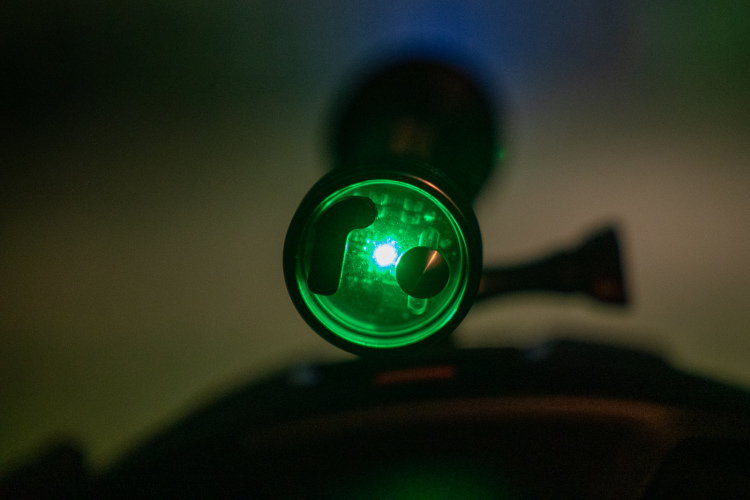
To keep the pedals fresh, Tyler has an extensive choice of replacement pins, and he even has a repair kit available.

F1 Stem Test

The F1 stem worked well, holding the bar firmly in place without even a hint of creaking. Even after going down hard on a few occasions, I was impressed to see that the bar and stem remained perfectly aligned without a hint of movement or bending.

Dualie Test

I instantly loved how the Dualie levers felt over the stock Code levers. They provide a definite improvement in feel without any hint of slipping: I never had to use a second finger to stop the bike. Speaking of feel, the machining on the levers grab the finger nicely, even with wet gloves on. All this equates to a better, more confident braking experience with the Dualie levers. If you are looking for a major upgrade on your levers, look no further.

Bottom Line

All in all, Tyler’s Twenty6 products are definitely worth checking out. They easily offer the most color choices around! So what will all these cost? For the Predator Ti pedal you’re looking at $269 – $289 (white). The F1 stem comes in at $129 – $139 (white) and the levers are priced at $74 – $79 (white). Some of these parts may be a bit on the pricy side of things, but these are not your run-of-the-mill components!

I would like to thank Twenty6 for sending the gear down for review.

Spank Spike Pedals: Reviewed

Wednesday, October 26th, 2011

I did a bit of an introduction to Spank’s Spike pedal a while back and since then I’ve been rocking the Spike pedal on my Banshee DH bike. Today I’m finally ready to share my analysis of these pedals.

Technical Specs

The Spike pedal, unlike many other pedals on the market, is made of cold-forged aluminum, which offers increased strength and durability. This special construction also allows these pedals to be über-thin at just 12 mm (not including the pins). Within this thin profile you get an IGUS outboard bushing and an over-sized full-complement inboard bearing. The IGUS bushing is made from reinforced fibers and solid lubricants. This technique makes for a bushing with predictable characteristics such as high compressive strength and good corrosion resistance and can be run lubrication-free. The steel axle is hollowed out and is alloyed with scandium for increased strength.

The elongated hexagon-shaped pedal is made with chamfered edges (a wedge design, as compared to square edges) to increase pedal clearances. This is important for cornering – the pedal can glance off things if there is a pedal strike, thus reducing the impact force on the bike. The elongated design is also meant to prevent pedal flip. The 90+ cm² area and 20-pin design makes for a very sure-footed feel.  Pins are inserted from the opposite side of the pedal with a hex key and locked in place as if they were cap screws, unlike hex pins that rely on the use of thread lock to stop them from spinning. Finally, the seals serve dual duty, providing both protection from the elements while also acting as an anti-spin control.

Installation

Installation of the pedals requires a 10mm hex key – there are no pedal wrench options here due to the proximity of the inboard bearing. The use of thread lube is important to prevent seizure of the axle to the crank arm. If you have a crank that requires washers, don’t forget to install them. With this pedal design, the inboard pedal body runs very close to the crank arm (± 1mm) so the lack of a washer could cause it to rub.

Real-World Testing

I took my trusty DH rig to the slopes to see if these pedals really worked as advertised. Bottom line: they definitely do!

Surprisingly enough, the Spike pedals offered excellent traction. It took a while to get used to the tight proximity of the platform to the crank arms, but after a bit of fumbling around, things were good. I had no real need to play with the pins–the 10 pins per side were adequate and well-placed, giving my feet great traction while still allowing them to roll when necessary. The pins are not the most aggressive on the market, but they can still take a chunk out of your legs if you’re not careful. Wearing shin protection would be a good idea, just in case you lose a foot while getting bucked off your bike.

What I loved most about the Spike pedal was the very solid feel underfoot. The large platform allowed me to move my feet fore and aft just a touch when desired.  I really found these pedals advantageous in the corners and tight spots too. We have a run called the Coffin Drop at Blue Mountain which is pretty tricky. If you hit it wrong, it will smash up your pedals and possibly toss you off the trail into the rhubarb. The low profile and chamfered edges shine here, keeping both feet and the pedals away from the rocks.

After two weeks of riding, I did have to adjust the pedal a bit, adding a bit more anti-spin, but that was the only thing that needed adjustment. Running my DH bike through Ontario’s bad weather at Blue (cold, rainy, muddy), the pedals didn’t clog up or exhibit degraded performance in any way. They still feel as smooth as the day they were installed.

A bit of a side note: the funny thing about the Spike pedals is how very quickly you will learn how many people are checking out the gear on your bike. While waiting in line for the lift, I had many people comment on the Spikes.

The Spank Spike pedals come in five colors: orange, blue, black, ti-grey, and red (tested), which will compliment a wide range of colors on your bike. At $125 MSRP, these are available at a good price point. They aren’t crazy expensive, and they offer decent value for the money. These rank in the top three in my favorite pedals book, primarily for their excellent performance-oriented design!

Many thanks to Spank for sending the Spike pedals over for review.

Dakine Sequence Pack and Blitz Jacket Review

Thursday, October 20th, 2011

You’re probably thinking – a pack and a jacket, in one review? Well, why not?

Dakine, in case you haven’t checked them out yet, is a big manufacturer of quality gear for mountain biking and other action sports. Not only do they produce great packs and luggage, but they also offer an extensive line of clothing for both men and women.

Sequence Pack

Having really stepped up my camera gear kit, I needed something just as serious to keep it all safe when I ride to take my pics. Now, seeing that most of my riding is on the slopes as of late (DH is just too much fun), and a fall could really ruin my day (not to mention my equipment), I needed something with a bit more padding than my old setup. The Sequence pack is just the ticket.

This mid-priced bag has enough room to carry all my camera gear, laptop, and more. The padded block allows you to carry your camera body and a barrage of lenses but you can also remove the padded camera block and configure it to exactly match the gear you’re hauling.

I set up my bag so that the camera body and other small parts sit in their own section, while each lens is cradled in its own padded cube. My flash, charger, and extra battery sit in another padded section which protects all the gear, keeping it from bouncing around. The great thing about the padded block is that it has full-length velcro so that you can set the bag up virtually any way you want.  The actual Sequence bag holds my laptop, mouse, power supply, pens, notepad, and technical manuals in the zip flap. The main flap also has room for a 15″ laptop and two small organization mesh zips to hold other stuff (ID, credentials, snacks, and the like).

Up top there is a zip pouch that holds the deploy-able rain cover. I also use this pouch to store my Blitz jacket. Two side pockets can hold water bottles or, when zipped open, a tripod. A big plus to the pack is the robust waist and shoulder straps which rivals the best hydration packs for comfort. In the waist strap there is even extra padding for the small of the back.

Using the Sequence for every bike trip and hiking situation I could muster, I have to say that I love this pack. I was a bit nervous when I first started carrying the big kit (what I call all my gear), but once I got used to the extra weight I was fine on all but the craziest of slopes. Not only does it keep my 15+ pounds of photo and computer gear safe (weight weenies are cringing right now), but when riding to spots on the slopes I appreciate the stability of the pack. Yes, the amount of gear I carry is a bit extreme, and most people may not take that much with them. My point in bringing this up is how much gear you can carry and still keep everything safe.

When things got a bit wet, all of my gear stayed nice and dry, thanks to the full construction of 420D Nylon and the easy-to-deploy rain cover (I still sprayed Scotchguard on the cover for added protection). On long trips, I doubled the space and packed my clothing in the main 33 liter compartment, while still carrying the padded camera gear along.

Blitz Jacket

The Blitz jacket is another super product from Dakine. Coming into the fall season, this is a must-have item here in Ontario and especially in BC, where we get a lot of rain during the fall. Packing water resistant gear is a must, and the Blitz is a great jacket. Constructed with a nylon outer shell and a polyester liner, this jacket is breathable too. It also stuffs in a pack easily.

The fit on the Blitz is roomy which is great if you’re wearing armor. If you usually ride without body protection, go one size smaller than you usually wear. This jacket holds up well to washing (I wash using cold water only).

The Blitz features two front zips with pockets and vents (all in one) and one left breast pocket. The full-length front zip is weatherproof, and there is a rear vent to help regulate body temperature. One of the Blitz’s coolest features is that the hood can easily accommodate a helmet or can be pulled closed (with the draw strings). The cuffs are adjustable with a very nice velcro arrangement which keeps the long sleeves from sliding up. The Blitz is not cut like a typical cycling jacket with the raised front and lowered rear waistline. Instead, this jacket features a regular cut, making it far more versatile since I can use it both on and off the bike. The waist does have a drawstring to allow you to tighten up if necessary.

The Blitz is rugged enough to be used as an outer layer even if you’re on a freeride rig and the durable shell can take abrasion from those close encounters with trees and bushes. The jacket also does a great job of keeping the wind out. This time of year when the weather can (and does) change quickly I keep the Blitz handy all the time. The jacket can get a bit too warm at times, especially if you’re in a high humidity situation. But seeing that fall is here with lower temps and humidity, the Blitz makes perfect sense.

The Sequence Pack runs $205 MSRP and the Blitz Jacket is offered at $170 MSRP. The Sequence pack comes only in black while the Blitz is available in Charcoal (pictured) or a style called “Phantom” which is a dark, textured color.

Thanks to Dakine for sending these items up for a review. Check out Dakine’s website for more great MTB gear.

Old Hardtail to New Commuter: How to Convert Your Rig for the Daily Grind

Wednesday, October 19th, 2011

After upgrading to that shiny new full suspension, disc brake equipped, 25 pound trail slayer, your trusty old hardtail got relegated to the back of the garage. You look at it from time to time and remember the good times you had on it: your first crash, your first all day epic, that trip to Moab where you carried it down Portal Trail

You think about riding it, but the new bike gets all the trail time and it makes you a little sad inside.

Photo courtesy of eliwestfall

Okay, so that’s a bit over-dramatized, but what if you could re-purpose that old hardtail and get regular saddle time on it again? One option is to convert it to a singlespeed; another is to turn it into a dedicated commuter bike, which are not mutually exclusive options, by the way.

When I started bike commuting about 5 years ago I thought I needed/wanted a road or ‘cross bike. I even started shopping around for one, but I soon realized that another bike was not in my budget at the time. I took a hard look at my Specialized Rockhopper and realized several things about it:

  • The frame is very well built.
  • It has excellent geometry.
  • I knew for a fact that I could ride it long distances comfortably.
  • It has pannier rack mounts.
  • It has bosses for two water bottle cages.
  • It can easily handle a load consisting of me, a laptop, clothes, etc.
  • It can drop off curbs, hit cracks, and even survive detours into the dirt when the bike path is under construction.
  • I paid $150 for it, so if it ever gets stolen, it’s not the end of the world.

The perfect commuter bike was sitting right there, ready to go!

At that time it was still my mountain bike, so I swapped tires twice weekly and removed the rack for trail use. This article, however, will cover what I learned when I did get that shiny new trail bike and turned the Rockhopper into my full time Curbhopper.

First you will need to assess your bike’s current condition, any parts that need upgrading or replacing, and any options you might already have installed.

Maintenance

  • Replace the chain and cassette.
  • Get the wheels trued.
  • Check the headset, bottom bracket and hubs for proper adjustment. Re-lube if necessary.
  • Replace the brake and shifter cables.
  • Replace the brake shoes.
  • Check all bolts and fasteners for tightness, rust, etc.
When commuting, you will likely be riding in traffic, dodging cars, and powering through intersections. That is not the time to miss a shift or snap a chain! Make sure the bike is in perfect mechanical condition. At some point you will thank yourself.

Upgrades

Knobby tires and front suspension are great on the trail, but on pavement…not so much. In order to make a truly dedicated commuter bike, these need to go.


There are a number of rigid steel forks on the market. These are sized to allow for the travel your bike used to have, and can come with V-brake or disc brake tabs.

Here are some decent models to consider:

eBikeStop carries Dimension steel forks in both V-brake and disc brake configurations. They range in price from $35 – $55.

When I converted, I spent $45 on a Tange steel fork, with V-brake tabs, but these seem to be getting a little scarce.

Surly makes a great steel fork for $100 with both V-brake and Disc tabs.

Whatever fork you choose, just be sure to match the brake mounting tabs to your intended brake type, and pay attention to 1 1/8th inch threadless vs 1 inch threaded steerers.

For tires, the issue is not so much the tread or the width, but more importantly the maximum air pressure. On pavement, a firmer tire rolls easier and you want as many psi as possible. I have 1.5″ wide Bontrager Hardcase Comfort tires that will take 85psi. Loaded with me and work stuff, these hold up great and roll fast. Here are some tire choices that are currently available:

Kenda Kwest (100psi 26×1.5 model) $20.50

Schwalbe Marathon $41.95

WTB Slick (with Flatguard) $19.99

Bontrager H2, H4 or H5 $20.99 – $46.99

Racks and Bags

With the fork and tires sorted, the next step is to give your newly created urban assault bike the ability to carry stuff. A luggage, or pannier rack is the first item to decide on. Most older mountain bikes have pre-drilled and tapped mount points for just this purpose. Topeak is the leader in this segment and their rear racks integrate seamlessly with their own line of bags while also supporting bags from other brands. The center of the rack acts as a de facto fender, and they have a built-in tab for mounting a tail light. One model is even disc brake compatible.

If you don’t have rack mounting tabs, you will need to use a seatpost rack. These don’t support as much weight as the frame mounted type, but they are suitable if it’s your only option.

Next you will need to choose a bag for transporting your stuff. If you do not need to transport a laptop, there is a huge selection of bags available. Make sure to allow room for a change of clothes, lunch, and personal items. Better quality models have compression straps, bungee cords and built-in rain covers. If you also need to transport a laptop, not to worry: there are bags designed specifically for this purpose. The Delta Metro Elite is an affordable choice that can hold a 17″ laptop with plenty of room left over for clothes and files, and it has an integrated rain cover. I have this model and it works ok, but the mounting system is a little weak. The mounting hook broke after about a month of use, but Delta replaced it for me without a hassle.

If you’re serious about bike commuting, the primo line of bags to check out comes from Arkel. These high quality bags are pricey, but they are very well made and can hold up over years of commuting. The Bug model is fairly compact and can hold a small to midsize laptop via an optional padded sleeve. Off the bike, it quickly converts to a backpack. The aptly named Commuter is the workhorse of the line-up. It swallows larger laptops and a ton of stuff and includes the  laptop sleeve.

Lights

Whether your whole commute is in daylight hours, or if you stretch into dusk in the spring and fall, a good set of lights can be a valuable purchase, and they may even be required by law in some places. A good quality ‘blinky’ tail light is a good idea regardless, as it helps motorists see you, even in bright sunlight. Here are several good models:

Planet Bike BRT-3 Can be direct-mounted on the Delta rack above. This is the light I use. $9.99

Niterider TL-5.0 Convenient seat post mount. $6.98

Blackburn Flea Small, light-weight, rechargeable and insanely bright. This is a popular model among full time bike commuters. $29.99

As for a headlight, there are a number of decent models in the $30 to $50 range from the above vendors, but if you already have one for nighttime mountain biking, you can just use that. If you don’t have a light, I would still recommend a mountain biking light such as the MagicShine MJ-808 P7 for $89.99, the CygoLite Pace 350 for $149.99 or the Light & Motion Stella 400 for $269.99. Any of these lights will work well for commuting, as they all have Hi, Medium and Flash modes for night time illumination or daytime visibility, as needed. I have the MagicShine and I love it.

This how-to is intentionally comprehensive and results in a well appointed, full-time commuter bike. You can start with the basic maintenance, street tires, and a backpack and make the rest of the modifications as time and money permit. Hopefully this helps you get that great old hardtail out of mothballs and back into circulation!

If you already have a converted commuter bike, go ahead and drop a link to a photo of it into the comments.

New 2012 gear from Interbike

Monday, October 17th, 2011

Interbike is a fascinating place, and if you ever get the chance to stroll through the booths you will find tons of fascinating products. Jeff and I were both really impressed with some of the things we saw, and at other times we were thoroughly unimpressed by some of the downright-ridiculous designs. We made sure to swing by most of our usual stops to chat with folks such as e*thirteen, Fox, iXS, Spank, SRAM, Shimano, Intense, Santa Cruz, Osprey, THE, and Easton. Interbike is seriously the greatest when it comes to getting a sneak peak at the latest gear and talking with your favorite riders.

e*thirteen

One of my first stops was at the e*thirteen booth. It’s hard to believe you can improve on such a great crank, but e*thirteen managed to squeeze 60 grams out of last year’s design by using an alloy axle and machining a little bit off the spider here and there. Not only did the crank just go through a weight reduction, but they also managed to change up the bottom bracket, making it more durable and easier to install.

Along with the cranks, there are two clever new pedals from e*thirteen: the LG1+ and LG1R. The pedals feature an alloy body, plates that attach to the pedal, and user-selectable 4mm or 7mm pins. The LG1R has titanium spindles and pins while the LG1+ features chromoly. The difference in weight between the two pedals is 88 grams (380g and 468g, respectively).

Race Face

Hard Goods

Race Face was at the show, but you had to look really hard to find their booth. :) Essentially the hard goods line-up has changed ever so slightly with the introduction of the Chester cranks. The Chester is basically Race Face’s entry-level DH crank, the Respond is their mid-level, and the Atlas is their top-tier DH crank.

Race Face is also getting ready to launch the SIXC, which is a new DH crank modified with a longer-than-average axle. The SIXC cranks will be lighter than the new XO DH coming out from SRAM and the rubber boots are a nice addition meant to save the crank ends from damage.

Soft Goods

I spent some time talking with Wendy from Race Face and she was proud to show off some of the clothing and protection that will be offered for next year. It looks like the trend is toward simple colors with large contrasting logos and neat argyle prints (kind of like the Singletracks jersey). Needless to say, Wendy (who also does the design work) has done a great job at making gear that will look cool for both men and women.

The new trend in MTB armor is softer, more flexible pieces and Race Face is on the ball with their Flank line-up. This soft wrap-around leg armor features a ton of excellent elements such as D3O on the impact points of the knee and shin and a Terry Cloth liner.

Stay tuned for more from RaceFace in the near future.

Niterider

A brilliant example of lighting at Interbike was Niterider. With all their lights out on display, this booth really was a beacon in a sea of bike gear. Niterider’s best and brightest, the Pro 3000 LED, uses 6 large Cree LEDs and a massive Li-Ion battery; the whole package retails for less than $700. Along with the top model, Niterider has a light for just about every budget, including both rechargeable and non-rechargeable units. I had a chance to talk with Tom, the founder of Niterider, and it seemed that we both shared the same passion for good lighting systems and the conviction that there really weren’t any good bike lights available when Niterider started out.

FSA

FSA was displaying all of their 2012 gear nearby and the smell of high quality, nicely-finished carbon saturated the booth. The K-Force and SL-K gear for the XC-Trail rider may be a good idea for those looking to save some weight. I really appreciated the extensive use of uni-directional carbon in the products that were on display. The cranks feature a spine of aluminum to keep things stiff along with the monocoque structure that you see. With other carbon goodies in the form of bars, seat posts and stems, FSA was out to impress.

Ritchey 29er

Despite not being a big 29er fan, I just had to stop and stare a while at this beautiful 29er by Ritchey. For one thing, I owned one way back in the day that was made by Tom Ritchey himself, and my bike had the same “America F*$@ ya” paint job. I kinda miss that bike, and this beautiful ride, although very modern, still has that classic look to it. I found myself wishing I had the cash to pick one up.

From the integrated seat post clamp, to the adjustable rear dropouts that allow you to go either singlespeed or geared, to the highly-polished look, this bike really is a stunner. It’s a steel frame and has a projected cost of $999 (frame only). Depending how you build it up, you can get weights down to 21lbs for a single or 23lbs if you’re going with gears.

THE

THE was showing off their new colors for this year’s T2, along with some cool armor and gear. There’s a decent mix of mild to wild color schemes for you.

Loaded Precision

Loaded Precision was showing off a few new components for this year with their signature series wheels and pedals. For those of you who are interested, they will have a 150mm rear axle available soon in addition to all the present wheel configurations… and in a variety of colors to really pimp your bike out. Anthony from Loaded also mentioned the growing number of products in their XC line-up, including some fire-red 29er wheels!

Topeak

Topeak was there showing off their vast array of pumps and gear. Some interesting additions included a new chain tool called the Link Meister which is geared toward serious users and shops. The head on the Link Meister adjusts so that you can get the pins out perfectly straight without messing things up, thanks to an adjustable shoulder which cradles the chain in the link separator. A really robust set of mud guards for suspension bikes caught Jeff’s eye as well as mine. It may have been sheer fascination about the whole idea, but I have to say they looked pretty sweet. I was thinking about tossing a pair on my DH bike…

For the Apple fanboys and fangirls out there, Topeak showed an iPhone 4 (and now iPhone 4S) compatible stem mount. Unlike the other iPhone handlebar mounts we’ve seen and used, this one put the phone front and center and leaves a cut-out for the phone’s camera. Not only can you use your iPhone as a GPS/cycling computer, now you can use it as a POV camera. Brilliant!

Randomness

When you go to Interbike, you will inevitably come across some oddities along with all the cool ideas. Below is one such product in the making (which type is it? that’s up to you). Still a prototype, this 4-wheeled pedal bike features full independent suspension using Rock Shox Monarchs. As Jeff and I chatted with the owners, we did see many places were weight could be removed. Presently this bike is pushing over 50lbs.

Azonic

Azonic proudly displayed the Outlaw wheels, which have been their staple product for many years and are now available in a 29er version and in an expanded color line. Along with that were bars and stems in the same color patterns for that perfect match.

Azonic has partnered up with O’neal to produce some cool looking threads and skid lids. Their focus seems to be all about color and a mix of retro patterns with modern graphics.

Twenty6

Before the show started, I got an invitation to visit Twenty6. Twenty6 is a small, high tech company that machines kick ass gear. Not only is the gear super slick, but they also have some rich color choices.

Below is just a sample of different color options. I’ll have a review written up soon on the Predator pedals, so stay tuned!

Pro Riders

Remember when I mentioned that Interbike offers access to celebrity riders? Well, great riders like Matt Hunter and Darren Berrecloth were at the iXS booth for a while signing posters and chatting it up.

I even got to spend a little while chatting with Matt. Having limited time, I just had to ask him how he did a particular jump in Seasons where he boosted off a kicker into a loose wall of dirt… it looked absolutely crazy! I got him to talk about how he felt going into it for the first time. It turns out a mix of confidence and fear with a bunch of adrenaline thrown in motivated him. I was really impressed to hear that he is human like the rest of us. Just in case you’re wondering, you can meet Matt in Whistler yourself during the summer months at the Summer Gravity Camp.

iXS

Speaking of iXS, they had a great line up of new 2012 gear on display. With a huge range of colors and improvements, I can’t wait to see when they will all be available. The new METIS shown below looks even better up close. The additional pad in back provides a perfect mating to a Leatt brace, and it provides excellent ventilation.

Not only does iXS make cool helmets, but they also produce a bunch of hemispherical goggles that really rock. They offer a dozen graphic styles to match or clash your helmets. iXS’s gloves and clothing are definitely something to behold. This is one website you must visit.

Spank

Spank had a bunch of shiny, new parts on display as well. They had a prototype stem that I thought looked absolutely amazing! The stem was beautifully CNC-machined, but I was told by Gavin Vos, the co-owner of Spank, that it is just a sample and that the final forged unit will be even stronger. The introduction of complete wheels from Spank also really peaked my interest. Even though I have no issues lacing up my own wheels, a complete solution with both hubs and rims is something I personally like.

The new Spike bar with another Spike stem prototype on display.

Speaking of Spike, stay tuned for a review of the new Spike pedals which, based on my initial rides, are excellent. These beasts have forged bodies with 20 pins on a true flat / thin body. How thin? 12mm to be exact. Not the thinnest, but in practical terms you can’t get much thinner without sacrificing strength.

In a previous post we talked a bit about wheels. Well, Spank has a few wheel sets bound to suit your riding style. The Spike and Spoon wheels look excellent with a bunch of innovative features like the BeadNip profile, the OhhBah inner wall, and zero eyelet construction. Again, Gavin explained why they decided to go without eyelets. They thought, “Why drill an extra large hole and add an eyelet, when precision drilling the holes with the correct angle will make a better interface and stronger wheel?”

Kore

Kore had a bunch of glossy parts out on display as well as a neat prototype of a new 35mm-diameter bar. They aren’t trying to set another standard just for the heck of it, but they reason that with bigger hit bikes, there is a real need for stronger gear that is more resistant to fatigue.

SRAM

One of my last Interbike stops was with SRAM. I talked with Tyler Morland for a while, and he showed off all the goodies to me. SRAM knows how to deliver! For one thing they had celebrities there with their bikes. Can you name the rider pictured below?

You know you done good when you have a tire named after you, like Danny Hart. Danny was around with his Giant showing off all the SRAM gear.

SRAM had all their components on display with new colors like the XO Silver, and there were other new additions to the line up like the XO DH chainring and bashguard.

Jeff and I both agree that the new X5 Group could be a game-changer next year. It looks like X9 but at a much lower price point. Tyler pointed out that essentially these two groups are the same and that the reduced pricing is a result of changes in materials. You will probably start seeing these on bikes in the $800 range – nice gear at a cheaper price point.

Shifting looks very X9ish as well.

The biggest story with SRAM is that you will have two more choices on gear for a total of 4 gear ranges for the chainrings: the original 42-28, 39-26, and now a lower 38-24 and an even lower 36-22. Another important set of products that SRAM will be releasing are easy-to-get repair kits for all your forks, shocks, and other gear.

Santa Cruz

The final stop that I had to make was Santa Cruz bikes. Like SRAM, you couldn’t miss this gorgeous booth with wall-to-wall wood and bike porn. Not to mention that Greg Minnar, Steve Peat, and Josh Bryceland were on hand as well.

Below are three of my favorite Santa Cruz bikes from the show:

The new carbon Nomad. This bike already was made even stronger than the aluminum version of the V10.

The new Carbon V10.

I got all goose-bumpy when I saw this rig! And to think that you can literally jump an entire highway with this bike and it’s still lighter than some XC bikes. What a testament to the strength found in newer carbon structures.

Santa Cruz Tallboy.

I have a lot of respect for this bike; the Tallboy is the bike that really turned me onto 29ers. A few people I know have this bike and they work magic on it–it climbs like a billy goat!

Well folks stay tuned for more – I hope to get a few more Interbike pics posted of even more sweet mountain bikes!

Answer’s Limited Protaper 780 DH Review

Wednesday, October 12th, 2011

I’ve gotta be honest: Answer has been my go-to downhill bar for a long time. Now Answer has a new option for you: semi-custom bars.

Answer released a limited run of 250 bars at Crankworx, and they are beautiful! If you strive to keep your ride unique, what an opportunity to do that with these stunning graphics. At the moment there are two styles available and in the coming months new graphics will follow. Answer will even consider your ideas: contact them directly for more details. (Maybe we need to petition for a Singletracks bar? ;) )

This bars are available in both the half-inch rise and the full-inch rise. Both bars share a 4° upsweep x 8° backsweep that I find perfect for my body shape. Made of 7050 alumininum just like the regular 780 DH bars, these are not a cheaper version, but rather the same great bar with a complex anodizing process used to create the graphics.

Installing them was a breeze, and just a matter of pulling off what was on my bike and swapping them over. Just remember to torque your bolts down properly (usually 6 Nm), and you’re good to go. The sweep works great for most any rider. Rotate the bar until the backsweep lines up with your arms, and you should be golden. I found that setting up my backsweep this way keeps my wrists in the most neutral position with very little stress.

Riding the slopes with these bars is a blast, just like my regular 780DH bars. The only issue I had was trying to stop myself from looking at them while riding. These bars are pretty light for the width, design, and abuse they take. Cutting them down shouldn’t be an issue if you find they are too wide for your body. These bars, like the other 780DHs, have trim marks on either end which make it easy to judge how much you want off. Just remember to measure twice and cut once!

If you’re in the States, contact Answer directly for more information. If you’re in Canada, contact Trident Performance Sports. Hurry though, as these are limited and going fast!

I would like to thank Tom at Answer for sending these bars down for review.

Light & Motion Seca 800 Review

Wednesday, October 12th, 2011

I probably mountain bike at night more than most folks – usually once a week year ’round, including the summer. One thing I’ve found is that nothing takes the fun out of a night ride more than having a bad light. A proper mountain bike light should be durable and reliable while offering proper illumination on the trail, allowing you to ride the same way you ride during the day. The Light & Motion Seca 800 does all of the above better than any light I’ve owned.

So let’s start with the stats. On paper the Seca 800 features 6 LEDs pumping out 800 lumens for 2 hours and the whole package (battery and head unit) weighs in at 341 grams. In the real world the numbers turn out even better – I got at least 2:15 run-time on high at 328 grams. There are settings for low, medium, high, and flash mode; charging time is about 2.5 hours. Viewed from the side the Seca 800 looks like a bank of stadium lights torching the singletrack.

On the trail the first thing mountain bikers will notice about any lamp is the beam pattern and projection. Light & Motion likes to point out that lumen count is just one factor in determining a light’s effectiveness; the pattern the light forms is almost equally as important. And this is where the difference between the Seca 800 and a single bulb and reflector unit is readily apparent. The Seca 800 beam is hotspot-free and works equally well mounted on the bars or the helmet.

That last bit is a big deal (to me anyway). A bright single bulb light works OK as a helmet lamp because you can turn your head to point the light where it’s needed at any given time. But oftentimes that means making unnatural movements or worse, taking your eyes off the line in front of you when you can least afford to do so. Mounting the Seca 800 on the bars also places the weight of the light and battery on your bike rather than on your helmet or in your jersey pocket.

Even mounted on the bars and without a supplementary helmet lamp, the Seca 800 does a great job illuminating short drops and low hanging tree branches, better than any other light system I’ve used. On the trails I typically ride I’ve found I can get away with keeping the light set on low or medium for most of the ride, though I suppose if I was a faster rider I’d need to ramp up to high more often.

The included bar / helmet mount clamping system is really simple and effective – just pull the rubber strap tight and hook it over the plastic pin. Once the strap is in place it doesn’t move; in fact it’s so stubborn that whenever I need to angle the light up or down slightly I have the release the strap – it’s that tight.

Light & Motion uses robust cable connectors that create serious suction to keep everything connected during the ride. There’s nothing worse than having a cable snagged and suddenly being left in the dark. In more than 2 months of riding with the Seca 800 I haven’t had a cable jiggle loose or get disconnected.

The Seca 800 features an intelligent power management system that warns you when you’re running low on battery power. In my tests, after about 2 hours, 15 minutes on high the lamp dimmed a little. According to the manual, the green LED on the power button should start blinking at this point but mine never did (this isn’t really helpful anyway if the light is on your helmet). After the initial dimming I got more than an hour and fifteen minutes (!) of additional run-time on high, though at a slightly lower light output level. With just a few minutes of run-time remaining, the Seca dropped the light output again and flashed the main lamps. At this point the green LED on the power button should also flash rapidly. With such a conservative warning system, I never worried about being caught out in the dark by surprise.

High, medium, and low settings simulated using Adobe Lightroom software. Can’t see much difference? You get the same effect on the trail at night – switching from high to medium doesn’t change the beam pattern, just the intensity (and even that’s subtle as you toggle from high to medium to low).

I love the sleek headlamp design and even the battery is well thought out with a groove on one of its three sides to fit snugly against a frame tube or stem. The power button could use a little work in my opinion – it’s hard to find, especially with a gloved hand and it’s also hard to tell when you’ve pressed it since the button “click” isn’t very positive. A rubberized button might be just the trick here so the texture stands out from the smooth metal and plastic surface on top of the lamp.

If you’re looking to extend your mountain bike season with a new light this fall, don’t let lumen counts and battery life numbers blind you to what’s really important: performance on the trail. The Light & Motion Seca 800 ($499 MSRP, $129 for an extra battery) is easily the best light system I’ve owned and offers reliable, effective illumination in a variety of terrain. Don’t get caught out in the dark this fall!

Manitou Revox Pro MTB Shock Review

Monday, October 10th, 2011

I’ve had the pleasure of testing quite a few mountain bike shocks back-to-back this season, including the new Revox Pro from Manitou. The Revox has gone through a few cosmetic changes and internal tweaks recently. On the surface the new Revox definitely looks much more polished compared to what it looked like a few years back.

The Revox Pro is Manitou’s top-level rear shock and is best matched with the Dorado (or any other dual-crown fork). Coming in at about 450 grams without spring (depending on length), the Revox Pro is ready to rock. With a battery of adjustments (HSC, LHS, rebound, pre-load, and no-tool volume control) this shock can be tuned for anything you can dish out. To ensure that last statement holds true, a 14 mm hard-anodized damper shaft has been incorporated to keep things under control. Cosmetic changes to the anodizing and a new black damper body give the shock a fresh new look.

A shock with this many adjustments takes a bit of care to set up. Doing so correctly produces a rear shock that really shines and keeps you under control. When setting up the Revox, it’s a good idea to write down all the changes that you make. The detents are a bit soft, so recording adjustments as turns from full open / closed works best. Selecting the spring rate (usually manufacturers give you a good idea here) is a start. Consulting Banshee, for example, informed me that I needed a 400lb/inch spring for the correct rate to go along with the Revox. You can tell if you’re right when it comes time to setting up the sag. Usually you only need about 2 turns from initial contact of the spring to the spring seat collars. I wanted 35% sag, so from an eye-to-eye of 240 mm I wanted a compressed eye-to-eye of 213 mm. I tweaked the collar a half turn more, and I was there.

Once that was done, I was off to the slopes for some testing!

Below is a setup sheet:

After the sag, I set rebound, starting closer to the middle of the range and backing it off until I got a wheel that returned fairly quickly but not so quickly as to buck me off the back of the bike. Now I tend to run the shock at 8 clicks from full CCW. It gives me a live feeling in the back without pushing me too far forward.

The next two adjustments are the low speed compression and then the high speed. So again, I set the LSC at half-way and I went and did a few rides. It took a bit to figure out that the LSC was perfect the first time out. I was playing around with both compressions until I found that the mid level, 1.5 turns, was the perfect amount to give me active compression when hitting bumps, but still hard enough for pedaling.

Getting the high speed set was a bit easier. Starting at just over the mid-way point, I went mostly down from there, finding that once the HSC was set to 10 clicks, which is just a bit below the mid-point, I was happy to play with the bottom-out adjustment. Bottom-out was moved to position three with 160 psi in it (10 over stock fill).

After spending some time playing around with the Revox Pro at Seven Springs, Blue Mountain, and Horseshoe Valley, I can say it works perfectly! The Revox never faded, leaked, or had any other defect. I had superior control over the rear of my bike. Over gnarly rock gardens or boosting tables or even hitting 12ft drops to g-outs to step ups, the Revox did an excellent job. A good upgrade would be a Ti spring (hopefully for next season).

The only issues I had were that the LSC detents didn’t click well and it was a bit hard to repeat settings. The small red knob was also difficult to adjust with gloves. The Rebound knob did detent well enough, but it was a bit stiff. If Manitou works out these minor kinks they will have a flawless shock.  Get one of these for your bike for $400 MSRP (springs and hardware extra from $17.00 to $25.00).

Thanks to the folks at Manitou for sending down the Revox Pro for a review.

Dakine Syncline MTB Short Review

Thursday, October 6th, 2011

The Dakine Syncline features an “all-mountain fit” with a 14.5″ inseam. It has a conveniently removable Italian-made Comp chamois, ventilated mesh lining, zippered hand pockets and leg vents, a heavyweight rib knit back stretch panel, side waist tab adjustments, polyester birdseye waistband, and a crotch gusset for an increased range of motion.

But what does all of that even mean? Nothing if it doesn’t translate into a comfortable ride out on the trail.

Out on the Trail in the Syncline

I first tested the Syncline shorts during a long day of shredding the Evolution Bike Park at Crested Butte Mountain Resort. The baggy fit easily accommodated some beefy knee pads without any catching or binding. Thanks to the removable chamois, I think you could easily wear a hip and tail bone protector under these shorts and still feel very comfortable (although I haven’t tried them with one yet). The exterior of the Syncline short is much heavier and tougher than a cross-country short (as you’d expect) since it’s built to survive a few tumbles off the bike now and again without getting shredded to pieces. I’ll admit I took a couple of spills, and the Syncline shorts thought nothing of them.

When is a pair of downhill shorts just another pair of shorts… and when is it something more?

Obviously, the Syncline is designed for the downhill aficionado, and with all of these DH-specific features and its durable build, it excels in this category.

I was surprised to discover that the Syncline performs well in a number of other applications, too.

Cross-country

Despite the fact that these shorts hit below the knee, they ride very well even on cross country rides. I guess the “all-mountain fit” lives up to its name, by keeping them from catching on the knee or saddle. There were several chilly, early-morning rides in Crested Butte when I threw the Syncline on for a little extra warmth, and they were both comfortable and toasty! Obviously, because of the heavy, durable exterior they wouldn’t be ideal for hot summertime rides, but as the temps continue to cool here in North Georgia I am looking forward to many fall rides in the Synclines,

Commuting

The cooler fall temperatures have also convinced me to start commuting to school again. As a result, my Syncline shorts have been seeing significant use as a pair of commuter shorts. They’re the perfect mix between bicycle comfort and classroom style. I don’t have to  destroy my taint on the uphill slog to campus, and I don’t have to pack an extra pair of shorts to change into before class. Dakine’s Phantom pattern (tested) is low-key enough to not draw any weird stares from my fellow English students. Want to sport a different style? The Synclines are available in 5 different colors.

Bottom Line

From the big hit bike to the carbon hardtail to the commuter, the Syncline shorts provide stellar performance and classy style!

MSRP: $135.

Many thanks to Dakine for providing the Syncline shorts for review.

Dakine Nomad Hydration Pack Review

Monday, October 3rd, 2011

If any one hydration pack can function as a jack-of-all-trades and still do every single job superbly, the Dakine Nomad is it.

Epic all-day trail ride in the backcountry? Check.

A day at the bike park? Check.

Sessioning a remote DH line? Check.

Short after work spin on the singletrack? Why not?

Dakine has thoughtfully engineered the Nomad to appeal to all sorts of riders from cross country to downhill. In order to appeal to all of those demographics, they incorporated a carrier for a full-face helmet that can also function as an XC helmet carrier with space for extra layers or even your shoes on the way to the trail. Armor carriers hang below the pack, but stay tucked out of sight if you don’t want to use them. A full 100 ounce bladder ensures you won’t get dehydrated on an epic trek and 1100 cubic inches of space guarantee you have plenty of room for those extra layers and emergency supplies. Finally, a mere 2 pound dry weight makes this pack perfectly fine for a quick after-work pedal, even if you don’t need all of the water and cargo space.

Out on the Trail

It’s so nice to use a pack that just plain works and doesn’t require any fiddling or excessive experimentation to figure out where to put everything. The internal organizer pockets are zippered to keep all of the little tools and parts that you need to carry separate, and specially-sized sleeves are already in place to hold both a mini pump and a spare tube. A fleece-lined sunglasses pouch is located safely on top of everything else for when the sun starts going down, and an mp3 holder sits just inside the top of the main storage compartment.

Dakine is serious about usability and design, and they naturally gave the reservoir a dedicated compartment separate from the main storage compartment. One of the greatest features that this pack offers is a stiff back panel with vented ridges that both eliminate barreling from the reservoir and promote airflow to keep your sweaty back as cool as possible. One added bonus that I noticed during a day in the bike park with the Nomad is that the stiff back panel and ridges seem to lock onto your back if you’re wearing a spine protector. The ridges are perfectly placed on either side of the spine protector, allowing the pack to stay firmly in place even if you’re busting through nasty rock gardens or launching booters!

For those epic cross country rides, the Nomad features the same swiss-cheese ventilation pattern on both the shoulder straps and the hip pads. While it’s difficult to quantify, I think this ventilation system significantly reduces perspiration.

But what if you don’t want to wear a waist belt? Well, the belt on the Nomad is removable, allowing it to ride much more comfortably when nearly empty.

Water Reservoir

I think I can safely say that out of every pack I’ve ever used, the Nomad is my favorite. Why does it stand out above the rest? Well, for all of the reasons listed above, for starters.

But in addition, the Nomad features the coolest and most intelligently designed reservoir on the market: Hydrapak’s Reversible Reservoir.

I’ve already blogged in detail about Hydrapak’s intelligent reservoir design, so I’ll just give you the Spark Notes this time around:

  • Durable
  • Quick disconnect hose
  • Strong fold-top closure
  • Completely reversible allowing it to dry quickly, be cleaned easily, and generally eliminate the build up of nast’.

Final Thoughts

All of these smart features allow this pack to function well for every type of rider, and with the best reservoir on the market, the Nomad is a winner. Despite the fact that it is on the large end of the hydration pack spectrum, the expertly designed back panel and straps help the Nomad ride almost as comfortably as a much, much smaller pack. Even though my test is done, I’m not sure I want to switch back to a smaller pack: the extra storage room is always appreciated!

All of my other packs are either gathering dust somewhere in the bottom of my closet or are being used as mere book bags for school. The Nomad is now my hydration pack of choice.

MSRP: $100.

Many thanks to Dakine for providing the Nomad for review!

Threesome Review: Bottle and Cages from Specialized

Thursday, September 29th, 2011

Water bottles and cages have been around pretty much as long as bikes themselves.  You’d think someone would have perfected them by now…yet, there are still cages that can’t keep a bottle secure and bottles that stink and make water taste like donkey sweat.  Thankfully Specialized has a few products that address these issues.

Purist WaterGate Bottle

It’s hard to get excited about a water bottle, until you use one that is really good.  And the Purist bottle is really good.  The bottle is infused with silicon dioxide, which forms a barrier between the plastic bottle and your liquid of choice.  What that means is your drink tastes like, well, just your drink.  Not your drink with plastic in it, or your drink with whatever was in the bottle last time it was used.  It also makes the bottle easy to clean and mold resistant.  Since the silicon dioxide is infused in the plastic in the molding process rather a coating applied to the inside, it wont flake off over time.  The bottle itself is really flexible and easy to squeeze, more so than any other bottle I’ve ever used.  The bottle is available in 22oz ($11) and 26oz ($12) sizes.


Close up of the WaterGate valve.  It works like magic.

The good doesn’t stop there.  Instead of a traditional bottle cap it’s got a WaterGate diaphragm type self sealing valve cap.  You pull the valve up to put it in the ‘ready’ position.  Then either squeeze the bottle or suck on the cap to open the diaphragm and get things flowing – and it will flow a lot of fluid.  You don’t have to bite on the valve, you don’t even have to touch it – just squeeze the bottle.  Oh, and the valve won’t leak unless you squeeze the bottle.  So you can leave it in the ‘ready’ position all the time without worrying about spilling any.  No more fumbling with trying to pull the cap out to get a swig.  The valve is removable for easy cleaning.


The cap doesn’t leak even if the bottle is laying on its side or turned upside down…until you give it a squeeze.

Any downsides?  They’re a little taller than normal bottles, so on one of my bikes when the 26oz is put in the seat tube bottle cage the cap hits the top tube.  And if the bottle is really full and you hit a bump hard enough a little bit of fluid might come out of the cap if it’s in the ready position – but only if the bottle is really full.

Rib Cage and Zee Cage

The Rib Cage ($20) is a traditional “top loading” bottle cage.  It’s made of reinforced plastic and weighs only 36g.  If you have more money than sense Specialized is happy to offer a carbon version that weighs less than 23g and retails for $60.  The Zee Cage ($18) is a side loading bottle cage, and also made of reinforced plastic, and weighs in at 43g.  There is no carbon version, but there is a $12 alloy model weighing in at 50g.  The Zee Cage is great for use on a seat tube or in a full suspension frame – it lets you use a big bottle without needing space to pull it out of a top-loading cage.  The Zee Cage comes in left and right side entry models.


Zee Cage on the left, Rib Cage on the right.

Both the Rib Cage and Zee Cage work really well.  Like all good things in the cycling world they’re laterally stiff and vertically compliant – flexible enough to get bottles in and out easily, but stiff enough to keep bottles in place.  I haven’t lost a single bottle yet.  They look good on modern aluminum and carbon frames, but not so much on thin tubed steel frames.  Both are available in lots of colors so you can coordinate them with the rest of your bike.  Not much else to say really.


The Zee Cage makes it easy to get big bottles in and out of tight places.

Where to Buy

Obviously, your local Specialized dealer will have both the bottles and cages.  You can also order them directly from Specialized on their website – go here to get started.  You can even design your own custom bottle here!  Lastly, there are a few places that sell the Purist bottle with their own logo on it.  A quick Google search has me thinking that Hammer Nutrition seems to have the best deal – the 26oz for only $9 and the 22oz for $7!  Of course you have to pay shipping, so unless you order a lot of bottles it’s still probably cheaper to buy from your local shop. Bottles up!


Site Map | Advertise | Partners | Contact Us | Terms | Privacy
Campground Reviews | Hiking Trails | Trail Running | Skiing / Snow Sports | Mountain Biking
Copyright 2012 Blue Spruce Ventures LLC | Atlanta, GA
singletracks.com is yet another slick Review App