singletracks is mountain biking
Sign In | Create Your Account | Site Map | Help  


Archive for the 'MTB Trails' Category

How To Create Your Own Trail Guidebook Using Singletracks.com

Thursday, August 4th, 2011

In this blog post I am going to provide you with a step-by-step guide to creating your own custom guidebook for use out on the mountain bike trail using Singletracks.com.

Why create your own guidebook?

But first, why would you want to “create your own guidebook”?

There are at least 3 different reasons:

  1. There isn’t a guidebook for the area you’re traveling to –  believe it or not, sometimes there just isn’t a guidebook for the exact area that you’re planning on visiting. And sometimes if there is, it really isn’t all that great. By doing your own work and creating a custom book via Singletracks, you can ensure that you will have great information when you need it.
  2. The information in existing guidebooks is old  Many guidebooks out there today are honestly really outdated. Trails have been modified or closed, or more likely there are new and better trails that have been built since the guidebook was last updated. By using the Singletracks.com database, you are getting some of the most up-to-date information available.
  3. Guidebooks cost money – Why shell out cash for a guidebook that might just be mediocre if you can create your own?

A step-by-step guide to creating your own guidebook:

1. Decide where you want to travel.

Sometimes this can be the hardest part. To get started, consult the list of the best mountain bike trails in the world.

Or, use the Google map and browse through different areas of the nation.

This process can be used for anywhere that Singletracks has trails listed. For the rest of this example, I am going to use Crested Butte, Colorado since that is where I am traveling next week now.

2. Hone in on the trails in your specific area.

Next, you want to limit the trails you are looking at to those in a specific region. If you’ve found one amazing trail and you want to explore nearby trails while you are in the area, click on the name of the city.

This will bring up a list of all the trails that have been marked as being in or near that same city.

Alternatively, if you know exactly what city you are wanting to visit, just type the city and state into the search box at the top of any page and it should pop up.

3. Broaden the area, if needed.

Are there not enough trails listed for that specific town? Hit the button that says “Trails Near _____” and the list will be enlarged to show trails in the surrounding area.

A few trails near Crested Butte:

You can further broaden or restrict the area using the drop down distance menu. [Note: these distances are given "as the crow flies" and may not reflect actual driving/riding distances.]

4. Read about the trails.

It’s a good idea even if you are using a published guidebook to research the trails before you visit so that you have an idea of exactly what you’d like to ride. When you do this on Singletracks, you can also decide which trails you’d like to include in your custom guidebook, and which you wouldn’t. Of course. you could just go ahead and include every trail in the region if you’d like!

 5. Print the trail.

To do so, click “More Actions,” then click “Print Trail.”

This will bring up a printable view of the trail.

Then just click “File” and then “Print,” or just press APPLE P or CTRL P to print the page.

6. Print the trail map.

To print the trail map (if available), you have to have a paid account. This is just one more reason to sign up! For only about $20 a year (the price of one decent guidebook), you get access to the thousands of trail maps available on Singletracks.com. It’s crazy cheap!

To do this, click on the “View Trail Map” link.

Then, click and drag the trail map to the tabs bar to open it by itself. (There are other ways to do this.)

Then just click “File” and then “Print,” or just press APPLE P or CTRL P to print the page.

7. Print the elevation profile, if desired.

Go back to the previous main trail map page.

Then, click and drag the elevation profile to the tabs bar to open it by itself. (There are other ways to do this.)

Then just click “File” and then “Print,” or just press APPLE P or CTRL P to print the page.

[Editor's note: each map page also has a "Printer-friendly" function that fits the map, elevation profile, and route notes on a single page.]

8. Repeat steps 5, 6, and 7 for as many trails as you want to include in your custom guidebook.
Use your printer at work or school to make quick work of all of these trails, and to save some money!

9. Staple.

The finished product:

10. Ride!

MTB Euro Trip: Lugano Downhill

Tuesday, August 2nd, 2011

After spending a month in Italy, we were anxious to get across the border and into a new country. We were also a little behind schedule to get to Le Tour de France, so we decided to take a train from Lake Garda to Lake Como, where we would cross into Switzerland and head to Zurich. After arriving in Como, we hopped on our bikes and rode a short 30 km across the border and to our campsite for the night near Lugano.

As we were setting up camp, another mountain biker rode by with his kids and took notice of our bikes. He asked about our trip and introduced himself as Adam, a British ex-pat who had been living in Switzerland for around 15 years. He had brought his family to Lugano for a week of camping at the lake, but said he had a big trail ride planned for the next morning and invited us along. After hearing him describe the trail and stories of riders coming from around the world to do this ride, we were sold and agreed to tag along the next day.

The next morning, we got together and rode out of camp ready for an epic ride. We rode to the train station near the campsite and took a train to Lugano’s main station, where we changed trains for a short connection to the bottom of the chairlift we would be going up. We each loaded up our bikes and took off up the mountain. We were a little worried on the way up as we saw the steep technical downhill track pass underneath the lift, but Adam assured us that we would be on a much smoother cross country trail on the other side of the mountain and our bikes, both hardtails set up for touring, would do just fine as long as we went slow on a few sections.

Once at the top, we took a minute to enjoy the view which was impressive in spite of the cloud cover that had rolled in. We also took a quick walk around a chapel that was built at the top of the lift by a famous local architect. Once we were ready to ride, we started heading up the final ascent to our trailhead. Despite having taken the lift, we still had 45 minutes worth of riding and walking uphill before we reached the summit, where our trail began.

We reached the radio tower at the top of the mountain and stopped momentarily for a quick bite at the Tibetan mountain hut while chatting with some of the hikers on the trail. After finishing, we made our way onto the trail to start our descent down the mountain.

The first section of trail was very rocky, and while it was fun, we both ended up with flats. With our spare tubes used up within the first 15 minutes of riding, Adam assured us that the rocks would end once we hit the nearby forest, and from there we would have smooth singletrack down.

With our tires re-inflated, we started back down towards the tree line, and there we found smoother trail with some flow like what we are used to in the States. We were able to really open things up on this downhill and fly over the roots and moss-covered dirt much faster than the loose rocks found on most trails in this area. After a few kilometers of downhill, we came to a trail intersection with a  great view, so we climbed over the fence beside the trail to sit in the grass and soak in the scenery.

Back on the bikes, we continued down another technical portion of the trail that had some more loose rocks. We picked our lines carefully through the rocks and before long the trail ended and we were back on pavement. We rode through the rolling hills on the road and passed through several small mountain villages along the way. We arrived at the bottom of our second lift just before 2:00 and with just a few minutes before the kitchen closed at a nearby restaurant. Since we were there just in time we put in our orders and took a break to eat some lunch before continuing on.

Once fed, we rode across the street to the chairlift and loaded up our bikes for another downhill run. After the short trip on the lift we were able to hit the trail with no additional climbing. The trail here began as wide doubletrack, then narrowed to an eroded drainage ditch for rainwater to run down the mountain.

Like the first trail we were on, the rocks only lasted until we reached the forest, where the trail turned to singletrack. The descent was still steep, and a long series of tight switchbacks meant that we had to keep our speed in check on the way down. After a couple of kilometers of tight switchbacks, the trail turned into a forest road and eventually back to paved road.

We coasted down the mountain on the road back into town to finish up the day. We had plans to catch a train back to the station near our campground where we started the day, but since the next train was still 30 minutes away we grabbed a couple of drinks from a nearby store and jumped in the lake to cool off while we waited.

After finishing the ride, we thanked Adam for showing us around on some awesome trails. This is definitely the best off road ride we’ve found in Europe so far, with lifts available, downhill singletrack, great views, and lots of interesting places to grab some food along the way. Our only regret would be riding it on cross country bikes since the trail is very technical in places and would be best enjoyed on something with a little bit more suspension. Even on our XC hardtails though, this was a great ride that we will remember for a long, long time.

Want to hear more about our trip?  Read more at mtnbikeurope.blogspot.com.

Monarch Crest Trail is OPEN!!

Monday, August 1st, 2011

Monarch Crest, an IMBA epic ride, is definitely one of the top trails in Colorado. Factor in the ratio of downhill to climbing, and it’s even sweeter. The only downside is that due to its high altitude, there is but a short window of opportunity to ride it between the leftover spring snow and new autumn snow. The good news is, that window is open…NOW!

If you haven’t ridden this amazing trail, this is the year to get off your duff and do it, and here is everything you need to know to put the trip together.

The Trail

Monarch Crest features singletrack connected by some fire road sections to make a mostly downhill run from the Monarch Pass trailhead back over to Highway 285. The starting elevation is about 11,300 feet and for the first two and a half miles it climbs steadily. The initial section of  fire road quickly gives way to singletrack that is level at first, but soon climbs some more to top out on the continental divide at around 12,000 feet. This is a great spot to stop for some snacks and 360° scenery.

From here the trail sidles along the Divide for a bit before heading downhill on more fire road,  plenty of buff singletrack, and even a talus field. Ultimately, the classic route links portions of the Colorado Trail, Silver Creek Trail, and Rainbow Trail for about 30 miles of authentic Colorado high country riding. There are two bailout points: at Marshall Pass around 11 miles in, and also at the Rainbow trailhead around mile 20. Including Rainbow, my GPS logged 2,770 feet of climbing, and a whopping 5,580 feet of descending!

Singletracks has the difficulty listed as ‘black diamond’, but I have found the entire trail to be rideable – the really technical sections are easily walked if needed. A solid intermediate rider should be able to tackle 99% of the trail. As for physical physical exertion, you will feel the altitude. Keep a slower, but steady pace, stay hydrated and fueled, and you should be fine.

Getting there

Monarch Crest is located near Salida, CO, which is a three hour drive from the Denver area. If you’re flying in from out of state, also check Colorado Springs, as some airlines have deals on flights to there, and the drive is an hour shorter.

Where to Stay

Salida has a range of lodging choices from seedy motels to the big hotel chains and even some swanky bed and breakfasts. I tend to stay at the Holiday Inn Express so I can take advantage of the free hot breakfast.

Where to Eat

There is everything from fast food to trendy microbreweries. I can personally recommend Amicas Pizza and the Salida Cafe.

Local Bike Shop

Absolute Bikes is THE bike shop for the Salida and Monarch Crest area. If you’re coming from out of town, they have a great rental fleet, and they have all your other needs covered as well with supplies, gear, last minute service and most importantly, maps and trail info.

Shuttle Service

Option #1 High Valley Shuttle Service. $20 per rider. Reservations recommended.

Option #2 If you have two vehicles, drop one at the Poncha Springs Visitor Center and drive the other, with bikes and riders, to the Monarch Pass trailhead. This approach involves driving back up to Monarch Pass to collect a vehicle after a very tiring bike ride.

Option #3 Drive to the Monarch Pass trailhead. Get on your bike. Ride the whole trail, and then sit in the parking lot at the Poncha Springs Visitor Center with a sad look on your face until someone offers you a ride back to your vehicle. A $5 bill and/or 6 pack of beer helps.


Be Prepared

Start early (no later than 10am). Violent thunderstorms pop up most afternoons, and they develop very quickly.

Bring plenty of food, water, and sports drink. This is a long trail, with sustained technical riding at very high altitude. I bring:

A 70 oz Camelbak with water and one 24 oz. bottle with Hammer Nutrition Heed.

Hammer Gel, Clif Shot Bloks, Sport Beans and a granola bar or two. (I kind of lose my appetite for ‘real’ food when exerting at high altitude.)

Most of the trail is remote, and even utilizing a bailout point you’re in for a long walk if you have a serious mechanical. I bring:

Two tubes, two CO2 cartridges, mini pump, tire lever, multi-tool with chain breaker, SRAM power link, tire sidewall patch kit, spare derailleur hanger, zip ties, velcro strips and some gorilla tape.

The weather will start out cool, get pretty hot, and then possibly show you some rain, hail or even snow later in the afternoon. I bring:

My usual shorts and jersey, and a jacket that converts to a vest. Tights or shell pants are also a good idea if you have room to carry them.

If you see lightning or hear thunder, take the closest shelter you can find, or drop down one of the bailout roads.

If you have a GPS, consider signing up for a Singletracks Pro membership here to gain access to the downloadable maps of this and other great trails. Absolute Bikes sells an excellent printed map with turn by turn directions and photos of all the intersections. For pre-trip planning, they have also posted a great map with photos, mileage, and trail descriptions here.

Monarch Crest is truly an epic ride. It is long and difficult but also fun and beautiful. When it’s all done, you will definitely thank yourself for making the effort!

Exploring New Wisconsin Dirt: The Trails of the Kettle Moraine

Monday, July 25th, 2011

A great place to start and the more technical of the two trail loops in The Kettles.

The midwest is flat. Maybe around here they should call it hillbiking, but that just isn’t very snappy, is it? By no means should this discourage an intrepid explorer, it’s just worth bearing in mind when you go out looking for new gnar to conquer. When I moved out here to the Madison, WI area from Philadelphia in January I was snowbound and looking for any biking I could get into. To keep up my game I tried riding a cyclocross bike in the snow and slush, lifted some weights (here and here), and even got a chance to jam it out indoor-style. Taking that into account, any singletrack in the area I hear about gets me in a tizzy.

Enter The Kettles. The Kettle Moraine State Park is an hour southeast of Madison. For the uninitiated, a moraine is a glacial feature made a long-ass time ago by a big chunk of ice. The pertinence in this case is that there are topographic features to shred that are more exciting that the predominant prairie landscape. For you “coasters” out there a little info: prairies blow for mountainbiking.

But fear not: The Kettles have some of this:

…some of this:

…and if you’re feeling squirrely there’s some technical stuff like so:

I know, I know: we’re not grooming you to be the next World Cup champion, but that’s not what The Kettles are for. You can string together a 25-mile loop by connecting the Emma Carlin and John Muir trails and get this: they’re one way! A radical concept but the benefit is that even if it’s a hot, busy Sunday like the day I went you barely put a foot down or change your pace to pass or be passed. It’s as if you’ve got the whole forest to yourself. The only people I saw were one guy taking his sweet time (passed him at a wide spot very politely) and two trail runners who by regulation must traverse the trails in the opposite direction of riders. Fantastic! Everything was sweetness and light – I swore I saw a unicorn sipping from an enchanted pond at one point during the session.

See what I mean?!? It’s glorious!

So you’re not going to get your rad on with burly jumps, tons of air, big log crossings or rock gardens. This is a place to crack the throttle, lean just a little further over in the turns, and get as much as you can out of the plains. Which can be quite a lot, thank you very much. Kettle Moraine: Prairie-dise.

Info here, here, and here. Now go hit it but watch out for the chipmunks, they’ll dart right in front of you for thrills.

Bonus pic #1: dusty day legs

Bonus pic #2: Where are you going to put that?

Bonus pic #3: Packing it in

Bonus pic #4: Giddyup

Trailside First Aid: When the Gnar Shreds You and Your Bike

Tuesday, July 19th, 2011

Have you been watching the Tour de France? Are you seeing what those spandex-clad fellas are getting themselves into? Dozens of hungry looking guys with really bad tan lines tossing themselves onto the asphalt at 50 mph with naught but some stretchy fabric and garishly-colored styrofoam beanies to keep their insides inside. They accept the risks of pursuing their passion as we do. The main difference is that when we hit the trails (and sometimes when we hit the trails) we’re on our own. No support car, no camera crew, no guy dressed up like a devil capering on the sidelines.

So there you are: out on the dirt with a ration of hurt. It could be you or your bike, but as we all know when things heat up and the trails get rough, all sorts of carnage can occur. An errant stick kicks up into your spokes and you’ve suddenly got a very expensive single speed. You went into that turn a little too hot, lost grip on the front wheel, and performed a spontaneous verification of gravitational consistency (you fell your ass down). All the myriad things that can happen when you’re way out in the wilderness should get you thinking about a plan for getting yourself back out with a minimum of drama. So like the Boy Scouts say: “Be Prepared.”

PART 1: Fix the bike

Much of the following depends on  your specific bike, so the more you know about how to work on your rig and the various parts, the better. I’ll simply list the tools, spares, and doodads I carry when I’m out on my 26″ hardtail.

A. 2 spare 26″ inner tubes (I never hesitate to carry this extra weight, since I’ve had more than one ride where I got two flats). If you’ve got tubeless I’d still recommend carrying a tube since, you know, sharp things are everywhere.

B. Patch kit. In addition to the two tubes I always carry a patch kit. The old school kind with glue, sandpaper and patches. Remember: if you don’t know how to use the patches they’re pretty useless on the side of the trail. Ask Sheldon Brown about it, you’ll get more info than you ever knew existed about tires, tubes, and wacky beards. If you’ve never heard of Sheldon Brown, well, shame on you.

C. Multi-tool. My latest favorite is a Topeak Hexus for a few reasons: it has a Torx head for disc rotor bolts, it has a chain breaker, since getting rad sometimes gets chains busted, and it also has a little curve of wire attached to the chain tool that blew my mind. The wire holds the two ends of a broken chain together so you can use the chain tool to rejoin the ends. Huzzah!

D. Tire levers. The Topeak Hexus is doubly sweet since it incorporates tire levers into the body of the tool.

E. Zip ties. Or if you’re from north of the border, Zap straps. That one always cracks me up, eh?

F. Master link. Chainpocalypse? No problemo, just use your chain tool to pop out the bad link and click it back together with this handy little fella. Remember to get the corresponding speed correct; 9 speed link for a 9 speed chain, 10 speed link if you’re one of those fancy rich dudes.

G. 2 hex bolts for clipless pedal cleats if you ride them. Seriously, you’ll never need these until you don’t have them. And they’re so small, just throw them in a dime bag tiny zip lock baggy for a rainy day.

H. Tire pump. There are tons on the market, find one you like and always have it. But remember this: no mini pump was designed for heavy use so don’t use it as your primary pump every time you’re heading out for a ride. I think it was BikeSnob who said that owning a quality floor pump is one of the things that separates actual cyclists from people who occasionally ride bikes. I concur.

The author’s best side. Photo credit to Brian McKinney

Part 2: Fix your broke ass

A. Bring plenty of water. A simple rinsing of the affected area is a great start to the healing process. Plus you’ll be hydrated and ready to get to the trailhead (or landing zone for the Medivac).

B. A clear head. One of the most valuable things I learned in survival training (yes, I actually did this) was “If you need to panic, get it out of the way, then get down to business.” Take stock of the situation and make the right decisions, don’t just spaz out because you’ve got a little boo boo.

C. Ride with a buddy. The probability of you and your bro breaking yourselves at the same time is menudo. He or she will be the one to ride out for help if your ride goes seriously pear shaped. Reward them with beer once you get out of the ICU. And not Bud either, the good stuff.

D. You’ll notice I’m not recommending you ride prepared with gauze, band-aids, antibacterial ointment and an air cast. Let’s face it; grams are important to those who want to tear it up. More important than a first aid kit in your Camelback, all you really need is common sense. Don’t get in over your head – let someone know where you’re riding and for how long, bring a friend, and don’t get (too) stupid.

None of these silly points of advice replace a sound mind and good judgement. It’s simply a mildly entertaining blog post with a few goofy internet pictures and some half baked ideas from a guy who barely avoids getting run down in traffic. Good luck out there and remember: chicks dig scars but you’ve got to stay alive to reap the benefits of their attention.

MTB Euro Trip: Mountain Biking the Dolomites

Wednesday, July 13th, 2011

Editor’s note: Andrew and Matt are two Americans who recently left their jobs and headed to Europe to tour around on their mountain bikes for a few months.  Their plans include seeing a stage or two of the Tour de France, taking in some beautiful scenery, riding some trails, and finishing up at Oktoberfest in Munich, Germany.  Some guys have the life, eh?  Look for occasional trip updates and ride reports from the wandering duo here on the Singletracks blog.

After camping for a couple of days at the edge of the Dolomites, we decided to leave Lago di Santa Croce (Italy) behind and set out for Cortina. Cortina is a well known ski town that is situated right in the heart of the Dolomites, and we were able to find a trail map online that showed a network of 15 different mountain bike routes running through the mountains surrounding town.

Our route that day was only about 70 km, but we knew that our final destination was 800 meters higher in elevation so we were prepared for a day filled with climbing. Surprisingly, the road that we were riding avoided the steep rocky peaks that fill the region and followed a relatively flat river valley for the majority of the day. After making great time during the morning, we stopped in Pieve di Cadore to get a couple of sandwiches and figure out where the next turn was. A few locals walking by stopped to admire our loaded down bikes (particularly Matt’s trailer) and informed us that to get to Cortina we needed to get on the bike path just downhill from our lunch spot.

We followed their directions and got on the greenway to ride, wondering how far it would take us before we were forced to move back onto the highway. We rode kilometer after kilometer before stopping to ask another local who told us that the greenway would take us all the way to Cortina, covering the last 27 km of our day. As it turns out, the path is a former railroad that has been converted into a 37 km cycling and pedestrian path. This provided us with a much more pleasant ride since the climbs were all gradual and there was no traffic to deal with.
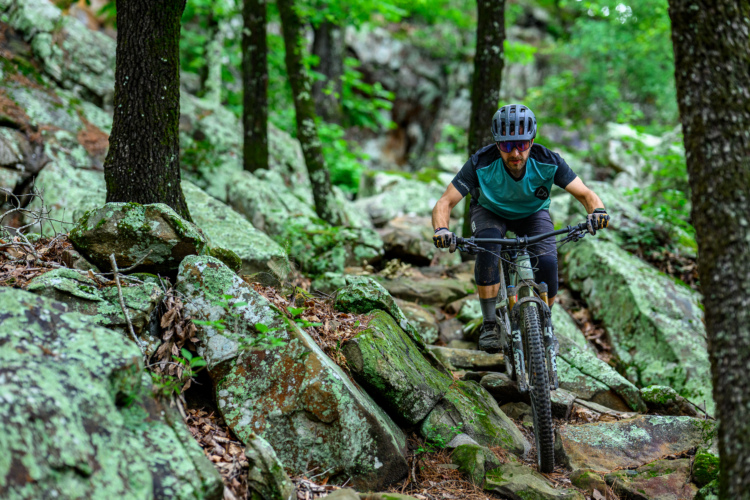
Matt riding the greenway to Cortina

We made it to Cortina in the mid afternoon and found a campground to spend the night. After settling in, we headed in to town and went to the local bike shop just in time to find that they were closing up for the day and the only employee there didn’t speak English. We picked up a free trail map and made plans to return first thing in the morning, then went back to exploring our new surroundings for the evening.

We returned to the same shop the next morning to have a quick repair done and get some more information on the trails. While the mechanic was working, we asked another employee who spoke English about the trail we had chosen and found out that none of the bike trails on the map were actually singletrack. Due to conflicts with hikers, bikes are not allowed on the local singletrack, only on dirt roads. He then recommended a different route than the one we selected and told us that it was the most complete tour of the region. The stats for the ride were daunting: 48 km with 1,500 m of climbing (30 miles with 4,900 ft), but we figured that since it was actually dirt roads instead of trail that we would be fine.

A typical Dolomite trail

Ready to ride, we left town on the main bike path which is an extension of the same rail-to-trail path that brought us into town the day before. In just a few kilometers, the pavement turned to gravel with a slight climb through tunnels and over bridges and then back to pavement where we began the first actual climb of the day. The road was very steep and with tired legs from touring, we shifted to our lowest gears to spin our way up. After climbing for the better part of an hour, we reached the first mountain hut of our route, Malga Ru Stua.

Some cows lounging trailside

This hut also marked the end of the pavement and return to gravel road for the rest of the day’s ride. We bypassed the hut and the cows that were lounging on the side of the road to continue our climb up. This section of road started out steep but rideable, but after a few switchbacks the loose rocky terrain and even steeper gradients forced us off of the bikes to hike our way up. After leveling back out to a reasonable gradient, we got back into the saddle and continued to grind our way up to the first summit, Rifuggio Senes at 2,116 meters.

At almost 1,000 meters higher than our starting elevation, we had climbed a long way and were ready for some food. We parked the bikes outside of the mountain hut and took a seat at a vacant table. The restaurant offered us cuisine that is a mix of Austrian and Italian, reflecting the history and mixed culture of the Dolomites which is evident in many of the small Dolomite towns, as well as one of the most amazing lunchtime views I have ever seen.

Lunch with a view

With our stomachs full, we prepared to tackle the first descent of the day which would take us down over 500 meters. At the top, the ride was fun with hard packed rocks and smooth trail that allowed you to carry a good bit of speed through the corners. The further we went down the trail the steeper our descent got, making the ride more dangerous since the rocks that make up the trail vary in size between sand and boulders.

At the top of the descent

We carefully rode down much of the descent trying to keep our sliding back wheels under control, until the road eventually got too steep for the rocky surface and turned into large slabs of broken concrete. We wound our way down endless switchbacks as we rode through a canyon that finally bottomed out. With the steep grades and loose rocks that made up the road surface, we were forced to ride the brakes the whole way down and never got an opportunity to really let loose and fly downhill.

The trail winding through a canyon

The second climb of the day began steep as well, but after the first couple of switchbacks it became more manageable and we were able to ride the entire way up. After an hour or so of spinning uphill, we topped out again at over 2,200 meters and began our final descent back to town. This downhill was much more fun than the first, with a more gradual loss of elevation and better traction beneath the tires. The scenery was also spectacular with a couple of small lakes beside the road and more dramatic rocky peaks above our heads.

One of several lakes we passed during our ride

Our second day in Cortina greeted us with tired legs and rainy weather, so we took a day off from the bikes and spent some time around town. While looking for a shop where we could restock on tubes, we came across 2ue 2ue, a different local bike shop than the one we visited previously, and asked the employees about more good trails in the area. To our surprise, the mechanic said that there was one singletrack trail in Cortina and marked it on the map for us to ride. With this information, we knew exactly what we would be doing the next day.

With better weather the next day, we shared breakfast with our Slovenian campsite neighbors and geared up for our ride. We decided to take the paved road up to the trail despite there being a couple of dirt options since we were not planning to spend another night in Cortina and had to be out of the campground by 2:00. The climb out of town was once again long, but not incredibly steep like many of the trails in the area. We knew we were making good time since we were able to stay with a group of roadies who were climbing just in front of us. Once we got to the trailhead, we veered off of the pavement and started to enjoy the first rideable singletrack in town.

Matt enjoying the singletrack

There was one hike-a-bike section early on through a rocky stream, but after that the trail rolled through the woods on hardpack dirt before spitting us out on the side of the mountain with a  panoramic view of Cortina and the mountains south of town. The trail was rocky here, but we were able to pick our way through and ride along the ridge.

Andrew enjoying the trailside view

Once the descent began, we lost elevation in a hurry as we made our way down the steep, loose doubletrack before leveling out in a grassy field with wildflowers all around us and a view of the 1956 Olympic ski jump facility. We turned onto the next trail on our route and began flying downhill once again through the trees and finally coming out behind a hotel near town. We coasted back to our campground excited to have ridden actual singletrack, but also a little disappointed that it was already over. We had covered 5-6 km of trail on the ride, but knowing that the only other riding in the area is on dirt road kind of spoils Cortina as a mountain bike destination.

Overall, Cortina is an great little town. There are plenty of recreation opportunities for outdoor enthusiasts, including climbing, hiking, and cycling. If you are looking for a destination with a variety of activities, then this may be the spot for you and bringing a mountain bike along will offer you some epic rides and access to lots of beautiful scenery that you would otherwise miss on foot in a day’s hike. However, if you’re looking for lots of singletrack trails, be aware that it will be very difficult to find in the Dolomites and you may be better served to look at another region.

Want to hear more about our trip?  Read more at mtnbikeurope.blogspot.com.

Fresh Dirt: Paynes Creek, GA Ride Report

Tuesday, July 12th, 2011

Whoops!

Not as in “whoops, I dropped the hamburger on the ground,” but whoops as in “YEE-HAW!”

The new mountain bike trail at Paynes Creek is absolutely chock-full of whoop-te-dos! They vary in size from small to massive, but all of them are easy to negotiate, making this a very beginner-friendly trail. However, if you are an advanced rider (or just have an extra-large dose of crazy), you can blast through many of these whoops at high speed, airing off of the top of one and landing on the transition into the next. The landings added to the thrilling g-forces at the bottom of the U’s are sure to put your rear suspension to the test, despite the almost complete lack of rocks and roots on this trail.

And of course, being the great journalist that I am, I totally forget to take a picture of a single whoop. Sure, it might have had something to do with how much fun I was having riding them!

While the gorgeous flow of this trail encourages you to drop the hammer and rail through everything, make sure you don’t get complacent: some of the biggest whoops right at the beginning of the trail (on a counter-clockwise day) will throw you into the air and have you landing on a loose off-camber corner above the water!

And while you might also think that this trail is totally flat because it’s in Northeast Georgia and lies right next to a lake, a couple of the switchbacked climbs may throw a series of tough punches to your gut.

Whether you are a beginner trying singletrack for the first time, someone just looking for pretty views of the lake, or an advanced rider ready to drop the hammer, the 7-mile long Paynes Creek trail has plenty of awesome to go around!

History

At this moment, Paynes Creek is about as new of a trail as you’ll ever ride, having just opened at the end of April (2011). This is the first true singletrack mountain bike trail in this section of Northeast Georgia and helps fill in a large gap in the map. Paynes Creek was designed and built through the cooperation of the US Army Corps of Engineers, the crew behind the epic trail design of FATS, the Southern Off-Road Bicycle Association (SORBA), people like you who were willing to volunteer, and even Singletracks.com.

So what are you waiting for? Plan your trip to Paynes Creek today!

MTB Movie Review: Pedal Driven

Monday, July 11th, 2011

10 Reasons to watch Pedal Driven, a BIKEumentary:

1. You saw the earlier Singletracks blog post by trek7k about the fundraising efforts to complete the movie. If you pledged, you’re part of the effort.

2. There are secret/illegal/pirate trails in your area and you want to watch the story of how a group of passionate, dedicated riders got their stealth trails approved by the federales.

3. You know some of the guys and girls from the Leavenworth, WA area who are featured in the documentary.

4. You love trees, but instead of hugging them you prefer to shred among them.

5. There’s a special place in your heart for 4th period civics class.

6. You negotiate instead of aggravate.

7. You want to see incredible footage of IMBA crews in the process of designing, building and testing trails. I never knew why the IMBA-made trails I’ve ridden were so amazing, but the movie does a great job of documenting the process.

8. If you’ve ever been frustrated by that “No Bikes” sign in your favorite slice of wilderness and want to know the whys and hows of getting it open to you and your dirty little friends, this film will open your eyes.

9. City slickers who battle traffic to get to the trailhead will be green with envy at some of these small town communities with singletrack that rolls right out of people’s backyards. Aspire to move into the sticks…

10. You want to learn how to contribute to the efforts of people who love to ride trails, want more of them, and want to make sure we take care of our natural resources while we’re out there enjoying them.

I personally found it hard to set aside time to watch this now that summer has arrived in all its midwestern glory. I’ve been getting in daily trail miles and every hour in the dirt makes me want two more. If the sun is out I have a hell of a time looking at a screen when I could be shredding singletrack.

But this documentary was inspiring in the fact that there are dedicated individuals who took the time to put on clean pants, meet with forest service officials, lobby local governments, sign petitions, turn shovels, lift logs and generally put in the time and effort it takes to get trail access for all of us. And for that, I salute every one of them. Thanks to you all!

Oh, and to Howell at the Moon Productions, the team that made this movie: you are a rad group. Anyone who is willing to put in the time, the dollars, the sweat and the love into documenting our favorite outdoor pursuit (and how to make it better) deserves mucho kudos.

The deets: Website | Facebook | Trailers | Where to buy it | These folks made the thing | Screening tour dates | Get involved!!

My Local MTB Trails: C’mon, I’ll Show You Around

Wednesday, July 6th, 2011

Ahhhh, home sweet home

Your local trails: they’re the home stadium, your turf. I submit that there are a huge list of things that make your go-to singletrack a very special place indeed. I got to thinking about this when I went out for an after work ride to grab some pictures of my new neighborhood spot. I rolled through at an easy-breezy pace, stopping to capture some images and thinking about how I would describe these trails to my buddies back home.

Come on in

These trails are pretty new to me. I moved to Wisconsin in January (I know, didn’t think that one through) for a new job and it’s taken quite a bit of getting used to. The first bikey thing I did was buy a snow-capable bike to get my ass back into shape after a long winter spell of sloth. After some fitness training and indoor riding that didn’t require the snow to melt I was feeling good and counting the days until the local trails were officially opened for the spring. When the go ahead was given by our trail keeper I was pumped and ready to hit it.

When I say trail keeper I mean the guy who is a full-time paid employee at the company that makes features, clears the brush and fallen trees, changes up the routes seasonally, fights erosion, etc. One of my coworkers asked me if I was enjoying “country club mountain biking.” He’s exactly right, short of a pro rider I can’t think of anyone who has it this good. For lunch I get changed in the locker room, pedal less than 10 minutes up the street to the trailhead, then get rad for an hour. Once that’s done I head back to the office, take a shower, change and lean by bike up against my desk to wait for the next session. How sweet it is…

High road or low?

So anyway, how would I describe these trails to my Philadelphia riding buddies? I’d say they’re a bit like White Clay in Newark, Delaware with the fast, flowy, almost pump-track quality of the David English trail. But the real difference is the man-made features everywhere. White Clay has a compact but very challenging skills section, but my Wisco trails have good stuff like the above all throughout. Plus there’s a double diamond trail with huge gaps, high drops, and wicked speeds if you can clear everything.

Some serious Forest of Endor shit going on

The magic of the local trail dawned on me while I was riding and thinking about this post. It’s the trail you head to if you’ve only got a couple hours after work, or before you have to mow the lawn, or if you’re a little too hung over for an all-day grinder. You know all the routes like the back of your hand, and you can pick and choose depending on whether you want to go balls out or just keep sharp and work up a sweat. The value of knowing the location of every root and rock, where it stays greasy the longest after the rain, or that straight section you know you can pin it on is immeasurable. This is your training ground. There is an uphill switchback that I’m still figuring out how to carry speed through without going wide and losing momentum. There’s a fast downhill section with 7 whoops in a row that I’m now able to blast my way down without a second thought or hesitation. The familiarity you have with your “backyard” lets you build skills, boost confidence, apply laser focus to your technique and have a blast all at the same time.

Haven’t mastered this one yet…

So get out to your local dirt! If you can pedal in from home it’s all the better. No loading the car, backing over the front wheel you forgot to put in the trunk, leaving your shoes at home, or getting stuck in traffic and running out of light. Plus it’s a built-in warmup. No matter where they are, your go-to trails provide fun, features, fitness and the chance to keep your game tight. The more you ride them, the more severe the smackdown you can put on your out-of-town buddies when they come to visit.

Tell us about your local go-to trail ride!

Mountain Biking in the Mountains of Tennessee: Chilhowee Trail System

Monday, June 27th, 2011

I had heard rumors of a mountain bike trail system just across the border in Tennessee by the name of Chilhowee. Several riders I met had raved about the quality of the trails up there, and it quickly moved up the ranks of my day trip to-do list.

I woke up Memorial Day morning, and tried to figure out what I wanted to do with myself. My wife had to go to work, but college and my work were both shut down, so I had no responsibilities. Well, almost no responsibilities. There was a large pile of dishes in the sink with the first smells of decomposition. It was my turn, and I had been avoiding them for almost a week. Last night, I had told myself that I would force myself to knock them the next day, but it was a sunny day outside, and dry singletrack is so more much fun than greasy, nasty dishes!

I didn’t feel like riding locally, as I had been cranking out the miles on our local trail system without a break for the past month. I had all day, so it was time to go somewhere new. My first stop was the singletracks trail database to look up nearby trails that I still hadn’t taken the time to ride. Chilhowee actually wasn’t too far away and I could drop my wife off at work on the way up and pick her up on the way back, thus reducing the amount of gas I’d have to burn to get there. Perfect, decision made!

A few hours later, and I was driving down the highway looking for a trailhead. I spotted a likely candidate on the right, and pulled off. It wasn’t the trailhead mentioned in my guidebook, but it ended up being a good choice as it was the lowest trailhead in the system. The main campground is actually on top of the ridge, so if I had parked there it would probably have meant a grueling 6 mile climb back up to the finish. Personally, I like ending with descents. When I got home and checked Singletracks, the parking lot listed here was the one that I decided to start from.

Right out of the parking lot, the trail forked. One way led uphill to the main trail system, and the other was a quick 1.5 mile trail up to a waterfall. I was here to explore, so I decided to start by checking the falls out. It was a tough, technical ride up with large rocks, roots, and tight slow-speed maneuvers on seriously exposed singletrack! Immediately I realized that some of my technical handling skills had gotten rusty. The skills were still there, they just needed to be shined up a little bit. After a tough 1.5 mile climb and a couple of creek crossings that were way too technical to ride, I made it to the falls!

It was well worth the effort, but I didn’t hang around long because I had a ride to do!

I retraced my tire tracks back down the way I had come, and then cut up to the Clemmer Trail, the main climb up to the rest of the trail system. I knew I was in for some sort of climb, but the trail took me a little by surprise and rocketed straight into the sky for about 5 miles! The tread was fairly loose gravel and the grade was steep, making it tough-going in some spots. The trail varied in width from a respectable singletrack to more of a doubletrack.

Main access trail/ascent.

There were trails on the map going every which way, and my guidebook didn’t seem to have a good route that made the most of the available terrain. So, I tried to create my own loop, roughly circumnavigating the entire trail system while trying to catch some of the inner trails as well. I peeled off of the main climb onto the Slickrock trail as soon as possible. If you decide to come to Chilhowee, be aware that the only slickrock on the “Slickrock Trail” is about 5 feet at the entrance, and then it’s over. The rest of the trail was a ton of fun, and offered some pretty rocky, challenging singletrack with good views, but there is definitely no slickrock!

Unfortunately, I was too distracted bombing through the rocks to stop and shoot photos of the gnarliest sections, but when the trees opened up and offered a view of the mountains, I knew I had to grab a snapshot:

In my opinion, Slickrock was one of the best trails in the system, and yet… it just wasn’t that great. Yes, it was singletrack, yes, it was challenging and in the mountains, but during my entire ride I just never really felt like I found a good rhythm. I’m not entirely sure why, because most of the trails were definitely sweet. The biggest bone that I have to pick with Slickrock and several of the others is that they just did not feel very well maintained. Many of the trails, and especially Slickrock, were very overgrown. I was constantly ducking branches and getting slapped by underbrush as I flew past. Maybe these are just small quibbles, but the overall experience could have been better.

As I finished up Slickrock, I finally reached the campground at the top of the mountain. I had had the trails almost entirely to myself, and rolling into the main parking area was a bit of a shock as the noise of people at the beach and cars going back and forth jolted me out of my reverie. I looked at the trail map quickly, and jumped back on the quiet singletrack as fast as possible.

The shorter looped trails surrounding the campground were infinitely easier than the longer trails further out. They also looked like they see more traffic, so they were better maintained and flowed much better than many of the other trails. These trails didn’t have that overgrown/under-maintained feel, so if you are satisfied with a quick 5 miles of easy riding, be sure to check them out!

Yes, these trails were easy, but the rocky topography offered up some jewels to play on here and there:

After exiting the beginner trails, I lost my way a little bit and ended up on some of the inner trails on my way to try to find another waterfall listed on my map. These inner trails also felt very overgrown, and were brutally steep! A steep, fast downhill with numerous whoops on a tight, exposed trail led to a grunt of a climb back up to the top and a more well-traveled trail. Finally, I was able to get my bearings and navigate to Benton Falls, the main waterfall in the center of the trail system:

Again, the tough trails and getting turned around were so worth it! The waterfall would have been prettier if there hadn’t been people crawling all over it, though.

I didn’t get to stay long or enjoy the cool water, as I had to get off the mountain, catch lunch, and pick up my wife.

Finally, all of the pain and suffering and busting through spiderwebs was about to pay off: I had roughly 5 miles of downhill in front of my tires! The Clemmer Trail, which I had climbed up, is situated on an old road bed, and as a result it is very straight and wide open with little chance of flying off of the edge. Finally, I was able to open it up and let ‘er rip! Keeping with my AFAP downhill policy, I bombed down that trail as fast as I possibly could! I did take a quick break to snap a photo of the mountains through a clearing in the trees, but then I was off again!

It had been a long, hot ride, and I was so relieved to get back to my pickup! My GPS unit read almost 19 miles with about 3,000 feet of elevation gain (it felt like so much more), but I knew that there were still numerous trails that I hadn’t gotten the chance to ride. My guidebook mentioned trails that were little more than boulder fields, and unfortunately, I had missed them! I had ridden some delightfully technical singletrack, but nothing exceedingly challenging.

When I got home and researched Chilhowee a little more closely, I found one of mudhunny’s photos from the Clear Creek trail, taken back in 2008:

While I wasn’t very impressed with the trail system overall, I obviously need to get back there and ride this trail! I realized over the course of my ride that while we have some very aerobically challenging trails here in the North Georgia mountains and they have some challenging technical sections, that my technical handling, especially when it comes to rocks, has suffered since I’ve moved here.

Fortunately, the Tanasi Trail System is right next door, and it’s still on my to-do list… I’ll have to make it a long day and hit Chilhowee too!

Mountain Biking Oregon: Tillamook State Forest

Friday, June 17th, 2011

On Thursday morning we awoke to blue skies which meant just one thing: it was time to ride! While driving to the coast earlier in the week we passed by Storey Burn Rd. which sounded familiar to me for some reason. Sure enough there was a trail called Storey Burn on singletracks so I asked Barry at Fat Tire Farm if it was worth riding. It turns out Storey Burn is just one part of the Browns Camp area of the Tillamook State Forest with miles of singletrack and ATV trails to explore. Sold!

I parked at the Browns Camp OHV day use area and was a little thrown off by the sounds of revving dirt bikes and ATVs buzzing around. The trailhead was well signed and I had no problem finding my way to the Wilson River Wagon Road (WRWR) Trail, a singletrack trail that’s closed to motorized vehicles. My plan was to make a loop with the WRWR, Nels Rogers, and Gravelle Brothers trails for about 8-10 miles of riding.

I wasn’t sure which way to take the loop so I picked counter-clockwise. The WRWR quickly gave way to the Nels Rogers trail where I came to a narrow bridge crossing Devils Lake Fork. At first I was worried about how I’d get across but it was actually pretty easy with my bike in one hand and the other clutching the rail. The trail climbed quickly and steeply after the creek crossing and I ended up hiking the bike a bit more than I would have liked.

At the Rogers Camp Trailhead I studied the map again and set off for the Gravelle Brothers trail – but for some reason I couldn’t find it. Not wanting to get lost, I headed down the forest road toward the University Falls trailhead where I knew I could rejoin the singletrack loop. About a mile down the road three police cars with lights on and sirens blaring came screaming past, almost like a scene out of the Dukes of Hazard. The dust was so thick I had to slow down just to see where I was going.

As I approached the University Falls trailhead a deer crossed the gravel road in front of me, seemingly unfazed by me and my bike. I guess the local wildlife has become desensitized to loud, fast moving objects in the woods.

At University Falls I hooked back up with the Wilson River Wagon Road trail and the singletrack was even better on this side of the loop. Fast, narrow descents were followed by tree-lined climbs through the lush green forest. At the top of one of the climbs the forest opened up and offered just a glimpse of the surrounding peaks. A man and a woman on mountain bikes were taking a break here and I was amazed at how clean their bikes and shoes were – clearly they must just be starting their ride. Although the trails weren’t nearly as wet here as they were at Sandy Ridge on Wednesday, there were still muddy patches mixed with dusty stretches at the ATV trail crossings.

Tillamook State Forest seems to offer mountain bikers plenty to choose from and I’d love to come back to explore Storey Burn and the full Wilson River trail. At less than an hour outside Portland, the Browns Camp area is an amazing place to explore on a mountain bike!

Mountain Biking Oregon: Sandy Ridge

Thursday, June 16th, 2011

Mudhunny and I are in Oregon this week and yesterday I got a chance to ride at the Sandy Ridge trails east of Portland. Even though Portland is known as one of the bike-friendliest cities in the US, there really aren’t a ton of mountain biking opportunities in town; instead, most of the good stuff (like Sandy Ridge) is almost an hour away.

I rented a Specialized Rockhopper Expert 29er from Fat Tire Farm and Barry gave me the low down on Sandy Ridge. The trail system is basically a singletrack lollipop with a paved climb up which keeps the trail traffic one-way. Barry said a lot of work had been done at Sandy Ridge recently and that the trails were in great shape when he rode there over the weekend.

When we pulled up to the trailhead it was raining which isn’t surprising since this is western Oregon. Sandy Ridge is located in the foothills of Mt. Hood on the west side where the weather can move in and out quickly so I decided to wait for the showers to pass before hitting the trail.

With a break in the clouds I jumped onto the paved climb just as two other groups of mountain bikers pulled into the parking lot. During the climb I was anticipating the descent down the Zig Zag trail and wondering what I’d see around the next corner. I stopped at a waterfall on the side of the road to catch my breath and tried to grab glimpses of the valley below only to see clouds beneath me. This is why I came to Oregon.

At the top of the climb I studied the map for a few minutes before heading onto the Three Thirty Eight loop. At the start of the loop I came across a trail work crew busy hardening the trail against the effects of the rain (which I imagine is a constant battle here). The “Trail Work Ahead” cone in the trail had a Fat Tire Farm sticker on it which just confirmed that I picked the right shop for my rental.

After a short, slick, and rocky ascent the trail pointed down and morphed into a downhill super run with big jumps, wide landings, and G-force inducing bermed turns. After about a half mile things mellowed out and the smooth trail undulated up and down through the forest for a mile or two.

By the time I got back up to the upper trailhead kiosk it was raining again and I was ready for my downhill reward. At the very top the trail started out bermy and smooth but this quickly gave way to technical rocks and roots as the trail switched back and forth every tenth of a mile or so. Some parts of the trail were steep and with the wet, slick roots I was admittedly cautious. Because the trail had zero climbing over the last couple miles I was starting to get a little chilly (thank goodness for Gore-Tex!).

About halfway down the mountain the trail switched modes again and the steep, technical stuff gave way to fast, swoopy downhill trail. A lot of the lower half felt like it belonged at a bike park like Northstar or Winter Park – clearly the folks who designed and built this trail like to ride. By the end I was tempted to ride back up and do it again so I could hit the turns and jumps I missed on my first run! If only there were a lift… :)

Sandy Ridge is a great trail system thanks, no doubt, to the volunteers who build and maintain the dirt. After just a couple hours on the mountain I could see what a challenging trail-building environment this is – and how the incredible scenery and terrain make that effort more than worthwhile. This trail wasn’t even on my radar before I came to Oregon but it should be on every rider’s wishlist!


Site Map | Advertise | Partners | Contact Us | Terms | Privacy
Campground Reviews | Hiking Trails | Trail Running | Skiing / Snow Sports | Mountain Biking
Copyright 2012 Blue Spruce Ventures LLC | Atlanta, GA
singletracks.com is yet another slick Review App