singletracks is mountain biking
Sign In | Create Your Account | Site Map | Help  


Archive for the 'MTB Trails' Category

Mountain Bike Trail Maintenance 101

Tuesday, January 24th, 2012

We’ve seen a recent surge of interest in trail building here on Singletracks and we just started a new forum for discussions about building mountain bike trails. But building the trail is only half of the equation; maintaining the trails is a long-term task that will never completely go away.

I’ve been dedicating more of my time lately to volunteering during trail work parties at my local trails. This blog post tells the story of our most recent work party, but also explains the why and the how behind basic trail maintenance.

De-berming and Nicking

We spent four hours on a Saturday morning (1/7/12) working on de-berming and nicking the Jake-to-Bull connector trail out at Bull Mountain which runs from the lower Jake Mountain parking lot to the upper Bull Mountain lot. Our main focus was the first section, which drops down from the Jake Mountain lot to USFS road 28-1. In my opinion, the entire Jake-to-Bull connector is (or was) one of the worst-draining sections of trail in the entire trail system, so our focus here was well-deserved, and really, long overdue!

The basic design premise behind a bench-cut singletrack trail is that you want the water to flow off the trail/across the trail instead of following the trail down the mountain. There are various techniques you can use to make this happen, but the most important is to make sure that the trail is out-sloped.

Due to heavy use (or a haphazard initial build), the center of this trail tends to pack down more than the outside, creating an outer berm that holds the water on the trail. Our job was to de-berm the worst sections of the trail and to “nick” the low points by building drainage channels off of the side so that the lowest spots at the bottom and tops of the hills can drain properly.

De-bermed section of trail.

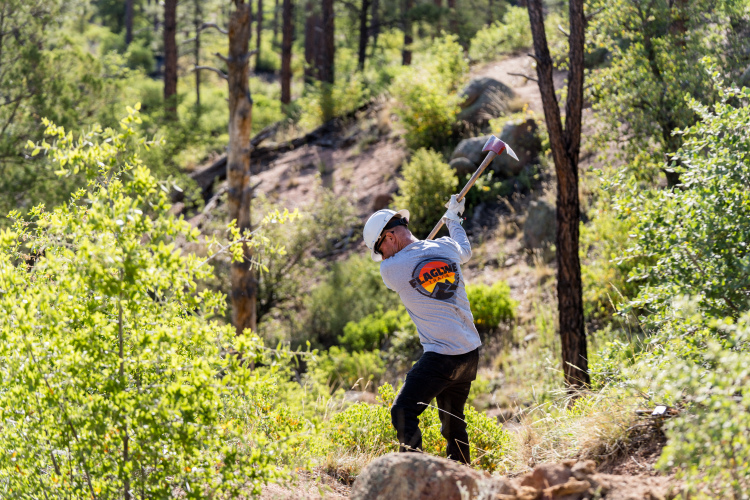
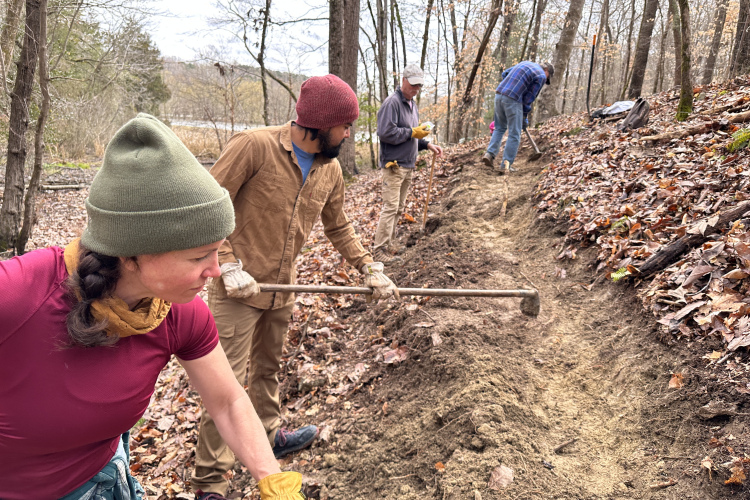
The tools of choice for this work are a pulaski and a McLeod. The pulaski is used for the main grunt work of chipping down the hardened outer berm and digging the nick in. But a pulaski isn’t capable of finishing the job. After the main digging is done, the McLeod comes out and is used to pull all the loosened dirt and other debris downhill, away from the trail. Generally, after pulling the loosened dirt away we’ll notice that the outer berm is still somewhat present, and then it’s back to the pulaski.

Pulaski, foreground. McLeod, background.

It can take a lot of switching back and forth between tools or people and a lot of time to satisfactorily de-berm and nick a low spot in the trail. Of course, you can do a quick once over… but if you don’t put in adequate time to do the job properly, it will either not make any difference at all, or the small drainages that you’ve made will fill right up in a few months. The best plan: do it right the first time so you won’t have to be back for another decade or so!

De-berming of a low spot, before and after:

Note: the low spot pictured above was rather minor compared to some of the muck holes we tackled that day!

The final test to determine whether or not the de-berming or nick will succeed at diverting the water off the trail requires a very specialized tool: a soccer ball.

Yes, a soccer ball. The ball is rolled down the trail and supposedly simulates the action of water with relative accuracy. If the ball rolls off the trail at your newly constructed nick or newly removed berm, then good: mission accomplished! If not, it’s back to the pulaski until it does.

Dave Muse testing the trail with the soccer ball.

Get Involved

With these trail design philosophies, tools, and techniques at your disposal, you are ready to start giving your trails the TLC they deserve! Before you head out and start moving dirt, though, make sure you have permission to perform the maintenance, and make sure you are working in line with the general philosophy of the trail system. For instance, out here in the National Forest we aren’t allowed to just go out and put tools to trail old day we please. We have to arrange pre-scheduled work days, document all the hours we work, sign waivers, and follow quirky safety procedures such as wearing helmets while we dig.

If you are interested in helping maintain your local trails, one of the best things you can do is become a member of your local trail advocacy group (check out this list of mountain bike clubs and organizations). They will probably have tools you can use, instruction and guidance on where and how to maintain the trails, and it’s a great way to meet like-minded riders, too! And if you aren’t convinced that you should help out yet, here are 7 Reasons to Start Doing Trail Work.

Get Digging!

Your turn: Are you involved in maintaining your local mountain bike trails?

Advocacy Alert: Three GA State Parks to Target Mountain Bikers with a Trail Fee

Wednesday, January 18th, 2012

The Georgia Department of Natural Resources (GaDNR) is currently proposing a new fee to ride mountain bikes on trails in three state parks: Unicoi, Fort Yargo, and Hard Labor Creek (which will have brand new mountain biking trails opening in the next few months).  Fort Mountain State Park has had a trail fee in place for several years, and it will remain.  Area riders are up in arms over the new fee, but not because of the money.  In discussing the issue I’m going to focus mostly on Fort Yargo, because it’s the most popular of the three for mountain bikers.

I’ve spoken with several people involved in this issue trying to see all the different sides: Tim Banks, the Assistant Chief of Operations for GaDNR; Robin Allen, Communication Director for Southern Off Road Bicycle Association (SORBA); and Tim Schroer, owner of Dirty Spokes Productions who promotes mountain bike races, duathlons, XTERRA triathlons, and trail running races all across north Georgia, including Fort Yargo.

The Proposal

If the proposed system is put in place, it will require riders to check in at park offices before they ride.  They will fill out a form and pay a $2 per rider fee and be given a placard or something similar to attach to their bike or carry with them as proof they paid the fee.  This new fee will be in addition to the current $5 per vehicle parking fee.  An annual trail pass can be purchased for $25, and the annual parking pass cost will remain unchanged at $50.

Why Riders Are Angry

What I didn’t mention above is that ONLY mountain bikers have to pay the $2 trail fee.  Hikers and runners can use the trails without the fee (though they still have to pay for parking).  This is the main reason many mountain bikers are angry – for being singled out.  Further, the trails at Fort Yargo were built and maintained almost exclusively by volunteer mountain bikers from the Yargo Area Biking Association (YABA) with very little cost to the State.  I haven’t been able to find the exact numbers regarding just how much the State actually paid for the construction of the trails but I would imagine the trail has more than paid for itself thanks to the crowds of people it brings to the park.  Last year the Athens Banner-Herald reported that the park had over 400,000 visitors and an economic impact of more than $24 million on the local area.  Before the trails were built it was one of the least visited of all the State Parks.


Volunteers have built some super fun trails in Fort Yargo State Park.  Photo: Athurber

Mr. Banks pointed out that mountain bikers are one of the last user groups to be charged for activities in State Parks.  Horseback riding, disc golf, swimming pools, and boat rental users have been charged fees for years.  While mountain biking doesn’t use facilities that the State maintains (such as boat rentals for example), riders do enjoy other amenities in the parks that cost the park money to build and maintain such as picnic tables, paved parking, shelters, bathrooms, water, etc.  I would argue that our parking fee would cover the minimal maintenance costs of those facilities, no?

When asked why hikers and runners wouldn’t be charged to use the same trails, Mr. Banks told me they believe that certain basic activities in State Parks should be free, and walking is really as basic as it gets.  I totally agree.  But, we’re using the same exact facilities, and it simply isn’t right to charge one group and not another.

Another reason riders are angry about the fee is because the money will not necessarily go directly back to the trails. For that matter, the money might not even stay in the park where it’s collected, instead going into the general park system fund.  Mr. Banks explained to me, however, this is how ALL fees are handled, so it’s not like they’re only using bikers’ fees to fund other activities.

Many riders feel so strongly that the fee is unfair and “punishment for success,” as one person put it, they are threatening to stop riding at the parks, and not renewing their annual parking passes.  There is also the worry that the fee will alienate volunteers who have spent years working on these trails, so much so that they just stop working on them.  Many of them see this as a stab in the back.  There is also a fear of the negative economic impact this fee could have on the areas surrounding the parks if riders do indeed stop riding there.


The trails in Unicoi State Park are part of mountain biking history: they played host to the NORBA Nationals in the mid ’90s and the current Georgia State Championship series often uses Unicoi for its season finale race.  Photo: mtbgreg1

Why a New Fee?

Because the parks need money, that’s why.  Since 2008 state appropriation funding to the park system has been cut by 46%.  Despite the cuts, GaDNR has been able to keep all GA State Parks open.  But, if they want to keep them open, more money has to be raised. Mr. Banks said they estimate the fee will bring in an additional $2,500 the first year from Fort Yargo.  This doesn’t seem like much money to me.  I asked why not simply raise the parking fee?  Well, they did that just a few years ago, and they try not to raise it too often.  It had been unchanged for about 7 years before the most recent increase.

Volunteer Rewards Program

The parks had several town hall type meetings recently regarding the new fees and many riders showed up and voiced their concern.  One of the results of those meetings is a volunteer rewards program.  Anyone who volunteers 20hrs of trail work will receive a free annual trail pass for their entire family.  This is a win-win: it rewards volunteers, and it will help attract more volunteers.  The parks will also be awarding honorary lifetime trail passes to people who were instrumental in building and maintaining the trails.


Brothers Steve and Randy Gordon founded the Yargo Area Biking Association and have been working on the trails there for years.  Photo: YABA

What About Racing?

Races at the parks draw big crowds, bringing lots of people into the park and surrounding areas who wouldn’t otherwise have been there – their economic impact shouldn’t be taken lightly.  The Dirty Spokes race I did at Fort Yargo last year had over 400 racers, and it seems to grow every year.  A lot of riders wondered how, and if, the new fee would change the race – would racers still have to check in and pay the $2 fee?  Will it cause the race entry fees to go up?  I asked Tim Schroer about how the new fees will affect the races and here’s his response:

I don’t know how it will effect races at the parks but hope people see and understand we have a great situation here in Georgia with some outstanding state parks.  The facilities at each of the parks here in Georgia are very well maintained / grounds well manicured and looked after (I believe the daily user fees in California are about $12 and the way our parks are maintained are so much better than the ones we visited this past year in California).

It is my understanding the additional fees will not apply to the events or participants in the events (but have not had a formal conversation about it / however our contracts are in and signed for 2012 and they do not reflect the new fees).  If there is an additional charge in years to come we will absorb the costs (we are in our 7th year of putting on these events and have never raised our prices.)


I had an awesome time racing at Fort Yargo last year.

SORBA’s Stance

When I spoke with Robin Allen it was clear that SORBA is taking the long view on this – how can it be used to improve mountain biking in Georgia?  The issue has (hopefully) opened a dialog between GaDNR and SORBA.  Robin said they’re trying to show the state just how awesome mountain biking can be for the park system.  If the success at Fort Yargo could be duplicated in other parks it would only be a good thing for everyone: the parks, riders, and communities around the parks.  SORBA had staff members (and plenty of local chapter members as well) at each of the meetings regarding the fee and they pushed for a fair solution, and especially something that rewards volunteers.  The parks listened (somewhat at least) and will be implementing the volunteer rewards program I discussed above.

What is the Answer?

There’s no getting around the fact that the parks need money to stay open. I understand that, as do most other riders.  Like I said, the money isn’t why riders are angry.  It’s the principal of the matter.  They’re angry because they’re being singled out.  They’re especially angry since they’re being singled out to use facilities they built and maintain for the park which have greatly benefited the park via increased visitors and parking fee revenue.  No good deed goes unpunished as they say.

Now, I don’t think the answer is to apply the trail fee to everyone.  Sorry, but I can’t stand behind charging someone to walk in a State Park.  In my opinion, there shouldn’t be a trail fee, period.  The only fair solution in my mind is to raise the parking fee.  This is completely fair since everyone would have to pay it, not just one user group.  And it would raise much more money than charging mountain bikers to ride.

If the park system would work with riders we could be a huge asset to them.  We’ll help secure funding to get new trails built, and we’ll swing the tools to build them as well.  We’ll maintain them for free.  Those trails bring a new group of people into the park that otherwise wouldn’t have come.  Races will help draw even more people into the park.  We don’t just come to the park with bikes and riding gear – we come with money to spend in the surrounding communities.  We camp, stay at hotels, buy gas, eat at local restaurants, and shop at local stores.  But by discriminating against mountain bikers by charging riders, and only riders, a fee to use multi-use trails, the parks would be biting the hand that feeds them.  Many riders will simply ride someplace else, where their volunteer work isn’t rewarded with a fee targeted only at them.   There are 172 trails listed in the Singletracks trail database for Georgia - riders have lots of choices.

Got An Opinion?

GaDNR is accepting comments on the new fee until Jan 20th (Friday).  If you would like to submit comments send them to Director.GSPHS@dnr.state.ga.us

Also, as always, use the comments section here on the blog to tell us what you think.

I’d like to thank Tim Banks, Robin Allen, and Tim Schroer for taking the time to answer my multiple e-mails, phone calls, and text messages.

Trail Tuesday: IMBA Ride Centers

Tuesday, January 17th, 2012

Years ago, IMBA’s only designation for truly excellent singletrack was the term “Epic.” Over the last several years that has slowly been changing, with new designations including “Gateway Trails,” “Flow Trails,” and “Ride Centers” being added to the vocabulary.

“Ride Centers” are areas that are truly mountain biking destinations in every sense of the word. The best ride centers have trails of all difficulties ranging from beginner to expert. They also include trails for all disciplines of mountain biking, from cross country to downhill and everything in between. Not only do they have great trails, but these areas provide great lodging, great restaurants, and great places to buy a drink.

IMBA has currently designated only seven locations as true “Ride Centers,” and even those are broken down into three categories: Gold, Silver, and Bronze. Here they are in descending order:

Park City, Utah (Gold)

Round Valley Trail. Photo: pdw02.

As IMBA’s only Gold-level ride center, Park City embodies every single one of the factors that I mentioned above. It has miles and miles of pristine singletrack with gorgeous Rocky Mountain views, trails ranging in difficulty from easy to hard, trails for all different types of riders, and plenty of facilities to support the droves of people that travel from out of town.

Trailside Loop and Skills Park. Photo: gab26.

According to IMBA Regional Director Ryan Schutz, “what’s really important is that [the trails] function as a cohesive network, with signage and trail connections that create a model riding area.”

Round Valley Trail. Photo: pdw02.

Oakridge Area, Oregon (Silver)

Alpine Trail. Photo: tumbleweed14.

The communities of Oakridge and Westfir have poured considerable resources into transforming their economies from ones driven by timber to economies driven by tourism–and mountain biking plays a big part of it. With everything from close-to-town loops to all-day epics, Oakridge is sure to please both the beginners and the veteran rippers with 500+ miles of singletrack.

Middle Fork Trail. Photo: AK_Dan.

Copper Harbor, Michigan (Bronze)

Photo: ukraine.

Located at the tip of the Keweenaw peninsula above the Upper Peninsula of Michigan, Copper Harbor is about as remote as you can get, making this a true “destination” trip. Copper Harbor is home to an ever-expanding network of trails ranging in difficulty from beginner to expert. Surprisingly, many of the trails are designed as gravity-fueled freeride trails with plenty of berms, jumps, and gnar to keep most any freerider grinning from ear to ear! Shuttles run during peak times, but if you have the legs and the bike for it, you can earn your turns as well.

Cuyuna Lakes, Minnesota (Bronze)

Photo: RoadWarrior.

Cuyuna Lakes just held their grand opening this summer, but the brand-new purpose-built trail system is already a “Midwest Mecca.” Mountain bike legend Hans Rey, after sampling the trails on opening day, said, “They’re among the best I have ridden — super flowy and fun.” Coming from Rey, that’s a real compliment! The trails currently include fast, flowy sections, challenging slow-speed technical sections, and everything in between. Cuyuna Lakes is also exploring the possibilities for challenging downhill-esque descents. It will be interesting to see what the future holds for this new destination!

Harrisonburg, Virginia (Bronze)

Photo: RoadWarrior.

Harrisonburg, located in the beautiful Shenandoah valley, has a wealth of characteristically gnarly East Coast singletrack, with a few sections of beginner-friendly trail thrown in here and there. The community features excellent in-town singletrack, with several certified Epics just outside of town. The racing scene is alive and well in Harrisonburg, with local races of various distances all the way up to the Shenandoah 100, part of the NUE series.

Santos, Florida (Bronze)

Photo: trek7k.

The fact that a trail system in Florida has made it onto such a short list of world-wide ride centers speaks volumes of the quality of the riding at Santos. Santos features everything from groomed to rowdy cross country singletrack and from technical stunts to a progressive freeride/jump area, as well as the opportunity to get some serious air in the Vortex! Factor in nearby camping, bike shops, several popular festivals and races, and a thriving year-round mountain bike scene, and you have a true mountain biking destination… in Florida!

Singltrek pod Smrkem, Czech Republic/Poland (Bronze)

Photo credit: http://www.singltrekpodsmrkem.cz

According to IMBA, this “is the first purpose-built mountain bicycle trail system in continental Europe.” Translated as “Singletrack Under the Spruce,” this trail system follows the border of the Czech Republic and Poland and features 40 miles of pristine singletrack. In a place where people are accustomed to riding fire roads and old hiking trails, Singletrack Under the Spruce is a radical departure from the norm, and a breath of fresh air. Taking after popular facilities in the United Kingdom, the trailhead “boasts a comprehensive. . .facility that includes a bike shop, rentals, café, bike wash, showers and changing rooms — all situated above a gorgeous lake.”

More information about Singletrack Under the Spurce is available on their website.

Your turn: Which factors do you think are most important in a mountain bike destination? Is it just about having miles and miles of trails, or does a real mecca need to have more?

Lack of Snow Around the US Means Extended Mountain Biking Season

Wednesday, January 11th, 2012

Most of the country has been suffering from a horrible snow year, but for many people this just means that the mountain biking season hasn’t come to an end yet! When I went home to visit family up in Wisconsin, I packed my skis because I was so stoked to hit the slopes during my annual winter trip. And there was snow on the slopes… but that was the only place that had snow, thanks to an artificial snow-making system.

I had several friends head out to Levis Mounds to mountain bike that week, and they reported back that the trails were almost completely bone-dry, save for a few small snowy patches in the shade. They’ve even posted a few videos to Youtube from their recent trail escapades:

Now I really wish that I had brought my mountain bike, too!

Other Regions

Many other areas of the country are having a similar winter. BendBulletin.com recently published an article about the best places to ride your mountain and/or road bike in Bend, Oregon during this incredibly dry year. According to the article, several trail systems including the Peterson Ridge Trail System and Maston Trail System are 100% free of snow and are in great riding condition!

The Boise Weekly out of Idaho recently published a short article in their recreation section entitled “Still No Snow… F*** it, Go Mountain Biking.” Apparently the trails in Boise are also in great shape, varying from frozen to tacky depending on the sunlight-to-shade ratio throughout the day.

Mountain bikers in the Northeast have been out on the trails too, according to an article on Boston.com entitled “Hey la Nina, where’d you go with our snow?” The article also cites abysmal snow conditions in the Lake Tahoe and Mammoth areas of California, Utah, and Colorado. According to the article, the only places in the country that truly have snow are Wyoming and Alaska.

And Alaska has truly been pounded! Just check out this photo from Cordova, Alaska that I saw on AK_Dan’s Facebook Profile, originally taken by Rob Campbell:

In case you’re having a hard time understanding what you’re seeing, those are the cables for a chairlift, and the metal piece sticking out of the snow is the top of the chairlift pole!

I’m sure those hardy Alaskans with their snow bikes are pushing the pedals anyway, though!

Common Sense

In the southern US, from the East Coast all the way to the West, we generally enjoy a 12-month riding season, so our tires have been rolling along like normal, although with slightly higher-than-average temperatures.

Since there is not snow on the ground to deter riders in many areas, trail advocacy groups all over the country are kindly asking that, while there are great opportunities to ride singletrack this winter, please exercise common sense and don’t ride wet trails. Please only ride trails when they are either dry or fully frozen! Riding soggy, wet trails can cause incredible trail damage, and this time of year the ruts you can make will freeze in place and will remain for many weeks (and even months) to come.

As one of the articles linked above mentions, riding through wet areas causes ruts, and riding around them widens the beautifully-narrow singletrack trail. If you encounter mud, please turn around.

If the trails are wet, it is the perfect time to go out and explore your local back roads! Many areas are blessed with extensive networks of unpaved forest roads that wind all through the mountains. While somewhat monotonous by mountain biking standards, riding dirt/gravel roads is much more fun than freezing through the high speeds of road riding. If you’re lucky, some of your local back roads may be passable only by 4×4′s… and mountain bikes! If you’ve got technical back roads, winter is the perfect time to go out and explore them! When dry trails return this spring and summer, you can jump back on the singletrack in earnest. But for now, if the trails are wet, please exercise restraint!

But hey, if conditions are dry, get out there and shred some mid-winter singletrack!

Your turn: Are you still pushing the pedals in your neck of the woods?

Trail Tuesday: Six Guided Multi-Day MTB Trips to Check Out

Tuesday, January 10th, 2012

Do you ever feel like you’re just riding in circles on your local singletrack? If so, a guided mountain bike tour in a far away place is just what you need in 2012. Aside from getting to shred new dirt, most multi-day guided trips allow you to focus on riding while leaving boring details like eating and sleeping to someone else.

There are dozens upon dozens of guided mountain bikes trips and tours available all across the planet! If you want to do a little research to find the trip that is right for you, spend some time with The Google, or just go to our mountain bike trips page.

But to whet your whistle for adventure and give you a small taste of what sort of guided mountain biking opportunities are out there, here are six dream-worthy expeditions that you could take this year.

Inca Trail: Sacred Rides

Photo: Sacred Rides.

One of the keys to Incan domination was their extensive network of roads and trails they built throughout the Andes. According to some estimates, the Incas left behind over 10,000 km of trails and roads. Thousands of those kilometers still remain, making Peru possibly “the world’s best undiscovered mountain bike destination,” according to Sacred Rides.

That claim doesn’t seem to be much of a stretch, either. The Olleros trail, for instance, is hailed as the world’s longest downhill, dropping 11,000 vertical feet from the tops of the mountains all the way down to sea level! This trip incorporates many other epic trails, as well as some historical exposure including a visit to the famous city of Machu Picchu (not included in trip price).

For more information on this trip, check out the Sacred Rides website and a ride report that was previously posted here on the Singletracks blog. Also, there’s a version of this same trip that’s much more freeride-oriented that you can learn more about here.

Cost for this 10-day adventure: $2,495 CAD.

Durango to Moab: Hermosa Tours

Photo: trek7k.

Durango and Moab are two very well-known mountain bike destinations–you’ve all definitely heard of them. What you may not know is that between Durango and Moab lies some of the best singletrack that the famous Colorado Trail and La Sal mountains have to offer!

Hermosa Tours offers a 6-day guided trip from Durango to Moab that includes more pristine singletrack than you can shake a pedal wrench at!

In addition to its remoteness, one of the most appealing aspects of the trip is the numerous climate zones that you will travel through: everything from high-alpine to desert.

Cost for 6 days: $1,295

Trek7k did a similar trip a couple of years ago with a group of friends, except they did it without guides by using the San Juan hut-to-hut system. Cost for a 7 day hut-to-hut journey with San Juan is $850.

You can read about trek7k’s journey here:

The Ultimate BC Adventure: Sacred Rides

Photo: Sacred Rides.

Who hasn’t dreamt of riding in British Columbia? BC is basically the best place on earth to ride a mountain bike, and over the course of this 13-day trip, Sacred Rides will guide you on some of the best singletrack BC has to offer.

You may have not heard, or at least not paid much attention to, some of these towns before: Fernie, Rossland, Revelstoke, New Denver, and Golden. As Sacred Rides puts it: “Leave Whistler and the North Shore to the tourist hordes – interior BC has all the goods, with a tiny fraction of the crowds. On many of the trails we’ll ride on this trip, we’ll be the only ones out there. . .”

From shuttle run repeats to all-day epics, this trip will deliver up the BC goods to you on a silver platter!

Cost for 13 days: $2,995 CAD.

Sawtooth Singletrack: Western Spirit

Photo: Western Spirit.

This trip is your ticket to the sweet stash of singletrack in Idaho’s Sawtooth Range. Starting in Sun Valley and then heading deep into the mountains, you will be surrounded by hundreds of miles of singletrack trails… and you’ll have a chance to sample about as much as you can handle! Get ready for many miles of technical riding at elevations of 6,000-9,000 feet.

Cost for 5 days: $1,225

Treasures of the Himalaya: Sacred Rides

Photo: Sacred Rides.

The Himalayas.

Just the name of this mountain range conjures up mental images of the perpetually snow-covered peaks towering high in the sky, higher than any other mountains on the planet. This trip will take you near some of these massive peaks on historic trails that have been traveled for hundreds of years. You will see two valleys with astonishingly different ecology, one of which is the deepest valley in the world. In addition to the epic Himalayan riding, you’ll also get to experience the rich culture and history of the region.

Cost for 12 days: $2,895 CAD

Sedona: Hermosa Tours

Photo: Hermosa Tours.

By the time February, March, and April roll around, it has been a long winter in many parts of the country. What better way to spring back into the mountain biking season with an early-season trip to the red rocks of Sedona, Arizona? With miles upon miles of singletrack ranging from historic routes to purpose-built trails, Sedona is guaranteed to make the memories of those wet, snowy months fade from your mind.

Cost for 5 days: $1,795

Of course this is just a sampling of the multi-day mountain bike trips out there so tell us, what one mountain bike trip would you love to go on this year?

Top 10 Bikepacking Routes in the US

Tuesday, January 3rd, 2012

If you’re like me, January is the time of year when you start planning epic mountain bike trips for the summer. And sure, some day trips qualify as epic but for the truly adventurous, here are some multi-day bikepacking routes you should consider tackling on your mountain bike this year.

Kokopelli’s Trail

photo: bonkedagain.

If you’re a mountain biker you’ve heard about Moab and you’ve probably also heard about the miles of singletrack in Fruita, CO. But did you also know you can ride your mountain bike from Fruita to Moab? Kokopelli’s Trail is a 142-mile multi-use trail that starts in Loma, CO (just a few miles NW of Fruita) and ends on Sand Flats Road in Moab, UT where it passes by Porcupine Rim and Slickrock trails, among others. While there’s officially no water along the route, there are 8 small camping areas with toilets and some even have picnic tables. Most folks count on a sag vehicle to deliver their gear but with a little planning, a self-supported bikepacking trip is totally doable!

Continental Divide Trail (CDT)

This epic trail is roughly 3,000 miles long and stretches across the Rockies from Canada to Mexico. Much of the route follows gravel roads and bikers will have to take a few detours to avoid bike-free Wilderness areas. Still, there is singletrack to be ridden and some of the most amazing scenery in the country to enjoy. Each year mountain bikers compete in posting the fastest times during the Great Divide and Tour Divide races but for those with a more leisurely pace in mind, plan on a solid 2 months of continuous riding to complete this route.
The Arizona Trail

photo: agmtb.

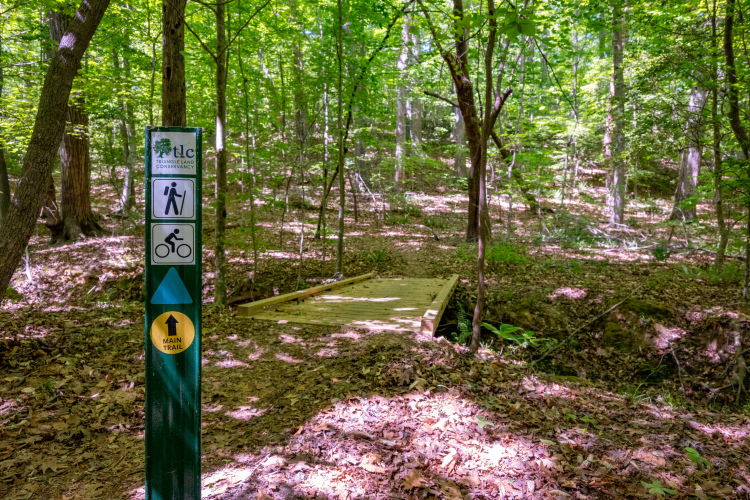
The Arizona Trail (AZT) is a recently completed 817-mile route spanning from the Mexican border to Utah through deserts, mountains, and canyons. After 26 years of hard work, the entire route will be officially opened later this month and on February 4 there will be a big celebration luncheon in Tempe. Each April, mountain bikers race (unofficially) either a 300-mile or 750-mile section of the trail which is a good opportunity to ride the route with others.

Tahoe Rim Trail

Officially 165 miles of singletrack, the Tahoe Rim trail features several sections that are closed to bikes – but even with potential detours it’s an amazing route! If the views of Lake Tahoe aren’t enough, the singletrack and alpine scenery make this a must-ride. Camping is generally plentiful in the surrounding National Forest but you’ll need to do a little research to put together a solid custom route.

White Rim

photo: jkey6.

The White Rim trail in Moab is a 103-mile jeep road loop with conditions unlike anywhere else on earth. Truly rad riders can complete the loop in a single day but for mere mortals, there are several campsites along the way (reservations often fill up a year in advance so plan ahead!). There’s also no water along the route so it’s usually best to have a support vehicle. Read about Luke_E’s White Rim trip to get more info.

Colorado Trail

Stretching nearly 500 miles from Denver to Durango, the Colorado Trail cuts through the heart of the Rockies and features some the most challenging – and beautiful – singletrack you can imagine. Like some of the other routes listed here, portions of the trail are closed to mountain bikes so detours are in order. Fortunately there are plenty of places to camp and the route is well marked with trailheads at various intervals.

Maah Daah Hey Trail

photo: davebab.

The Maah Daah Hey trail stretches 97 miles between Theodore Roosevelt National Park North and South Units across North Dakota’s rugged badlands and rugged prairie. Each designated campground (there are 6-7 along the route) features potable water, though you’ll often find natural water sources along the trail. Mountain bikes aren’t allowed inside the National Park boundaries but an alternate route for bikers is provided across Buffalo Gap.

Trans North Georgia

Pinhoti trail

This is a fairly new, unofficial 350-mile MTB route across North Georgia, starting at the South Carolina border and ending in Alabama to the west. If you’re thinking this might be a good beginning bikepacking route to tackle, think again – the Trans North Georgia boasts 56,000 feet of climbing, more than a quarter of the climbing along the 3,000 mile Continental Divide Trail! Portions of the Trans North Georgia route follow the 165-mile Pinhoti Trail, another good multi-day option available to bikepackers. Both routes stick mostly to National Forest land where it’s easy to find camping and water sources.

C&O Canal Towpath

photo: diddleydawn.

Sure, the C&O trail isn’t singletrack and the grade never goes above 2-3%. Still, this 184-mile route is unpaved and offers a great opportunity for beginning bikepackers to get on the trail. The C&O trail starts in Washington, DC and ends in Cumberland, MD with plenty of places to stay along the way (read: you can do this without bringing a tent).

Paradox and Tabeguache Trails

Although technically two different 100+ mile trails, the Paradox and Tabeguache form a rough triangle with Kokopelli’s trail for an epic tour of western Colorado and eastern Utah. These trails aren’t as well traveled as some of the other bikepacking routes mentioned here so planning a trip can be a challenge. Trail surfaces range from singletrack to jeep roads to forest road riding.

Which of these trails is on your bucket list?

Trail Tuesday: Bear Creek & Pinhoti Trail

Tuesday, December 20th, 2011

It took me nearly two months but I finally finished it: my Santa Cruz Tallboy FS 29er was ready to ride! After dialing in the suspension, checking every cable, and adjusting brake pads and levers, I chose the Bear Creek – Pinhoti Trail (P1, P2) loop outside Ellijay, GA for the maiden voyage. It turned out to be an incredible day of riding!

I first rode the Bear Creek trail in the late 1990s, and in those days it was considered one of the best, if not the best, mountain bike trail in Georgia (in 2008 Bike Magazine was still rating it the best in the state). Perfectly spaced water bars, moderate slopes, and clear water crossings are just some of the highlights here – not to mention the incredible views this time of year.

Since the time mudhunny and I first rode the Bear Creek loop, there’s been a new major trail addition in the area – the Pinhoti trail – which starts near Bear Creek and runs west into Alabama. These days a popular ride pieces together an 18-mile loop with the Bear Creek and Pinhoti Trails which I decided to tackle on an overcast December morning.

I parked at the Pinhoti Section 2 trailhead (known as P2) and started on the gravel road heading clockwise around the loop. Less than a mile from the trailhead I passed Mulberry Gap, a “mountain bike getaway” where many bikers choose to stay or take advantage of the parking, food, repairs, and other services. I haven’t personally visited Mulberry Gap but it’s a pretty unique set-up and friends have nothing but good things to say about the place. I made a mental note to stop by another time and kept pedaling into the cold morning fog. Off to the right side of the road I spotted a flock of wild turkeys, appropriate, given the name Pinhoti is a Native American term meaning “turkey home.”
Near the top of the forest road climb I pulled off at the Bear Creek overlook and checked out the views (or at least what I could make out with all the low clouds). Another half mile of climbing lead me to the official Bear Creek trailhead (the upper one) and the start of the descent. For about half a mile the trail was rockier and rootier than I remembered and featured a couple sharp switchbacks before landing at a gated forest road. Apparently many riders choose to skip this first section, opting instead for a shorter initial climb up the road, but I enjoyed the old-school feel.

After about a mile of forest road descending, the singletrack begins and it’s glorious. This trail had “flow” way before the term became popular with mountain bikers and it still does today. But just as quickly as it began, the descent seemed to come to an end and I found myself staring up at the enormous Gennett Poplar, famously one of the largest trees in the state. From here I started climbing again, this time on the Pinhoti trail section 1, aka P1.

For those who are familiar with the Snake Creek Gap time trial series, this section of the Pinhoti trail isn’t nearly as technical as the stretch from Armuchee to Dug Gap but there is enough climbing to keep things challenging. In between P1 and the next section, P2, the trail briefly follows forest roads and former roadbeds, quickly narrowing to singletrack as the forest reclaims the corridor.

Up until this point my new bike performed flawlessly and I was actually kinda surprised since this is the first bike I’ve built up from scratch. Well, ok I didn’t install the fork and headset but I did everything else myself – which is probably why the rear derailleur decided to stop working on P2. It didn’t take a pro mechanic to see the derailleur cable had slipped out from the anchor bolt which was fortunately an easy fix.

Bear Creek – Pinhoti video.

The trail topped out as it made an unassuming bend around one final peak and began descending for the next two miles or so. To me this was the best part of the day thanks to the smooth trail, long sight lines, and carefully sculpted, wide sweeping turns. This is what North Georgia mountain biking is all about!

Even though I’ve probably done hundreds of rides like this in the southeast, this was the first time I’ve ridden a full suspension bike on one of them, and you know what? I kinda liked it. Sure, I had to work the ProPedal lever like a DJ spinning a record thanks to all the short climbs and descents, but to be able to smooth out the rough carpet of medium rocks and thick roots on Bear Creek made a fast, flowy trail even faster and more enjoyable. Feels like I’ve finally found a little bit of Santa Cruz right here in Georgia!

Trail Tuesday: Alps 2 Ocean Cycle Trail, New Zealand

Tuesday, December 13th, 2011

Winter is officially just a few weeks away for us here in the US and Canada but in New Zealand, the summer is right around the corner. And just in time for the start of the mountain biking season, the Alps 2 Ocean Cycling Trail is opening several new sections to riders. When it’s fully completed in November, 2012, the Alps 2 Ocean trail will span 312km (about 200 miles) from the base of Mt. Cook (highest peak in New Zealand) in the southern Alps to the coast at Oamaru.

The Alps 2 Ocean trail is a part of the New Zealand Cycle Trail and is funded by the New Zealand Ministry of Economic Development. The idea is to develop and promote 18 great rides that showcase the natural beauty of New Zealand and each ride is rated easy, intermediate, or advanced. Most of the rides are designed as multi-day routes and there’s at least one ride in each region of the country.

Rated as an easy ride, the Alps 2 Ocean trail can be conveniently ridden as a 6 day trip with stops in various villages offering places to stay and eat. The trail starts 780m (2,500ft) above sea level which means you’re riding mostly downhill all the way to the coast. Still, because this is rated as an easy trail I’m guessing it’s all about the scenery, not the adrenaline. It’s also not clear how much of the final trail will be off-road, though nearly all of the photos show natural surface tracks.

Alps 2 Ocean Trail (photo: nzcycletrail.com)

Fortunately, other parts of the New Zealand Cycle Trail, like the Waikato River Trail, St. James Cycle Trail, and the Old Ghost Road on the West Coast are rated advanced and the photos seem to back up the rating. All three trails can be ridden as multi-day epics from 1-4 days long, depending on your ability – and the number of times you stop to take in the incredible scenery!

St. James Trail (photo: nzcycletrail.com)

Old Ghost Road (photo: nzcycletrail.com)

Old Ghost Road (photo: nzcycletrail.com)

The New Zealand Cycle Trail website has photos and information about each trail, making it easy to plan your own off-road, multi-day bikepacking trip in God’s own country. The best part: mountain biking in New Zealand gets you on the bike in January when the rest of us are still shivering in our thermal tights!

Trail Tuesday: Strand Hill, Crested Butte, CO

Tuesday, December 6th, 2011

This is the final installment in my series of ride reports from my vacation to Colorado during the first week of August, 2011. By the time this blog post goes live, it will probably be December. Man, how time flies.

In case you’ve missed them, you can check out my other ride reports here:

Strand Hill

We walked into a local bike shop at the beginning of our stay in Crested Butte and Strand Hill was one of the trails that all of the locals recommended. Most of their other recommendos were already on my hit list, but Strand Hill was something of a surprise.

On a map, this trail doesn’t really look like much. By the numbers, compared to all of our other rides, it wasn’t much either: it ended up being about 8 miles round trip (2-3 of those being gravel road miles) with only 1 hour of total ride time. In reality, though, it was the best way to end an already stellar mountain biking vacation!

The lead up to the actual Strand Hill loop was about a mile of gravel road grinding from the trailhead. After scaling a rickety fence crossing, the climbing began in earnest: straight up a rocky, rutted gravel road. The road ran out in a field with the sunlight burning down through the thin atmosphere: we could almost feel our increased proximity to the sun.

Eventually, the road led into the trees, but it kept on climbing.

Climbing up the washed-out road.

While the climb was steep and anaerobic, it ended much sooner than some of the long alpine climbs we had already ridden that week. Still, it was a welcome relief to drop into some smooth singletrack!

Dropping in to the Strand Hill trail.

This trail was such a fitting end to our long week of fat-tired bliss as it was simply one of the best little downhills that we rode in Crested Butte… and consequently it’s one of the best little downhills I’ve ridden in my entire life!

The trail is swoopy up top with beautiful turns sculpted over the years by thousands of tires. The dirt is amazingly tacky, refusing to let your wheels drift out.

As the trail descends Strand Hill the grade steepens, and the trail gets rockier and rootier with a few small drops thrown in. The turns stay wonderfully swoopy, and the added gnar only heightens the brake-burning bliss!

At the bottom of the Strand Hill trail there is a junction providing a number of different options. We elected to jump on the Canal Trail, and it proved to be a good choice as the flowy descent just kept going! The Canal trail was noticeably flatter and smoother, but it was still a delightful ride back down to the gravel road. A little more gravel grinding, and we were back at the truck.

Yeah, Strand Hill wasn’t a very serious ride: it wasn’t very long, and the descent was not exceedingly challenging or extended. But the upshot is, even if you’re a relative beginner and are willing to brave the initial climb, this ride is guaranteed to put a smile on your face! And even if you’re a grizzled master of the singletrack, the beautiful flow of Strand Hill will make this little out-of-the-way trail so worth your while. Strand Hill is a classic!

Your turn: Have you ever ridden a trail that truly shines despite its short length? What is it?

10 Reasons to Mountain Bike in the Dark

Tuesday, November 29th, 2011

Today is Trail Tuesday which means it’s time to talk mountain bike trails. Tuesday also happens to be the day I usually go night riding with the Faster Mustache club (meet @ 8:30pm in front of Flying Biscuit, Candler Park) so I thought I’d share my top 10 reasons to ride mountain bike trails at night.

1. Riding in the dark makes you a better rider. At night your field of vision narrows to the thin strip of dirt just in front of your tire which allows you to concentrate on reading the trail in new ways. Shadows cover hidden obstacles so you’ll quickly learn to be more alert and to react more quickly to the terrain. As a part of a broader skills training regimen, night riding will hone your abilities on the trail.

2. Old trails become new. If you’re like me, sometimes you get bored of riding the same old trails week after week but night riding changes things completely. Riding through a dark tunnel of trees and blackness will get your adrenaline pumping while things like trail exposure will fade away, making difficult trails seem easier and vice versa.

3. Dark trails are empty trails. If you’re looking for solitude on the trail but don’t want to drive to the middle of nowhere, night riding can be just the ticket to getting the trails all to yourself. The upshot is you can also ride faster without worrying about running into riders coming the opposite direction. Even if you do encounter other riders you’ll be able to see their lights well before they approach.

4. Lower temps in the summer. This one kinda bites both ways but I love being able to ride at night during the summer when the temperatures are much lower than during the day.  Even better: a pre-dawn ride in the summertime.

5. Open up your riding schedule. If you have a family you know that getting in a little trail time can be a challenge some days. Riding at night is a good compromise since it opens up your schedule to do other things during the day. Who needs sleep anyway?

6. Good excuse to get new gear. I know, I know, mountain biking isn’t all about the gear but sometimes it’s fun to play with new toys. For night riding you’ll need at least one high tech light system and warmer clothing if you’re riding during the winter.

7. Night riding is more social. Riding at night by yourself is even more dangerous than riding solo during the day, though that’s not to say I haven’t done it more than once. Still, thanks to #5 most of your riding buddies won’t have an excuse for skipping a night ride. After our Tuesday night rides we usually go for pizza and beers at Felini’s which is almost as fun as riding.

8. Avoid trail user conflicts. I’ve never heard of anyone going “night hiking” – though I suppose some people do it. Still, you typically won’t find hikers or equestrians out on the trails at night which opens up the riding possibilities if you catch my drift.

9. See the light show. Just because it’s nighttime doesn’t mean you won’t be able to see amazing scenery. If you’ve ever seen a stream of a dozen bike lights weaving through the forest at night you know what I’m taking about – such a cool sight.

10. Extend your season. If you’re used to hitting the trail for a couple hours after work, standard time can put a crimp in your plans – unless of course you have a light. Don’t be a caveman – get a light and venture out at night!

What do you like (or dislike) about riding at night?

Convinced you’re ready for your first night ride? Read maddslacker’s night riding 101 article to find what you need to get started!

Go With the Flow: Flow Country Trails

Tuesday, November 22nd, 2011

IMBA recently partnered with Hans Rey and trail designer Diddie Schneider to certify Flow Country Trails around the world and so far five trails have made the cut. We first wrote about the concept during the 2010 IMBA World Summit where Hans Rey spoke about his vision for mountain bike trails that anyone, from beginners to experts, could ride and enjoy. Here is the low down on the first five Flow Country Trails along with three additional recommendations for the list.

Mottolino Bike Park (Livigno, Italy)

photo: mottolino.com.

The trails at Mottolino were the first official Flow Country (FC) Trails in the world and we got a sneak peak at video of the trails at the 2010 IMBA World Summit. As the first official FC trail, Mottolino showcases the best features of this type of trail: smooth tread, bermed and banked turns, and miles of flow. Mottolino offers lift service for those who don’t believe in earning their berms. :)

MTB Zone Bike Park (Bischofsmais, Germany)

photo: bikepark.net.

MTB Zone Bike Park in Germany also offers lift service for riders and they even have bike rentals on site. One of the highlights is the dual slalom course that allows riders to race side-by-side through the smooth, sculpted turns.

Punchline (Hailey, Idaho)

Part of the Croy trail system, Punchline is a 1.3 mile semi-circular loop that’s designed to be ridden clockwise (most FC trails have a single direction of travel). Punchline features rocks, berms, step-ups, and jumps that are meant for advanced riders but should be roll-able for less skilled mountain bikers. Although it’s a short loop, riders will climb (and descend!) a couple hundred feet.

Rush Trail (Draper, UT)

Just south of Salt Lake City, the Rush Trail is currently 2.2 miles of Flow Country bliss. And while the trail descends about 400 feet along its length, it’s not a DH trail per se; it’s solidly FC. You’ll find the Rush trail in the vicinity of the Corner Canyon Trail.

Sandy Ridge (Sandy, OR)

I got a chance to ride the Sandy Ridge trail this summer and it was a blast! First off, there’s nothing sandy about this trail – it’s totally what you’d expect from western Oregon (ferns, thick canopy, and mossy). Everything is totally roll-able but if you’ve got the skills you can really air out the jumps and rail the berms. The main downhill run is currently about 4 miles long while the climb up the paved road should be tolerable even on a long travel bike.

Other FC-Worthy Trails

Looking at the list so far, Europe and the western US have a lock on FC trails but there are plenty of other trails where you can get your flow on.

Forks Area Trail System [FATS] (South Carolina)

FATS is well known for its 30-ish miles of smooth, flowy trails near the Savannah River along the GA/SC border but somehow it hasn’t nabbed an FC badge yet. Still, it’s an IMBA Epic and even though you won’t find a lot of sustained downhill riding on most loops, FATS is a fun trail for riders of all abilities.

Allegrippis  Trails (Raystown Lake, PA)

photo: WVPedler.

Another East Coast pick, the Allegrippis trails are purpose-built for mountain biking with lots of dips and smooth tread for miles and miles. Dirt Rag holds their annual Dirtfest here and many riders report this is one of the best trails they’ve ridden. Like FATS, there aren’t sustained descents (or climbs) which may be holding up an official FC designation.

Copper Harbor (UP Michigan)

photo: ukraine.

The trails at Copper Harbor have already made the Singletracks photo of the day at least once and with good reason. An IMBA Epic, the Copper Harbor trails feature miles of flowy singletrack and elaborate wood bridges snaking through the forest. As you can see, not all berms are made of dirt!

An article in the Wall Street Journal about flow trails this summer also mentioned the Lake Tahoe Basin Management Unit, though it’s not clear which trail or section they meant (Flume trail perhaps?).

Flow trails are popping up everywhere as more and more purpose-built mountain bike trails are sited and constructed thanks to local volunteers and groups like IMBA. What is your nomination for the next official Flow Country Trail?

The Most Technical Mountain Bike Trails in the World

Tuesday, November 15th, 2011

We love top 10 lists but one list we couldn’t find anywhere: the top 10 most technical mountain bike trails in the world. Admittedly it’s a tough list to compile – unless you’re Hans Rey and have spent a lifetime scoping the sickest lines around the planet. Still, we figured the singletracks database would be a good place to start for a list like this so based on member ratings, input via the forums and Facebook, and good old internet searchin’, here are the 10 gnarliest mountain bike trails we could find. Did we miss a trail? Tell us about it in the comments!

Dakota Ridge (Denver, CO)

photo: MarkZahn

This is one of the first trails that made me wonder: Am I the only one who thinks this trail is totally nuts? Fortunately maddslacker and mtbgreg1 can back me up here – this is an incredibly technical trail! Dakota Ridge teeters on a rocky spine overlooking Denver to the east and Red Rocks and the front range to the west and features chunky, off camber rocks with shear drops on either side of the trail. Still, it’s one of those classic Denver rides everyone has to ride (or walk!) at least once.

Psycho Rocks (Mt. Crested Butte, CO)

With a name like Psycho Rocks, you don’t really need black diamond markers. Just looking at the photos, Psycho Rocks is rocky, steep, and slippery when wet. Photo left: mtbgreg1.

Pick nearly any lift-serviced DH mountain biking destination and you’re sure to find black diamond and double black diamond rated runs so consider this pick a nod to all those killer bike park runs too. Trails like Frankenstein at Seven Springs in Pennsylvania (element22′s pick) and La 1837 at Mont St. Anne in Quebec, Canada are some of the toughest, yet most accessible, trails around. Head to a resort and see what you’re made of!

Pisgah National Forest (North Carolina)

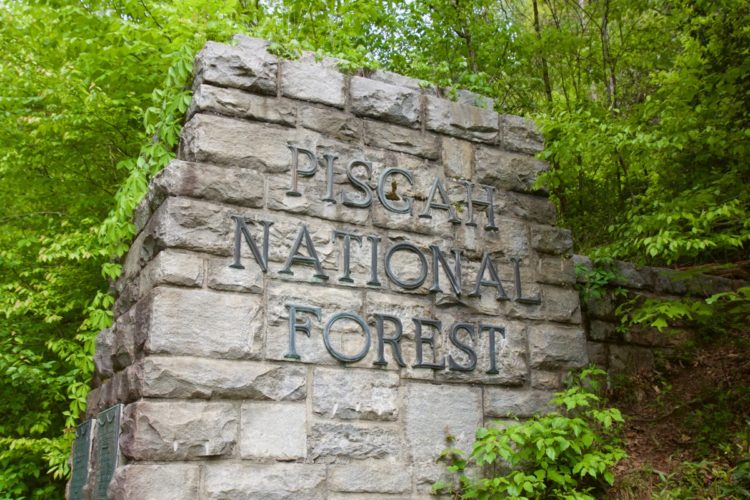
Pisgah is known to riders up and down the east coast of the US for some of the most rugged (and beautiful) trails around. In fact, Bike Magazine chose Pisgah as this year’s proving ground to punish rigs in their 2012 model year tests. Pisgah is littered with steep descents, webs of roots as thick as your thighs, and crumbling rocks hidden beneath slippery, decaying leaves. Want to find the gnarliest stuff? Look up Farlow Gap, Black Mountain, and Pilot Rock – just don’t say we didn’t warn ya.

Alp d’Huez (France)

Home to the Mega Avalanche, the world’s largest DH race, Alp d’Huez features over 8,000 vertical feet of shredding spread over 80 miles of dedicated DH mountain bike lines. The Mégavalanche itself is a 20-mile DH run that punishes riders with year-round snow, ice, and rocks not to mention wooden freeride structures. If you’ve ever ridden on snow or ice, you know that alone takes even the easiest trails from mild to wild in an instant!

Tower (San Luis Obispo, CA)

We haven’t seen any reviews of this trail since 2009 so maybe it doesn’t exist anymore – if not, RIP Tower Trail. As if the steep slopes and ginormous boulders weren’t enough, the trail is hemmed in with barbed wire on one side! (photo left: downhillnews) You may recognize this trail from the photo in rotation on the singletracks homepage; man, just looking at this drop makes my stomach churn.

Moab (Utah)

Easily the most well known collection of mountain bike trails in the US, Moab features desert rock riding like nowhere else on the planet. Even trails with a mild reputation like Slickrock feature surprisingly steep descents and shocking exposure. But for the truly brave (or insane!), take a look at the Portal Trail where there’s a sign that demands riders dismount or risk certain death. If you’d rather try staying on your bike, Flat Pass and even Porcupine Rim will challenge even the most skilled mountain bikers.

Whistler (BC, Canada)

Whistler is essentially synonymous with technical mountain biking thanks to its steep slopes, creative structures, and mossy, thick vegetation. Trails like Garbonzo and countless other unnamed trails in the area are legendary for their rocks, roots, trees, and “north shore” style trail furniture. Whistler is the best place to ride miles of challenging tech for days on end – that is, if you’ve got the stones.

Catch ‘Em Up Trail (Paradox Valley, CO)

I’m not sure how (or if) this is even an official mountain bike trail but I rode walked it last summer during my ride from Durango to Moab. Catch ‘Em Up is really a cow trail shortcut ranchers use to drive cattle from the Paradox Valley to higher elevation grazing areas. Yet each summer, countless mountain bikers like those in our group attempt to ride down 3/4 of a mile and about 1,000 vertical feet to the roadway below. It was hard for any of us to imagine someone riding down this trail without walking – a lot – but then again, there must be someone who could do it!

Gas Plant (Taipei, Taiwan)

This one just sounds sick – don’t blow up at the Gas Plant! Taipei is notoriously hilly and covered with thick vegetation so when we read that Gas Plant features Taipei’s most technical climbs and descents, we were sold. Here are a couple tidbits from the Formosan Fat Tire Association website description: “starts off with 2 short carries over un-rideable rocks” and “(not) the safest place to ride, yet amazingly there has been only one serious injury here that we are aware of.” Oh, good, only one serious injury! Plus, at the end of the run you’ll also find “the slipperiest stairs in Taipei.”

Moraine State Park (Pennsylvania)

photo: jneuff

Fact: a moraine is an accumulation of unconsolidated glacial debris like rock and dirt. Judging by pics of Moraine State Park like the one above, this place was also hit by a hurricane shortly thereafter! Singletracks reviewer jneuff says “This is definitely a trail to seek out if you enjoy technical, very technical, singletrack,” and other reviewers agree it’s the most technical, difficult trail they’ve ridden. Enough said.

Know of a trail that makes any one of these look like a road ride? Tell us about it in the comments!


Site Map | Advertise | Partners | Contact Us | Terms | Privacy
Campground Reviews | Hiking Trails | Trail Running | Skiing / Snow Sports | Mountain Biking
Copyright 2012 Blue Spruce Ventures LLC | Atlanta, GA
singletracks.com is yet another slick Review App