
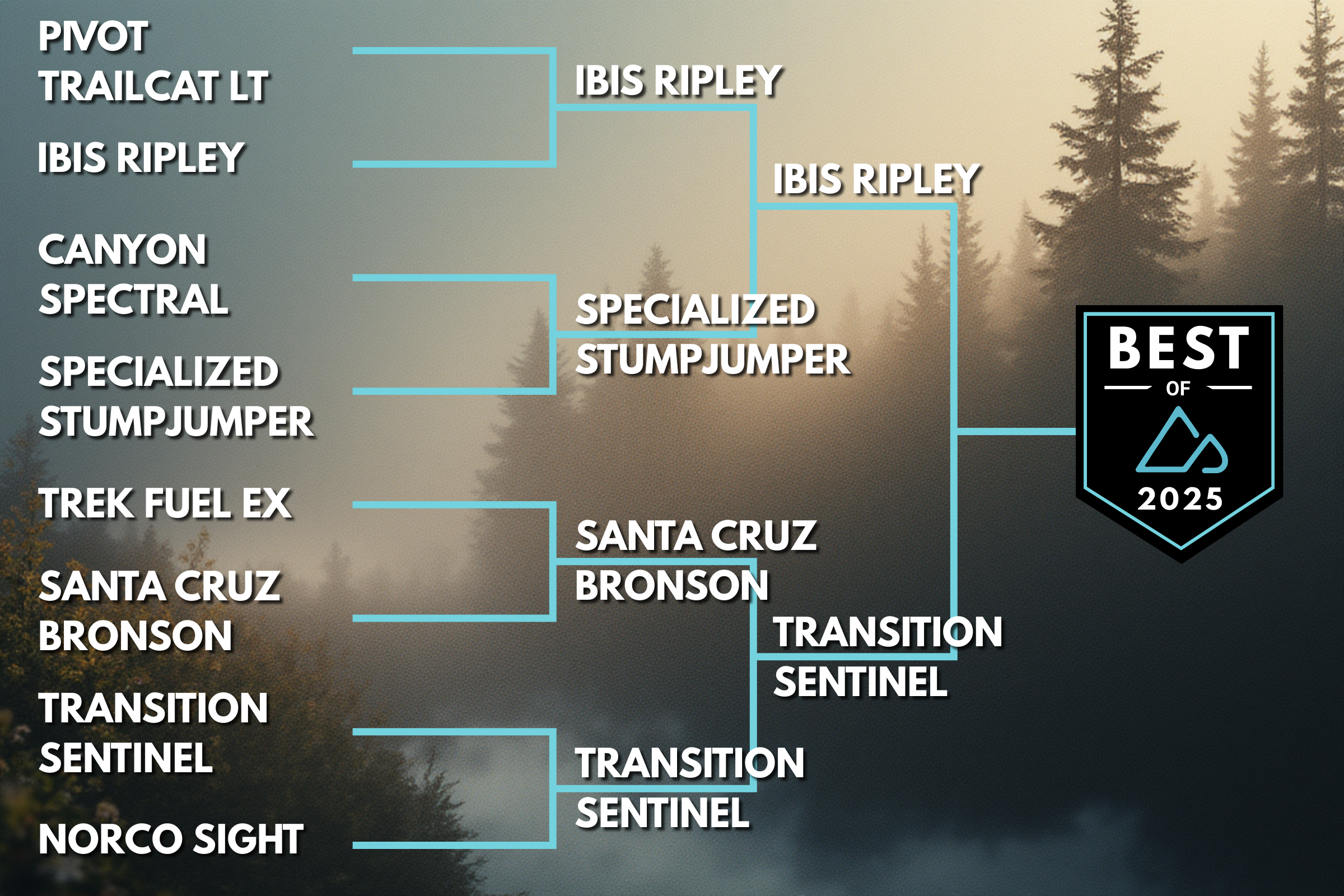
And then there were two.
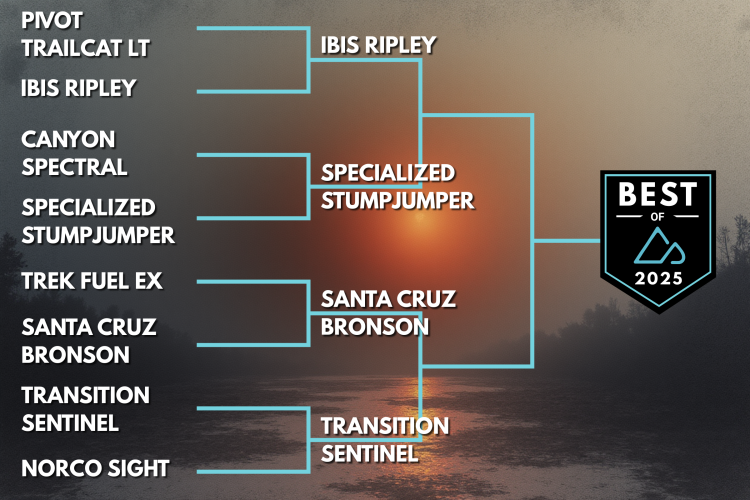
The 2025 Trail Bike of the Year Tournament been a wild ride, with a mix of blowouts and squeakers that have been anything but predictable. We started with eight of the best new trail bikes of 2025, and now only two remain: the Ibis Ripley and Transition Sentinel.
The Ripley ripped the Stumpy EVO a new one
In the semifinal round between the Ibis Ripley and the Specialized Stumpjumper 15 EVO, the Ripley received twice as many votes as the Stumpy for a true blowout. This is especially surprising given that the Stumpy basically did the same thing to the Spectral. Based on the first round, it looked like the Stumpy would cruise to the number one spot.
So how did the Ripley do it? For starters, though both builds are priced at $4,999, the Ripley includes top-level Fox Factory suspension components, including the all-new 36 SL fork. The Ripley also has the longest reach of any size large bike in the tournament, even though lately we’ve heard from a lot of riders that reaches are getting too long. The Ripley frame is heavier than the Stumpy EVO, which suggests that maybe riders really don’t care too much about weight. And the six-way geometry adjustment available on the Stumpjumper might just be overly complicated for some riders.
Finally, there’s a big difference in the travel numbers between the two bikes. Readers seem to be sending a message that less is more when it comes to travel, though we’ll see how that theory holds up here in the finals.
The Sentinel stands tall over the Bronson, but barely
Readers were torn between the Bronson and Sentinel in the semifinals, with the Sentinel taking just over half — 52% — of the votes. Though the bikes offer identical 160/150mm front/rear suspension numbers, the Bronson mixes wheels, and the Sentinel doesn’t. With such a small margin between the two, I don’t think we can say whether readers have a preference for one wheel size or the other.
Here again, the winner had an advantage in the suspension department, with the Sentinel build featuring a Rock Shox Ultimate fork and shock compared to Performance-level suspension on the Bronson. Though both builds we compared feature carbon frames, Transition offers buyers the option of an aluminum bike while Santa Cruz does not.
Santa Cruz and Transition have different suspension design philosophies, which could’ve been the difference. With the Bronson, Santa Cruz embarked on somewhat of a course correction, giving the bike reduced anti-squat, while the Sentinel is sticking with the rest of the industry in the more anti-squat camp. Only time will tell if Santa Cruz is onto something, but for now, it appears riders aren’t fully convinced.
| Transition Sentinel Carbon Eagle 90 | Ibis Ripley v4 Eagle 90 | |
|---|---|---|
| Suspension travel front/rear | 160/150mm | 140/130mm |
| Drivetrain | SRAM Eagle 90 T-type | SRAM Eagle 90 T-type |
| Suspension | RockShox Lyrik Ultimate fork, RockShox Super Deluxe Ultimate | Fox Factory Float SL 36 fork, Fox Factory Float w/EVOL |
| Geometry (size large frame) | HTA: 64° STA: 78.3° Reach: 480mm Chainstay: 448mm | HTA: 64.9° STA: 77.4° Reach: 511mm Chainstay: 440mm |
| Weight | ?? | 7.3lb* |
| Price | $6,699 | $5,499 |
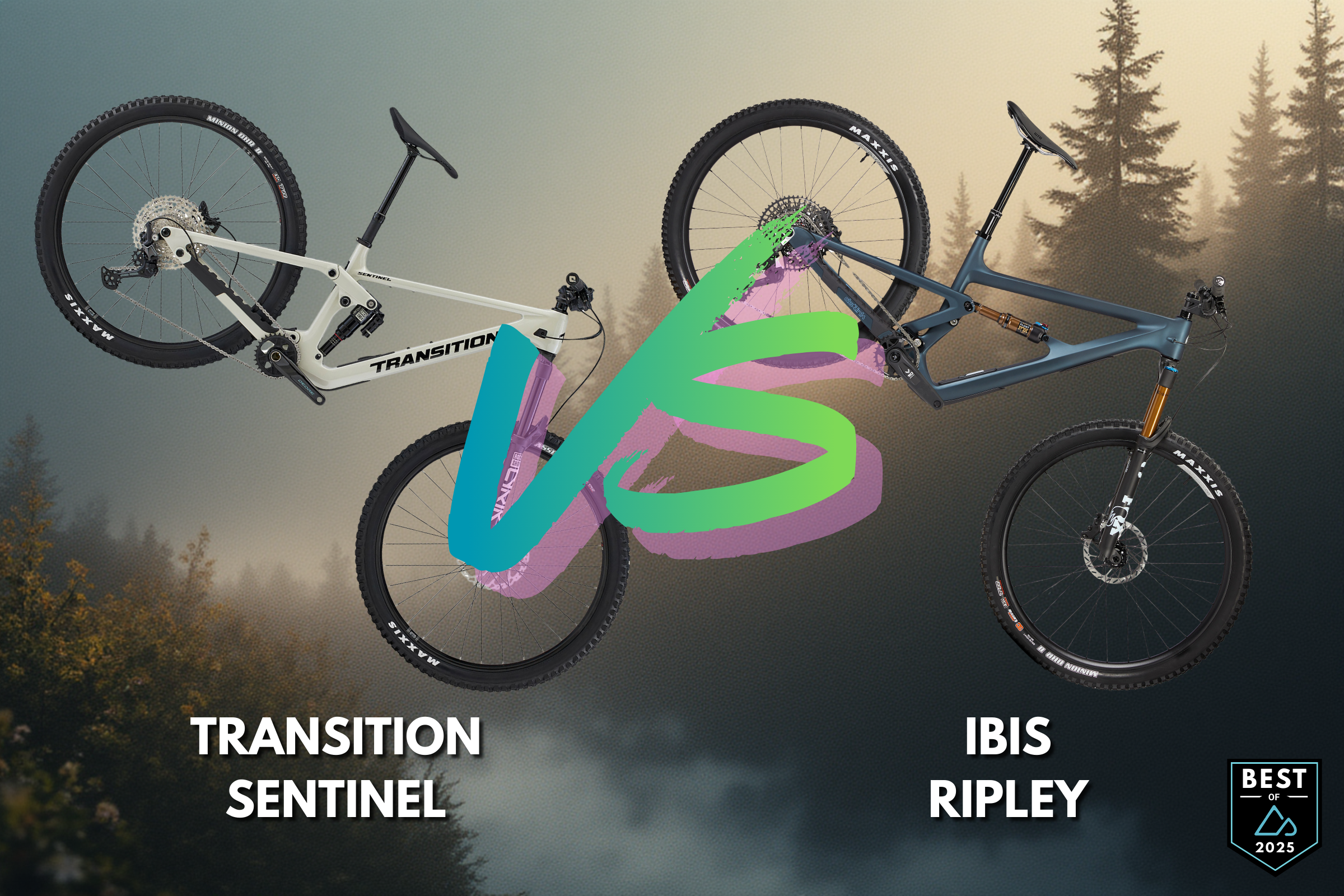
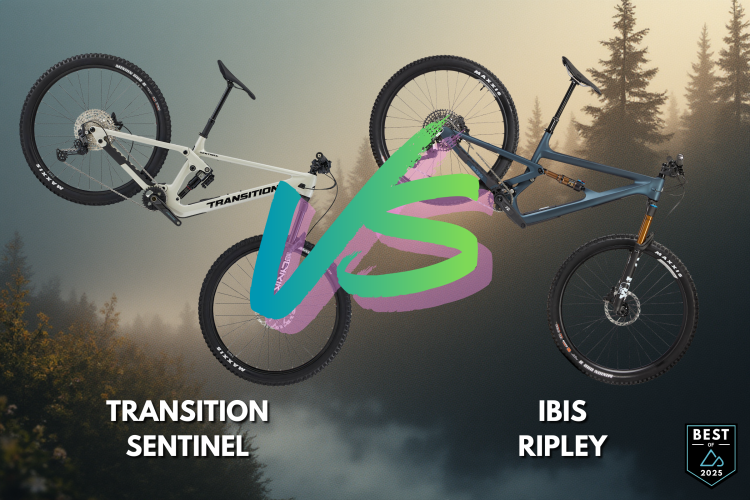
Sentinel vs. Ripley
Ibis and Transition have a lot in common. Both are mountain bike brands at their core, and both are located in MTB hotspots (Santa Cruz and Bellingham, respectively). They’re much smaller companies than the others in the tournament, like Specialized, Santa Cruz, Trek, and Canyon. Though the Sentinel and Ripley are both trail bikes, they are designed with very different intentions.
Suspension
Among the 2025 Trail Bike of the Year Tournament bikes, the Ibis Ripley stands out with the least amount of travel, with 140/130mm front and rear. While we could’ve chosen the Ripmo, which was updated at the same time as the Ripley (and in fact, shares the same frame), we wanted to include at least one bike at the shorter end of the trail bike spectrum. Yes, the latest generation of trail bikes is longer than the one before it, but are buyers fully on board? For example, two years ago, the Stumpjumper was a 140/130mm bike just like the Ripley. Now, it’s 160/145mm.
Multiple bikes in the competition have 160/150mm of suspension travel front/rear, like the Sentinel. A year or two ago, I would have called this category all-mountain; now it’s pretty standard for trail bikes. Though the Transition Smuggler matches the Ripley’s travel numbers, that bike was last updated in 2023, which places it outside the tournament window.
Beyond the raw suspension numbers, the Ripley has the advantage of a name-brand suspension design in DW-Link. Buyers have come to trust the performance of DW-Link when it comes to traction and pedal efficiency, and Ibis has been using and refining the system over many years.
Transition’s Giddyup suspension is unique to the brand, though it’s also a four-bar setup like DW-Link. However, Giddyup is a Horst-link design that Transition says provides a wide tuning range, with recommended sag levels ranging from 26-33%.
Frame features and builds
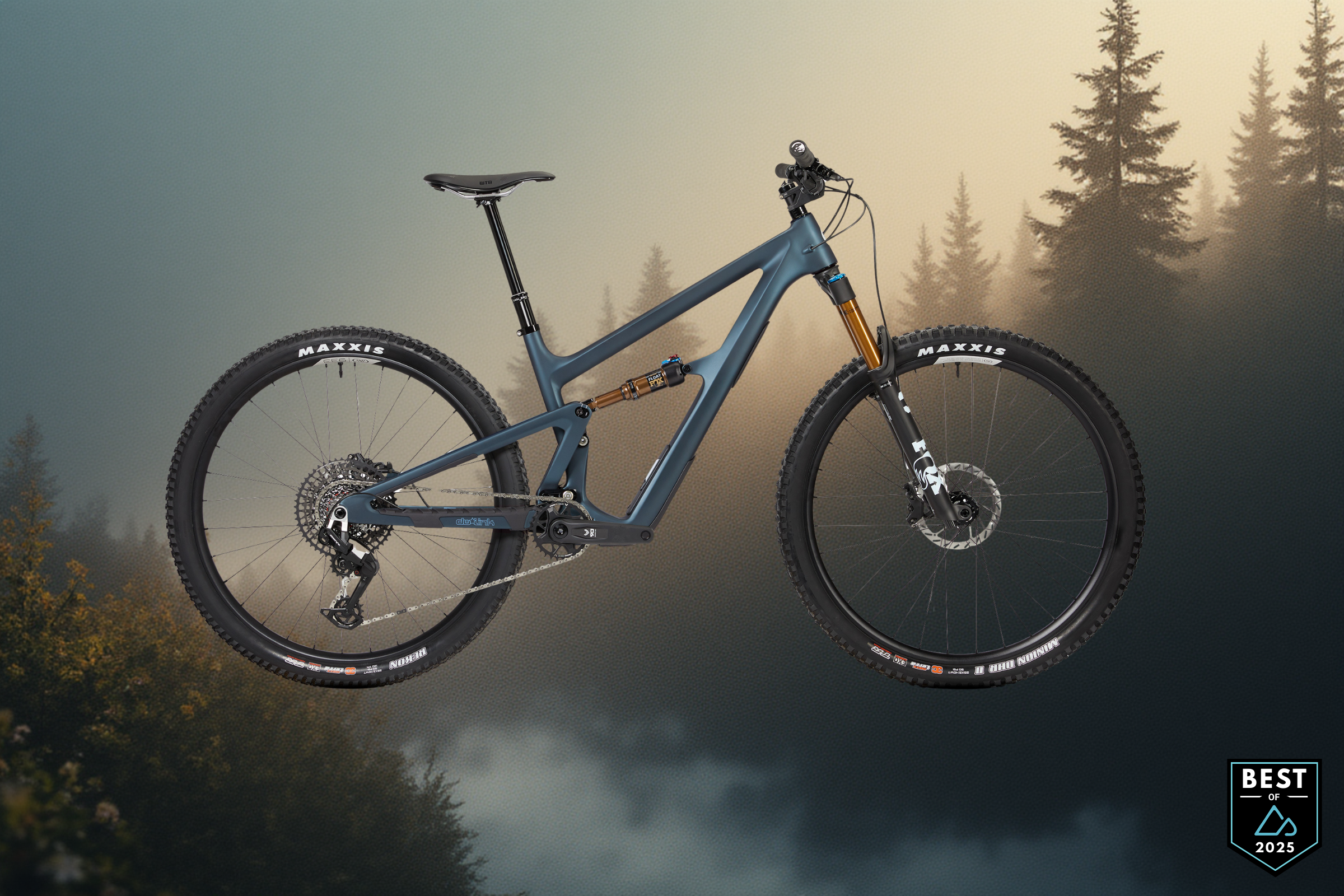
Both the Sentinel and Ripley frames feature flip chips that are designed specifically for converting the bikes from 29ers to mixed wheel setups. It seems riders find this use of flip chips more straightforward than, say, using the flip chip to change the ride feel alone.
Ibis and Transition offer their bikes in carbon and aluminum, giving buyers a range of price points to choose from. Plus, some riders prefer aluminum over carbon for durability and environmental reasons.
The Ripley frame features Lunchbox internal storage in the downtube, whether you go with carbon or the aluminum Ripley AF. Transition only offers their BOOM Box internal frame storage on carbon models.
The warranties on the Sentinel and Ripley are pretty similar, with both offering a lifetime guarantee against manufacturing defects and crash replacement programs. Ibis also adds lifetime lower pivot bushing and O-ring replacements.
There’s a notable $1,200 price difference between these two Eagle 90 builds. Both feature top-shelf suspension components. Where the much lower-priced Ibis build saves is on brakes (SRAM DB8 vs. Maven Bronze) and house-brand wheels compared to the name-brand DT Swiss wheels on the Transition.
Geometry
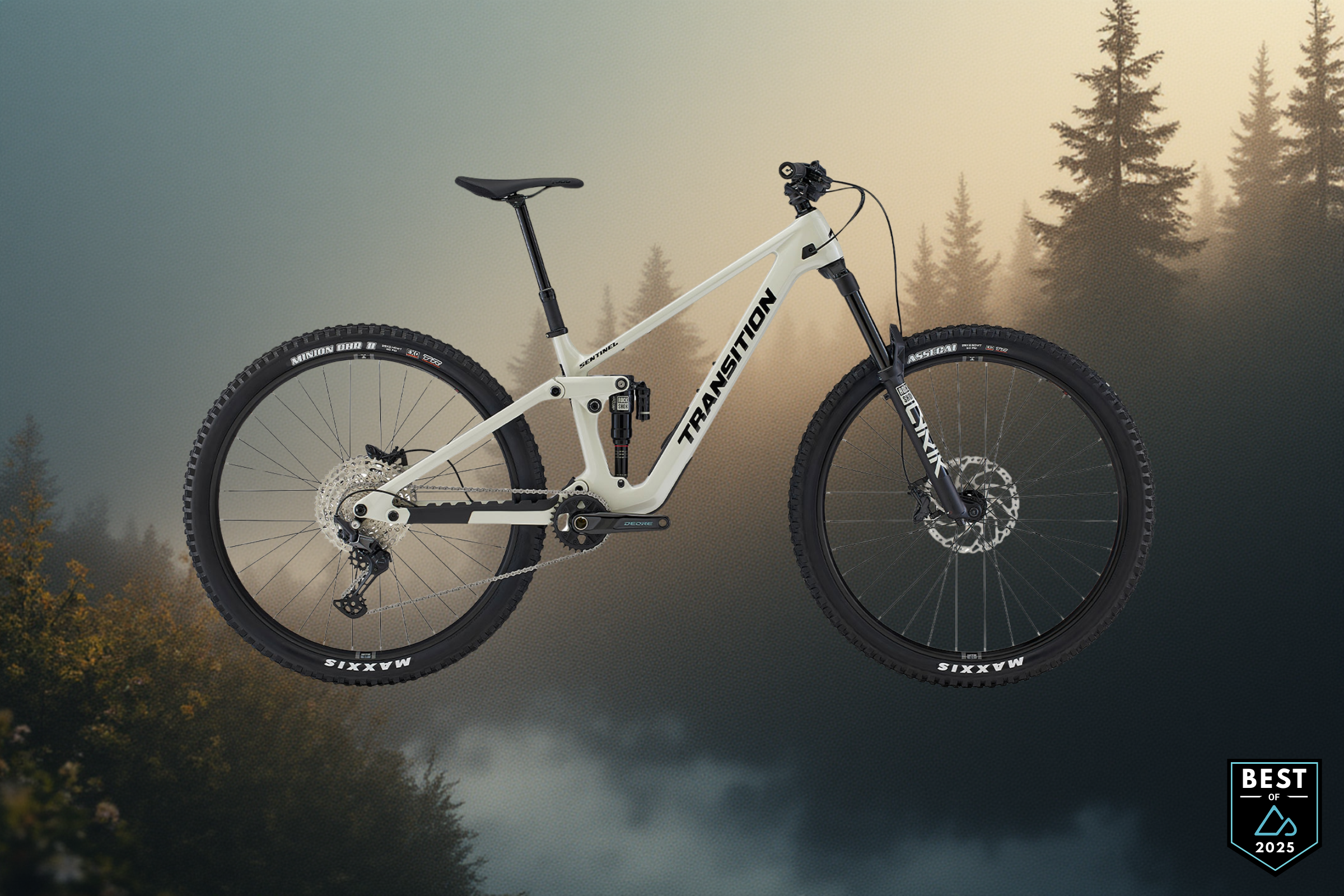
The Transition Sentinel is offered in six sizes compared to five for the Ibis Ripley. By using matched 27.5″ wheels on size extra small Sentinels, Transition says the bike can fit riders under five feet tall. Ibis does not offer a 27.5 version of the Ripley.
The Ibis Ripley is the go-to bike for riders who like a long reach, offering up to 545mm on size extra large bikes. Even the size small frames (the smallest size Ibis offers) have a 440mm reach compared to 430mm on the size small Sentinel. (Extra small Sentinels have an even shorter reach, 415mm.)
Bottom bracket drops vary pretty considerably between the two bikes. Transition’s drop is just 25mm, though with an extra 20mm of travel front and rear, the effective drop is likely pretty similar to the Ripley. Ibis varies the bottom bracket drop based on the frame size, with smaller sizes riding lower than the larger frames. Transition specs 165mm cranks on all bike sizes, while Ibis offers 165mm cranks on sizes small and medium and 170mm cranks on everything else.
Otherwise, these bikes, despite having very different travel numbers, offer pretty similar geometry in terms of the head and seat tube angles. Both have chainstay lengths that vary based on frame size.
Which one is deserving of Trail Bike of the Year?
The culmination of the 2025 Trail Bike of the Year Tournament sees two distinct philosophies vying for the overall title: the Ibis Ripley and the Transition Sentinel. Representing smaller, rider-focused brands from renowned MTB hotspots, both bikes have proven their mettle through a challenging bracket, yet offer very different propositions to the trail rider.
While both brands share dedicated mountain biking roots, offer versatile frame options like carbon and aluminum, and incorporate practical features such as mixed-wheel flip chips and robust warranties, their design philosophies diverge in key areas like reach and travel. Ultimately, the decision for Trail Bike of the Year will hinge on whether riders prioritize the Ripley’s efficient, progressive, shorter-travel approach and extended reach, or the Sentinel’s more robust, gravity-oriented capability and inclusive sizing.
Tell us why you voted the way you did in the comments below. We’ll announce the 2025 Trail Bike of the Year on Monday, December 8.


0 Comments