Latest mountain bike news

The National Park Service has <a href="http://www.imba.com/news/mtb_news_wire/10_07_07_big_south_fork.html">given the thumbs</a> up after a year-long trial project allowing mountain bikes in the Big South Fork National River and Recreation Area. Mountain bikes were allowed on the Grand Gap Loop Trail through a shared use plan (no bikes on weekends) and during this period there were no complaints from hikers. Based on these results the park service may potentially open more trails to shared mountain bike usage.

This is definitely great news but I'm a little skeptical about the analysis used in a projects like this. I mean, if there had been 1 complaint would they have said the project was a failure? What about if the mountain bikers complained about the hikers picking wildflowers or walking their dogs off leash? Would that get hikers banned?

Unfortunately it doesn't seem like there are good objective measures in place for assessing trail usage. Instead of weighing "complaints," perhaps land managers could look at trail impact (horses would lose here) or user group popularity (in many locations hikers would lose on this count).
Anyway, kudos to the courteous bikers of Big South Fork, perhaps we can show more land managers that we can share the trails with everyone else.
The National Park Service has <a href="http://www.imba.com/news/mtb_news_wire/10_07_07_big_south_fork.html">given the thumbs</a> up after a year-long trial project allowing mountain bikes in the Big South Fork National River and Recreation Area. Mountain bikes were allowed on the Grand Gap Loop Trail through a shared use plan (no bikes on weekends) and during this period there were no complaints from hikers. Based on these results the park service may potentially open more trails to shared mountain bike usage.

This is definitely great news but I'm a little skeptical about the analysis used in a projects like this. I mean, if there had been 1 complaint would they have said the project was a failure? What about if the mountain bikers complained about the hikers picking wildflowers or walking their dogs off leash? Would that get hikers banned?

Unfortunately it doesn't seem like there are good objective measures in place for assessing trail usage. Instead of weighing "complaints," perhaps land managers could look at trail impact (horses would lose here) or user group popularity (in many locations hikers would lose on this count).
Anyway, kudos to the courteous bikers of Big South Fork, perhaps we can show more land managers that we can share the trails with everyone else.
The National Park Service has <a href="http://www.imba.com/news/mtb_news_wire/10_07_07_big_south_fork.html">given the thumbs</a> up after a year-long trial project allowing mountain bikes in the Big South Fork National River and Recreation Area. Mountain bikes were allowed on the Grand Gap Loop Trail through a shared use plan (no bikes on weekends) and during this period there were no complaints from hikers. Based on these results the park service may potentially open more trails to shared mountain bike usage.

This is definitely great news but I'm a little skeptical about the analysis used in a projects like this. I mean, if there had been 1 complaint would they have said the project was a failure? What about if the mountain bikers complained about the hikers picking wildflowers or walking their dogs off leash? Would that get hikers banned?

Unfortunately it doesn't seem like there are good objective measures in place for assessing trail usage. Instead of weighing "complaints," perhaps land managers could look at trail impact (horses would lose here) or user group popularity (in many locations hikers would lose on this count).
Anyway, kudos to the courteous bikers of Big South Fork, perhaps we can show more land managers that we can share the trails with everyone else.
The National Park Service has <a href="http://www.imba.com/news/mtb_news_wire/10_07_07_big_south_fork.html">given the thumbs</a> up after a year-long trial project allowing mountain bikes in the Big South Fork National River and Recreation Area. Mountain bikes were allowed on the Grand Gap Loop Trail through a shared use plan (no bikes on weekends) and during this period there were no complaints from hikers. Based on these results the park service may potentially open more trails to shared mountain bike usage.

This is definitely great news but I'm a little skeptical about the analysis used in a projects like this. I mean, if there had been 1 complaint would they have said the project was a failure? What about if the mountain bikers complained about the hikers picking wildflowers or walking their dogs off leash? Would that get hikers banned?

Unfortunately it doesn't seem like there are good objective measures in place for assessing trail usage. Instead of weighing "complaints," perhaps land managers could look at trail impact (horses would lose here) or user group popularity (in many locations hikers would lose on this count).
Anyway, kudos to the courteous bikers of Big South Fork, perhaps we can show more land managers that we can share the trails with everyone else.
**Alt Text:** A chart outlining a trail difficulty rating system, including categories for trail width, tread surface, average trail grade, maximum trail grade, and natural obstacles. The system ranges from easiest (white circle) to extremely difficult (double black diamond), with specific criteria for each rating level.
A person wearing a cycling helmet and sunglasses sits on a mountain bike on a dirt trail surrounded by lush greenery. Another mountain bike is parked nearby, and a bike saddle hangs from a tree branch in the background.
A rocky landscape featuring a smooth granite surface with patches of green vegetation around the edges. In the foreground, a large log is positioned on the rock, and a faint path winds across the terrain leading into the background, where lush trees are visible. Overcast skies create a soft, muted light in the scene.
  1
The National Park Service has <a href="http://www.imba.com/news/mtb_news_wire/10_07_07_big_south_fork.html">given the thumbs</a> up after a year-long trial project allowing mountain bikes in the Big South Fork National River and Recreation Area. Mountain bikes were allowed on the Grand Gap Loop Trail through a shared use plan (no bikes on weekends) and during this period there were no complaints from hikers. Based on these results the park service may potentially open more trails to shared mountain bike usage.

This is definitely great news but I'm a little skeptical about the analysis used in a projects like this. I mean, if there had been 1 complaint would they have said the project was a failure? What about if the mountain bikers complained about the hikers picking wildflowers or walking their dogs off leash? Would that get hikers banned?

Unfortunately it doesn't seem like there are good objective measures in place for assessing trail usage. Instead of weighing "complaints," perhaps land managers could look at trail impact (horses would lose here) or user group popularity (in many locations hikers would lose on this count).
Anyway, kudos to the courteous bikers of Big South Fork, perhaps we can show more land managers that we can share the trails with everyone else.
The National Park Service has <a href="http://www.imba.com/news/mtb_news_wire/10_07_07_big_south_fork.html">given the thumbs</a> up after a year-long trial project allowing mountain bikes in the Big South Fork National River and Recreation Area. Mountain bikes were allowed on the Grand Gap Loop Trail through a shared use plan (no bikes on weekends) and during this period there were no complaints from hikers. Based on these results the park service may potentially open more trails to shared mountain bike usage.

This is definitely great news but I'm a little skeptical about the analysis used in a projects like this. I mean, if there had been 1 complaint would they have said the project was a failure? What about if the mountain bikers complained about the hikers picking wildflowers or walking their dogs off leash? Would that get hikers banned?

Unfortunately it doesn't seem like there are good objective measures in place for assessing trail usage. Instead of weighing "complaints," perhaps land managers could look at trail impact (horses would lose here) or user group popularity (in many locations hikers would lose on this count).
Anyway, kudos to the courteous bikers of Big South Fork, perhaps we can show more land managers that we can share the trails with everyone else.
The National Park Service has <a href="http://www.imba.com/news/mtb_news_wire/10_07_07_big_south_fork.html">given the thumbs</a> up after a year-long trial project allowing mountain bikes in the Big South Fork National River and Recreation Area. Mountain bikes were allowed on the Grand Gap Loop Trail through a shared use plan (no bikes on weekends) and during this period there were no complaints from hikers. Based on these results the park service may potentially open more trails to shared mountain bike usage.

This is definitely great news but I'm a little skeptical about the analysis used in a projects like this. I mean, if there had been 1 complaint would they have said the project was a failure? What about if the mountain bikers complained about the hikers picking wildflowers or walking their dogs off leash? Would that get hikers banned?

Unfortunately it doesn't seem like there are good objective measures in place for assessing trail usage. Instead of weighing "complaints," perhaps land managers could look at trail impact (horses would lose here) or user group popularity (in many locations hikers would lose on this count).
Anyway, kudos to the courteous bikers of Big South Fork, perhaps we can show more land managers that we can share the trails with everyone else.
  3
The National Park Service has <a href="http://www.imba.com/news/mtb_news_wire/10_07_07_big_south_fork.html">given the thumbs</a> up after a year-long trial project allowing mountain bikes in the Big South Fork National River and Recreation Area. Mountain bikes were allowed on the Grand Gap Loop Trail through a shared use plan (no bikes on weekends) and during this period there were no complaints from hikers. Based on these results the park service may potentially open more trails to shared mountain bike usage.

This is definitely great news but I'm a little skeptical about the analysis used in a projects like this. I mean, if there had been 1 complaint would they have said the project was a failure? What about if the mountain bikers complained about the hikers picking wildflowers or walking their dogs off leash? Would that get hikers banned?

Unfortunately it doesn't seem like there are good objective measures in place for assessing trail usage. Instead of weighing "complaints," perhaps land managers could look at trail impact (horses would lose here) or user group popularity (in many locations hikers would lose on this count).
Anyway, kudos to the courteous bikers of Big South Fork, perhaps we can show more land managers that we can share the trails with everyone else.
  1
The National Park Service has <a href="http://www.imba.com/news/mtb_news_wire/10_07_07_big_south_fork.html">given the thumbs</a> up after a year-long trial project allowing mountain bikes in the Big South Fork National River and Recreation Area. Mountain bikes were allowed on the Grand Gap Loop Trail through a shared use plan (no bikes on weekends) and during this period there were no complaints from hikers. Based on these results the park service may potentially open more trails to shared mountain bike usage.

This is definitely great news but I'm a little skeptical about the analysis used in a projects like this. I mean, if there had been 1 complaint would they have said the project was a failure? What about if the mountain bikers complained about the hikers picking wildflowers or walking their dogs off leash? Would that get hikers banned?

Unfortunately it doesn't seem like there are good objective measures in place for assessing trail usage. Instead of weighing "complaints," perhaps land managers could look at trail impact (horses would lose here) or user group popularity (in many locations hikers would lose on this count).
Anyway, kudos to the courteous bikers of Big South Fork, perhaps we can show more land managers that we can share the trails with everyone else.
A winding dirt path through a lush green meadow, surrounded by mountains under a bright blue sky with scattered clouds.
  2
A narrow dirt path surrounded by lush green trees, leading through a wooded area. The sunlight filters through the foliage, creating a serene and tranquil atmosphere.
  4
The National Park Service has <a href="http://www.imba.com/news/mtb_news_wire/10_07_07_big_south_fork.html">given the thumbs</a> up after a year-long trial project allowing mountain bikes in the Big South Fork National River and Recreation Area. Mountain bikes were allowed on the Grand Gap Loop Trail through a shared use plan (no bikes on weekends) and during this period there were no complaints from hikers. Based on these results the park service may potentially open more trails to shared mountain bike usage.

This is definitely great news but I'm a little skeptical about the analysis used in a projects like this. I mean, if there had been 1 complaint would they have said the project was a failure? What about if the mountain bikers complained about the hikers picking wildflowers or walking their dogs off leash? Would that get hikers banned?

Unfortunately it doesn't seem like there are good objective measures in place for assessing trail usage. Instead of weighing "complaints," perhaps land managers could look at trail impact (horses would lose here) or user group popularity (in many locations hikers would lose on this count).
Anyway, kudos to the courteous bikers of Big South Fork, perhaps we can show more land managers that we can share the trails with everyone else.
  2
The National Park Service has <a href="http://www.imba.com/news/mtb_news_wire/10_07_07_big_south_fork.html">given the thumbs</a> up after a year-long trial project allowing mountain bikes in the Big South Fork National River and Recreation Area. Mountain bikes were allowed on the Grand Gap Loop Trail through a shared use plan (no bikes on weekends) and during this period there were no complaints from hikers. Based on these results the park service may potentially open more trails to shared mountain bike usage.

This is definitely great news but I'm a little skeptical about the analysis used in a projects like this. I mean, if there had been 1 complaint would they have said the project was a failure? What about if the mountain bikers complained about the hikers picking wildflowers or walking their dogs off leash? Would that get hikers banned?

Unfortunately it doesn't seem like there are good objective measures in place for assessing trail usage. Instead of weighing "complaints," perhaps land managers could look at trail impact (horses would lose here) or user group popularity (in many locations hikers would lose on this count).
Anyway, kudos to the courteous bikers of Big South Fork, perhaps we can show more land managers that we can share the trails with everyone else.
  1
The National Park Service has <a href="http://www.imba.com/news/mtb_news_wire/10_07_07_big_south_fork.html">given the thumbs</a> up after a year-long trial project allowing mountain bikes in the Big South Fork National River and Recreation Area. Mountain bikes were allowed on the Grand Gap Loop Trail through a shared use plan (no bikes on weekends) and during this period there were no complaints from hikers. Based on these results the park service may potentially open more trails to shared mountain bike usage.

This is definitely great news but I'm a little skeptical about the analysis used in a projects like this. I mean, if there had been 1 complaint would they have said the project was a failure? What about if the mountain bikers complained about the hikers picking wildflowers or walking their dogs off leash? Would that get hikers banned?

Unfortunately it doesn't seem like there are good objective measures in place for assessing trail usage. Instead of weighing "complaints," perhaps land managers could look at trail impact (horses would lose here) or user group popularity (in many locations hikers would lose on this count).
Anyway, kudos to the courteous bikers of Big South Fork, perhaps we can show more land managers that we can share the trails with everyone else.
  1
A winding dirt path surrounded by green grass and forested hills under a blue sky with scattered clouds. A person is biking along the trail, which forks in the distance.
The National Park Service has <a href="http://www.imba.com/news/mtb_news_wire/10_07_07_big_south_fork.html">given the thumbs</a> up after a year-long trial project allowing mountain bikes in the Big South Fork National River and Recreation Area. Mountain bikes were allowed on the Grand Gap Loop Trail through a shared use plan (no bikes on weekends) and during this period there were no complaints from hikers. Based on these results the park service may potentially open more trails to shared mountain bike usage.

This is definitely great news but I'm a little skeptical about the analysis used in a projects like this. I mean, if there had been 1 complaint would they have said the project was a failure? What about if the mountain bikers complained about the hikers picking wildflowers or walking their dogs off leash? Would that get hikers banned?

Unfortunately it doesn't seem like there are good objective measures in place for assessing trail usage. Instead of weighing "complaints," perhaps land managers could look at trail impact (horses would lose here) or user group popularity (in many locations hikers would lose on this count).
Anyway, kudos to the courteous bikers of Big South Fork, perhaps we can show more land managers that we can share the trails with everyone else.
The National Park Service has <a href="http://www.imba.com/news/mtb_news_wire/10_07_07_big_south_fork.html">given the thumbs</a> up after a year-long trial project allowing mountain bikes in the Big South Fork National River and Recreation Area. Mountain bikes were allowed on the Grand Gap Loop Trail through a shared use plan (no bikes on weekends) and during this period there were no complaints from hikers. Based on these results the park service may potentially open more trails to shared mountain bike usage.

This is definitely great news but I'm a little skeptical about the analysis used in a projects like this. I mean, if there had been 1 complaint would they have said the project was a failure? What about if the mountain bikers complained about the hikers picking wildflowers or walking their dogs off leash? Would that get hikers banned?

Unfortunately it doesn't seem like there are good objective measures in place for assessing trail usage. Instead of weighing "complaints," perhaps land managers could look at trail impact (horses would lose here) or user group popularity (in many locations hikers would lose on this count).
Anyway, kudos to the courteous bikers of Big South Fork, perhaps we can show more land managers that we can share the trails with everyone else.
The National Park Service has <a href="http://www.imba.com/news/mtb_news_wire/10_07_07_big_south_fork.html">given the thumbs</a> up after a year-long trial project allowing mountain bikes in the Big South Fork National River and Recreation Area. Mountain bikes were allowed on the Grand Gap Loop Trail through a shared use plan (no bikes on weekends) and during this period there were no complaints from hikers. Based on these results the park service may potentially open more trails to shared mountain bike usage.

This is definitely great news but I'm a little skeptical about the analysis used in a projects like this. I mean, if there had been 1 complaint would they have said the project was a failure? What about if the mountain bikers complained about the hikers picking wildflowers or walking their dogs off leash? Would that get hikers banned?

Unfortunately it doesn't seem like there are good objective measures in place for assessing trail usage. Instead of weighing "complaints," perhaps land managers could look at trail impact (horses would lose here) or user group popularity (in many locations hikers would lose on this count).
Anyway, kudos to the courteous bikers of Big South Fork, perhaps we can show more land managers that we can share the trails with everyone else.
  2
A scenic view of rolling green hills leading to a mountain range under a blue sky with fluffy white clouds. A narrow winding trail cuts through the grassy landscape, surrounded by clusters of trees and wildflowers.
  4
Book cover titled "Mountain Biking Georgia" by Alex Nutt, featuring a scenic trail with two mountain bikers riding through a wooded area. The design includes bold text and is likely aimed at outdoor enthusiasts.
  1
The National Park Service has <a href="http://www.imba.com/news/mtb_news_wire/10_07_07_big_south_fork.html">given the thumbs</a> up after a year-long trial project allowing mountain bikes in the Big South Fork National River and Recreation Area. Mountain bikes were allowed on the Grand Gap Loop Trail through a shared use plan (no bikes on weekends) and during this period there were no complaints from hikers. Based on these results the park service may potentially open more trails to shared mountain bike usage.

This is definitely great news but I'm a little skeptical about the analysis used in a projects like this. I mean, if there had been 1 complaint would they have said the project was a failure? What about if the mountain bikers complained about the hikers picking wildflowers or walking their dogs off leash? Would that get hikers banned?

Unfortunately it doesn't seem like there are good objective measures in place for assessing trail usage. Instead of weighing "complaints," perhaps land managers could look at trail impact (horses would lose here) or user group popularity (in many locations hikers would lose on this count).
Anyway, kudos to the courteous bikers of Big South Fork, perhaps we can show more land managers that we can share the trails with everyone else.
The National Park Service has <a href="http://www.imba.com/news/mtb_news_wire/10_07_07_big_south_fork.html">given the thumbs</a> up after a year-long trial project allowing mountain bikes in the Big South Fork National River and Recreation Area. Mountain bikes were allowed on the Grand Gap Loop Trail through a shared use plan (no bikes on weekends) and during this period there were no complaints from hikers. Based on these results the park service may potentially open more trails to shared mountain bike usage.

This is definitely great news but I'm a little skeptical about the analysis used in a projects like this. I mean, if there had been 1 complaint would they have said the project was a failure? What about if the mountain bikers complained about the hikers picking wildflowers or walking their dogs off leash? Would that get hikers banned?

Unfortunately it doesn't seem like there are good objective measures in place for assessing trail usage. Instead of weighing "complaints," perhaps land managers could look at trail impact (horses would lose here) or user group popularity (in many locations hikers would lose on this count).
Anyway, kudos to the courteous bikers of Big South Fork, perhaps we can show more land managers that we can share the trails with everyone else.
The National Park Service has <a href="http://www.imba.com/news/mtb_news_wire/10_07_07_big_south_fork.html">given the thumbs</a> up after a year-long trial project allowing mountain bikes in the Big South Fork National River and Recreation Area. Mountain bikes were allowed on the Grand Gap Loop Trail through a shared use plan (no bikes on weekends) and during this period there were no complaints from hikers. Based on these results the park service may potentially open more trails to shared mountain bike usage.

This is definitely great news but I'm a little skeptical about the analysis used in a projects like this. I mean, if there had been 1 complaint would they have said the project was a failure? What about if the mountain bikers complained about the hikers picking wildflowers or walking their dogs off leash? Would that get hikers banned?

Unfortunately it doesn't seem like there are good objective measures in place for assessing trail usage. Instead of weighing "complaints," perhaps land managers could look at trail impact (horses would lose here) or user group popularity (in many locations hikers would lose on this count).
Anyway, kudos to the courteous bikers of Big South Fork, perhaps we can show more land managers that we can share the trails with everyone else.
The National Park Service has <a href="http://www.imba.com/news/mtb_news_wire/10_07_07_big_south_fork.html">given the thumbs</a> up after a year-long trial project allowing mountain bikes in the Big South Fork National River and Recreation Area. Mountain bikes were allowed on the Grand Gap Loop Trail through a shared use plan (no bikes on weekends) and during this period there were no complaints from hikers. Based on these results the park service may potentially open more trails to shared mountain bike usage.

This is definitely great news but I'm a little skeptical about the analysis used in a projects like this. I mean, if there had been 1 complaint would they have said the project was a failure? What about if the mountain bikers complained about the hikers picking wildflowers or walking their dogs off leash? Would that get hikers banned?

Unfortunately it doesn't seem like there are good objective measures in place for assessing trail usage. Instead of weighing "complaints," perhaps land managers could look at trail impact (horses would lose here) or user group popularity (in many locations hikers would lose on this count).
Anyway, kudos to the courteous bikers of Big South Fork, perhaps we can show more land managers that we can share the trails with everyone else.
A group of mountain bikers riding through a rock-lined path underneath a highway, with concrete pillars supporting the structure above. The terrain features winding trails and earthy surroundings, providing a unique biking experience in an urban environment.
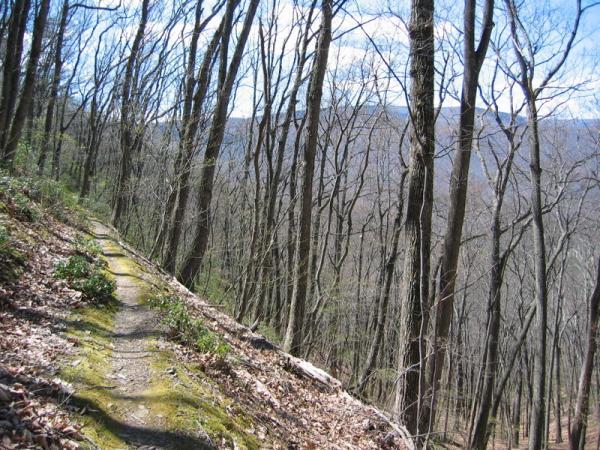
A winding dirt path through a forest with tall, bare trees and a view of distant mountains under a blue sky with scattered clouds. Leaf litter covers the ground alongside the trail, and patches of green vegetation are visible.
  2
  3
The National Park Service has <a href="http://www.imba.com/news/mtb_news_wire/10_07_07_big_south_fork.html">given the thumbs</a> up after a year-long trial project allowing mountain bikes in the Big South Fork National River and Recreation Area. Mountain bikes were allowed on the Grand Gap Loop Trail through a shared use plan (no bikes on weekends) and during this period there were no complaints from hikers. Based on these results the park service may potentially open more trails to shared mountain bike usage.

This is definitely great news but I'm a little skeptical about the analysis used in a projects like this. I mean, if there had been 1 complaint would they have said the project was a failure? What about if the mountain bikers complained about the hikers picking wildflowers or walking their dogs off leash? Would that get hikers banned?

Unfortunately it doesn't seem like there are good objective measures in place for assessing trail usage. Instead of weighing "complaints," perhaps land managers could look at trail impact (horses would lose here) or user group popularity (in many locations hikers would lose on this count).
Anyway, kudos to the courteous bikers of Big South Fork, perhaps we can show more land managers that we can share the trails with everyone else.
A mountain biker navigating rocky terrain, leaning forward as they ride downhill over a steep, uneven surface under a clear blue sky.
  1
Graphic featuring the text "Singletracks bike the net" at the top, with "MTB Trail Access 2007" prominently displayed in the center. Below, there are four colored icons with the keywords: "Speak," "Build," "Respect," and "Ride." The background is a gradient from light blue to white.
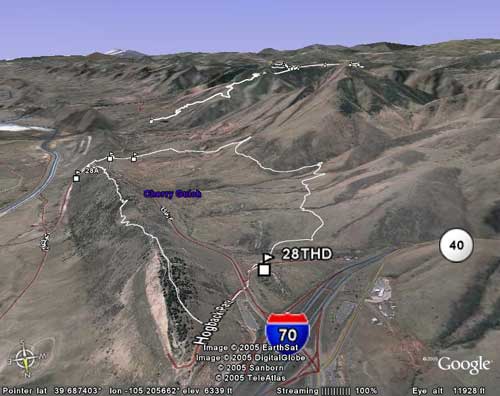
A 3D satellite map showcasing a mountainous landscape, with a winding road labeled "40" and the town of "Cherry Creek" marked. The image also displays the interstate highway "I-70" and various terrain features in the background.
  1
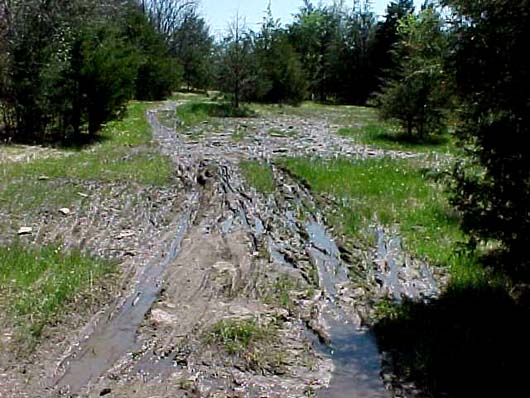
A muddy pathway through a wooded area, showing tire tracks and patches of grass surrounded by trees. The ground is wet and uneven, indicating recent rain or poor drainage.
  1
The National Park Service has <a href="http://www.imba.com/news/mtb_news_wire/10_07_07_big_south_fork.html">given the thumbs</a> up after a year-long trial project allowing mountain bikes in the Big South Fork National River and Recreation Area. Mountain bikes were allowed on the Grand Gap Loop Trail through a shared use plan (no bikes on weekends) and during this period there were no complaints from hikers. Based on these results the park service may potentially open more trails to shared mountain bike usage.

This is definitely great news but I'm a little skeptical about the analysis used in a projects like this. I mean, if there had been 1 complaint would they have said the project was a failure? What about if the mountain bikers complained about the hikers picking wildflowers or walking their dogs off leash? Would that get hikers banned?

Unfortunately it doesn't seem like there are good objective measures in place for assessing trail usage. Instead of weighing "complaints," perhaps land managers could look at trail impact (horses would lose here) or user group popularity (in many locations hikers would lose on this count).
Anyway, kudos to the courteous bikers of Big South Fork, perhaps we can show more land managers that we can share the trails with everyone else.
A panoramic view of the Cleveland skyline during sunset, showcasing tall skyscrapers and the iconic Key Tower. The image features a bridge crossing a river, along with bustling city streets below, painted in warm hues of orange and purple from the setting sun.
A panoramic view of the Grand Canyon, showcasing its dramatic layers of red and gray rock formations under a clear blue sky. The landscape features steep cliffs and valleys, illustrating the natural beauty and geological history of the area.
  1
The National Park Service has <a href="http://www.imba.com/news/mtb_news_wire/10_07_07_big_south_fork.html">given the thumbs</a> up after a year-long trial project allowing mountain bikes in the Big South Fork National River and Recreation Area. Mountain bikes were allowed on the Grand Gap Loop Trail through a shared use plan (no bikes on weekends) and during this period there were no complaints from hikers. Based on these results the park service may potentially open more trails to shared mountain bike usage.

This is definitely great news but I'm a little skeptical about the analysis used in a projects like this. I mean, if there had been 1 complaint would they have said the project was a failure? What about if the mountain bikers complained about the hikers picking wildflowers or walking their dogs off leash? Would that get hikers banned?

Unfortunately it doesn't seem like there are good objective measures in place for assessing trail usage. Instead of weighing "complaints," perhaps land managers could look at trail impact (horses would lose here) or user group popularity (in many locations hikers would lose on this count).
Anyway, kudos to the courteous bikers of Big South Fork, perhaps we can show more land managers that we can share the trails with everyone else.
  1
The National Park Service has <a href="http://www.imba.com/news/mtb_news_wire/10_07_07_big_south_fork.html">given the thumbs</a> up after a year-long trial project allowing mountain bikes in the Big South Fork National River and Recreation Area. Mountain bikes were allowed on the Grand Gap Loop Trail through a shared use plan (no bikes on weekends) and during this period there were no complaints from hikers. Based on these results the park service may potentially open more trails to shared mountain bike usage.

This is definitely great news but I'm a little skeptical about the analysis used in a projects like this. I mean, if there had been 1 complaint would they have said the project was a failure? What about if the mountain bikers complained about the hikers picking wildflowers or walking their dogs off leash? Would that get hikers banned?

Unfortunately it doesn't seem like there are good objective measures in place for assessing trail usage. Instead of weighing "complaints," perhaps land managers could look at trail impact (horses would lose here) or user group popularity (in many locations hikers would lose on this count).
Anyway, kudos to the courteous bikers of Big South Fork, perhaps we can show more land managers that we can share the trails with everyone else.
  1
A person riding a mountain bike over rocky terrain under a clear blue sky. The rugged landscape features large, uneven rocks and sparse vegetation in the background.
  4
A book cover titled "Managing Mountain Biking: IMBA's Guide to Providing Great Riding," featuring two mountain bikers riding along a narrow trail surrounded by trees and mountains in the background. The sky is blue with snow-capped peaks visible, emphasizing a scenic outdoor environment.
  1
The National Park Service has <a href="http://www.imba.com/news/mtb_news_wire/10_07_07_big_south_fork.html">given the thumbs</a> up after a year-long trial project allowing mountain bikes in the Big South Fork National River and Recreation Area. Mountain bikes were allowed on the Grand Gap Loop Trail through a shared use plan (no bikes on weekends) and during this period there were no complaints from hikers. Based on these results the park service may potentially open more trails to shared mountain bike usage.

This is definitely great news but I'm a little skeptical about the analysis used in a projects like this. I mean, if there had been 1 complaint would they have said the project was a failure? What about if the mountain bikers complained about the hikers picking wildflowers or walking their dogs off leash? Would that get hikers banned?

Unfortunately it doesn't seem like there are good objective measures in place for assessing trail usage. Instead of weighing "complaints," perhaps land managers could look at trail impact (horses would lose here) or user group popularity (in many locations hikers would lose on this count).
Anyway, kudos to the courteous bikers of Big South Fork, perhaps we can show more land managers that we can share the trails with everyone else.
A colorful map of a park or recreational area featuring labeled pathways, buildings, and natural landscapes. The layout includes various zones designated by letters and includes trails, open spaces, and a river or water feature along one edge.
Three mountain bikers ride on a grassy slope with wildflowers, while a chairlift runs overhead against a backdrop of mountains and a blue sky with fluffy clouds.
  3