singletracks is mountain biking
Sign In | Create Your Account | Site Map | Help  


WTB Nano Race 29er 2.1″ Tire Review

Friday, December 23rd, 2011

Specs

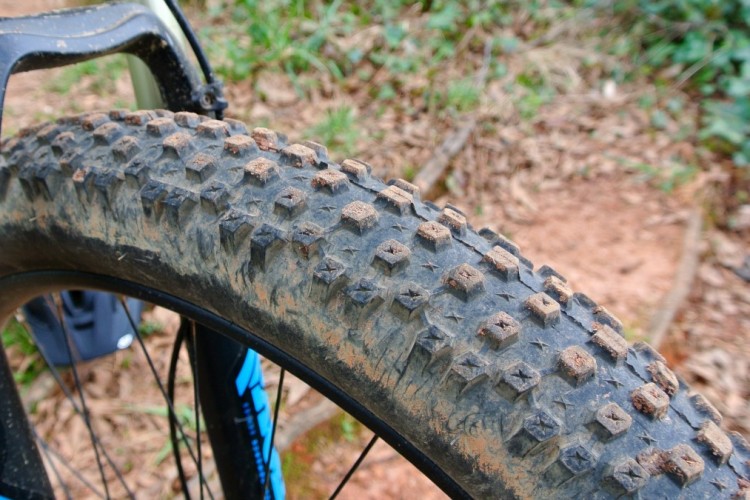
The WTB Nano Race 29er 2.1″ tire features an Aramid bead, DNA rubber, and a lightweight casing. The Aramid bead and lightweight casing definitely help drop weight, and at only 560 grams this tire is light and fast and definitely intended for use as an XC tire. According to WTB, the DNA rubber is a “fast-rolling 60a durometer rubber compound [...] specifically formulated for high-performance riding in a variety of conditions.” As for the Nano’s design itself, WTB claims:

“Its micro-knob design and large supportive casing conquer rough racecourses and roll with the punches on long trail rides. The elevated centerline tread rolls quickly on asphalt and hardpack, while the numerous working edges track predictably in ‘dust over crust’ conditions.”

Let’s see how accurate this description is, shall we?

Test

I’ve put close to 600 miles on the Nano as my rear tire on the Ibex Maroc. Over the course of my extensive test, I was very surprised to discover that despite being relatively narrow and so low-profile, the Nano provides excellent traction!

I think that the Nano’s traction in a variety of conditions can be attributed to the tacky DNA rubber. Despite having “micro” knobs, this tire seemed to stick to most stuff and provided plenty of power as I climbed up and ripped down the mountain, whether I was in Colorado or Georgia.

I’ve found that the description WTB gives above is pretty much spot-on. This tire is great in hardpack and “dust-over-crust” conditions, and I would add that it also handles well in rocky conditions (as long as the rocks are dry).

Negatives

As you might expect, this small-knobbed tire came up short in a few areas. Anytime the conditions were somewhat wet, the Nano started having difficulties. And it particularly hates wet roots. Trying to climb up a damp, root-infested slope that’s a little off-camber? Forget about it.

As I mentioned above, the Nano features a super-tacky rubber compound. While tacky rubber equals good traction, it doesn’t equal longevity. At about 400 miles, the Nano was already showing significant wear, and looked ready to be replaced. After 600 miles, I am in dire need of a new tire.

Before / After 400 miles.

After 600 miles.

Final Verdict

Due to the low weight and the extremely low-profile knobs, the Nano is a fast rolling tire! As the “race” designation obviously indicates, this tire is meant to be raced. It’s not really designed to be an everyday, do-it-all tire for the average Joe but if you’re looking for speed on a dry course, be sure to give the Nano a try!

MSRP on the Nano Race is $65 per tire.

On Test: Ibex Maroc 29er Carbon Fiber Mountain Bike

Wednesday, August 31st, 2011

I recently wrote that I’m in the middle of testing out Ibex’s full suspension trail bike, the Asta Pro. When I was talking with Ibex about the possibility of doing a bike review, they asked which bike I was interested in trying out, and the one I requested, the bike I was most eager to ride, was the Maroc 29er. The Asta Pro was sort of an “opening act,” if you will. The Maroc 29er is the headliner!

Ibex Maroc above the Horsetooth Reservoir in Fort Collins, CO

What had me so excited about this rig? Here are the highlights:

  • 29er
  • Carbon fiber frame
  • SRAM X9 build
  • 2×10 drivetrain
  • 100mm fork
  • $2,479.99

I knew this bike was light, but I was uncertain of its actual weight until after I put it on the scale myself.

Real weight (with pedals) = 24.82 pounds. Nice!

Unboxing

The Maroc came well protected in its shipping box:

Like the Asta Pro, the Maroc came with a number of thoughtful “extras” that many companies wouldn’t normally include:

Since this frame is naked carbon fiber, there wasn’t any frame paint, but Ibex still included a nice multi tool, pedal wrench, and pedals. However, I did find it interesting that the $2,500 Maroc came with a pair of plastic flat pedals while the $1,900 Asta Pro came with Wellgo clipless pedals.

Just finished with the build.

I totally dig all of the red X9 accents!

A Couple of Issues

Chain Stays

Right away I noticed the rear tire clearance between the chain stays is very tight. The Maroc is currently spec’ed with WTB Wolverine 2.2″ tires front and back, but the trouble is this tire rubs in the chain stays, right out of the box. Ibex is aware of this, however, and threw in a WTB Nano 2.1″ tire for the rear. These photos will show you how tight the clearance is even with this lower-profile tire:


While the clearance is very low, I haven’t had any issues since I installed the Nano. I left the 2.2″ Wolverine on up front for maximum grip, and this tire combination has worked superbly everywhere I’ve ridden.

Fork

Secondly, right after I finished assembling the bike I gave the fork the standard push test, just to feel the delicious slide of the Reba. However, this standard “test” that we all “perform” just because suspension feels cool actually revealed an issue this time, as the seal on the left side of the fork slid all the way up the stanchion. I pressed it firmly back into place, and just crossed my fingers, hoping everything would be OK… but it wasn’t.

Just a couple minutes after I got it out on the trail I discovered that the fork was not performing properly when the stanchions compressed all the way into the main fork body and refused to rebound, and I was riding metal-on-metal.  Yes, it really did take someone with my exceedingly gifted mechanical expertise to realize that there was a problem here. ;)

The beauty of buying a bicycle from a company the size of Ibex is that they are very easy to contact and work with, despite the fact that distribution is internet-only. Ibex is only a phone call or email away, so I got on the horn with them right away to straighten out the issue. Since they are based out of nearby Atlanta, I was able to meet up with them the next day and get a new fork–excellent!

The new fork has performed perfectly–I haven’t had a single issue with it.

I think the most important takeaway from this experience is to realize that while you may be buying your bike off of the internet, Ibex is serious about providing a quality product as well as quality customer service.

Upper Loop, Crested Butte, CO

On the Trail

I have put almost 150 miles on the Maroc already, most of them in the mountains around Crested Butte, CO. While I want to put about 300-400 miles on this bike before I write my final review, I do have a couple of quick thoughts from my experience on the Maroc so far:

  • This bike is fast! I definitely appreciate the weight savings from the carbon fiber frame and all of the other lightweight components such as the carbon bars and seat post. If you have money to upgrade, a tubeless conversion (such as dgaddis’s Ghetto Tubeless setup) could drop a pound or so, and a high-end wheelset could drop 1 – 1.5 pounds. All of that weight loss would be rotational weight, which we all know is the best place to shed weight on a bicycle. Pretty quickly you could be looking at a 22 pound mountain bike. And if you continued to upgrade… who knows!
  • It feels pretty nimble for a big-wheeled bike. I love to just jam this rig in and out of corners as I mach through the singletrack. For my build, the cockpit is a very comfortable balance between a relaxed posture and an aggressive XC racing stance.
  • I can truly feel the damping effect of the carbon frame, especially when pounding through a bunch of small obstacles such as breaking bumps.
  • I really appreciate the forgiveness of a 100mm fork versus an 80mm fork. It seems like many manufacturers of 29er hardtails are divided on whether they should spec an 80 or a 100. My vote is definitely the 100. I got into many hairy situations during my trip to the Rockies where a shorter-travel fork may have meant a nasty trip over the handlebars.
  • I’m a big 2×10 fan, but the combination of the lack of oxygen in Crested Butte and the lack of a few gears on the lower end of my drivetrain forced me to get off and walk at times. But on my home turf at least, 2×10 is the way to go!

Dyke Trail, Crested Butte, CO

In summary, the Maroc has many of the factors that I think make for an amazing hardtail 29er. The carbon fiber frame, 2×10 drivetrain, 100 mm fork, and other components all combine to create a mountain bike that I am having a hard time putting down! I don’t want to think about the sad day when I’m supposed to give this bike back… I may have to pack the truck, grab the Maroc, and head for the border!

Many thanks to Ibex Bicycles for providing the Maroc 29er for review.

WTB LaserDisc Trail 29er Wheelset Review

Wednesday, August 17th, 2011

Way back in the dark cold wintery month of March I posted an “On Test” article about the hardware in the WTB LaserDisc Trail 29er wheelset.  Several hundred miles of dirt have passed beneath the wheels since then, and I’m ready to post the final review.


These aren’t the lightest wheels available, but they’re stiff and strong.

Pros

These wheels are overbuilt, strong, and stiff.  I purposely rode these wheels hard through rougher lines than I would normaly choose just to see if I could knock them out of true.  No luck.  They’ve caught plenty of air at FATS, and plowed through miles of rock gardens on the Pinhoti trail.  They’re still perfectly true.  No problems with the hubs either, they’re still smooth and spin a long time.  The freehub in the rear wheel is quiet, making only a faint clicking noise when coasting along.


Wide and stiff rims help improve tracking over rough terrain.

The LaserDisc wheels feel great in the corners thanks to the stiff build and high spoke tension that keeps them from flexing.  They have a wider rim than my usual wheelset which spreads out the tire a bit and lets the sidewalls provide more support, which meant I could use less air pressure than normal to get the same ride feel.  It also puts more tread in contact with the dirt which helps with grip in the corners.  When I was using tubes I did occasionally bang the rim into roots/rocks but, surprisingly, there were no ill effects.  I never pinch flatted and the rims have no dents.  I only did that few times however, as I converted the wheels to tubeless for the majority of the test period (more on that later).


I’m not a fan the over branded, almost NASCAReque, look of many modern wheels, so I appreciate the subtle all black look of the WTB LaserDisc Trail wheels.  Black never goes out of style.

Cons

Weight, tubeless use, and bang for the buck are the only things I can complain about with these wheels.  One of the biggest areas of concern people have about 29er wheels is that they’ll be heavier and harder to accelerate.  These wheels won’t do much to help debunk that notion – especially when compared to lighter, more XC-oriented wheels.  They’re about half a pound heavier per wheel than my usual wheelset and the difference is very noticeable – these are more difficult to get up to speed. For less than the full asking price of $680 for the set you can find lighter tubeless-ready wheels with similar design goals.  Finally, the front axle cannot be converted to different standards (mine is the 15mm thru-axle version).

Tubeless Use

There’s good and bad news here with regards to running these wheels tubeless.  The bad news is the wheels are NOT designed to be used tubeless, and doing so probably voids the warranty.  The good news is they work well converted to tubeless using the Gorilla tape ghetto method I explained in this how-to article.  I used Specialized 2Bliss Ready tires and they worked perfectly – I was even able to inflate them using just a floor pump.


The rear hub is nice and quiet, if you’re into that sort of thing.

Verdict

The LaserDisc Trail wheels are strong, stiff, and reliable.  However, they aren’t very light, they’re not officially tubeless-ready, and a little expensive for what you get in my opinion.  Lightweight XC racers should look elsewhere as other options might work better for them.  But, for heavier or more aggressive all-mountain riders, these could be just the ticket – especially if you can find them on sale.

Thanks to the folks at WTB for providing these wheels for review.

WTB Silverado Syndicate Saddle

Friday, August 5th, 2011

Did you ever have one of those times where you just couldn’t bear to wait for something? For me, I had been anxiously awaiting the arrival of the WTB Silverado Syndicate saddle and wouldn’t you know it..I managed to get not just one but two! Yep, WTB released the Syndicate in white with black print as well as black with white print and I snagged one of each.

What’s the big deal with the Silverado Syndicate saddle? Well for starters it’s an exact replica of the saddle the Santa Cruz race team uses. I don’t have a Santa Cruz mountain bike yet but the saddle may just find itself on one sometime soon… In the meantime, the saddle matches both my present rides perfectly and has all the features I want and need.

The covering on the Syndicate is not your typical leather covering because, although durable and comfortable, leather is not so great for DH/FR bikes. Big bikes are prone to falls, water, and mud and none of that is good for leather. The nylon covering on the Syndicate is actually a much better choice.

The Syndicate comes with titanium rails and a nylon frame and weighs in at about 220 grams, not too bad considering competing saddle weights. Speaking of the saddle frame, WTB incorporates comfort zone technology and flex tuning here for maximum rideability. At the tip of the saddle you have a cut-out for some pressure relief plus additional cut-outs to protect on your sensitive pelvic region. The addition of the “Love Channel” further improves pressure relief and comfort while also encouraging air flow when you’re just off the saddle. The long slim shape (133mm x 274mm) helps move the rider’s mass forward while staying seated which is helpful on those longer XC/Trail climbs.

Installing the Silverado Syndicates on my DH and FR rigs was a great choice. For one thing, the longer saddle and narrowish width works well with my riding style. On my rigs I tend to install saddles with a tip up attitude simply due to the fact that the bike is most always pointing down slope and the tip up attitude tends to counter the push forward you would normally feel if the saddle was set parallel to the ground.

I also rode one of the Syndicates on my trail bike for a while to get a good indication of how well it works on extended rides. In every case the saddle worked great. It is a bit stiff but not all that stiff; for a beginner I would say wait a while before purchasing one of these. This is, after all, a performance saddle and not one of those mushroom cushy beginner saddles you would find on a something from a chain store. After seasoning your butt and building up a good mileage base, you may be ready for something like this.

The DNA padding on this saddle ranges from 4-12mm in thickness, and after some time the DNA padding gives a bit and takes shape. For a saddle on a DH bike this thing really finishes the look on a bike but more importantly, it performs great. Even off big drops and all kinds of “off slope” excursions, the rails and cover are holding strong with no sign of abrasion or bending.

The Silverado Syndicate sells for about $130 and can be found in stores now. Check it out.

Thanks to Chris and the folks at WTB for sending down the Silverado Syndicates for review.

On Test: Ibex Asta Pro Mountain Bike

Friday, July 22nd, 2011

The Ibex Asta Pro is a 26″ full suspension mountain bike with 100mm of travel front and back, and I have the opportunity to spend some quality time with one and see what it’s really made of!

Ibex Asta

Out of the Box

Ibex is a small direct-to-consumer company, and since every customer will receive their mountain bike by mail, Ibex wanted me to go through the entire un-boxing and building process to see what I thought.

The packaging was excellent and the bike was very well protected, and as a result the frame and all of the parts were in pristine condition.

Unboxing

The bike is finally uncovered!

And while that is good, it is to be expected. Where Ibex really impressed me is the attention to detail and all the little extras they throw in the box to make the life of the consumer easier.

Extras

Extras

Wellgo Pedals

For one thing, Ibex included a pair of Wellgo SPD clipless pedals complete with cleats. Most bike companies nowadays, whether in the shop or online, don’t bother with providing pedals. I think some of the reasoning is that with so many pedal options on the market, it is a very personal component and most people just stick with what they enjoy. Yeah, that’s what they try to tell us, but I think a bigger part of the equation is that these companies are trying to find a way to cut costs on their end. Ibex goes the extra mile and throws in a pair of pedals.

Pedal Wrench

To attach the pedals to the bike, Ibex included a pedal wrench for plenty of torque.

Multi Tool

Multitool

As for all of the other wrenching that needs to be done when building a bike, I found an Ibex-branded multi-tool that was more than capable of handling everything for this basic build. Just in case you are new to the bike scene and don’t own any of the tools required to put this bike together, Ibex has you covered.

Touch-Up Paint

Finally, I found two bottles of touch-up paint, just in case the frame had been scratched, or in case you want to touch up any scuffs or scratches from normal use down the road.

These extras are all super thoughtful, and I wouldn’t have been bothered in any way if these things hadn’t been in the box. The fact that they were just highlights how serious Ibex is about going the extra mile.

After I removed all of the comprehensive packaging, the bike went together very easily. I adjusted the air pressure in the fork and checked the pressure in the shock, and I was ready to ride!

First Impressions

About 5 days ago I got out and thrashed the Asta on a 17-mile route that is sure to shake down any bike and expose any issues that need attention. I can honestly say that the Asta took all I threw at it and kept begging for more pain! The bike felt very stiff and precise as I shoved it in and out of corners.

The bike climbed superbly thanks to the low weight (27.66 lbs stock with pedals) and minimal suspension, but the 100mm of squish was ready and available when things got messy. The Asta definitely doesn’t have the forgiveness of a longer travel bike, but the suspension did its job and took the edge off of all kinds of roots and rocks.

These are still preliminary impressions, but the Asta is an amazing climber and a capable descender, and that is a very fun combination! I think this bike fits squarely in the category of “Trail Bike” that it is intended for. It just does really well at shredding singletrack.

Thoughts on the Component Spec

Shimano XT

I haven’t spent a significant amount of time on Shimano’s XT group before but so far I am enjoying my experience. The shifting has been super crisp and totally predictable! I am so thankful that the new Shimano shifters are set up to be shifted either like Shimano’s traditional shifters OR like SRAM’s shifters with just the thumb. After one or two rides, I gave up trying to use my index finger and just stuck with what I felt comfortable with: using my thumb.

Also, I think a full XT kit is a really nice spec at this pricepoint, as the complete bike only retails for $1899.99. It’s hard to find a full XT kit on a sub $3,000 bike, not to mention a sub $2,000 one!

WTB Wolverine 2.1″ TeamWolverine

I’m normally a sucker for fat tires, 2.35″ being my width of choice unless I’m on a downhill bike, but the 2.1″ WTB Wolverines feel right at home on this style of mountain bike. In my opinion, they have been riding pretty dang well and have hooked up when I’ve needed it. I may move up to a 2.25″ tire for a little more grip in the corners… but just because that’s my personal taste.

FSA Carbon Handlebar

Carbon Handlebar

I thought the carbon handlebar was an interesting choice for a bike of this price range, but since all of the other components are so nice, it’s tough to say where I’d rather have had the money spent. Perhaps the grips? Bottom line, I think it’s a great touch, and I’ve been thoroughly enjoying it!

I could keep writing about my thoughts and impressions so far, but the fact is I want to feel like I have really ridden this mountain bike before I write about it so that when I do write, I can do so authoritatively. My plan is to put the Asta Pro through an abusive treatment of at least 300 miles of singletrack. I’ve already been thrashing it in the mountains of North Georgia, and I have a road trip to Colorado planned for the beginning of August. Rest assured: this bike will be TESTED!

A big “thank you” to Ibex for providing this mountain bike for review!

WTB Bronson 2.3″ AM Tire Review

Friday, April 29th, 2011

The WTB Bronson 2.3″ AM tires are ready for action in a variety of terrain.  Weighing in at 810 grams, these tires feature a large number of relatively small, low-profile knobs along the center of the tire with prominent knobs along the edges for aggressive cornering. The Bronsons are also UST compatible for an easy tubeless setup if that’s your thing.

WTB Bronson

Photos taken shortly after installation.

Installation

My wheels aren’t set up for tubeless tires so I needed to run these as regular tires with tubes in them. As a result, I can’t speak on the ease or difficulty of tubeless installation. However, for a regular rim, these tires were pretty difficult to get on as they are UST tires. UST tires generally feature a heavier, tighter bead than your standard tire, making them more difficult to install on a regular rim.  Changing a flat with these is really a pain, but I suppose if I was running tubeless I wouldn’t have that problem! With a little perseverance and a couple of tire wrenches, though, you’ll do just fine.

My Experience With the Bronsons

Product reviews can certainly give you a better understanding of bike products and they can also aid in your decision making before a purchase. I read bike and product reviews online and in magazines all the time and in my experience reviews are more helpful for some product categories than for others.

In particular, bike tire reviews can be influenced by personal preference and are often fairly subjective compared to other bike part reviews. Part of the reason is that it’s difficult to separate raw tire performance from one of many other variables including trail conditions, bike set-up, and rider skills. Despite the subjective nature of MTB tire reviews there are definitely a few larger-scale topics that can be addressed so I’ll attempt to hit all of the prominent points.

Bronson

Where the Rubber Meets the Trail

For my riding style, 2.3″ tires are where it’s at. I’m not a big racer, so I don’t really care if I make it up the climbs a few seconds faster. I would rather sacrifice the climbing speed gained from a narrower tire and trade it for turn-gripping traction and additional control at speed through the rough. If you are of this same persuasion, the 2.3″ AM rendition of the Bronsons is a good choice.

When reading up on these tires I got the impression that they weren’t designed for any specific function, but rather to be an excellent all-around tire in almost every condition. Based on my experiences that’s actually pretty accurate. The Bronsons perform well on just about everything including hardpack, loam, leaves, roots, rocks, and even in wet conditions.

Due to the high number of knobs I thought that wet conditions would be the Bronsons’ downfall and that they would pack up with wet clay after just a few revolutions. While any tire will get coated in sticky red Georgia clay, I was very surprised to find that the Bronsons shed muck quickly and maintain traction well in the nast. I believe these mud-shedding properties are a result of the sloping sides and angled design of all the knobs; you won’t find a square-shaped knob anywhere on these tires. The sloped edges keep the tires running clean and tracking well.

Tires

The relatively low-profile knobs on the Bronsons allow them to feel very fast-rolling and yet they still provide excellent traction. The tires hooked up well in the corners and generally railed singletrack like a champ! As I mentioned above, they shone in almost all conditions including wet ones, but I personally thought they excelled the most on hardpack.

The only place I really thought the Bronsons didn’t shine was in really loose, rocky conditions. Despite the 2.3″ width they don’t have the same gnar-gobbling goodness provided by a larger-knobbed tire.  But as an all-rounder, the Bronsons ($65 MSRP) are definitely a worthy candidate for your next tire purchase!

Thanks to WTB for providing these tires for review.

On Test: Fox F29 Terralogic Fork and WTB LaserDisc Trail 29

Friday, March 4th, 2011

I just received two very cool products to test and review: the 2011 Fox F29 Terralogic fork and a WTB LaserDisc Trail 29 wheelset.  In this post I’ll go over the technical nitty gritty of the products and what they promise to do.  There is a lot of technology and engineering in both the wheels and fork, so I’m just going to cover the basics.  After I have some time to thrash ride them, I’ll let you know if they deliver on those promises or not.  Okay, let’s get on with it!

Fox Racing Shox F29 Terralogic Fork

SPECS
Travel: 100mm (also available in an 80mm)
Dropout: 15QR (standard 9mm option also available; only the 100mm version has the 15QR option)
Steerer: Straight 1-1/8″
Weight: 1.88kg (uncut steerer, includes axle, brake hose guide, and star nut)
Damper: FIT
Other: Terralogic option; Kashima coated stanchions; adjustable rebound
MSRP: About $850-$910 depending on options

What does all that mean?  Let’s start with the FIT damper.  FIT is an acronym for Fox Isolated Technology.  It’s a cartridge style damper, meaning the oil is sealed inside a bladder, not free to move around inside the fork leg like an open bath damper.  The FIT damper uses less oil and is lighter and eliminates aeration (air bubbles in the oil).  All of this should mean a fork that works consistently even when it gets hot toward the bottom of a long gnarly downhill.

That gold Kashima coating on the stanchions is about a lot more than pretty looks.  It’s a Fox-exclusive coating that, compared to standard hard-anodized stanchions, is not only harder for more durability and scratch resistance, but also much smoother, for less friction.  There is some variation to the color of the coating, so any two forks may have different looks, and in fact the color can vary from one fork leg to another.  This coating is only available on aftermarket forks.

The 15QR thru-axle has been improved for 2011 over previous versions.  It’s now 21g lighter with no decrease in stiffness.  Compared to the standard 9mm QR axle, the 15QR thru-axle gives a much stiffer connection between fork legs, minimizing flex and improving steering precision.  Of course a thru-axle hub is required and these days many hub manufacturers sell thru-axle conversion kits so getting a new fork doesn’t necessarily mean needing a new front hub.  This will be my first experience with a thru-axle and I’m looking forward to seeing the difference for myself.

Now, lets talk about the main reason I’m excited about trying this fork: Terralogic.  Terralogic promises to give you the best qualities of both a rigid and suspension fork.  It allows you to set the fork so it stays rigid when subject to slow, or small, forces, but when the force exceeds a certain threshold the fork acts like a normal suspension fork, soaking up the bumps to let you ride faster and maintain traction.  That threshold is adjustable, with 15 different settings to choose from, and is intended to be a set-it-and-forget-it affair.

How does that translate to trail riding?  In theory, I should be able to get out of the saddle on climbs and hammer uphill while the fork stays locked out to give me maximum efficiency.  And when I start down the hill the fork will soak up whatever the trail throws at it.  And best of all – I won’t have to flip any levers or turn any dials while riding.  Just pedal and steer.

Once I put some miles on the fork I’ll let you know if it actually works as advertised and is worth the lofty price tag.  In the meantime, head over to the Fox website if you want more details on the fork.

WTB LaserDisc Trail 29 Wheels

SPECS
Front Hub: LaserDisc Lite, 15QR (9mm QR also available)
Rear Hub: LaserDisc Lite (single speed specific also available)
Rims: LaserDisc Trail 29er
Spokes: Butted 14/15 Gauge, Black
Rims: Alloy, Black
Weight: Front – 970g; Rear – 1130g* (including quick release)
MSRP: Front – $280; Rear – $400

The LaserDisc Trail 29 wheelset is WTB’s all around trail bike 29er wheelset.  WTB positions this wheelset as light enough for cross country racing but strong enough to stand up to aggressive trail riding. To me the build seems to focus a little more on strength and stiffness than it does low weight. The wheels have a very nice all black color scheme (other than the sticker pictured above); nice and low key, which I like.

The hubs are WTB’s own design and they keep the weight down with an aluminum shell, freehub body, and axles.  The bearings are stainless steel and the freehub features six dual-sided pawls for 12 points of engagement.  A singlespeed-specific rear wheel/hub is available, as is a standard quick release front wheel/hub.  The wheels are not designed for tubeless use.

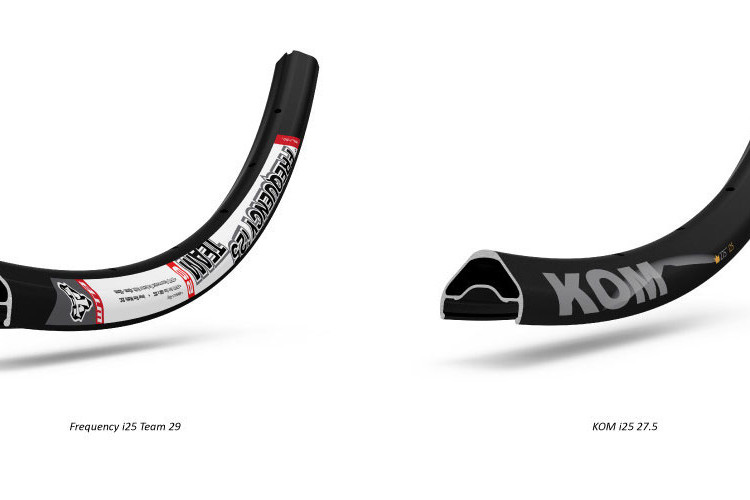
The rims are WTB’s popular LaserDisc Trail 29er rims.  The 27mm width is on the wide side for typical XC use, and should work nicely with wider tires.  The rims are 32 hole, and do have eyelets.  The eyelets add some weight but should allow for higher spoke tension and a stiffer wheel build.  The rims also feature WTB’s patented I-Beam and Unbendium Bulge shapes, both of which increase strength and stiffness without adding excessive weight.

The spokes are, surprise, also WTB’s own design.  They are double butted to keep weight down, but are a little different from most spokes.  Most double butted spokes are 2.0mm at the J-bend and nipple where strength is needed most, and only 1.8mm in the middle.  But WTB’s spokes are 2.5mm at the J-bend to increase strength over a standard spoke.  The nipples are an aluminum alloy instead of brass to keep weight down.

I’m looking forward to trying these wheels since they’re pretty different from the wheelset I’ve been riding for the last year.  The WTB’s are heavier, but they have a wider rim and should be much stronger and stiffer.  But they are not tubeless ready, which is already a strike against them in my opinion.  I’ll ride them with tubes, and will probably try and convert them to tubeless as well.  I’ll let you know how it works!

Check out WTB’s website for more details.

*Note – On the WTB website the rear wheel weight is listed as 970g, which I think must by a typo, accidentally carried over from the front wheel specs.  The weight listed above (1130g) is what my wheel weighed on my Feedback Sports Alpine Digital Scale.  The front wheel matched the claimed weight exactly.

I would like to thank Fox and WTB for providing these products for review.

WTB LaserDisc DH Wheelset Review

Tuesday, March 1st, 2011

WTB offers the LaserDisc DH wheelset as a low-cost, lightweight alternative for gravity riders who ride hard. I posted a preview of this wheelset last winter and now I’m finally ready to give my full review after months of thrashing. I conducted my rides on some of the most demanding trails in Whistler and Vancouver, so these wheels took quite a pounding. To see how they fared, read on…

The Ride

The WTB LaserDisc DH wheels bolted onto my Banshee Legend MK II effortlessly and lowered my bike’s weight by over a pound. A quick parking lot test revealed a bike that had a livelier feel with faster acceleration. Dropping weight in the wheels means a lower rotational mass which is much more noticeable than weight reduction elsewhere on a bike. Needless to say, losing a full pound in wheel weight makes a big difference in the ride. Unless you’re already running a race-light wheelset, you will notice a difference too. These wheels may be light but I wanted to see how they would hold up against the world’s most demanding trails.

For the first month of testing I was surprised by how well these wheels held up. I pounded them on the rocky, pothole filled trails of Whistler and the Shore and they stayed straight and flat-spot free. I was surprised because normally I destroy wheels pretty quickly. Could these be the perfect DH wheels?

Well the LaserDisc’s are good but certainly not perfect. After a month of thrashing the rear wheel un-tensioned itself and I put a good sized flat spot in it. From this point on, the wheel de-tensioned, went out of true and flat spotted every 2 or 3 rides (after re-tensioning of course). The result is that I now have a rear wheel with 3 flat spots, some side to side wobble and loose spokes. The front wheel fared much better with just 1 minor flat spot. On a positive note, the hubs still run as fast and smooth as they did when they were new.

It may sound like these wheels didn’t hold up very well, but readers should know that I put much more strain on my equipment than the average rider. I have a plow-through­-everything-quickly mentality, am 6’3” 200lbs with riding gear, and I ride the roughest, rootiest, rockiest trails in Canada. These wheels held up well for a month, so they will likely hold up for a full season under a lighter, finesse rider who frequents smoother trails. As someone who is tough on bike equipment, I’m used to breaking stuff; replacing the rims (edit: and spokes) should make these wheels good as new since the spokes and hubs have held up well.

The Verdict

If you’re a privateer racer or performance-minded downhiller looking for a lightweight, inexpensive wheelset, consider the WTB LaserDisc DH. These wheels do well on smooth, pedal-friendly tracks, though they’re not quite up to steep, burley tracks because they’re so lightweight. They are not bombproof, but will add horsepower to your bike when pedaling. I can’t think of a lighter DH wheelset at this price point, making the WTB LaserDisc DH wheels a great buy for the right rider.

Thanks to WTB for the test product.

WTB Deva Women’s MTB Saddle Review

Tuesday, February 22nd, 2011

WTB Deva Women's Saddle

There aren’t a lot of women’s specific mountain bike products out there that actually need to be women’s specific (like bike pumps – seriously). One major exception, of course, is mountain bike saddles.  I’ve been searching for a comfortable and lightweight women’s specific saddle for a long time and was recently fortunate to stumble upon the WTB Deva Saddle.

WTB Deva Mountain bike saddleTo me, comfort is the most important criteria for any saddle. I like the WTB Deva saddle because, first, it’s slightly wider than most men’s saddles to cushion more of your bottom. I’ve ridden on a few 2-3 hour rides already and I didn’t have to slow down because my butt was sore (since it’s winter, my legs become sore and tired long before I notice soreness anywhere else!).  Another way the WTB Deva adds comfort is through a feature called the Love Channel. The Love Channel is a small groove that runs down the middle of the saddle to minimize pressure on sensitive areas. I shouldn’t have to tell you how important that is when rolling over rocks and roots at high speed!

Then there’s the gel padding that helps provide comfort, too.  As a racing saddle, the Deva is pretty firm with some flex; the minimal padding gives the Deva a low profile which is crucial when the ride involves varied saddle positions. If I’m frequently getting in and out of the saddle for climbs and descents, the last thing I want is to sit back down on a firm, unforgiving seat.  I’ve ridden with a men’s saddle before and there were many times that I would much rather climb out of the saddle than sit and pedal on something that feels like a hard, plastic chair in the waiting room at the DMV.

Though it’s been a while since I’ve done any mountain bike racing, I still like using a racer’s saddle because it is lightweight.  These days I favor lightweight components, not just because I plan to get back into mountain bike racing, but because I only weigh 100lbs. and don’t want to waste extra energy hauling around a heavy bike (outside of DH, few men ride mountain bikes that weigh 25% of their body weight).  My WTB Deva SLT weighs just 240g with titanium rails and by itself, the Deva won’t make the difference between getting on the podium or not, but it’s a great saddle choice for me.

For any woman who is riding a men’s saddle and hating it, the first upgrade to your mountain bike should be a women’s specific saddle like the Deva. The shape of the WTB Deva makes a world of difference! Even after taking a (motherhood) hiatus from the bike, I can ride comfortably for hours on this saddle.  And the Deva is the perfect saddle if you intend on racing or are in the market for a high-quality women’s mountain bike saddle.

Plus, nothing says you’re fast and fearless like white mountain bike components.  I’ve  always been hesitant about choosing white mountain bikes and parts because of the inherent mud and grime but for the Deva I’m willing to make an exception. My white WTB Deva certainly makes a statement, and my butt could not be happier!

Thanks to the folks at WTB for providing the Deva for review.

WTB Dissent 2.5 DH Mountain Bike Tire Review

Wednesday, January 12th, 2011

The Dissent 2.5 mountain bike tire from WTB is a beefy DH/FR-specific tire that’s built tough to withstand the gnarliest conditions. The 2010 model I tested features wider tread block spacing than previous generations in an effort to improve performance in moist, wet, and loose conditions – perfect for the trails I ride in BC. I previewed these tires last year and now I’m ready to share my full-on review.

The Ride

I tested the WTB Dissent tires on the rocky, rooty, unforgiving trails of the North Shore and Whistler. The trails here are the ideal proving ground for a DH tire due to the variability in terrain. I mounted these tires to WTB Laserdisc DH wheels, set the pressure to 32 psi rear and 28 psi front, and hit the trails.

The first thing I noticed was the volume of these tires. The Dissents are much bigger than other 2.5 tires on the market and barely fit into the back of my Banshee Legend MK II frame – both height- and width-wise. That extra volume was much appreciated at the Whistler Bike Park (WBP), where these tires excelled (in fact WTB says the tire was “designed around the demanding conditions of the WBP”). On the dry, dusty, hardpacked trails of the WBP, the Dissent 2.5’s were supple, rolled fast, and never flatted once. Traction on hardpack was excellent, both in braking and cornering. These tires showed minimal wear after numerous days, a rarity among soft compound DH tires. Unfortunately, I found the Dissents didn’t perform quite as well when the trails got wet.

On the wet, rooty, and loose trails of the North Shore I didn’t get as much traction out of the Dissents as I would have liked. Despite the increased tread spacing compared to the 2009 design, these tires still tend to pack up with mud in certain conditions, causing the tire to break loose prematurely on steep descents, roots, and corners. Also, watch the tire pressure in areas with sharp rock – I flatted after landing wrong on a rock after a steep section during one of my rides. Fortunately the nylon sidewall insert adds rigidity and some flat protection but riders should always check their tire pressure before every ride.

The Verdict

If you’re looking for a dry conditions tire that delivers outstanding performance on rough, hard-packed, summer bike park trails, I wholeheartedly recommend the WTB Dissent 2.5. It grips well, rides smooth, and wears slowly in these conditions. Overall performance takes a bit of a hit when things get wet or loamy but for a summer tire, it’s hard to beat the WTB Dissent 2.5.

Thanks to the folks at WTB for providing the Dissent 2.5 tires for testing.

WTB is Stepping up with Stryker

Tuesday, August 31st, 2010

weir_web

This year WTB is rolling a well-tested new wheel system for the XC -Trail rider. Perhaps you might recall the TSC tires that we reviewed a month or so back (Mutano and Weirwolf). Well, to complete the system, WTB now offers a wheel set that perfectly matches their tires.

WTB’s new TCS (Tubeless Compatible System) Wheel System features light-weight tubeless tires, rims, and wheels so riders can customize their set-up for specific terrain and riding style. The new wheels sport WT69 metal alloy, tubeless compatible rims with lightweight rim tape, bladed WTB spokes, alloy nipples, and a stainless steel cartridge bearing system with dual labyrinth seals. The Stryker XC is one of the first complete TCS wheel systems from WTB.

wtb-stryker-low-resWTB worked with a team of engineers and professional riders like Mark Weir and Jason Moeschler to develop the TCS Customized Integrated Wheel System. The new TCS gear is compatible with all UST, ISO and ETRTO standards, tires, rims, and wheels.

If you check out the WTB website you can see the boys (and girls) from WTB have already notched numerous wins with these fresh wheels on their bikes. No doubt this gave them plenty of time to hammer out any issues that might arise with a new wheel system. Being one who is always interested in what’s new and wonderful in our industry I am looking forward to testing these out.

As far as I know the TCS system is the first mountain bike wheel system (tires, rims, spokes, hubs) that is entirely produced by the same manufacturer. Who knows, very soon you might see the TCS wheel system available for higher end OE wheels on your next bike. Stay tuned for more information and hopefully a review in the not-too-distant future.

WTB Valcon SLT Carbon Mountain Bike Saddle Review

Friday, July 23rd, 2010

valcon1

The WTB Valcon mountain bike saddle comes in three flavors (SLT Carbon, Team Carbon, and Pro) and is positioned as an XC race saddle, though I found it to be much more versatile than advertised. The Valcon SLT Carbon ($165 MSRP) is lightweight, high tech, and strong enough to stand up to DH-intensity pounding on the trail.

I had high expectations for this saddle based on the other WTB saddles I’ve ridden and I have to say the good folks at WTB didn’t disappoint. The Valcon is similar to the WTB Silverado but sightly more rounded with the addition of what WTB calls the Luxzone. The Luxzone is basically a cut in the middle of the saddle to relieve pressure in the groin area while improving air flow down there (it doesn’t get more luxe than that).

The SLT is covered in leather with a fresh, over-sized WTB graphic running diagonally across the back. Underneath the cool exterior there’s the familiar DNA padding which is also found on the other high-end WTB models. For those who aren’t familiar, DNA is a dense foam padding that forms over time to your contours and reduces saddle hotspots on the bike.

The carbon composite shell further reduces weight and allows for some give when going over bumps and roots. If you look at the Valcon closely you’ll see this saddle is rather flat (unlike say a Pure or Rocket) which makes for an efficient climbing saddle. The flat shape also allows the rider to get on to the tip more easily and stay there to increase leverage and performance.

As icing on the cake, the Valcon SLT Carbon also spots 7mm titanium rails. Titanium not only reduces weight but helps reduce vibration.

dorado131

During my tests I ran the Valcon SLT Carbon on both my XC bikes and my DH rig and it was comfortable either way. Of course when it comes to DH I’d probably save the Valcon for competition and leave the wear and tear of everyday riding to another WTB saddle like the Aviator.  Overall the Valcon doesn’t feel super stiff, but firm, so a seasoned rider shouldn’t have any issues with the ride. And while this is a firm saddle, it can still be ridden for hours without feeling numb or uncomfortable.

After logging a ton of time in the saddle across several rides I still enjoy the Valcon and haven’t had any issues with creaking or loose stitching. Feel free to check out WTB to see the entire line-up of saddles to fit your butt and your budget!

I would like to thank the folks at WTB for providing the Valcon SLT Carbon for review.


Site Map | Advertise | Partners | Contact Us | Terms | Privacy
Campground Reviews | Hiking Trails | Trail Running | Skiing / Snow Sports | Mountain Biking
Copyright 2012 Blue Spruce Ventures LLC | Atlanta, GA
singletracks.com is yet another slick Review App