singletracks is mountain biking
Sign In | Create Your Account | Site Map | Help  


Easton Havoc 26″ MTB Wheel Review

Tuesday, May 31st, 2011

Part two of the Easton Havoc line-up is the all new wheelset. Talk about an upgrade! Wow. Yup, they really went and listened to the demands from aggressive all mountain and freeride mountain bikers and the result is the new Havoc 26″ wheels.

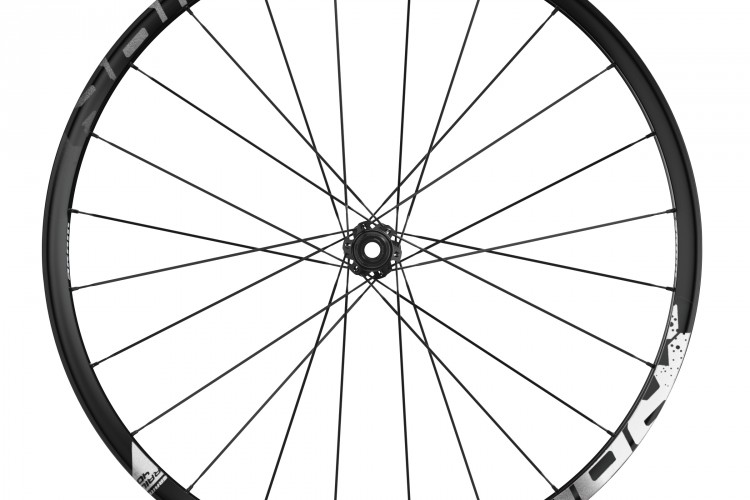
To start things off, Easton made some major changes to the rims. The company added a full 1mm to the inside width, bringing it to 23mm (28mm outside) which makes these stronger than ever before. The new Havocs are also UST compatible so you can run those UST tires with no special rim strips! If you choose not to run UST tires you can simply remove the valve cores and run tubes.

Of course Easton didn’t stop there – the hubs were redesigned as well. With sealed cartridge bearings and a re-tooled hub design you’re looking at a wheel that is designed for abuse. No only that, the new dedicated 20mm front hub increases performance over the previous model. The rear hub comes in QR10x135 or 12×135 with 12x142mm spacers, making the Havoc wheels very adaptable to a wide range of bikes. What does carry over from previous models is the same great 3-pawl cassette body.

Weighing in at 1750 grams (about 150 grams lighter than the 2010 Havocs) these new wheels are much snappier on the trail. Speaking of snappy, 24 butted Sapim spokes laced three cross front and rear is what holds everything together and helps balance between a fast energy-transferring wheel with one that’s supple enough to take some harshness out of the trail. For those of you who are running Shimano Center Lock rotors, you will have to get a set of 6-bolt rotors as these wheels only come with that rotor interface.

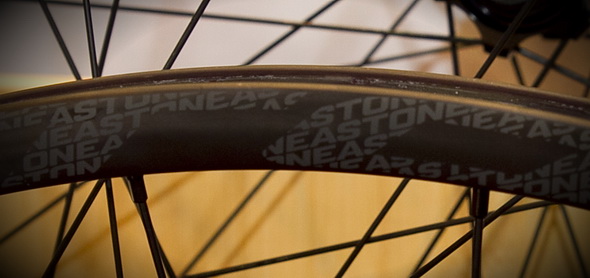
Bling-wise you get fresh matching graphics like the ones on the bars and stems I reviewed earlier on. A new high-end water transferred graphic circumscribes the entire rim looks hot when riding, not to mention the bright orange anodized hub which is sure to catch a look or two on the trails. If orange isn’t your thing, Easton also offers a toned down grey finish. Either way they both look great.

Installing tires on the Havoc wheels was a snap. I wrapped mine in a set of Minions with 4oz of Stan’s for a satisfying dual snap of the beads locking everything firmly in place. Best of all, it only took 10 minutes.  Just remember to generously apply soapy water on the sides of the tire and you’re golden. Installing and torquing down the rotors (4.5 – 6Nm) took another few minutes with no issues. The final step of tossing on a 9spd cassette burned less time that it took me to write this sentence.

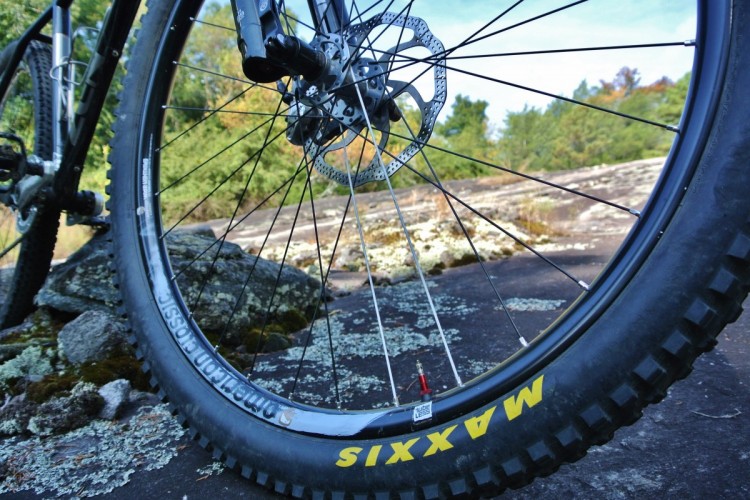
I decided to install the Havocs on my Freeride bike instead of my AM/trail bike. Seeing that the Haven’s are doing such a great job in that area, and the Havoc’s come with the 12/135mm axle, I figured the freeride bike is the way to go. The first thing that came to mind is the fact that the Havocs are in direct competition with the Mavic Crossmax SX wheels. Both wheels are very similar, with weights that are grams away from one another (the Havocs are 5 grams lighter) and rim cross sections that are 2mm apart (Havoc 23mm / Mavic 21mm inside widths). Heck, both wheels are UST and have 24 spokes which adds to the similarities. It was definitely going to be interesting to see how the new Havocs stood up.

One of my biggest concerns with wheels is how well they engage when riding. Nothing spoils a ride more than not being able to put the power down or losing balance because you’re rocking the cranks too much to engage the freehub. As in previous models of Easton wheels, these Havocs feature the same welcomed and familiar engagement. At slow speeds or riding over a skinny I have no problem maintaining my cranks at 3 and 9 o’clock, allowing me to barely tap the cranks while still gaining forward movement. That’s a big, big plus here. With the three cam pawl engagement you need very little movement to get the freehub to catch. Now what I also picked up on while hitting trails is the quick acceleration you get due to the low mass (keep in mind the tires you choose). For what these wheels are, they are fast. I was really impressed with how fast they change direction – definitely not what most freeride wheels feel like.

As for strength I have had no issues so far with these wheels. Taking them to Kelso, Horseshoe Valley, and another few choice spots in and around Ontario I haven’t encountered any reliability issues; the wheels remain straight even after sailing over rock gardens (remember to keep up your momentum). Landing some pretty big doubles and step downs with smooth transitions is also no big deal. The over-sized bearings still spin like new, though I did have to adjust the front hub once during my test but it really is not a big deal.  I also tweaked the rear wheel a touch (remember the momentum comment) but fixed it up with a truing key to keep the rim dead straight.

So what do I think of the new Easton Havoc wheels ($945 MSRP)? They are certainly on par with other brands as far as pricing so that is not an issue at all – the value is definitely there. For strength I would also say these can take a beating like Rocky Balboa and still come back. To recap. Strength – check. Performance – check. Value – check (although pricy). Good looks – check. UST compatible – check. Hmmm there’s a lot going on here isn’t there? Check out a set for yourself and you tell me what you think! Cheers.

Thanks to the folks at Easton for supplying the Havoc wheels for review.

Mavic DeeMax Ultimate DH Wheelset Review

Wednesday, May 18th, 2011

The Mavic DeeMax Ultimate is one of the lightest DH specific wheelsets on the planet! Already an icon in the DH world, many of the top DH mountain bikers run these wheels and it’s easy to understand why.

Mavic has been producing high quality gravity-oriented products for some time now and still manages to improve its products. The DeeMax Ultimate wheels weigh in at 1,965 grams (AFAIK, the only ones below 2,000) while the next lightest competitor’s wheels weigh 2,050 grams. Now that weight is all in, valves included. The Ultimates feature a UST rim meaning there’s no need for rim strips and the UST valves are provided.

Speaking of the rims, Mavic ‘drills’ only one wall of the 21mm internal width rim (good for tires from 2.3″ to 3.0″). This is what Mavic calls their Fore drilling process; essentially the process uses a ton of friction to displace a quantity of material to the side of the hole just before the drill pokes through the wall of the rim. The displaced material is then threaded and becomes the holes for the Mavic-specific spoke nipples. Seeing that the inner wall is not affected there is no need for rim tape and a seal can be formed.

Mavic’s SUP process also helps ensure a stronger, lighter rim. Essentially after bending the rim, the rim gets welded together and its surface is milled smooth. This jointing process really improves the overall strength of the rim. The rim itself is made from an aluminum alloy called Maxtal. Now this isn’t a 6061 material like others use, though I can’t say exactly which type of alloy Mavic is using. It could very well be a similar 6000-series aluminum with a specific treatment process kept secret by the company.

Mavic uses an “Interspoke milling process” to remove non-structural material from the rim’s surface, leaving only what’s needed for strength. Looking at the rim you can see a slight build-up of material around the spoke holes as well as a spine of material along the center of the rim.

On other Mavic wheels I’ve reviewed, the company used Zircal spokes which are not found on the Deemax Ultimates. Mavic decided to go with bladed and double-butted stainless steel spokes here to add to the durability of these wheels. Mavic also specially designed the hub using their SRS system to arrange the spokes and keep them in place, preventing the spokes from popping out of position. This is a great feature since the Ultimates do have a bit of flex built into the rim (which allows the wheels to absorb some stresses without cracking). I spoke with Sean Sullivan from Mavic and he mentioned that the ability for the rims to flex was an important trait that some of the top level DH riders wanted in a wheelset. Because of the small amounts of flex that may happen on the gnarliest of courses in the rocks, they had to make sure spokes didn’t pop out.

The DeeMax Ultimate hubs are only offered in a 20mm through-axle front and 12x150mm rear configuration. If you have a bike with a 12x135mm rear, go with the DeeMax wheels (slightly less expensive) and 23mm inside spacing on the rim.

The freewheel hub features Mavic’s ITS4 cassette body which uses two pairs of cam pawls for fast engagement. This works great for the rider who wants to just kick the cranks a bit rather than try to stroke the pedals while floating over rocks and roots. It takes very little crank rotation (about 5 degrees) to engage the wheel compared to other hubs I’ve used that need double that or more (though to be fair Mavic isn’t the only company offering quick-engaging hubs).

Servicing the hubs and replacing parts is a cinch thanks to an intelligent design. I really like the way the cam pawls are arranged and how they engage the hub. The cams have been designed with as large of a diameter as possible to engage right under the drive spokes which produces a more direct path of power. With two bearings supporting the cassette body along with the other two bearings supporting the hub itself, this makes for a hub that performs solidly. Up front you get two over-sized bearings sitting within the hub and the stout axle shaft. Freeplay from the bearings cans be finely adjusted using the bearing tool (supplied with the rear wheel).

Seeing that these wheels are UST I decided to run my wheels tubeless for the duration of my review. I used Stan’s as sealant (4 oz. with 2.5″ tires was needed to seal things up) and soapy water and away I went. The lack of a tube increases the response of the wheels for sure. There is less resistance to the whole set-up as these wheels are all go when you’re on the pedals.

How do these feel on the slopes? In a word: Awesome! The Deemax Ultimates can really send it. The minimized rotating mass makes these wheels feel like someone hid an electric motor on the bike to propel me down the hill. These wheels really do accelerate quickly. When I am off the pedals and descending, I don’t slow down and I got super quick changes of direction and responsiveness all day long. Compared to some wheels that take a bit more effort to get you moving, these just go.

A while back I reviewed the Crossmax SX wheels and loved them. Now, picture the Deemax Ultimates as the bigger, tougher brother. Many of the technologies are shared between the two, just scaled up for World Cup level abuse. At first I was a bit worried that these lightweights wouldn’t hold up to rockgardens and serious gnar. But after hitting the step downs and rock gardens at a few familiar trails, I quickly realized these can take more than I am willing to give them, even with the tires on dangerously low pressure (oops!). At such low tire pressures the Ultimates stood up great – not a single ding and they held my limp tires firmly in place despite the fact that the tires should have peeled right off the bike.

Mavic offers a program called MP3 which, when purchased at the same time as your wheels, will cover your wheels for two years no questions asked. So if you do trash a rim, you’re covered. All you have to do is send them back (at your cost) and they rebuild the wheels and send them back to you. Not a bad insurance policy for those who like to shred!

If you’re an aspiring DH rider and really want to step up your game, grab a set of Deemax Ultimates. For ultimate speed and agility these wheels are right up there with an MSRP to match ($1190). Hey, no one ever said high performance would come cheap. If you’re planing on going big (I mean really big) you may want to consider the slightly heavier and less expensive DeeMax wheels ($899 MSRP).  Whichever way you go, Mavic will get your rolling.

I would like to thank Mavic for sending up the Ultimates for review. Another quick thanks to the folks at SRAM, Rockshox, Banshee, Loaded and THE.

On Test: Fox F29 Terralogic Fork and WTB LaserDisc Trail 29

Friday, March 4th, 2011

I just received two very cool products to test and review: the 2011 Fox F29 Terralogic fork and a WTB LaserDisc Trail 29 wheelset.  In this post I’ll go over the technical nitty gritty of the products and what they promise to do.  There is a lot of technology and engineering in both the wheels and fork, so I’m just going to cover the basics.  After I have some time to thrash ride them, I’ll let you know if they deliver on those promises or not.  Okay, let’s get on with it!

Fox Racing Shox F29 Terralogic Fork

SPECS
Travel: 100mm (also available in an 80mm)
Dropout: 15QR (standard 9mm option also available; only the 100mm version has the 15QR option)
Steerer: Straight 1-1/8″
Weight: 1.88kg (uncut steerer, includes axle, brake hose guide, and star nut)
Damper: FIT
Other: Terralogic option; Kashima coated stanchions; adjustable rebound
MSRP: About $850-$910 depending on options

What does all that mean?  Let’s start with the FIT damper.  FIT is an acronym for Fox Isolated Technology.  It’s a cartridge style damper, meaning the oil is sealed inside a bladder, not free to move around inside the fork leg like an open bath damper.  The FIT damper uses less oil and is lighter and eliminates aeration (air bubbles in the oil).  All of this should mean a fork that works consistently even when it gets hot toward the bottom of a long gnarly downhill.

That gold Kashima coating on the stanchions is about a lot more than pretty looks.  It’s a Fox-exclusive coating that, compared to standard hard-anodized stanchions, is not only harder for more durability and scratch resistance, but also much smoother, for less friction.  There is some variation to the color of the coating, so any two forks may have different looks, and in fact the color can vary from one fork leg to another.  This coating is only available on aftermarket forks.

The 15QR thru-axle has been improved for 2011 over previous versions.  It’s now 21g lighter with no decrease in stiffness.  Compared to the standard 9mm QR axle, the 15QR thru-axle gives a much stiffer connection between fork legs, minimizing flex and improving steering precision.  Of course a thru-axle hub is required and these days many hub manufacturers sell thru-axle conversion kits so getting a new fork doesn’t necessarily mean needing a new front hub.  This will be my first experience with a thru-axle and I’m looking forward to seeing the difference for myself.

Now, lets talk about the main reason I’m excited about trying this fork: Terralogic.  Terralogic promises to give you the best qualities of both a rigid and suspension fork.  It allows you to set the fork so it stays rigid when subject to slow, or small, forces, but when the force exceeds a certain threshold the fork acts like a normal suspension fork, soaking up the bumps to let you ride faster and maintain traction.  That threshold is adjustable, with 15 different settings to choose from, and is intended to be a set-it-and-forget-it affair.

How does that translate to trail riding?  In theory, I should be able to get out of the saddle on climbs and hammer uphill while the fork stays locked out to give me maximum efficiency.  And when I start down the hill the fork will soak up whatever the trail throws at it.  And best of all – I won’t have to flip any levers or turn any dials while riding.  Just pedal and steer.

Once I put some miles on the fork I’ll let you know if it actually works as advertised and is worth the lofty price tag.  In the meantime, head over to the Fox website if you want more details on the fork.

WTB LaserDisc Trail 29 Wheels

SPECS
Front Hub: LaserDisc Lite, 15QR (9mm QR also available)
Rear Hub: LaserDisc Lite (single speed specific also available)
Rims: LaserDisc Trail 29er
Spokes: Butted 14/15 Gauge, Black
Rims: Alloy, Black
Weight: Front – 970g; Rear – 1130g* (including quick release)
MSRP: Front – $280; Rear – $400

The LaserDisc Trail 29 wheelset is WTB’s all around trail bike 29er wheelset.  WTB positions this wheelset as light enough for cross country racing but strong enough to stand up to aggressive trail riding. To me the build seems to focus a little more on strength and stiffness than it does low weight. The wheels have a very nice all black color scheme (other than the sticker pictured above); nice and low key, which I like.

The hubs are WTB’s own design and they keep the weight down with an aluminum shell, freehub body, and axles.  The bearings are stainless steel and the freehub features six dual-sided pawls for 12 points of engagement.  A singlespeed-specific rear wheel/hub is available, as is a standard quick release front wheel/hub.  The wheels are not designed for tubeless use.

The rims are WTB’s popular LaserDisc Trail 29er rims.  The 27mm width is on the wide side for typical XC use, and should work nicely with wider tires.  The rims are 32 hole, and do have eyelets.  The eyelets add some weight but should allow for higher spoke tension and a stiffer wheel build.  The rims also feature WTB’s patented I-Beam and Unbendium Bulge shapes, both of which increase strength and stiffness without adding excessive weight.

The spokes are, surprise, also WTB’s own design.  They are double butted to keep weight down, but are a little different from most spokes.  Most double butted spokes are 2.0mm at the J-bend and nipple where strength is needed most, and only 1.8mm in the middle.  But WTB’s spokes are 2.5mm at the J-bend to increase strength over a standard spoke.  The nipples are an aluminum alloy instead of brass to keep weight down.

I’m looking forward to trying these wheels since they’re pretty different from the wheelset I’ve been riding for the last year.  The WTB’s are heavier, but they have a wider rim and should be much stronger and stiffer.  But they are not tubeless ready, which is already a strike against them in my opinion.  I’ll ride them with tubes, and will probably try and convert them to tubeless as well.  I’ll let you know how it works!

Check out WTB’s website for more details.

*Note – On the WTB website the rear wheel weight is listed as 970g, which I think must by a typo, accidentally carried over from the front wheel specs.  The weight listed above (1130g) is what my wheel weighed on my Feedback Sports Alpine Digital Scale.  The front wheel matched the claimed weight exactly.

I would like to thank Fox and WTB for providing these products for review.

SUNRingle Black Flag Expert 29er Wheelset Review

Wednesday, January 5th, 2011

The Blag Flag Expert wheelset from SUNRingle quite possibly represents the most complete mountain bike wheelset you can buy. With Stan’s Bead Socket Technology (BST) baked in and plenty of options like 15mm and 20mm through-axle configurations, just about the only thing you need to add is air (oh, and of course a tire). The result is a durable, fuss-free set-up that rides like a pure-bred stallion on the trail.

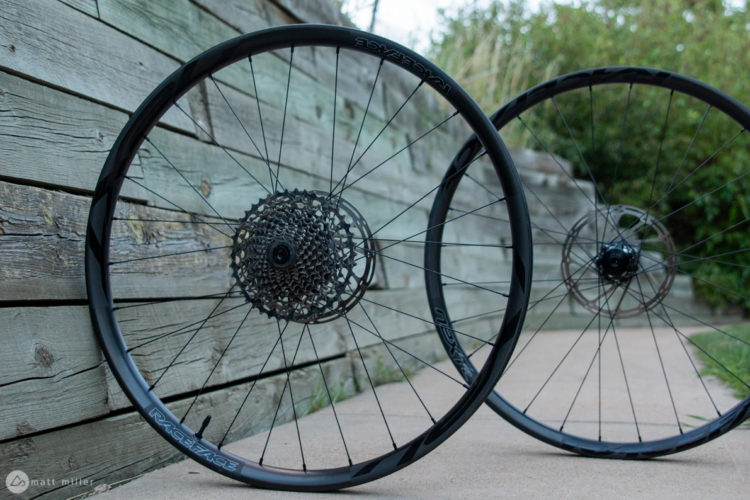
SUNRingle markets the Black Flag Expert as an XC/Trail wheelset so I decided to run these rugged wheels on my week-long Durango to Moab trip over the summer and I’ve been riding them ever since. Compared to the XC-specific wheels I typically ride, I felt virtually zero flex over rocky terrain and was relieved to hear nothing but silence when landing short drops. Twenty-eight Wheelsmith spokes and stiff, low-wall 24mm aluminum rims make this a strong wheel that may not be the lightest out there (1830 grams) but offers a great trade-off between high strength and low weight. (In the last two years alone I’ve destroyed two lightweight 29er wheels from two different manufacturers – and I’m not a heavy guy at all.)

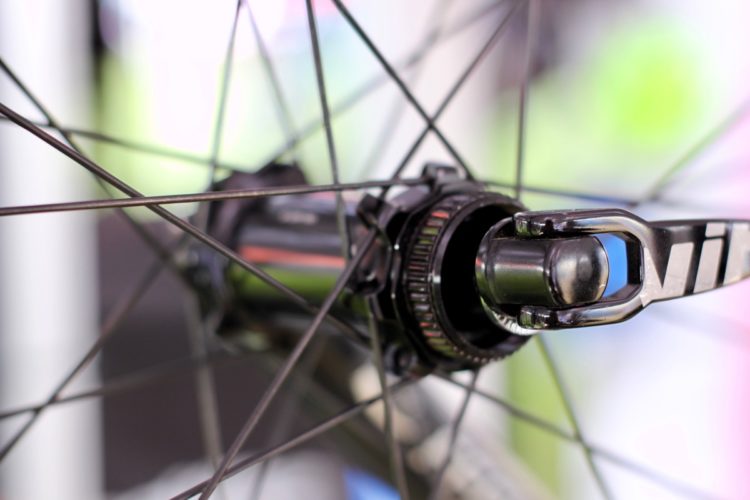
The Black Flag Experts roll true right out of the box and on the trail the overall stiffness allowed me to pick my lines with surgical accuracy. These wheels also get a big boost from the thru-axle configurations available on the front wheel. I went with the 20mm version and I have to say I’m completely sold on the idea of a stiff front end.

One of the things that really got me excited about the Black Flag Expert wheelset is the inclusion of Stan’s next-generation BST which gives the rims a lower sidewall and shape that’s perfectly mated to your tire bead for a tighter tubeless seal. With the rim tape professionally applied and tire sealant and valve stems included, this is a great wheel for riders who are looking to go tubeless (or for those who are fed up with the hassle of converting a wheelset on their own). I have to admit I’m not the most experienced when it comes to tubeless tires (yet) and despite the fact, my installation went without a hitch using a standard floor pump. Stan’s/NoTubes.com is pretty much the gold standard in tubeless mountain bike tires so you can’t go wrong here.

I’ve experimented running these wheels both tubed and tubeless and with different tires and I have to say I haven’t run into any issues. The BST rims do make for a tight fit when running tires with tubes and at times I was frustrated with just how difficult some tires were to mount. But once I was able to get the tires on I really appreciated the tight fit these rims offered.

The SUNRingle hubs included on the Black Flag Expert wheels have held up well over 6 months of abuse thanks to the rugged aluminum shell and Cartridge Bearing system. The audible freehub “buzz” is sorta fun at first but to me the noise started getting a little old after a few rides. Even now I find myself clutching the back brake when I bring my bike inside after a night ride, careful not to wake anyone with the clicky rear wheel. The upshot is the freewheel pawl system offers decent engagement, though you won’t want to use these wheels for low speed trials or freeride maneuvers. For XC training and even racing, the freewheel offers good acceleration and response. The rotor mounts are solid and worked flawlessly with both Hayes and Avid brake set-ups.

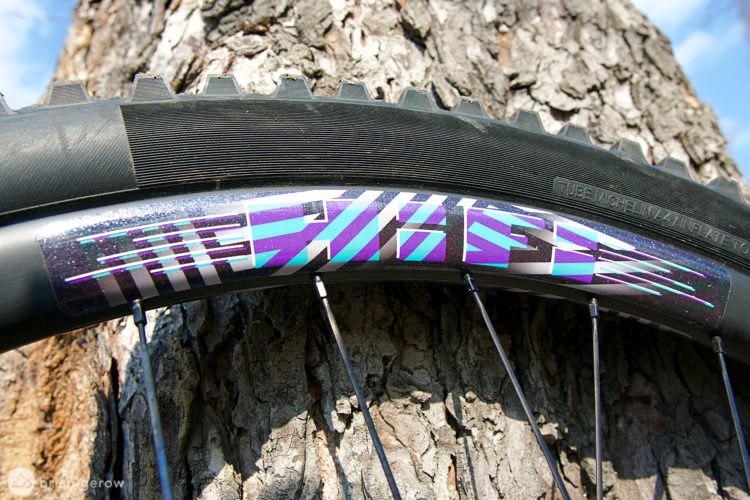
The over-sized Black Flag graphics shown above may not be for everyone but the stickers can be removed for an all-black murdered-out look. Black spokes, black rims, and black hubs – these are the wheels Jay-Z would rock on his 29er. The wheels are also available with yellow rims if you’re feeling more like a leader.

The Black Flag Expert 29er wheels from SUNRingle ($480 MSRP) offer the complete package for XC and Trail riders looking for a stiff, durable wheelset that’s up for just about anything. The integrated Stan’s BST and high quality hubs make this a versatile wheelset that will keep spinning for years to come. Available in 29″ and 26″ versions.

Thanks to the folks at SUNRingle for providing the Black Flag Expert 29er wheels for review.

Sun Ringle Charger Pro MTB Wheelset Review

Monday, May 3rd, 2010

charger2

Not too long ago I did a write up about Sun Ringle and spoke with product manager Scott Boyd. Well I recently got a call from Scott and was stoked to hear that he was sending me a set of the new Charger Pro wheels to take for a spin.

The Sun Ringle Charger Pro wheels will be available for about $650 MSRP and should include just about every adapter you can think of (more on that later). The Charger Pro wheels are a total redesign from last year’s wheels starting with the Stan’s Notube rim profile which comes complete with rim strips, valves, and sealant so you can run these wheels tubeless if you want. The front wheel also comes with all the adapters that you will need: 20mm through axle, QR 15mm, and the QR 9mm. If that’s not enough you can also find the adapters and installation tools (sold seperately) to run 135 x 12mm or the new 142 x 12mm rear axle for just $20 each.

charger3

The new Charger Pro sports a beefy 28mm wide rim with a 22.8mm inner bead which is the perfect balance between high strength and low weight. With the new Stan’s licensed bead lock incorporated into the rim profile and the deep 23.5mm section width you’re looking at one very strong wheel that will take it all season after season. (My wheels have already spent a lot of time on my FR rig). The drop center rim with safety ridges aid in both tire installation and in keeping the tires in position when riding.

Red anodized aluminum spoke nipples from wheelsmith, forged from 7000 series aluminum, keep overall wheel weight low without loosing strength. Compared to other spoke nipples, these babies have been hammered into shape (others tend to be cut) which adds to the durability of the spoke nipple.

Of course the shining star here is the all new, 24 hole hub design that ensures no two spokes will ever come in contact with each other. The Charger Pro hub also features large bearings to support the wheel and can take any abuse you’re willing to give them. The bottom line is these hubs make the wheels stronger, smoother spinning, and longer lasting.

Swapping between axle sizes is a painless experience that nearly anyone can handle themselves. For the rear wheel adapter you’ll need to use the included tool to hold the axle as necessary for removal of the adapters.

Installing a set of ITS 909 DH tires was a piece of cake. I decided to try these tires with the Stan’s fluid and no tubes to see how well the Charger Pro would perform with a non-specific tubeless tire. Using an air compressor I had no problem inflating the tires to the proper pressure; if you don’t have an air compressor, a good quality floor pump will also do the trick (just takes a little extra work).

The great thing about these wheels other than the cool graphics, blood red hubs, and bone white rims is the support that comes along with the wheel. Everything you need is there for you: the Stan’s rim strips and valves, Stan’s fluid, and all the front axle adapters you might need. And for those who have a larger rear axle, the 12 x 135mm or 12 x 142mm axle adapters go for just 20 bucks including the tool!

Performance on the trail

On the trail I found the Charger Pro wheels to be stiff but not overly so. Some wheels that are on the market (particularly those that are mass produced) have a period of adjustment where you can hear the spokes creaking and settling in but I didn’t get that with the Charger Pros. From the second they were on the bike I didn’t hear a thing from them.

Taking the bikes into corners I got a good feel for the trail without a hint of wandering or wobble from the wheel. The wheel mass is low enough that it’s a cinch to change lines quickly but thanks to the strength of these wheels in combination with a larger volume tire you can blast over just about anything. The sturdiness of the rim took rock gardens like a champ without complaints and I was impressed with how straight the rim remained after repeated blows. The overall strength reminds me of a much heavier wheelset that I used not too long ago. The Charger Pro gets high marks for cool looks, decent weight, and toughness all in once package. Nice.

charger4

Although the Charger is marketed as an AM wheel, you could easily consider this for your freeriding days as well. Even if you’re not a freerider, these wheels should also fit the bill perfectly for fairly technical trail riding. The 24 spoke two-cross configuration is the perfect set-up for a wheel that will be changing direction frequently (read: high speed). Now if you’re a straight-line hucker that hits monster gaps (25 foot or larger) you may want to consider something a bit beefier like the ADD wheels from Sun Ringlé. But if you’re someone like myself that does hit the FR trails while keeping it to a sane level (drops 15′ foot or less with smooth transitions) then these should be right up there on your short list of high performance wheels.

Specs from Sun Ringlé:

  • Stan’s No Tubes BST™ Tubeless Technology >>
  • Premium Direct Pull Hubs with Japanese Precision Bearings
  • Wheelsmith Double Butted Spokes
  • Lightweight AM Wheel – 1699g / Pair
  • Available in 29er
  • Hubs are easily convertible to today’s axle standards – 20mm, 15mm and QR end caps included*
  • Wheels include Stan’s No Tubes Yellow Sealing Tape, Sealant, and Valves*

I would like to thank the folks at Sun Ringlé for providing these wheels for testing and review.

Crankbrothers Cobalt Wheelset Review

Friday, January 30th, 2009

The Crankbrothers recently got into the wheel business and after previewing the Cobalt wheelset at Interbike back in September we knew we had to try them out. Sure, the wheels look pretty (they’re made by the Crankbros. after all) but we wanted to know how they would perform on the trail – fortunately we weren’t disappointed.

The first thing you’ll notice when looking at a set of Cobalt wheels (aside from the color) is the unusual spoke arrangement. Cobalt wheels turn the traditional spoke model on its head with spoke nipples attached to the hub rather than the rim. Crankbrothers uses “elongated nipples” to provide extra strength and to concentrate mass toward the hub rather than the rims meaning you’ll need less initial force to get the wheels rolling from a stop. At the rim the spoke heads are attached to fins on the rim unlike a typical wheel where the spokes actually penetrate the rim. The upshot: stronger rims and no need for rim tape inside to protect your tubes and tires.

Speaking of tubes, the Cobalt wheels are designed to work with tubeless tires which is great news for anyone looking to save weight and cut down on flats. I set up my Cobalt wheels with Kenda tires and plain old tubes and found the fit to be impeccable. The seal between tire and wheel was so tight that after inflating the tube I heard a loud hissing sound and thought I had a pinch flat. I quickly spun the tire around only to find the air was escaping from the space between the tire and tube – now those are some tightly sealed rims! (remember – no spoke holes)

The Cobalt wheels are very light (688 grams front, 852 grams rear) and each one is a good half pound lighter than my regular wheels. Despite the light weight the wheels felt super strong on the trail and even on a recent urban ride. Wobble was nonexistent in corners and rocky patches and the wheels rolled ultra true right out of the box. Although the Cobalts are billed as XC wheels I didn’t notice any flex on jumps and the ability to upgrade to 15mm thru axles means even downhill riders could consider these wheels (Crankbrothers also makes an all-mountain wheelset called Iodine with many of the same features).

Crankbrothers innovation is evident throughout the Cobalt wheelset. Beyond the unusual spoke and nipple arrangement, Crankbrothers uses a two-stage, split quick-release skewer that reduces the amount of force required to release wheels after a ride. I honestly haven’t made use of this feature but I suppose it could be helpful for riders with weak arms after a long ride. The Cobalt rear wheel hub is a “noisy freewheel” (similar to Chris King hubs) and sound like you have a baseball card in your spokes whenever you’re coasting. At first the sound made me feel like a badass but it got a little annoying on long, flowy descents. The wheels are disc brake compatible only so if you’re still rocking V-brakes you’ll need to upgrade your brakes before adding these wheels.

Aside from the amazing technical features of the Cobalt wheelset, what really makes a Crankbrothers product drool-worthy is the design. Opening the Cobalt wheelset box felt like I was unwrapping an iPhone – the attention to detail with something as simple as the packaging is truly amazing. These wheels also turn heads on the trail – on a recent ride at Heritage Park I spoke with the only rider we saw about the wheels for several minutes. No doubt about it, these wheels have substance AND style.

Upgrading the stock wheels on your mountain bike can give you a whole new ride and the Cobalt wheelset from Crankbrothers is a great choice for aggressive XC riders. The only thing about these wheels that will slow you down are the gawkers!


Site Map | Advertise | Partners | Contact Us | Terms | Privacy
Campground Reviews | Hiking Trails | Trail Running | Skiing / Snow Sports | Mountain Biking
Copyright 2012 Blue Spruce Ventures LLC | Atlanta, GA
singletracks.com is yet another slick Review App