singletracks is mountain biking
Sign In | Create Your Account | Site Map | Help  


New 2012 gear from Interbike

Monday, October 17th, 2011

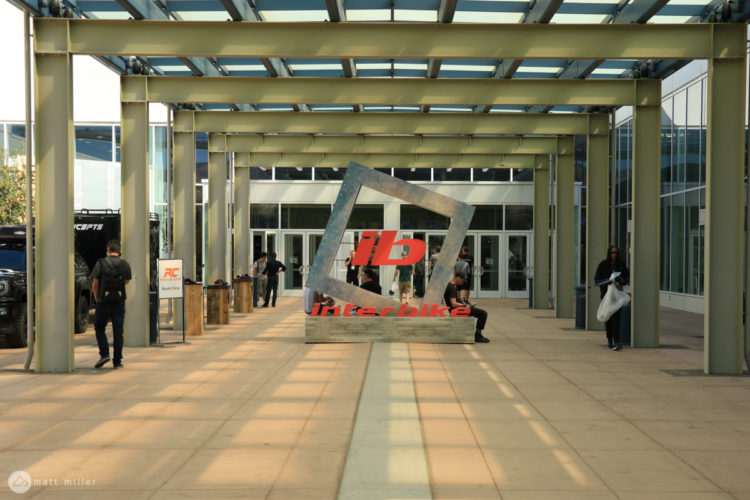
Interbike is a fascinating place, and if you ever get the chance to stroll through the booths you will find tons of fascinating products. Jeff and I were both really impressed with some of the things we saw, and at other times we were thoroughly unimpressed by some of the downright-ridiculous designs. We made sure to swing by most of our usual stops to chat with folks such as e*thirteen, Fox, iXS, Spank, SRAM, Shimano, Intense, Santa Cruz, Osprey, THE, and Easton. Interbike is seriously the greatest when it comes to getting a sneak peak at the latest gear and talking with your favorite riders.

e*thirteen

One of my first stops was at the e*thirteen booth. It’s hard to believe you can improve on such a great crank, but e*thirteen managed to squeeze 60 grams out of last year’s design by using an alloy axle and machining a little bit off the spider here and there. Not only did the crank just go through a weight reduction, but they also managed to change up the bottom bracket, making it more durable and easier to install.

Along with the cranks, there are two clever new pedals from e*thirteen: the LG1+ and LG1R. The pedals feature an alloy body, plates that attach to the pedal, and user-selectable 4mm or 7mm pins. The LG1R has titanium spindles and pins while the LG1+ features chromoly. The difference in weight between the two pedals is 88 grams (380g and 468g, respectively).

Race Face

Hard Goods

Race Face was at the show, but you had to look really hard to find their booth. :) Essentially the hard goods line-up has changed ever so slightly with the introduction of the Chester cranks. The Chester is basically Race Face’s entry-level DH crank, the Respond is their mid-level, and the Atlas is their top-tier DH crank.

Race Face is also getting ready to launch the SIXC, which is a new DH crank modified with a longer-than-average axle. The SIXC cranks will be lighter than the new XO DH coming out from SRAM and the rubber boots are a nice addition meant to save the crank ends from damage.

Soft Goods

I spent some time talking with Wendy from Race Face and she was proud to show off some of the clothing and protection that will be offered for next year. It looks like the trend is toward simple colors with large contrasting logos and neat argyle prints (kind of like the Singletracks jersey). Needless to say, Wendy (who also does the design work) has done a great job at making gear that will look cool for both men and women.

The new trend in MTB armor is softer, more flexible pieces and Race Face is on the ball with their Flank line-up. This soft wrap-around leg armor features a ton of excellent elements such as D3O on the impact points of the knee and shin and a Terry Cloth liner.

Stay tuned for more from RaceFace in the near future.

Niterider

A brilliant example of lighting at Interbike was Niterider. With all their lights out on display, this booth really was a beacon in a sea of bike gear. Niterider’s best and brightest, the Pro 3000 LED, uses 6 large Cree LEDs and a massive Li-Ion battery; the whole package retails for less than $700. Along with the top model, Niterider has a light for just about every budget, including both rechargeable and non-rechargeable units. I had a chance to talk with Tom, the founder of Niterider, and it seemed that we both shared the same passion for good lighting systems and the conviction that there really weren’t any good bike lights available when Niterider started out.

FSA

FSA was displaying all of their 2012 gear nearby and the smell of high quality, nicely-finished carbon saturated the booth. The K-Force and SL-K gear for the XC-Trail rider may be a good idea for those looking to save some weight. I really appreciated the extensive use of uni-directional carbon in the products that were on display. The cranks feature a spine of aluminum to keep things stiff along with the monocoque structure that you see. With other carbon goodies in the form of bars, seat posts and stems, FSA was out to impress.

Ritchey 29er

Despite not being a big 29er fan, I just had to stop and stare a while at this beautiful 29er by Ritchey. For one thing, I owned one way back in the day that was made by Tom Ritchey himself, and my bike had the same “America F*$@ ya” paint job. I kinda miss that bike, and this beautiful ride, although very modern, still has that classic look to it. I found myself wishing I had the cash to pick one up.

From the integrated seat post clamp, to the adjustable rear dropouts that allow you to go either singlespeed or geared, to the highly-polished look, this bike really is a stunner. It’s a steel frame and has a projected cost of $999 (frame only). Depending how you build it up, you can get weights down to 21lbs for a single or 23lbs if you’re going with gears.

THE

THE was showing off their new colors for this year’s T2, along with some cool armor and gear. There’s a decent mix of mild to wild color schemes for you.

Loaded Precision

Loaded Precision was showing off a few new components for this year with their signature series wheels and pedals. For those of you who are interested, they will have a 150mm rear axle available soon in addition to all the present wheel configurations… and in a variety of colors to really pimp your bike out. Anthony from Loaded also mentioned the growing number of products in their XC line-up, including some fire-red 29er wheels!

Topeak

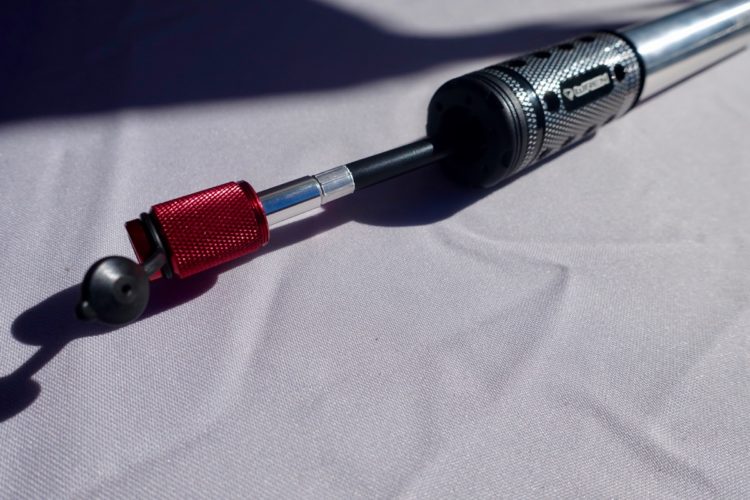
Topeak was there showing off their vast array of pumps and gear. Some interesting additions included a new chain tool called the Link Meister which is geared toward serious users and shops. The head on the Link Meister adjusts so that you can get the pins out perfectly straight without messing things up, thanks to an adjustable shoulder which cradles the chain in the link separator. A really robust set of mud guards for suspension bikes caught Jeff’s eye as well as mine. It may have been sheer fascination about the whole idea, but I have to say they looked pretty sweet. I was thinking about tossing a pair on my DH bike…

For the Apple fanboys and fangirls out there, Topeak showed an iPhone 4 (and now iPhone 4S) compatible stem mount. Unlike the other iPhone handlebar mounts we’ve seen and used, this one put the phone front and center and leaves a cut-out for the phone’s camera. Not only can you use your iPhone as a GPS/cycling computer, now you can use it as a POV camera. Brilliant!

Randomness

When you go to Interbike, you will inevitably come across some oddities along with all the cool ideas. Below is one such product in the making (which type is it? that’s up to you). Still a prototype, this 4-wheeled pedal bike features full independent suspension using Rock Shox Monarchs. As Jeff and I chatted with the owners, we did see many places were weight could be removed. Presently this bike is pushing over 50lbs.

Azonic

Azonic proudly displayed the Outlaw wheels, which have been their staple product for many years and are now available in a 29er version and in an expanded color line. Along with that were bars and stems in the same color patterns for that perfect match.

Azonic has partnered up with O’neal to produce some cool looking threads and skid lids. Their focus seems to be all about color and a mix of retro patterns with modern graphics.

Twenty6

Before the show started, I got an invitation to visit Twenty6. Twenty6 is a small, high tech company that machines kick ass gear. Not only is the gear super slick, but they also have some rich color choices.

Below is just a sample of different color options. I’ll have a review written up soon on the Predator pedals, so stay tuned!

Pro Riders

Remember when I mentioned that Interbike offers access to celebrity riders? Well, great riders like Matt Hunter and Darren Berrecloth were at the iXS booth for a while signing posters and chatting it up.

I even got to spend a little while chatting with Matt. Having limited time, I just had to ask him how he did a particular jump in Seasons where he boosted off a kicker into a loose wall of dirt… it looked absolutely crazy! I got him to talk about how he felt going into it for the first time. It turns out a mix of confidence and fear with a bunch of adrenaline thrown in motivated him. I was really impressed to hear that he is human like the rest of us. Just in case you’re wondering, you can meet Matt in Whistler yourself during the summer months at the Summer Gravity Camp.

iXS

Speaking of iXS, they had a great line up of new 2012 gear on display. With a huge range of colors and improvements, I can’t wait to see when they will all be available. The new METIS shown below looks even better up close. The additional pad in back provides a perfect mating to a Leatt brace, and it provides excellent ventilation.

Not only does iXS make cool helmets, but they also produce a bunch of hemispherical goggles that really rock. They offer a dozen graphic styles to match or clash your helmets. iXS’s gloves and clothing are definitely something to behold. This is one website you must visit.

Spank

Spank had a bunch of shiny, new parts on display as well. They had a prototype stem that I thought looked absolutely amazing! The stem was beautifully CNC-machined, but I was told by Gavin Vos, the co-owner of Spank, that it is just a sample and that the final forged unit will be even stronger. The introduction of complete wheels from Spank also really peaked my interest. Even though I have no issues lacing up my own wheels, a complete solution with both hubs and rims is something I personally like.

The new Spike bar with another Spike stem prototype on display.

Speaking of Spike, stay tuned for a review of the new Spike pedals which, based on my initial rides, are excellent. These beasts have forged bodies with 20 pins on a true flat / thin body. How thin? 12mm to be exact. Not the thinnest, but in practical terms you can’t get much thinner without sacrificing strength.

In a previous post we talked a bit about wheels. Well, Spank has a few wheel sets bound to suit your riding style. The Spike and Spoon wheels look excellent with a bunch of innovative features like the BeadNip profile, the OhhBah inner wall, and zero eyelet construction. Again, Gavin explained why they decided to go without eyelets. They thought, “Why drill an extra large hole and add an eyelet, when precision drilling the holes with the correct angle will make a better interface and stronger wheel?”

Kore

Kore had a bunch of glossy parts out on display as well as a neat prototype of a new 35mm-diameter bar. They aren’t trying to set another standard just for the heck of it, but they reason that with bigger hit bikes, there is a real need for stronger gear that is more resistant to fatigue.

SRAM

One of my last Interbike stops was with SRAM. I talked with Tyler Morland for a while, and he showed off all the goodies to me. SRAM knows how to deliver! For one thing they had celebrities there with their bikes. Can you name the rider pictured below?

You know you done good when you have a tire named after you, like Danny Hart. Danny was around with his Giant showing off all the SRAM gear.

SRAM had all their components on display with new colors like the XO Silver, and there were other new additions to the line up like the XO DH chainring and bashguard.

Jeff and I both agree that the new X5 Group could be a game-changer next year. It looks like X9 but at a much lower price point. Tyler pointed out that essentially these two groups are the same and that the reduced pricing is a result of changes in materials. You will probably start seeing these on bikes in the $800 range – nice gear at a cheaper price point.

Shifting looks very X9ish as well.

The biggest story with SRAM is that you will have two more choices on gear for a total of 4 gear ranges for the chainrings: the original 42-28, 39-26, and now a lower 38-24 and an even lower 36-22. Another important set of products that SRAM will be releasing are easy-to-get repair kits for all your forks, shocks, and other gear.

Santa Cruz

The final stop that I had to make was Santa Cruz bikes. Like SRAM, you couldn’t miss this gorgeous booth with wall-to-wall wood and bike porn. Not to mention that Greg Minnar, Steve Peat, and Josh Bryceland were on hand as well.

Below are three of my favorite Santa Cruz bikes from the show:

The new carbon Nomad. This bike already was made even stronger than the aluminum version of the V10.

The new Carbon V10.

I got all goose-bumpy when I saw this rig! And to think that you can literally jump an entire highway with this bike and it’s still lighter than some XC bikes. What a testament to the strength found in newer carbon structures.

Santa Cruz Tallboy.

I have a lot of respect for this bike; the Tallboy is the bike that really turned me onto 29ers. A few people I know have this bike and they work magic on it–it climbs like a billy goat!

Well folks stay tuned for more – I hope to get a few more Interbike pics posted of even more sweet mountain bikes!

Putting on the Brakes @ Interbike: Avid, Shimano, Formula, and Ashima

Monday, September 26th, 2011

At Interbike this year we saw a number of mountain bike brake refinements along with a few interesting new developments from companies like Avid and Formula. Here’s what we found.

SRAM / Avid

One of the biggest deals at the show was Avid. The company is revamping their rotors this year and changing them to even sizes in line with the industry which is a big step for them. The new rotors are the HS1 (all stainless) and the higher-end HSX (two piece with aluminum center) in 140, 160, 180, and 200mm sizes. The new hexagonal-shaped rotor has been cross-drilled instead of having the rotor milled out. The smaller, more numerous holes will run smoother with less “growl” as the pads do their job bringing your bike to a stop.

The entire line of Avid brakes that feature taper bore (Elixir, XO, and XX) have been tweaked internally with a revised bladder to reduce air permeability. The new design adds an air trap system to prevent air from entering the reservoir and an O-ring just in front of the air trap to further improve the feel of the brake and maintain consistency. The new Elixir 9 also gets an improved contact point adjuster for 2012. Along with that, the World Cup brakes lose the tri-align system in favor of weight savings, bringing them down to 277 grams (weight includes lever, caliper, and 160mm rotor and hardware).

Shimano

Shimano had a see-through XT brake set on display with windows into the caliper and lever assembly (pics below). The complex lever design fits great for one finger operation and the adjustment on the lever works well at setting reach as well. The simple linear piston and return spring with its relatively large volume should perform nicely. However, even in this cutaway you can see how air could be trapped in the piston area of the master cylinder. Just be sure to have the reservoir pointing up and full when bleeding the system out and it shouldn’t be a big deal.

The brake caliper itself looks great with a simple, elegant design that makes it easy to remove top-loaded pads. But having the bleed port below the hose means you are doing a caliper-to-lever bleed only. Not a bad thing but with visuals like this you can get a better idea of what you’re dealing with. Now if only these would work in the real world I would be sold!

Formula

Formula has refined their mountain bike brake line-up as well. The new oval piston DH monster, the Formula RO, has a totally redesigned lever and master cylinder with more volume than the current THE ONE. Along with a redesign, the unit is also more robust. Stroke reach adjustments are built into the lever and the RO can also be had with optional FCS (contact point adjustment).

The top-load design makes for easy removal and servicing of the pads and pistons. The calipers on the RO are forged one-piece designs to keep weight to a minimum. The bleed port is located in the middle of the caliper making it easy to flip flop the calipers if you decide to run “Moto” style.

At about 361 grams per wheel, these are heavier than THE ONE brakes but heavier duty as well (not that there was anything wrong with THE ONE). The robust design as shown above and the redesigned levers scream DH.

THE ONE with reach adjust on the lever.

And when I saw the latest idea from Formula I was screaming like a little girl at a Justin Bieber concert. Formula is working on a new hydraulic brake hose quick release fitting. Coming from a race background and using zero loss quick releases before I was super stoked! Talk about making some jobs easy. The best part of the quick release is that the hose end is just slightly larger than the hose itself, opening up a bunch of possibilities for routing.

Ashima

Ashima Brakes has been coming up with inventive ways of making brake rotors run cooler and lighter. Wayne Moore let me in on some ideas that have been floating around, some of them a bit crazier than others but you never know.

The photo above shows a test concept that uses a simple fan that would pump air through the rotor to cool things off a bit. Simple, somewhat effective, and lightweight. Usually nothing gets in that space anyhow. Another idea Ashima is working on is a three spoke aluminum rotor core with carbon reinforcement (for added stiffness) and steel braking surfaces for compatibility. Of course this is still under development but it should make for a lightweight rotor.

Due to time constraints we didn’t get a chance to hit everyone else but believe me, Hope, Magura, Funn and others were also showing off their goods as well.

More to come…

Interbike MTB Suspension Report: Fox, Rockshox, Marzocchi, and More

Wednesday, September 21st, 2011

Mountain bike suspension manufacturers seem to have raised the bar yet again this year. Everyone from Fox and Rockshox to DT Swiss and Marzocchi to newcomer Formula was proud to show off their latest and greatest.

Fox Racing Shocks

Stopping off at Fox first, I spent some time talking with Josie Jacques-Maynes, an accomplished mountain bike racer in her own right, about their 2012 line up. Fox is splitting the line into three categories: Factory, Performance, and Evolution with Factory being the highest end with all the latest and greatest. The entire 2012 line up gets new SKF low friction seals which improve sensitivity. The rich Kashima coating still finds itself on all the Factory line forks and now on the RP23, RP2, DHX Air 5.0, and the DHX- RC4 shocks.

Fox is also coming out with an all new longer travel 29er fork for 2012. There are two versions: a Float with 140mm of travel or a TALAS with 110/140mm travel. Up close you can tell FOX took their time to evaluate this fork before bringing it to market with careful consideration to both weight and strength. Coming in at 4.54lbs (TALAS taper steerer 15QR) this fork is begging to be tossed on a Yeti SB95 or similar long-travel 29er.

Fox is also nearly ready to release their version of the dropper seat post. So far what is clear is that it will come in two sizes (30.9mm and 31.6mm) and will feature a remote lever (natch). Checking the test model I did the wiggle test and lo and behold, this one had nearly zero side-to-side play compared to others on the market. Am I waiting to test one… YES.

As for the rear shocks I am stoked on getting ready to give a full review on the 32mm TALAS and RP23 shocks. This year’s RP23 has what Fox calls Adaptive Logic which provides a greater range of ProPedal tuning and increases the Boost Valve effectiveness.

Fox previewed a new technology still early in development that uses any Android device or Garmin GPS along with a special pump (with built in ANT+) to set up the fork. First you scan the QR code on the fork , then hook up the pump and the app tells you what to do next. Seems like a neat concept for setting up the fork correctly. The program even gives you recommended compression and rebound settings. This unfortunately is still under development but if executed well I can see it helping many riders get their suspension set up right.

Rockshox

Swinging by Rockshox and talking with Tyler Morland about everything SRAM, we went through all the numerous tweaks that Rockshox has made for 2012. Lower friction damper cartridges, Keronite on the top models, and tapered carbon steering tubes are just the start of what Rockshox has to offer this year. The really big news for Rockshox is the expanded offerings in the 29er markets. You can now get your hands on a SID, Reba, Recon, Revelation, and the lower cost XC versions for big wheel rigs. With travel options from 80-140mm, Rockshox is making sure you’re covered.

The all new Motion Control DNA damper cartridge is lighter and features greater adjustability and improved sensitivity. For all you gram counters, the lightest 29er SID weighs in at just 1450 grams – pretty damn light for sure. Jeff has posted a few articles about longer travel 29ers bikes and the Revelation 29er with its 32mm uppers and 20mm maxle will surely find its way onto many a Trail 29er soon.

On the longer travel side of things, the Lyrik gets major upgrades with a choice of a BoXXer-derived Mission control DH damper, a Dual position air system that will drop the travel down 30mm in just one 110°degree sweep, or the BoXXer-style solo air spring. Stiff 35mm stanchions and three choice of steering tubes will  round things out. The BoXXer gets tweaked as well with further improvements to sensitivity as well as some weight savings with the lowers coated in Keronite rather than paint. The Keronite is a very hard uniform surface, much like a ceramic compound which helps reduce weight while keeping strength high.

At Rockshox it doesn’t end with new forks. The photo above says it all. There are now white color options on the Monarch and Monarch Plus shocks and even a new carbon option on the Monarch which gets some versions below 200 grams. The Monarch Plus is now available and will pair nicely with a Lyric on those longer travel Trail or AM bikes.

Another new item from Rockshox this year is the Kage rear shock. The Kage matches the Domain series of forks and is a lower priced option to the Vivid line up. The Kage RC has pre-load, compression, and rebound adjustments and comes in at 402 grams (no hardware and no spring, 216mm length).

DT Swiss

DT Swiss also made an appearance at Interbike this year to show off their suspension tech. The forks all have a very uniform look to them which could be a bit confusing but other than that you’re looking at a solid choice. For one thing the XRC 100 Single shot comes in at just 1170 grams with a carbon steering tube (with an unique internal rib for stiffness). The lowers are carbon as well with a reverse arch much like Manitou forks. The biggest fork is DT’s EXM 150 coming in at 1675 grams.

The EXM 150 features a magnesium lower with a polished center bridge called the torsion box. Controls on the EXM are much like many platforms with a threshold control and independent rebound and compression circuit adjustment (Launch Control). The ABS (Auto Balance System) is used for the damper which makes it easy to set up the air spring. The positive and negative air chambers set themselves automatically.

DT Swiss also offers the incredibly light XR carbon rear shock. At its shortest length, 165mm, you have a shock that is 142 grams. Pretty crazy but yeah, talk about light. The XR also gets a new air spring with the same ABS platform as the forks for precise set up. What I find unique about this shock is the threaded carbon canister. To date I believe this is the only carbon component that has threads right in the material. Using an aluminum damper shaft for the rest of the construction and carefully placed seals should keep this damper working for some time.

Manitou

Unfortunately Manitou was not at Interbike this year but they have a few refinements on the Dorado and R7. The big news for them is the release of the Marvel, the first for Manitou with a QR15, using the familiar hex that has been used successfully on their 20mm through axles. In addition to the Marvel, a tuning kit is being offered that will allow everyday riders to tune their suspension to perfection. For the rear suspension a tweaked Revox shock is coming this year. Stay tuned for a review on that soon!

Formula

Formula is making a debut this year with their very own fork design using 33mm stanchions for a good mix of stiffness and weight savings. Add to that a pull spring for small bump compliance and a main air spring for the bigger bumps and this promises a sensitive shock. The display models were QR9 with post mounts and it wasn’t clear if a 15QR is on the way. What you can see in the cutaway is the thin lowers and even the lower DU bushing, all designed to keep things as light as possible.

Marzocchi

Marzocchi was at the show showing off their latest line of extensive forks along with a display of legacy fork models. The line up has been revamped with new models and changes in the damper cartridges. The new Corsa Superleggera Carbon 29er fork features a one-piece tapered steering tube / upper crown and a weight that rivals some 26er forks at 1650 grams. This fork offers three travel lengths (80, 100, and 120mm) and is internally adjustable using a new hydraulic travel adjust system (Switch TA) that works completely independent of the damping system. Relying on hydraulics, the optional travel change of 40mm (on the 55 series) or 30mm (on the 44 series) automatically re-extends without pulling back up on the bars.

On the bigger side of things, the 66 hasn’t changed much over the last year, but the 888 RC3 Evo gets a new and improved cartridge and finally a 4-bolt mounting system for the stem.  The Roco line up of rear shocks sees a color change, now in black to tone things down a bit.

Unfortunately we didn’t have enough time to check out everyone at the show – we missed Suntour and X-Fusion – but hopefully next year we will stop by and check that out for you. Stay tuned for more coverage from Interbike!

Interbike MTB Tire Report: Tubeless, 29ers, and Multi-Compound

Wednesday, September 21st, 2011

At Interbike Syd and I spoke with a number of mountain bike tire companies and while we didn’t see any shocking changes, we did take note of some interesting trends affecting the 2012 product lines.

Tubeless tires are taking off

If you’ve ridden tubeless tires on your mountain bike (or even just chatted with dgaddis for a few minutes) you know there are many advantages to rolling without tubes. Aside from generally lower weights and fewer flats, most riders also report an improved ride feel and lower rolling resistance. With those advantages in mind, tire companies are adding tubeless, tubeless ready, and UST tires to their line-ups and in some cases re-engineering classic tread patterns to run sans tube. Among the companies we spoke with, WTB, Geax, and Schwalbe are all adding more tubeless tires to the line-up, particularly among 29er tires where tubeless tires had been scarce. Case in point: 6 out of 8 of the 29er tires Schwalbe showed at Interbike were marked “tubeless ready.”

29er tires are getting more aggressive

Over the years mountain bike tires have been getting wider and beefier but that trend sorta tapped out a year or two ago once most tires maxed out at around 2.5 inches (Surly tires not withstanding). This year it seems that trend is getting new legs in the 29er segment as tire manufacturers start to target the new class of 29er Trail bikes. WTB has the 2.5 inch Weirwolf LT 29er tire while Schwalbe has a new 2.35 inch 29er tire called the Hans Dampf. In addition to increased widths, expect to see deeper and knobbier 29er tread patterns to emerge over the next couple of years.

Admittedly I’m a bit puzzled by some of the new 29er tires targeting the other end of the spectrum: 2.0 width and lower. Almost every tire company we met with offered at least one 2.0 or narrower tire for racing. The best explanation we heard was that the Europeans are finally catching onto 29ers for XC riding/racing and they want skinny tires.

Multi-compound tires

More and more complex mountain bike tire tread patterns are being designed using multiple rubber compounds these days and some companies are even using different colors of rubber to visually distinguish the compounds. The advantage: different grip and wear patterns for each knob zone (primary, transition, and corner). While the idea of using different compounds for each tread zone isn’t new, it’s certainly becoming more common.

Special-purpose tires are multiplying

It’s hard to quantify but it seems like there are more and more special-purpose mountain bike tires popping up these days. Surly has their enormous balloon-like tires and this year they added a 4.7-inch monster, the Big Fat Larry, to the line-up. Schwalbe offers a new 29er studded tire called the Ice Spiker which not only includes 402 spikes but it’s also tubeless ready (don’t ask me how that’s possible). There are also plenty of “race only” tires that use especially sticky, grippy compounds that work great on race day but wear down too quickly for everyday riding.

As you can see there’s a lot to keep up with in the mountain bike world and tires are no exception. While there weren’t a lot of completely new tire patterns on display – most companies stuck with their tried-and-true designs – there are certainly a number of exciting new applications in the space, especially for those of us who rider big wheels.

Marin Rift Zone XC7 29er Review

Monday, September 19th, 2011

Last week at Outdoor demo I rode a Marin Rift Zone XC7 29er and found it to be a worthy competitor in the FS 29er space. Marin places the Rift Zone XC7 roughly in between an XC and Trail bike and based on the ride and geometry I’d say the bike leans much more heavily toward the XC end of the spectrum.

Like the other FS 29ers I tested, the Rift Zone is a capable climber (70.5-degree head tube angle) and fairly lightweight for a hydroformed aluminum-framed bike. As tested the bike offers a solid mix of Fox suspension components, a Shimano drivetrain, and Sun Ringle Black Flag wheels (perhaps the most non-XC thing about this bike). Descending on the Rift Zone was a blast – in my notes I wrote “juicy suspension.” Some of that juiciness could be attributed to the on-site tuning – after the Marin mechanic set me up I stopped off at the Fox tent where they ended up adding pressure back to the rear shock.

Looking at the raw numbers on the Rift Zone XC7 you can see this bike is really built for XC riding. The 100mm of front and rear travel places this bike solidly in XC territory while the 70.5-degree head tube angle is one of the steepest of the bikes I tested (only the Santa Cruz Tallboy and Giant Anthem X have steeper head tubes). The bike’s chainstay length of 450mm is right in between the Trek Rumblefish and Specialized Camber Pro.

At around $2,600 complete, this is one of the most affordable FS 29ers available and it does a good job on the trail. If you’re looking to upgrade to a FS and a 29er at the same time, this could be a good choice for you.

Yeti SB95 FS 29er Review

Monday, September 19th, 2011

At the Interbike Outdoor Demo there was no shortage of full suspension 29ers to test, though the Yeti SB95 definitely stood out. With 5 inches of front and rear travel and the legendary Yeti brand, this was one 29er I had to ride. After waiting more than an hour for a size XL bike I saddled up to see what the SB95 had to offer.
The SB95 follows quickly on the heels of the SB66, a 6-inch travel 26er Yeti introduced recently. Like the SB66, the SB95 features Switch suspension technology:

Switch technology is an optimized dual-link design that utilizes an eccentric mechanism that switches direction as the bike moves through its travel. Built into a compact assembly, the eccentric creates a microlink that continuously repositions the lower pivot of the swing arm, allowing us to create a suspension system with no compromises.

Basically the idea is that Switch allows the bike to climb well, offers good small bump sensitivity, and reduces chain growth in the last third of the bike’s travel. Based on my short test run I can say the suspension delivers: climbing felt about as efficient as the 4-inch 29er bikes I tested while offering better small bump compliance than some of the more race-oriented FS 29ers.

And on full throttle descents the SB95 was super plush. Halfway through one run I stopped and noticed the O-ring on my shock was hanging precariously at the end of its barrel. Figuring the ring had somehow worked its way loose (I couldn’t have possibly used that much travel!) I reset it, only to find the ring showed full rear shock compression after the second half of the run. I never got to the point of bottoming the shock out, nor did I notice anything other than smooth damping through the full range.

The Yeti SB95 is offered in an aluminum frame at the moment but word is that a carbon version is in the works. With a short stem and wide bars, this is clearly meant to ride like a big-wheel trail bike – one of the few available at the moment. With that in mind, I found the SB95 didn’t handle quite as well as the other FS 29ers I tested, including the 120mm Specialized Camber Pro (4.7 ~4.5 inches of travel). Although specs aren’t available online yet, I suspect the effective top tube length on the SB 95 is longer than the Camber Pro while the wheel bases are roughly the same.

As 29ers move into Trail and even (shock!) AM territory, it will be interesting to see how companies like Yeti handle the geometry challenges posed by bigger wheels. The SB95 is a solid effort and proves that FS 29ers are more than just a fad.

Animated comparison of the geometry of the Yeti SB95 and the Specialized Camber Pro. The Yeti SB95 offers the most travel of any 29er I tested at Outdoor Demo.

Interbike MTB Wheel Report: What’s Hot in Rolling Stock

Monday, September 19th, 2011

At Interbike this year many companies had brand new hoops to show boasting lighter weights, tubeless compatibility, increased stiffness/durability, and additional 29er offerings.

Fulcrum Red Power 29 SL

Easton and Mavic are going at it head to head with a bunch of new wheels for 2012. Both companies are offering feather-light wheel sets and also UST rims and straight pull spokes. DT-Swiss and Fulcrum are both coming out with complete wheel sets; DT is even offering a complete range of their Tricon wheels (mixing cross with radial lacing, also known as Crow’s Foot lacing). Speaking of spokes, or lack thereof, 28, 24, and 20 spoke pattern mountain bike wheels seem to be becoming more common.

I’ve also noticed a new interest in cassette body engagement features among wheel companies. Nearly everyone I came across is using 3 or more cam pawls for quicker, more positive engagement.

EC90 Carbon 29er wheel set from Easton.

Ritchey WCX Vantage II: Tubeless-ready carbon 29er wheels weigh in at 1537 grams and $1999 MSRP.

In the materials arena, scandium and carbon are showing up more often in mountain bike rims. Speaking of carbon, there are some super sweet carbon wheels out there. Now if you’re questioning the durability of carbon, most of the well designed MTB wheels with carbon rims can take bigger hits without damage compared to the aluminum versions. Yes, right now carbon wheels cost almost as much as college tuition but they typically hold out much better than aluminum due to the higher strength of materials.

e13 TRS+ scandium rim 29er trail wheels (middle)

Companies are also focusing on making stronger MTB wheels. e*thirteen by the Hive, for example, released a series of wheels for 2012 using Chub hubs. With their own custom rim profile that will work with tubeless tires (tape needed) and using braised eyelets instead of riveting, these look promising. Even the cassette body is burly: using tool steel (very tough) and higher quality springs in the engagement portion of the cassette body, riders get 6° degrees between resounding “clicks” (or should I say clacks!).

Spank is another company that is set to release a complete mountain bike wheel set. The wheels will feature an exclusive rim profile cut to run without eyelets while keeping the contact a perfect 360° degrees around the spoke hole plus a hook bead that will take a dig while reducing pinch flats. Novatec is another lesser-known brand that is starting to make waves with a rim for every riding style. Look for new lighter, stronger, and more affordable wheels from Novatec in the near future.

Some of the big names in wheels from overseas have admitted they’re behind the game in bringing a lightweight 29er wheel set to market. Expect to see more of these companies offering new designs that rival the 29er wheels available today.

Formula Volo XC 29er: 1437 grams for the set. 24 spoke, QR/Q15 axle.

Another trend in 29er wheels is the move toward more all-mountain / trail oriented wheel sets. In fact at this point there are probably more choices of 29er trail wheels than 29er trail bikes but everyone seems to agree this is where things are heading. Look for burlier 29er wheels with reasonable weights coming in 2012.

Azonic Outlaw 29er: Classic wheel set goes big.

Loaded AMXC 29er wheel.

Crankbrothers Cobalt 29er wheels (no “cobalt blue” to be found on these wheels)

What do you see as the next trend in MTB wheels? How do you feel about more complete wheels showing up on the mid-level to higher-end mountain bikes? Much more Interbike coverage coming!

The Mountain Bikes of Interbike 2011

Friday, September 16th, 2011

While the other MTB sites focus on the “booth babes” and “girls of Interbike,” we thought we’d do something different and focus on the mountain bikes (weird, we know). Here are just a few bikes we found ourselves drooling over at the show.

Santa Cruz Blur TR. Carbon, 5 inches of travel, 26″ wheels.

Felt Nine. Carbon hardtail 29er. Stock weight: 21-22 lbs.

LaPierre Team DH.

Look 920. FS carbon.

Look 986. Carbon hardtail.

Mountain Cycle Twentynine and Thirteen. Hardtail 29er, belt drive compatible.

Mountain Cycle San Andreas 2.0.

Mountain Cycle Zen II.

Santa Cruz Highball. Hardtail 29er.

Pivot Mach 5.7 Carbon. 26er.

Salsa Horsethief. FS 29er with 5 inches of front and rear travel.

Norco Sight.

Intense Hard Eddie 29.

Intense Tracer 29.

Moots Divide.

Moots MX Divide.

Diamondback Dixon. Hardtail 29er with 66-degree headtube and all-mountain fork.

Diamondback Sortie 29 Black.

Diamondback Scapegoat.

Diamondback DF5 DH Prototype.

Breezer #1. From the note card: “Breezer #1 is widely considered the first modern mountain bike. Joe debuted this bike on Repack in the fall of 1977 and won five straight Repacks – the new bike was a sensation.”

Salsa Spearfish. FS 29er.

Much more from Interbike: components, trends, and additional test ride reports coming soon!

Giant Anthem X FS 29er Review

Thursday, September 15th, 2011

Branding is a powerful thing. Most of us don’t want to admit it or perhaps we’re not even aware of it but when it comes to mountain bikes, something as simple as a name can influence our opinion about a bike. Admittedly my perception of Giant mountain bikes has been that they’re heavy and clunky (don’t ask me where I got this idea – I own a carbon Giant road bike that I really like). So coming into my test ride of the Giant Anthem X 29er I assumed the bike would be a beast on the trail (and not in a good way). And once again I was wrong.

The Anthem X is a full suspension 29er with 100mm of travel front and rear and a full aluminum frame. The SRAM X0 build that I rode was lightweight and seemed to be almost on par with the carbon 29ers I rode during the day.  The stealthy paint job and muted components scream “surgical strike.”

Climbing up the road to the start of the demo course was a breeze but otherwise unremarkable. In fact I could have done the same climb on my hardtail 29er and wouldn’t have felt much difference. The suspension was responsive through dips and transitions but where it really shined compared to other FS 29ers I tested was on the short, steep stingers along the course at Bootleg Canyon. Even slightly out of the saddle on those short climbs the Anthem X delivered without feeling overly twitchy on the descents.

Just one year ago I couldn’t name a single FS 29er that I enjoyed riding but for 2012 companies like Giant seem to have found the sweet spot with XC-style bikes like the Anthem X.  Models are priced at around $3,800 MSRP from your local Giant dealer. This is a fun bike to ride and one that won’t leave you completely worn out at the end of an epic day on the trail.

Surly Moonlander Mountain Bike Review

Thursday, September 15th, 2011

These days the trend seems to be toward fatter and fatter mountain bike tires and no one is pushing the envelope more than Surly. By now you’ve probably seen the Pugsly but this year the company is taking things to a whole new level with the Moonlander.

At first glance the Moonlander looks like a two-ton beast that has no business riding anywhere but in a flat, straight line but I decided to give it a spin around the singletrack loop at Outdoor Demo. Despite the ginormous wheels and heavy tires I was still able to pass riders on more traditional bikes steaming up the road proving to me this is bike is more than just a concept bike or a gimmick. And although the rims on the Moonlander are officially 26″, with the tires the wheels have nearly the same effective diameter as a 29er.

On the loose, sandy trails the Moonlander seemed to be at home and felt like it floated over much of the terrain. Of course that also meant it was terrible at cornering (surprise!) but the ultra high volume tires provided a nice cushion that almost felt like a suspended bike over small rocks despite being fully rigid. A couple of times I caught myself looking over my shoulder to spot the truck I was sure was following behind me, only to realize the deep, crunching tire sound I was hearing was coming from my own wheels.

The rims on the Moonlander – called “Clown Shoes” – feature two rows of spoke holes and can be laced in a number of configurations. The demo rig I tested was laced on the drive side of the rim only which looked odd at first but didn’t seem to affect the ride. The Moonlander features a steel frame and rigid fork and comes with 3.8″ Surly Big Fat Larry tires. The space-y, reflective flake paint job is other-worldly.

I think for me to own one of these bikes I’d need to move somewhere where it snows at lot or at least grow a full beard. Still, the Moonlander is a fun and unique bike for cruising around or even hitting the trails – just as long as you don’t take yourself too seriously out there. :)

Trek Rumblefish FS 29er Review

Wednesday, September 14th, 2011

The Trek Rumblefish is a beautiful mountain bike with clean lines, modern hydroformed tubing, asymmetrical chainstays, and hot graphics that I had to ride during my time at Interbike. Like the other Gary Fisher 29er descendents, the Rumblefish has a reputation for being a solid big wheel bike with excellent handling characteristics.

The 2012 Rumblefish is currently spec’d with 110mm of rear travel and a 120mm travel fork which is a bit unconventional – most manufacturers prefer to match front and rear travel numbers. The rep I spoke with admitted the set-up wasn’t ideal and that the frame designers were still trying to make the geometry work (early adopters beware!).

Even with just 110mm of rear travel, Trek classifies the Rumblefish as a Trail bike which is traditionally 5-inch (120-140mm) travel territory. Of course some will argue that a 29er effectively rides like a longer travel bike than one with 26-inch wheels, making it difficult to pinpoint equivalent ranges of travel for big wheel bikes (XC vs. Trail vs. AM, etc.). Anyway, enough with semantics and classifications – I wanted to see how the Rumblefish handled itself on the trail.

On the climbs the Rumblefish definitely felt dialed in and efficient. While other companies are turning to carbon frames to moderate the 29er weight penalty, the Rumblefish is actually quite light despite its fully-suspended aluminum frame. On the descents the Rumblefish was agile and responsive and I had a hard time finding fault with the mismatched front and rear travel. This bike, like most of the other FS 29ers I rode, was a lot of fun on the trail and the geometry felt just right to me.

Still, I never got the feeling that this bike was more of a “Trail” bike than any of the other 29ers I rode at Outdoor Demo. Just about the only thing that screamed Trail to me about the Rumblefish was the wide, 2.4″ Bontrager tires on the demo model. If you ask me the Rumblefish (starting around $2,400 MSRP) rides like a fast, fun big-wheel XC bike in the same way as the Giant Anthem X does. It will  definitely be interesting to see how the frame and geometry on the Rumblefish evolves over time!

Update: The Trek website is now showing the 2012 Rumblefish comes with 120mm of travel front and rear (thanks Neil!). The rep we spoke with at Interbike apparently didn’t have the latest information – either way, the bike rode well!

Specialized Camber Pro 29er Mountain Bike Review

Wednesday, September 14th, 2011

The Specialized Camber Pro 29er is more mountain bike than most riders deserve – and yet it’s not even top of the Specialized line. With decades of experience designing and building mountain bikes, Specialized has applied that knowledge to the Camber Pro, resulting in a high performance FS 29er that’s built for going fast and winning races.

Like the Tallboy from Santa Cruz, I went into my demo ride assuming the Camber Pro would feel a bit sluggish and unnecessarily heavy. Of course once again I was completely wrong. The Camber Pro is probably the most responsive FS 29er I tested and it was ultra-snappy on the climbs. At medium speed over rocks the bike felt a little twitchy and stiff but once I opened things up the suspension felt plush. Of course it’s always hard to pinpoint exactly what’s affecting the feel of a bike – everything from tire pressure to shock settings to frame materials plays a role.  Still, I can say the Camber Pro has a racy feel that seems to be part of its DNA.

Unlike the top of the line S-works Stumpjumper 29er, the Camber Pro is not a full carbon bike – the rear triangle is alloy. Still, the bike is very light and felt just as stiff (or even more stiff) than other full carbon bikes I tested. With 120mm of travel this bike dips its toe into Trail bike waters but to me it’s a pretty solidly XC bike. Still, some of the features – like wider handlebars and a Specialized dropper seatpost – lean toward Trail bike territory.

Specialized has a reputation for producing dialed-in racing machines and the Camber Pro is no exception. It’s a sexy looking bike that’s efficient at getting its job done, all in a neat, FS 29er package. Want to win full-on singletrack century bike races? The Camber Pro might just be your ticket.


Site Map | Advertise | Partners | Contact Us | Terms | Privacy
Campground Reviews | Hiking Trails | Trail Running | Skiing / Snow Sports | Mountain Biking
Copyright 2012 Blue Spruce Ventures LLC | Atlanta, GA
singletracks.com is yet another slick Review App