Sign In | Create Your Account | Site Map  

2010 Fox 32 Float 150 FIT RLC Installation & Configuration

Wednesday, January 6th, 2010

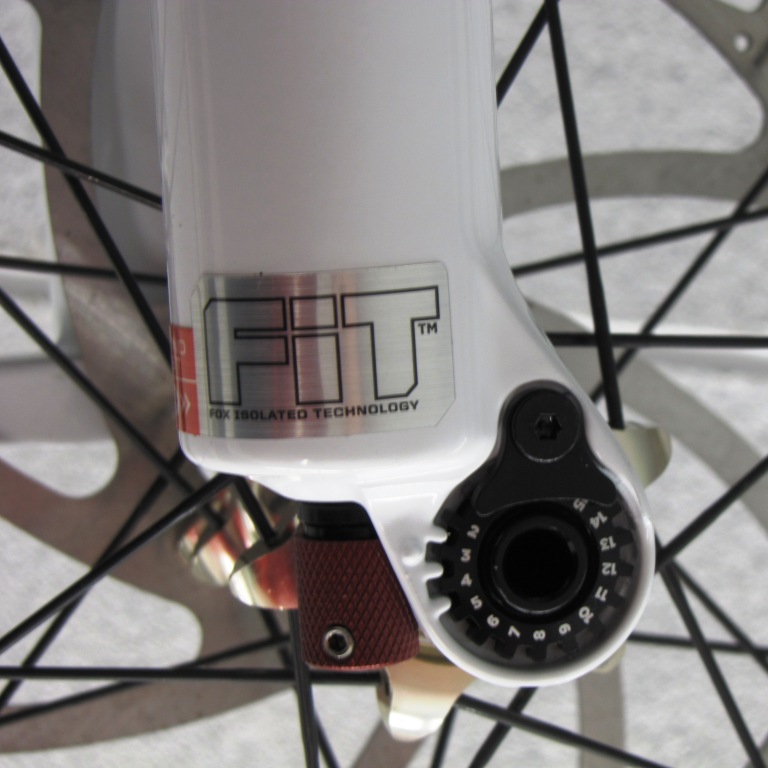
Here’s a quick guide to installing (or not installing) the Fox 32 Float 150 FIT RLC fork and how to dial it in for max performance on the trail. If you’re looking for a review, check this out.

Installation Tips

Don’t plan on installing this fork yourself unless you have all the proper tools handy and are competent enough for the task. Just in case you’re wondering, you will need either a pipe cutter with a new blade on it or a steering tube cutter guide and a hack saw. You will also need a star nut installation tool. Having said that, once the steering tube and star nut are installed, the rest of the installation is actually easy.

You’ll want to make sure you have enough brake hose for full travel (though you can step the travel down to 130mm using the included spacers). Always follow the recommendations on the included interactive installation CD when mounting the wheel and setting up your quick release for the first time. Keep in mind that the QR should not brush up against the fork at all when the QR locks in place.

rlc3

Take your bike around a parking lot or on the street and jounce the fork for a while to get all the fluids in place. Let everything settle in for a bit before continuing onto bigger and gnarlier stuff. This is actually an important step and should never be skipped before setting op the fork, no matter how hard it may be to wait. :)

rlc1rlc2

Setup

The 32 Float 150 RLC has four settings: air pressure, rebound, low speed compression, and lock-out threshold. The first setting you’ll want to adjust is the air pressure and sag. To do this you should have ridden around a bit to get all the bushings well lubricated to make sure that nothing sticks. Dial all the settings to the lightest levels by backing out the knobs (counter-clockwise) on both the compression bezel and the rebound knob on the bottom of the fork leg. Once that is complete you can set the sag on the fork.

Get dressed up in your full cycling gear and weigh yourself in. Look up your weight on the chart in the owners manual to find the correct pressure setting and use the provided shock pump to pressurize. For example, at my weight (full in @200lbs), Fox recommends 95 psi for the correct amount of sag.

Setting compression and rebound along with lock-out settings are all about user preference and will vary from rider to rider and will depend on your terrain, riding style, and ability. Ultimately you want the fork to track the terrain without feeling like it wants to toss you off the bike. You also don’t want a fork that feels like it’s about to bottom out on moderate drops. I generally like to set rebound first, then compression.

You can get a good idea of the initial rebound setting while standing in one spot and jouncing the fork. Start turning the rebound dial clockwise a few clicks at a time, and test each change by opening your hands and pushing down hard on the bars. The rebounding fork should not push your hand off the bars when it returns; if it tosses your hands off, there is too little rebound. Now, go for a ride and pay attention to how the fork is returning. On multiple hits the fork should not pack down (that is, lose travel every hit). Once the rebound is set, it’s time to get the compression and lock-out dialed in.

Compression should be set on the fly, preferably on a section of trail that you know well. With the compression knob you want to add enough compression (clockwise) so that when you take a drop / bump you don’t blow through the entire travel. Instead, you want to have a controlled compression without hitting the bump stop. You can also use the lock-out feature as a higher-level compression setting when taking larger drops or as a way to improve efficiency when pedaling through flats and climbs.

The 2010 Fox 32 Float 150 FIT RLC offers a wide range of settings you can tweak to get the perfect ride. Experiment to find the settings that work best for you!

Manitou Absolute+ MTB Fork Upgrade

Friday, December 18th, 2009

picture-54

Here’s something all you who own 2007 and newer Manitou forks are going to be extremely interested in hearing about. The best part? It won’t cost you an arm and a leg to upgrade your front suspension.

Just in time for the holidays, Manitou has released the new Absolute+ damper cartridge (MSRP $44.99 -$69.99 depending on fork model). The Absolute+ is basically a new damper unit that will give you 8 low speed compression levels and a shimable high speed compression circuit on your Manitou fork. It’s super simple to install and you can be up and running in just 15 minutes.

The Absolute+ unit is similar to a TPC damper but the Absolute+ allows you to change up both hi (called the Pro Stack) and low speed compression (called the Speed needle). Out of the box the Absolute+ is set up for the average rider, however if you find yourself riding super rough trails or are on the heavier side of the spectrum, (180+ lbs) you will need to re-shim the high speed compression unit for maximum performance (your local shop can help you out on this).

picture-31

A close look at the damper side by side to a TPC you can see a totally redesigned piston assembly.

In this article I will give you the low down on installation which will allow you to decide if you want to DIY or get a pro to do it for you. For this job you’ll need a few socket wrenches (20mm and 24mm) and one 2mm allen key. Pretty simple tool list, huh? You may want to consider changing the fork oil at the same time but it’s not necessary. Factory oil will work well with this damper unless you’re over 250 lbs. (in which case you’ll want a heavier oil).

picture-56picture-57picture-61

Installation

For most home mechanics, replacing the damper will take less time than reading this article. First, turn the TPC knob full open (soft, counterclockwise). Then with the 2mm allen wrench, remove the solitare screw that holds the adjuster knob on. After you remove that screw carefully remove the cap and remove the two detent bearings and springs. Once that step is done you can remove the damper cartridge by turning it counter-clockwise with a 20mm wrench until it is totally off. You can now compare the two damper cartridges.

picture-58picture-349picture-59picture-60

With the cartridge out you can either dump the oil and replace with fresh stuff or just check the level and top it off as necessary. Use a measuring tool like a vernier caliper or a simple tool cut out of cardboard with graduations on it and top off the level using the chart provided by Manitou. Each fork has a different recommended oil level so it’s important that you get the right amount (my Minute needs a level of 87mm for example).

Once you have the right oil level, you can insert the damper cartridge and torque to 45 - 55 in/lbs or 5.1 - 6.2 Nm. Carefully install the springs and then the bearing detentes (180 degrees appart). For this step, make sure you have the fork level, otherwise the detents will fall out. The final step is to install the cap with the allen screw; torque it down and then you’re ready to go.

Performance

On rocky trails with big drops I found the Absolute+ improved performance over the TPC unit that it replaced. For one thing the new control knob is easier to adjust and makes it much easier to identify settings at a glance. There are eight levels of control which offer distinct differences in slow speed compression. The shock worked equally well on washboard technical stuff and even the larger hits. One great thing I observed was how the fork didn’t feel like it was blowing through its travel too quickly on drops around the 4- 6 foot level.

For about $50 this upgrade is well worth the coin and will really improve the performance of your older 2007+ Manitou fork. Once you get the fork dialed in you will see that the separated circuits really do a great job controlling how your fork behaves.

Manitou has been doing a lot of  work revamping their product line-up and beyond the Absolute+ they have several new and exciting products just around the corner. Thanks to the folks at Manitou for providing the Absolute+ damper for review.

GORE RideOn MTB Cable Systems

Friday, March 27th, 2009

One thing I love about mountain biking is the constant product changes and improvements. Companies are forever revising their products and finding ways to be competitive in the MTB marketplace. Gore is one of those companies and their new $65 cable set is one of those products that other manufactures are going to work hard to catch up to. The RideOn cable system comes in three formats - low friction coated, sealed low friction coated, and the extra long sealed low friction. The RideOn cables are compatible with Shimano, SRAM, and Campagnolo. At present they are available in Black or White and if you’re a roadie you also have the choice of Grey.

picture-1a

I recently got my hands on a set of the extra long sealed cables from Gore. For those of you who ride in dirty and muddy conditions pay attention! This cable set is one of the few which are totally sealed from shifter to derailleur, in one continuous low friction liner, and capped with a very effective grub seal, with no chance of contamination. Perfect for those mossy, muddy parts of trails that never dry up, or for riders who don’t clean their bikes after every ride.

Installing these cables is pretty much the same as a regular cable set with a few fine points of difference. The instructions from Gore are pretty clear and for those of us who like video, the Gore website has a video tutorial that clearly illustrates the installation procedure.

To do the job you need:

picture-1b

* repair stand
* electrician wire cutters
* metric Allen wrenches or Allen sockets (4, 5, 6,mm)
* torque wrench
* new razor blade
* sharp awl or punch
* bicycle cable and housing cutters

I found when installing these you need a good cutter such as the Park Tool cutter. The cable housing is very stiff and tough and regular side cutters don’t work that well - the side cutters tend to squish the cables too much. Follow the instructions and do not lube these cables! And remember - measure twice, cut once. :)

picture-1c

Once installed you need to check the operation of your shifters (or brakes) and adjust them as necessary. The first thing you will notice is the smoothness and crispness of the shift. On my test bikes I was using SRAM’s X0 and X9 shifters and derailleurs, both of which already shift great on their own but with these cables I noticed an immediate improvement in shifting. I didn’t feel any stretching and didn’t experience any ghost shifting as the bikes went through their suspension travel. I really love the improvement in shifting and if someone asks do I think they are worth it, I would have to say absolutely yes.

One final note for those of you who use full length cables - be sure to get the extra long cable set. The extra long set includes more than enough housing and cable for those monster DH rigs out there with miles of suspension travel, and long wheel bases.

Keep an eye on Gore, there will be some new and interesting products on the horizon from them soon! Enjoy and happy riding.


Site Map | Advertise | Partners | Contact Us | Terms | Privacy
Camping | Hiking | Trail Running | Mapping | Mountain Biking
Copyright 2010 Blue Spruce Ventures LLC | Atlanta, GA
singletracks.com is yet another slick Review App